
Last Updated on 14 August 2026 by Greg Brookes
You Can Build Muscle With Kettlebells, but Exercise Selection and Loading Matter
For hypertrophy, choose exercises that let the target muscles work hard through a controlled range and can be progressively overloaded. The goal is not to make every session faster. It is to create enough high-quality muscular work to force adaptation.
Kettlebells are not just conditioning tools. With the right exercises, sufficient volume and progressive overload, they can build substantial muscle.
The biggest mistake is treating muscle-building workouts like kettlebell cardio. Swings, Snatches and fast complexes have their place, but hypertrophy is usually better served by more stable, controlled exercises where the target muscles become the limiting factor.
This guide shows you which exercises work best, how many sets and reps to use, how close to failure to train, and how to structure a practical full-body kettlebell muscle-building workout.
How Kettlebells Build Muscle
Muscle growth requires repeated sets that place enough tension on the target muscles, performed close enough to failure to make those fibres work hard, and repeated over time with progressively greater demand.
Kettlebells can do this very well, but only when the exercise and kettlebell weight match the muscle you are trying to train.
How Many Reps and Sets for Kettlebell Muscle Gain?
Muscle can be built across a wide range of repetitions when the set is sufficiently challenging. In practice, moderate rep ranges are usually the most convenient because they allow meaningful loading without every set becoming extremely long.
| Exercise type | Useful rep range | Typical sets | Rest |
|---|---|---|---|
| Heavy compound lifts | 5 to 10 | 3 to 5 | 2 to 3 minutes |
| General hypertrophy work | 8 to 15 | 2 to 4 | 90 seconds to 3 minutes |
| Lighter / limited-load work | 12 to 20+ | 2 to 4 | 60 seconds to 2 minutes |
You do not need to take every set to absolute failure. Most of the time, finishing with roughly 1 to 3 technically good repetitions left is a sensible place to work.
See my Reps in Reserve guide and Kettlebell Reps guide for more detail.
6 Kettlebell Exercises for Building Muscle
These exercises are useful because they are relatively easy to repeat, load and progress. Ballistic exercises such as Swings and Snatches are excellent for power and conditioning, but they are not my first choices when the primary goal is maximising muscle growth.
Double Kettlebell Front Squat

Best for: Quads, glutes and adductors
For somebody with reasonably strong legs, a Goblet Squat often becomes limited by how much weight can be held at the chest. Double kettlebells give the legs much more meaningful loading potential.
Muscle-building starting point: 3 to 4 sets of 6 to 12 controlled reps.
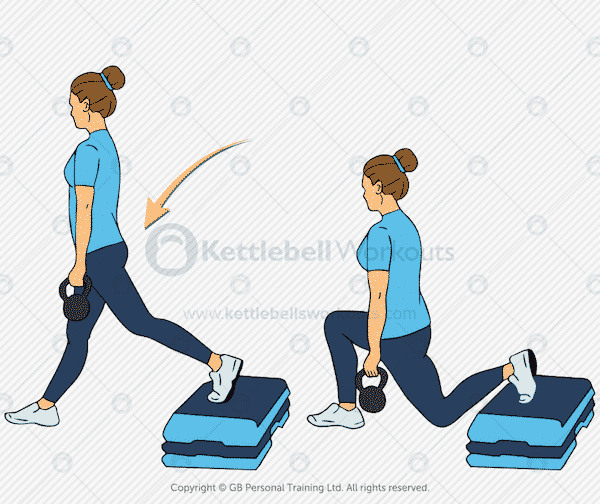
Kettlebell Reverse Lunge
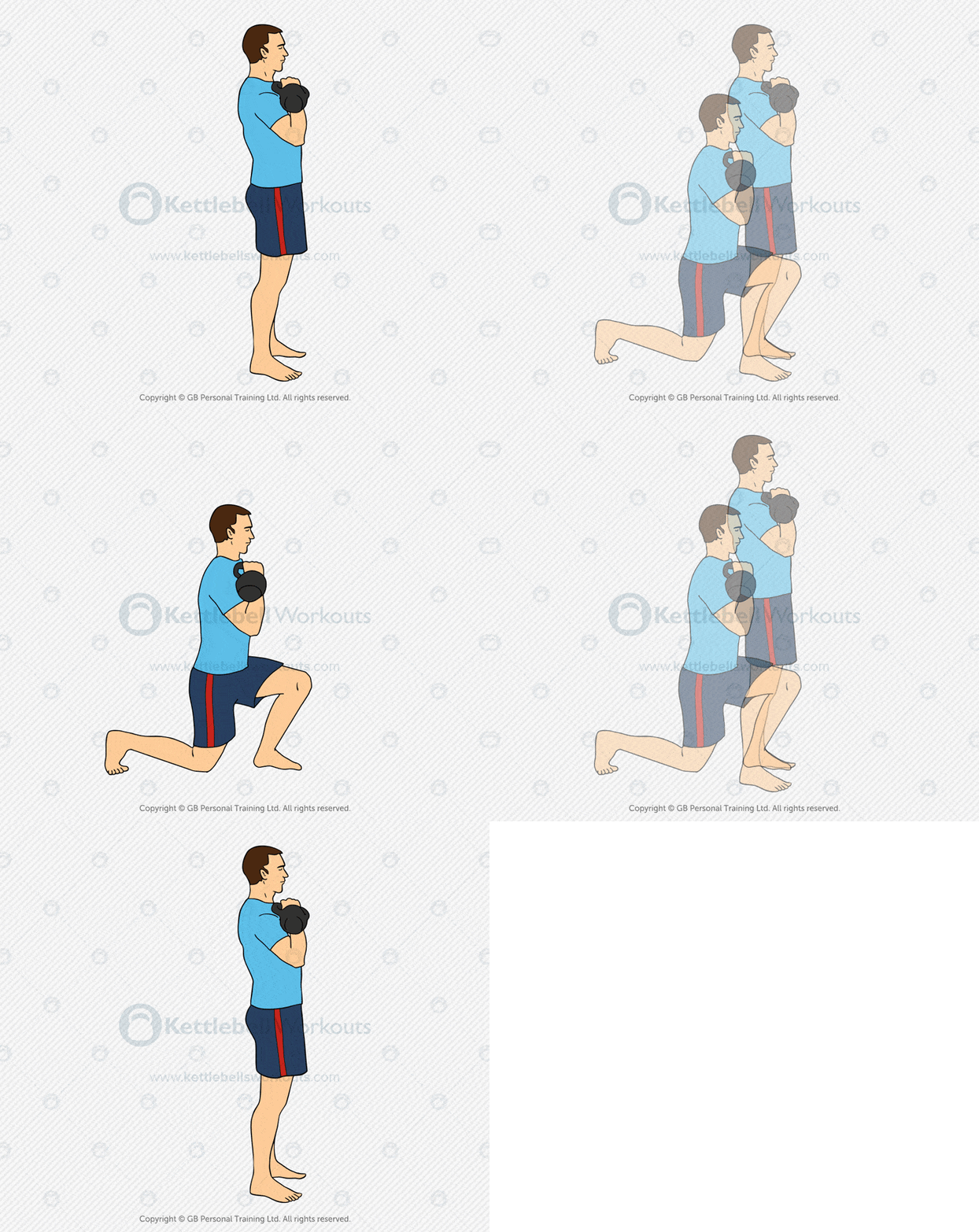
Best for: Quads and glutes
Unilateral leg work is particularly useful for hypertrophy because 1 leg has to handle most of the load. This allows a relatively modest kettlebell load to create a substantial local training stimulus.
Muscle-building starting point: 3 to 4 sets of 8 to 15 reps each side.
Kettlebell Clean & Press
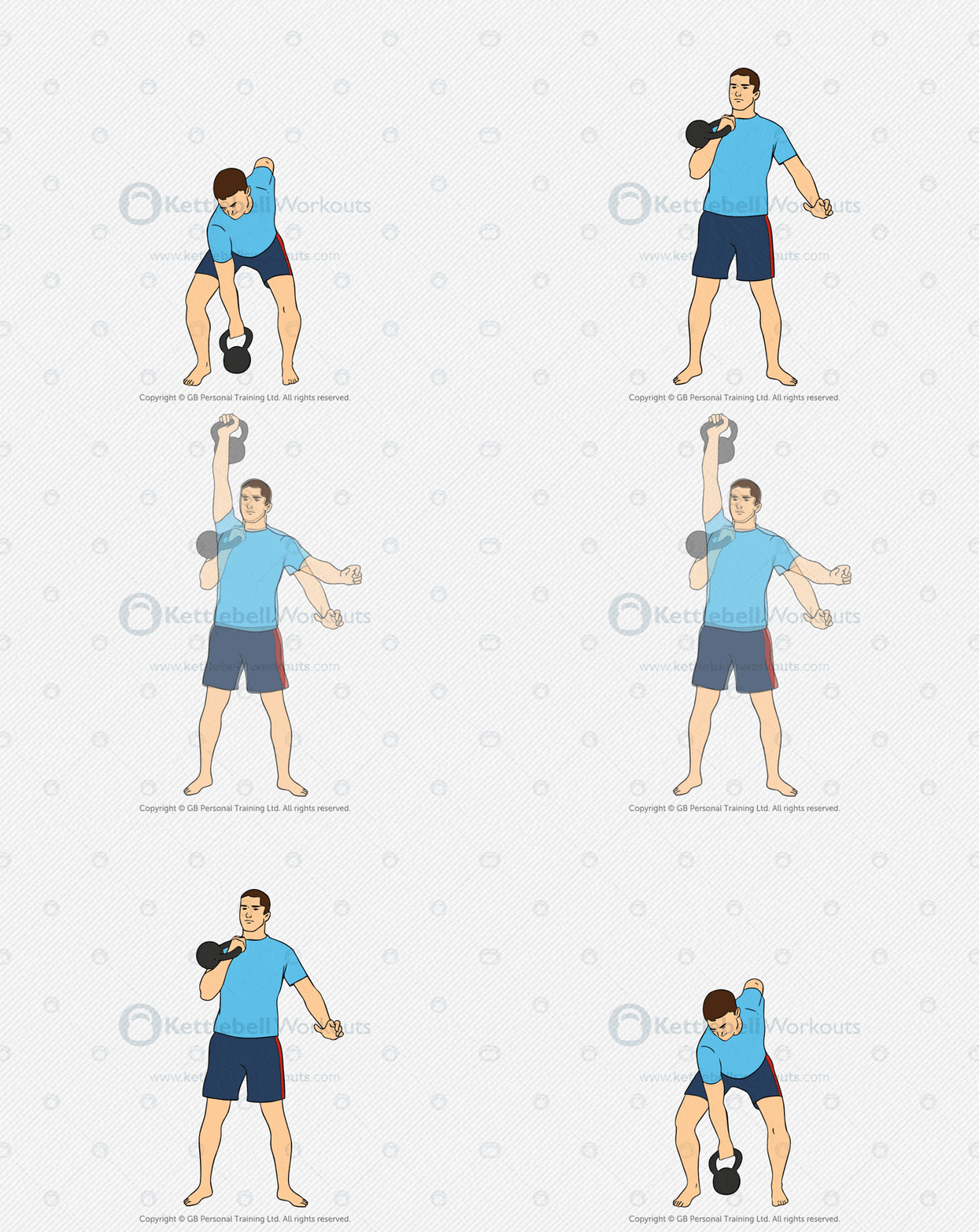
Best for: Shoulders and triceps
The Clean gets the kettlebell into position, but the strict Press is the main muscle-building element. Use a controlled Press rather than turning every difficult repetition into a Push Press.
Muscle-building starting point: 3 to 4 sets of 6 to 12 reps each side.
Kettlebell Bent Over Row
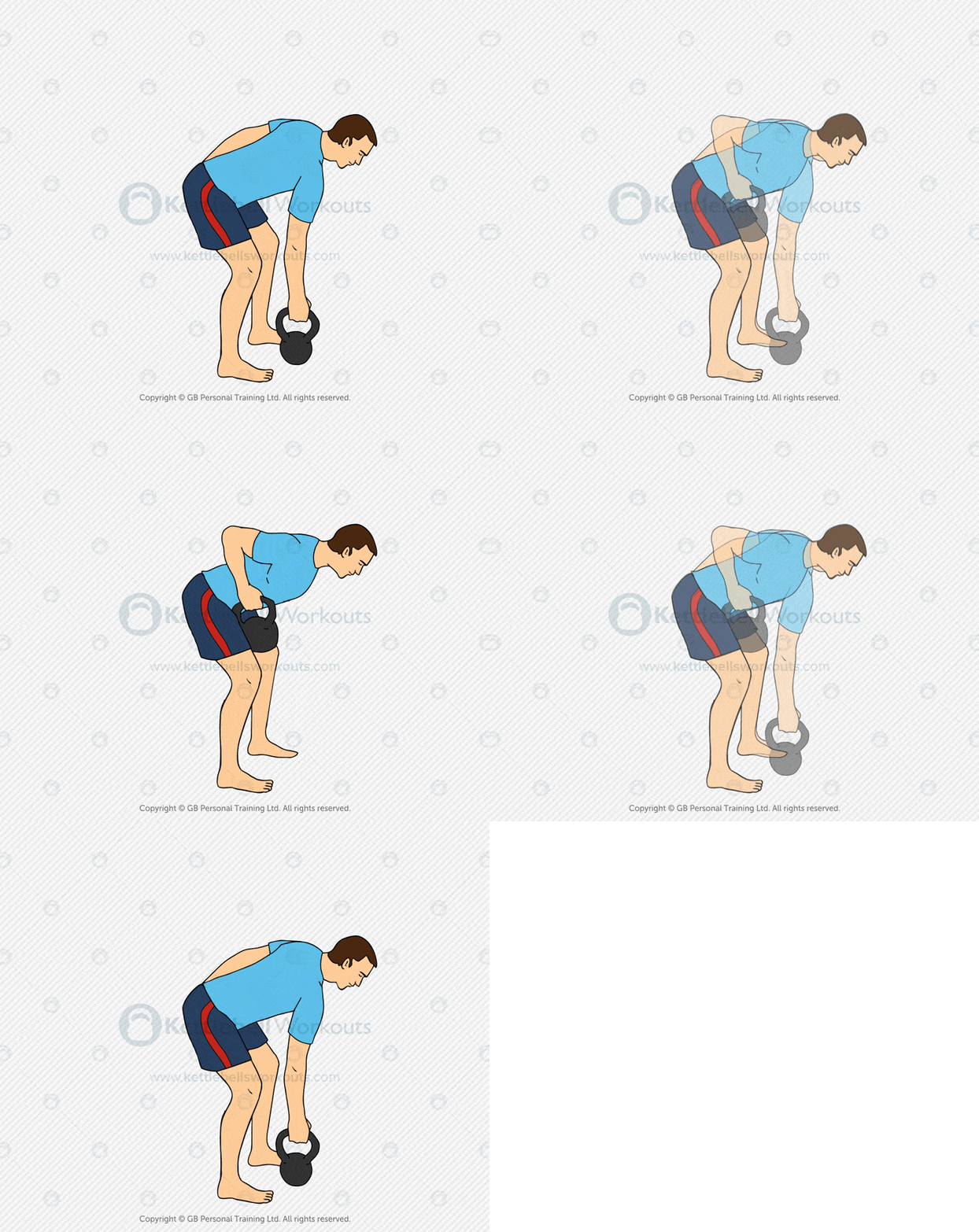
Best for: Back and biceps
Rows are easy to repeat, easy to progress and allow the back and arms to work through a controlled range. Use a heavy single bell or double kettlebells when more loading is needed.
Muscle-building starting point: 3 to 5 sets of 8 to 15 reps.
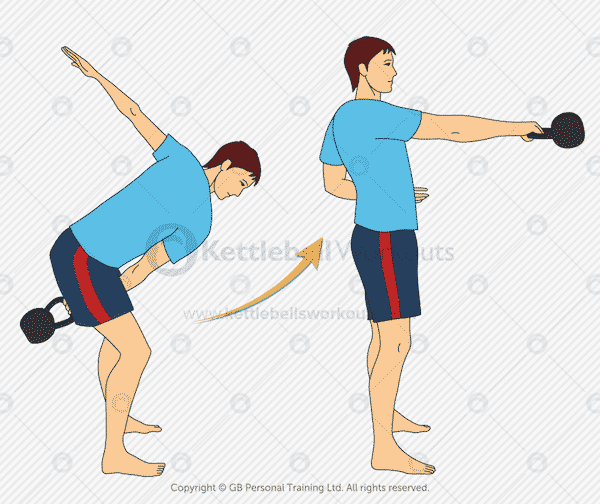
Kettlebell Single-Leg Deadlift
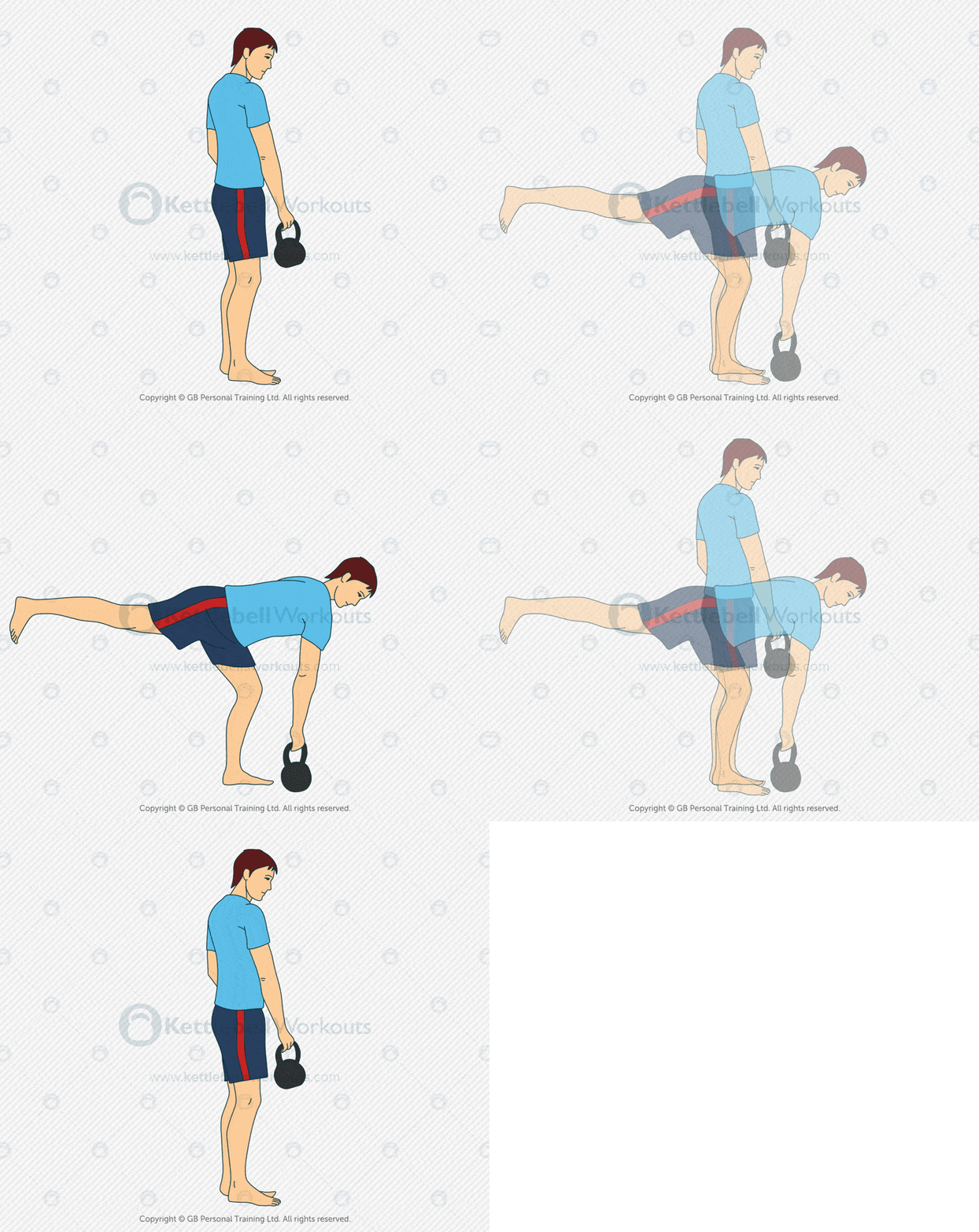
Best for: Glutes and hamstrings
The Single-Leg Deadlift can create a strong posterior-chain stimulus with less absolute load. If balance limits the hamstrings and glutes, use light fingertip support so the target muscles remain the limiting factor.
Muscle-building starting point: 3 to 4 sets of 8 to 12 reps each side.
Goblet Squat
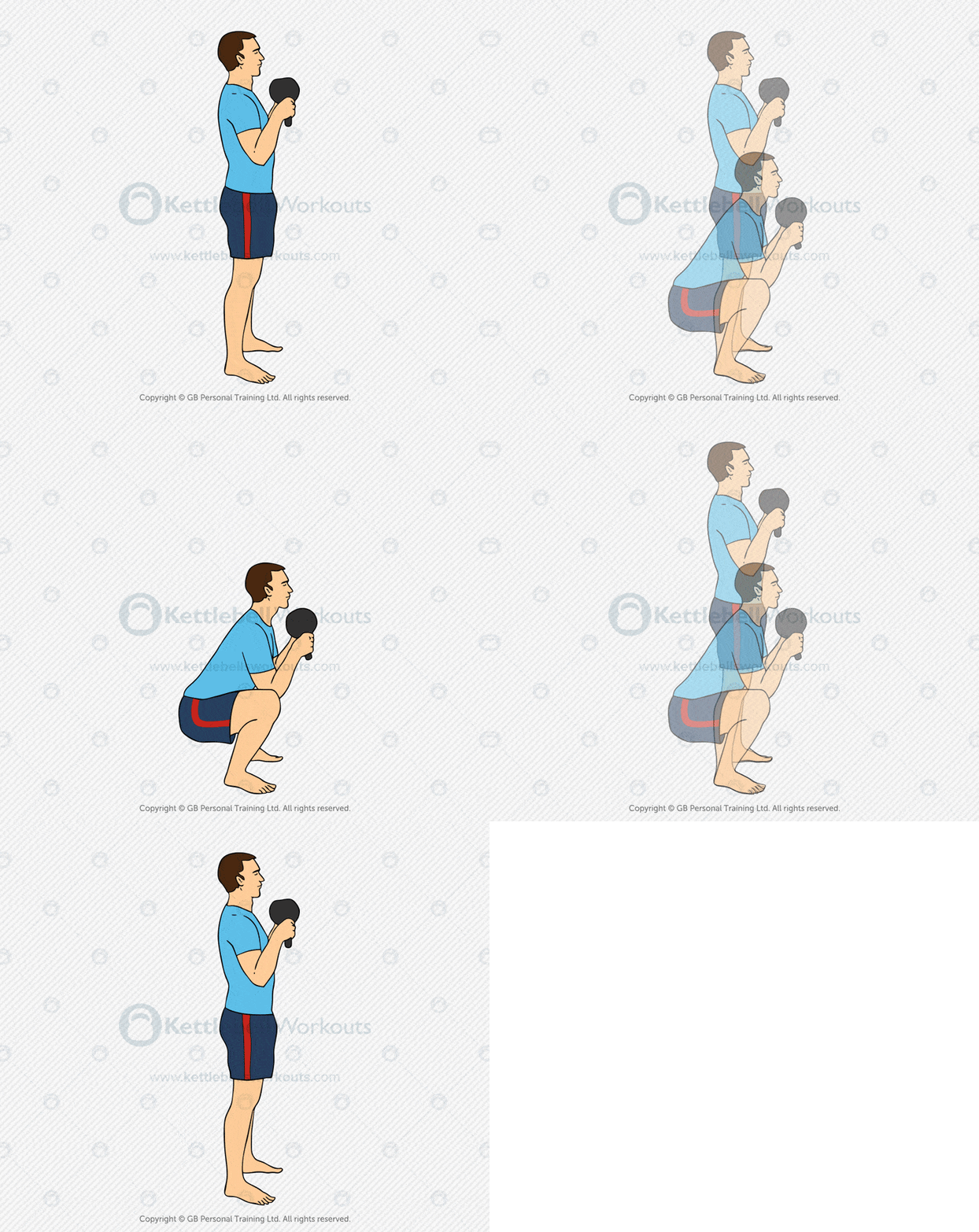
Best for: Beginners and higher-rep leg work
The Goblet Squat is useful while the available kettlebell is genuinely challenging for the legs. Stronger lifters often outgrow it because holding the bell becomes the limitation before the legs are sufficiently challenged.
Muscle-building starting point: Use 8 to 20 reps while the legs, rather than the arms or breathing, remain the main limiting factor.

Where Kettlebells Become Limited for Hypertrophy
The main limitation is not the kettlebell itself. It is whether you own enough load for the muscle being trained.
Legs are the clearest example. A single Goblet Squat may be excellent for a beginner, but somebody with strong legs can outgrow it quickly. At that point use Double Front Squats, heavy unilateral exercises such as Lunges or Bulgarian Split Squats, or another training tool that allows greater loading.
The same principle applies everywhere: do not keep adding repetitions indefinitely just because you have run out of kettlebell weight. If the set stops being an efficient way to challenge the target muscle, change the exercise or increase the available load.
Full-Body Kettlebell Muscle-Building Workout
This session keeps the exercise selection simple and puts the largest muscle groups first. Perform the exercises as straight sets or paired sets, but do not rush the rest periods.
Full-Body Hypertrophy Session
Rest: generally 90 seconds to 3 minutes between hard sets. Longer rest is perfectly acceptable when it lets you perform more high-quality muscular work.
How Often Should You Train for Muscle Gain?
For many people, 2 to 4 resistance-training sessions per week works well. What matters more than the exact number of days is whether each muscle receives enough challenging work across the week and you can recover between sessions.
A simple approach is 2 or 3 full-body sessions. More experienced lifters may prefer an upper/lower or other split so they can perform more work without making individual sessions excessively long.
See my Kettlebell Training Splits guide and Kettlebell Workout Plan.
How to Progress Kettlebell Muscle Gain
Progression does not mean making every workout more exhausting. The simplest method is to keep the same important exercises and gradually improve your performance.
1. Add repetitions
Choose a rep range, for example 8 to 12. Add reps over time while keeping a similar number of good repetitions in reserve.
2. Add load
When you can reach the top of the range across your working sets with good technique, move to a heavier kettlebell where possible.
3. Add useful volume
Add another working set only when recovery is good and the extra work is still productive rather than simply adding fatigue.
See 7 Ways to Progress Your Kettlebell Workouts for more options.
Nutrition and Recovery for Muscle Growth
Training provides the stimulus, but muscle growth also depends on enough protein, total energy and recovery.
Kettlebell Muscle Building vs Strength Training
The 2 goals overlap, but they are not identical. Strength training puts more emphasis on producing high force with heavy loads. Hypertrophy puts more emphasis on accumulating enough hard, muscle-focused work across the week.
If getting stronger is your main goal, see my Kettlebell Strength Training guide.
If you simply want more ready-made sessions, see 3 Kettlebell Workouts for Mass.
Related Kettlebell Guides
Frequently Asked Questions
Can you build muscle with kettlebells?
Yes. Kettlebells can build muscle when the exercise provides enough resistance, working sets are taken sufficiently close to failure and the training progressively becomes more demanding.
Are kettlebells as good as dumbbells or barbells for muscle gain?
They can be excellent, particularly for Presses, Rows, Lunges, Double Front Squats and unilateral exercises. The main limitation is whether the kettlebell weights you own allow enough progressive loading for the target muscle.
How many reps should I do to build muscle with kettlebells?
Many people will find roughly 6 to 15 reps convenient for most exercises, but higher repetitions can also build muscle when the set is sufficiently challenging and the target muscle remains the limiting factor.
Do I need 2 kettlebells to build muscle?
No, but 2 kettlebells become useful when you need more total load, particularly for strong legs and for double Rows, Squats and other bilateral exercises.
Are Kettlebell Swings good for building muscle?
Swings can contribute to muscular development, particularly around the hips and posterior chain, but I would use them primarily for power and conditioning rather than as a main hypertrophy exercise.
How close to failure should I train?
You do not need to reach absolute failure on every set. Finishing most working sets with roughly 1 to 3 technically good repetitions left is a practical approach.
Great explanation
Great article Gregg