
Last Updated on 11 August 2026 by Greg Brookes
Advanced kettlebell training is not about finding unusual exercises just to make a workout look harder.
An exercise becomes advanced when it demands more strength, mobility, stability, timing or coordination than the basic movements that come before it.
The 7 exercises below are progressions for experienced kettlebell users who already have a solid Swing, Clean, Squat, Press and Get Up foundation.
What Makes a Kettlebell Exercise Advanced?
Advanced kettlebell exercises combine several physical qualities at once. You may need to stabilise a kettlebell overhead while squatting, balance on one leg, control an unstable bottoms-up position or move a kettlebell explosively with precise timing. The goal is greater movement skill, not simply heavier weight.
Before You Try These Advanced Kettlebell Exercises
You should not need to learn basic movement patterns while also trying to manage the extra complexity of these exercises.
7 Advanced Kettlebell Exercises
Kettlebell Bottoms-Up Press

The bottoms-up position places the heavy body of the kettlebell above the handle, so small errors in wrist position or shoulder control are immediately exposed.
First become comfortable with the Bottoms-Up Clean and static rack position. Then press a light kettlebell slowly without letting it tip forwards or sideways.
Kettlebell Overhead Squat

The Overhead Squat combines lower-body strength with demanding shoulder and upper-back mobility.
Keep the kettlebell stacked overhead while sitting into the squat. If the arm drifts forwards or the ribs flare excessively, reduce the depth or return to simpler Squat and Press variations.
Kettlebell High Pull
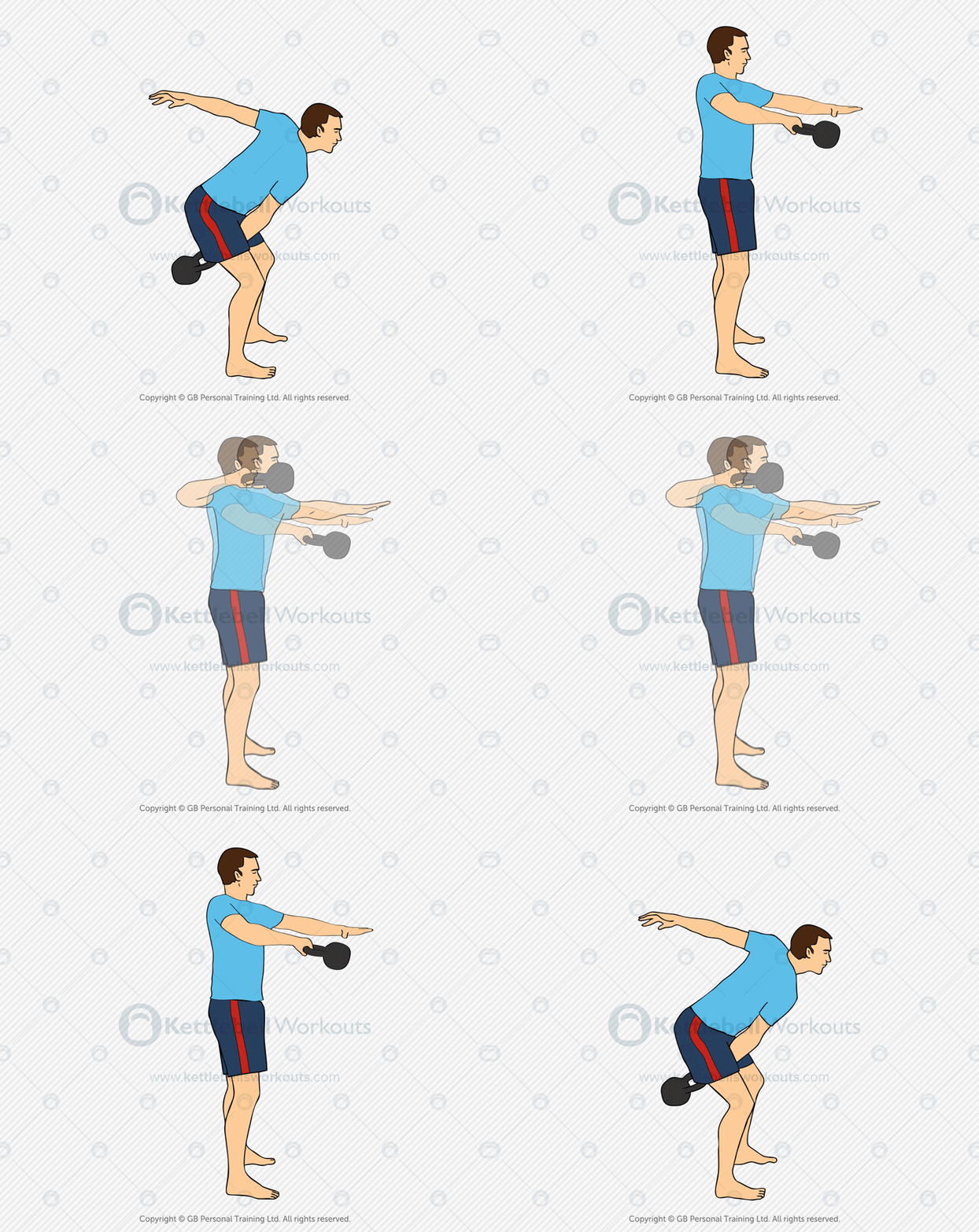
The High Pull builds on the one-handed Swing. Hip drive still creates the power, but the elbow then travels backwards as the kettlebell rises.
Do not turn it into an upright row. If the arm is doing most of the work, return to the Swing and rebuild the timing.
Kettlebell Snatch
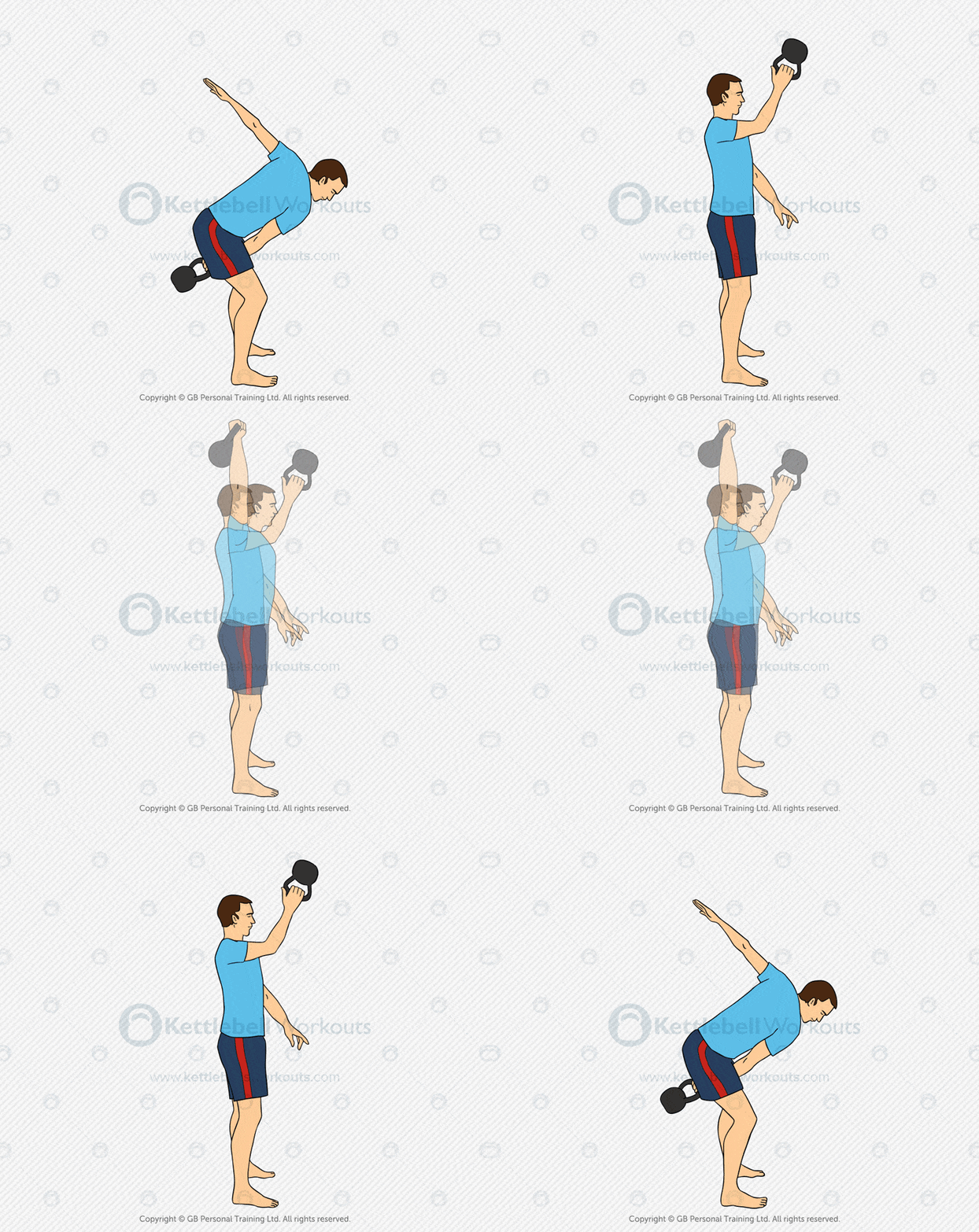
The Snatch takes the kettlebell from the Swing into an overhead lockout in one continuous movement.
Good timing matters more than brute force. The kettlebell should travel close to the body and settle smoothly around the hand rather than crashing onto the forearm.
Kettlebell Renegade Row

The Renegade Row combines a plank with a unilateral row and places a large anti-rotation demand on the trunk.
I do not consider this an essential kettlebell exercise. If you use it, choose kettlebells with a stable flat base and make sure they cannot tip or roll as you shift your bodyweight. I would not add a Push Up to this movement.
Kettlebell Pistol Squat
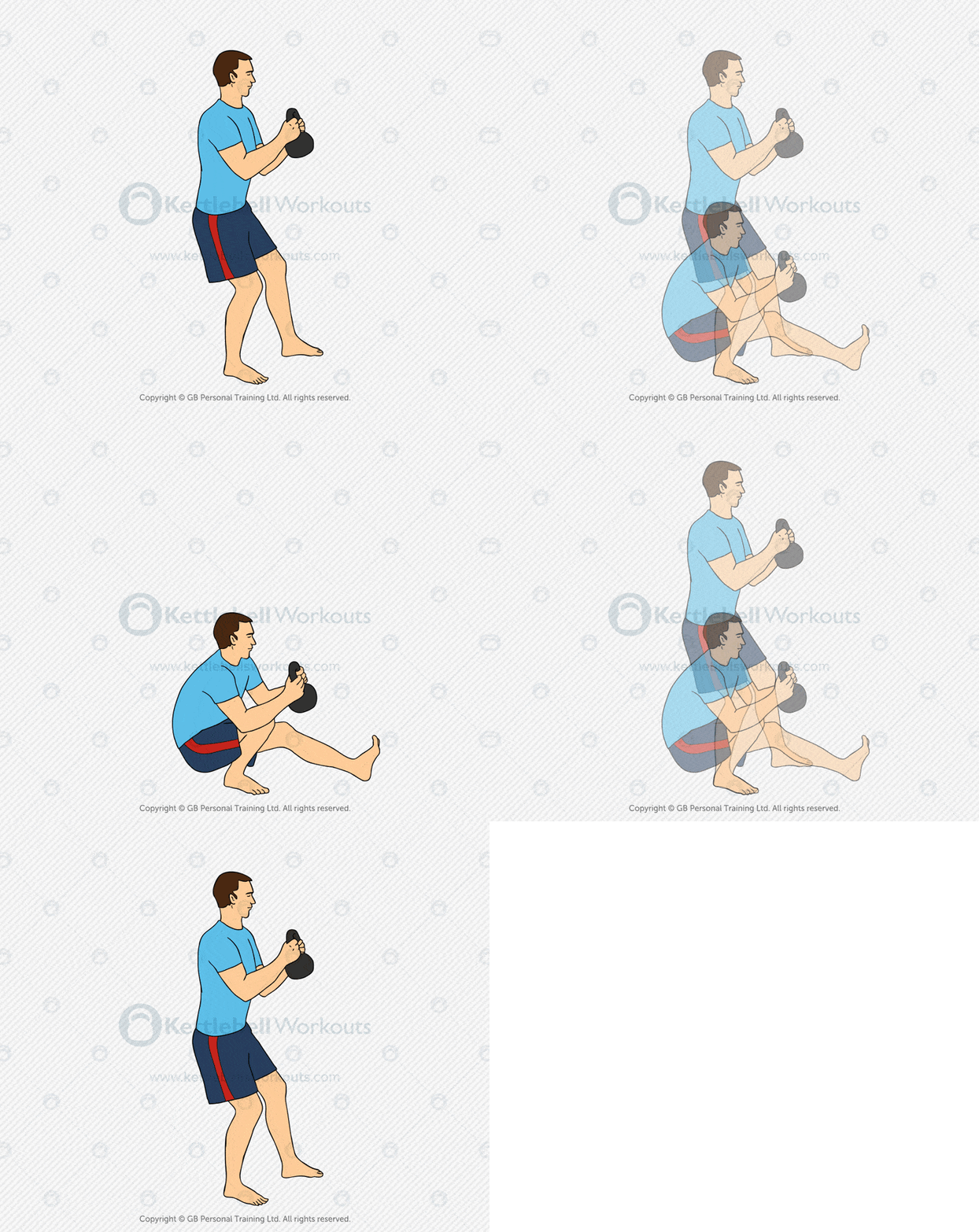
The Pistol Squat demands a rare combination of leg strength, balance and ankle and hip mobility.
Learn the movement without a kettlebell first. Holding a light kettlebell in front can actually provide a useful counterbalance before you gradually increase the load.
Kettlebell Straight Arm Sit
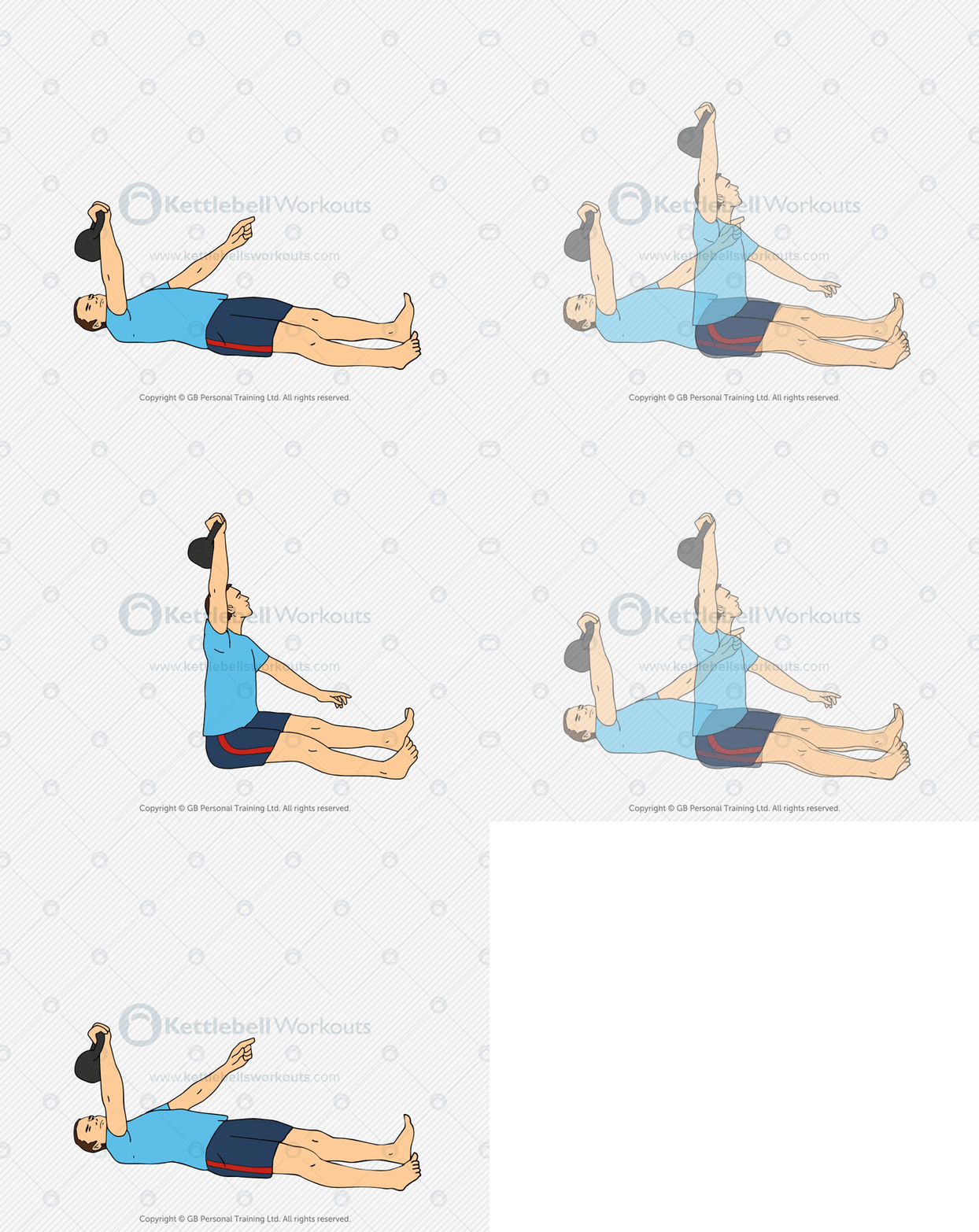
The Straight Arm Sit challenges the trunk while you maintain a locked-out kettlebell overhead.
Keep the arm vertical and move slowly through the sit-up. A lighter kettlebell is usually more appropriate than trying to force the movement with momentum.
Advanced Kettlebell Workout
Knowing advanced exercises is useful, but you also need a sensible way to train them without throwing every difficult movement into one exhausting circuit.
Advanced Strength + Skill Circuit
- High Pull: 6 reps each side
- Overhead Squat: 5 reps each side
- Snatch: 5 reps each side
- Pistol Squat: 3 to 5 reps each side
- Straight Arm Sit: 5 reps each side
Rest for 60 to 90 seconds, then repeat for 2 to 4 rounds depending on your experience and the kettlebell weight.
If the Snatch or Overhead Squat begins to deteriorate, stop the circuit rather than chasing another round. Advanced training should look controlled.
How to Progress Advanced Kettlebell Training
Adding weight is only one form of progression. With these exercises I would prioritise movement quality, control and repeatability first.

Related Kettlebell Guides
Frequently Asked Questions
What are the best advanced kettlebell exercises?
Useful advanced options include the Snatch, High Pull, Bottoms-Up Press, Overhead Squat, Pistol Squat and Straight Arm Sit. The best choice depends on whether you want to develop power, strength, mobility, stability or movement skill.
When should I start advanced kettlebell training?
Start when the foundational movements that feed into the exercise are already reliable. For example, master the Swing before the High Pull and Snatch, and develop a strong overhead position before the Bottoms-Up Press or Overhead Squat.
What is the hardest kettlebell exercise?
There is no single hardest exercise. A Pistol Squat may be limited by single-leg strength and mobility, while an Overhead Squat may be limited by shoulder and upper-back mobility. Difficulty depends on the person and the quality being challenged.
How often should I do advanced kettlebell workouts?
For most people, 2 to 3 well-planned kettlebell sessions per week are more useful than repeatedly training advanced movements while fatigued. Recovery needs depend on your overall programme, load and training volume.


Comments