
Last Updated on 19 August 2026 by Greg Brookes
A good full body kettlebell workout does not need dozens of exercises. Cover the main movement patterns, choose exercises that match your experience and then progress the load, repetitions or workout structure over time.
Kettlebells are especially useful for full body training because 1 bell can be used for hinges, squats, presses, rows, carries and core exercises without changing equipment.
Below you will find the 5 movement patterns I use when building full body kettlebell workouts, followed by 3 complete routines for beginner, intermediate and advanced training.
If you want to browse more options by workout type and duration, see my Full Body Kettlebell Workouts hub.
Benefits of Full Body Kettlebell Workouts
Full body kettlebell training lets you develop strength and conditioning in the same session while practising the major movement patterns more frequently than a traditional body-part split.
- Time efficient: train the major movement patterns in 30 to 45 minutes.
- Simple equipment: many effective sessions need only 1 kettlebell.
- Strength and conditioning: combine controlled resistance exercises with more dynamic movements.
- Easy to scale: change the kettlebell weight, reps, sets, rest periods or exercise difficulty.
- Useful for general fitness: train the whole body several times each week without needing a complicated split routine.
How to Warm Up for Full Body Kettlebell Workouts
Keep the warm up specific to what you are about to do. I usually start with a few minutes of easy joint movement, then practise the main patterns with bodyweight or a light kettlebell.
Slingshots, Halos and Good Mornings work well when they match the exercises in the session. You do not need a long separate workout before your workout.
Kettlebell Good Morning Warm Up
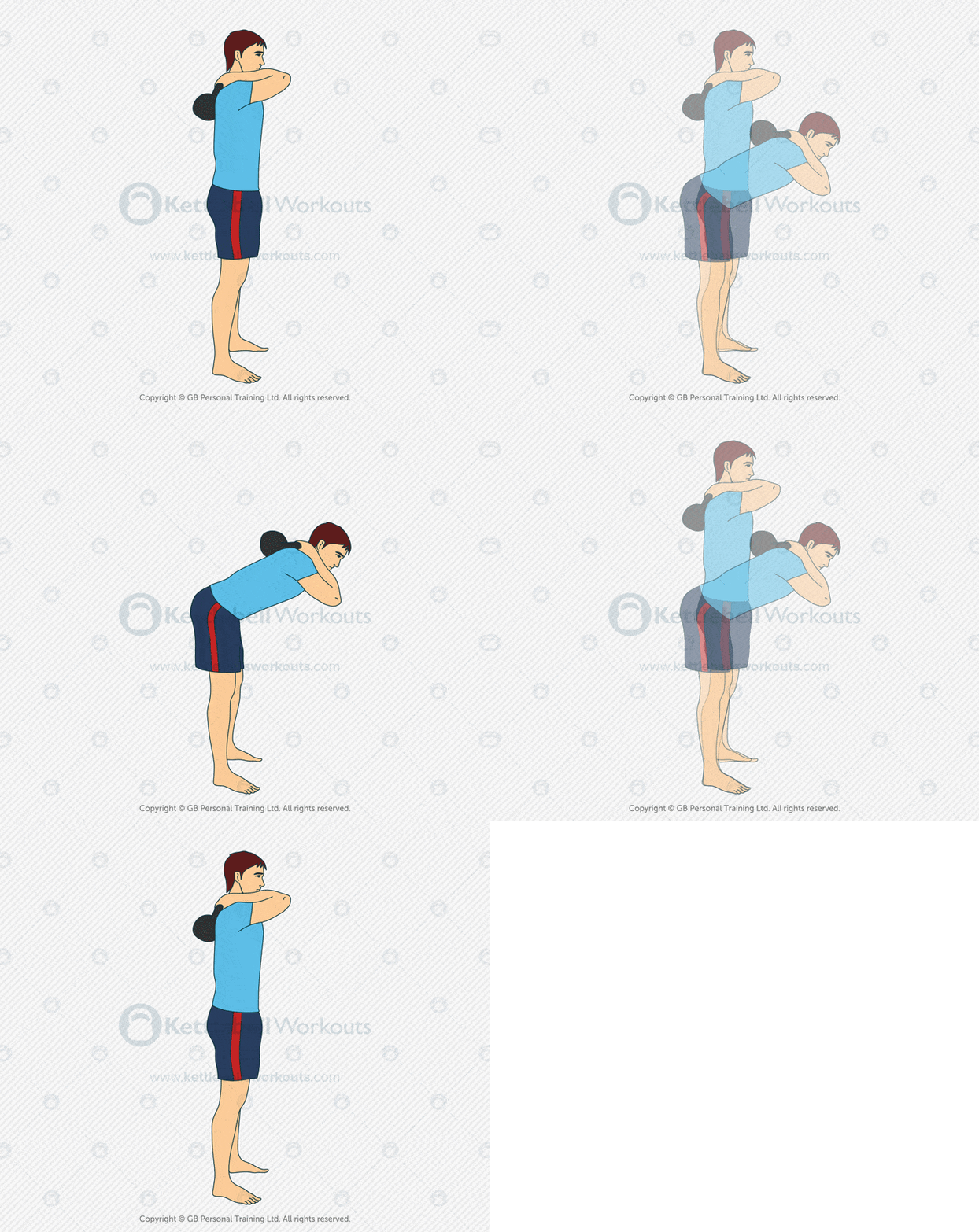
Use for: rehearsing the hip hinge before Swings, Cleans or Deadlifts.
Keep the load light and use the drill to feel the hips moving backwards while the trunk stays organised.
Start with: 8 to 10 slow repetitions.
5 Movement Patterns for Full Body Kettlebell Training
Use these 5 patterns as a checklist when building a full body kettlebell workout. You do not have to use the same exercise every session, but the structure helps stop important movements being missed.
Hinge
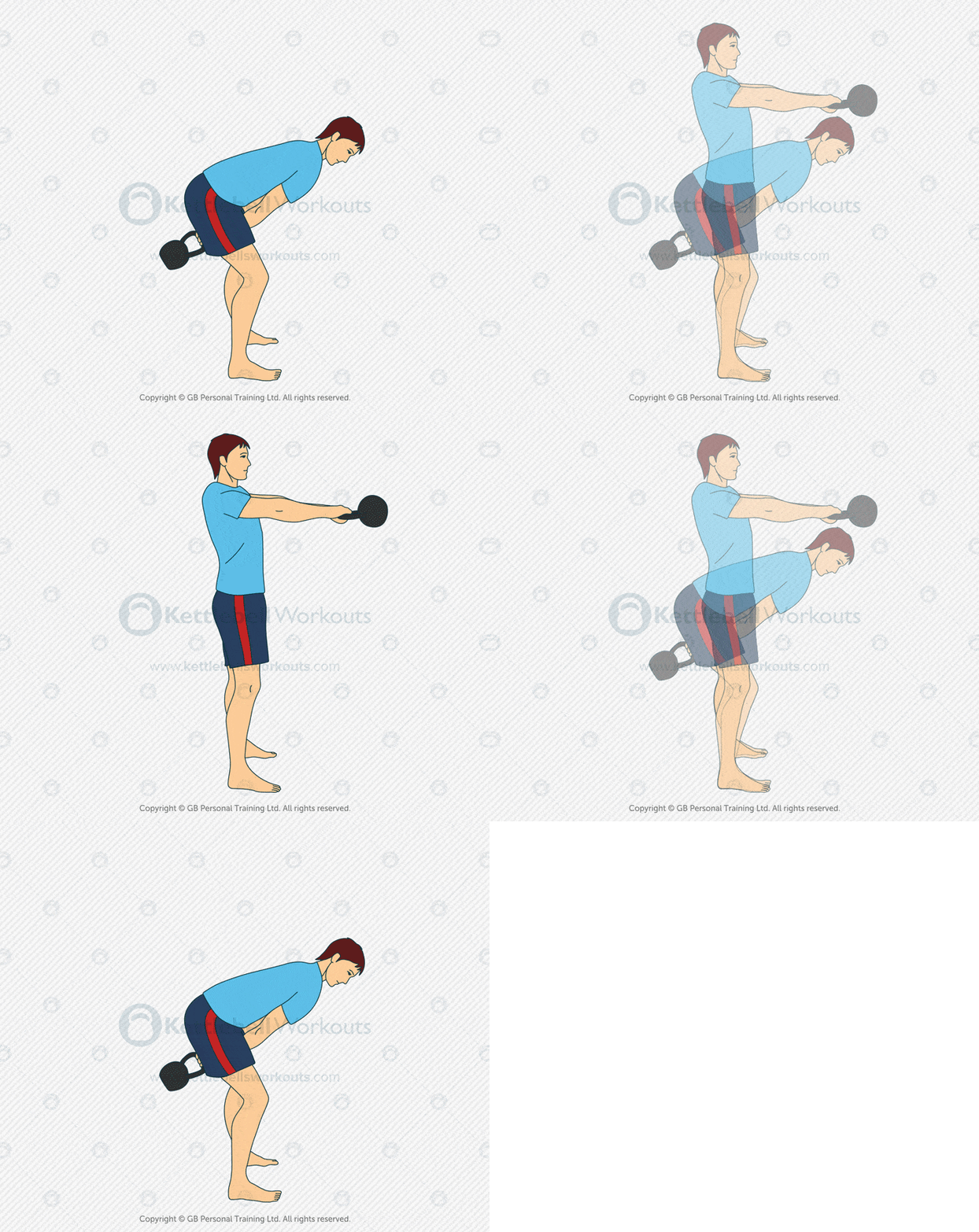
Best for: hamstrings, glutes, hips and full-body power.
The hinge is the foundation of kettlebell training. Swings, Cleans and Deadlifts all use the hips to produce force while the trunk stays controlled.
For beginners, start with a Deadlift or controlled hinge pattern before progressing to faster ballistic work such as the Swing.
Start with: 10 to 15 Swings or 6 to 10 Deadlifts.
Knee Bend

Best for: quads, glutes and lower-body strength.
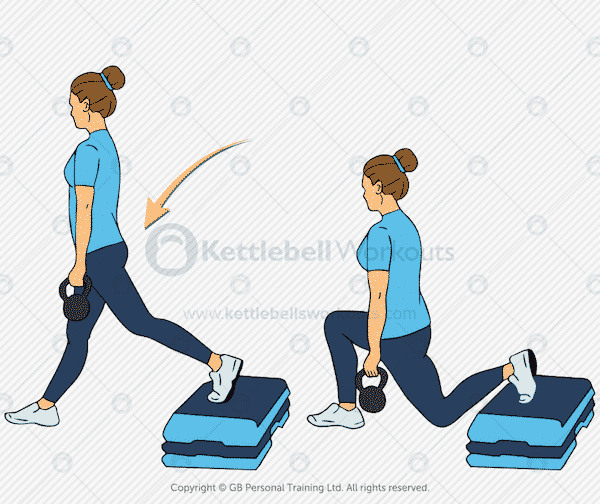
Squats and Lunges give your full body kettlebell workout a knee-dominant pattern to complement the hinge. Goblet Squats are ideal for beginners, while Racked Squats and Front Squats allow heavier progression.
Keep the feet grounded and use the squat depth you can control comfortably.
Start with: 6 to 12 controlled reps.
Push

Best for: shoulders, triceps and whole-body pressing strength.
Pressing gives the workout an upper-body push. Use a strict Overhead Press when you want more controlled shoulder strength, or a Push Press when you want the legs and hips to contribute.
Choose a kettlebell you can control overhead without leaning backwards or losing wrist position.
Start with: 5 to 10 reps per side.

Pull
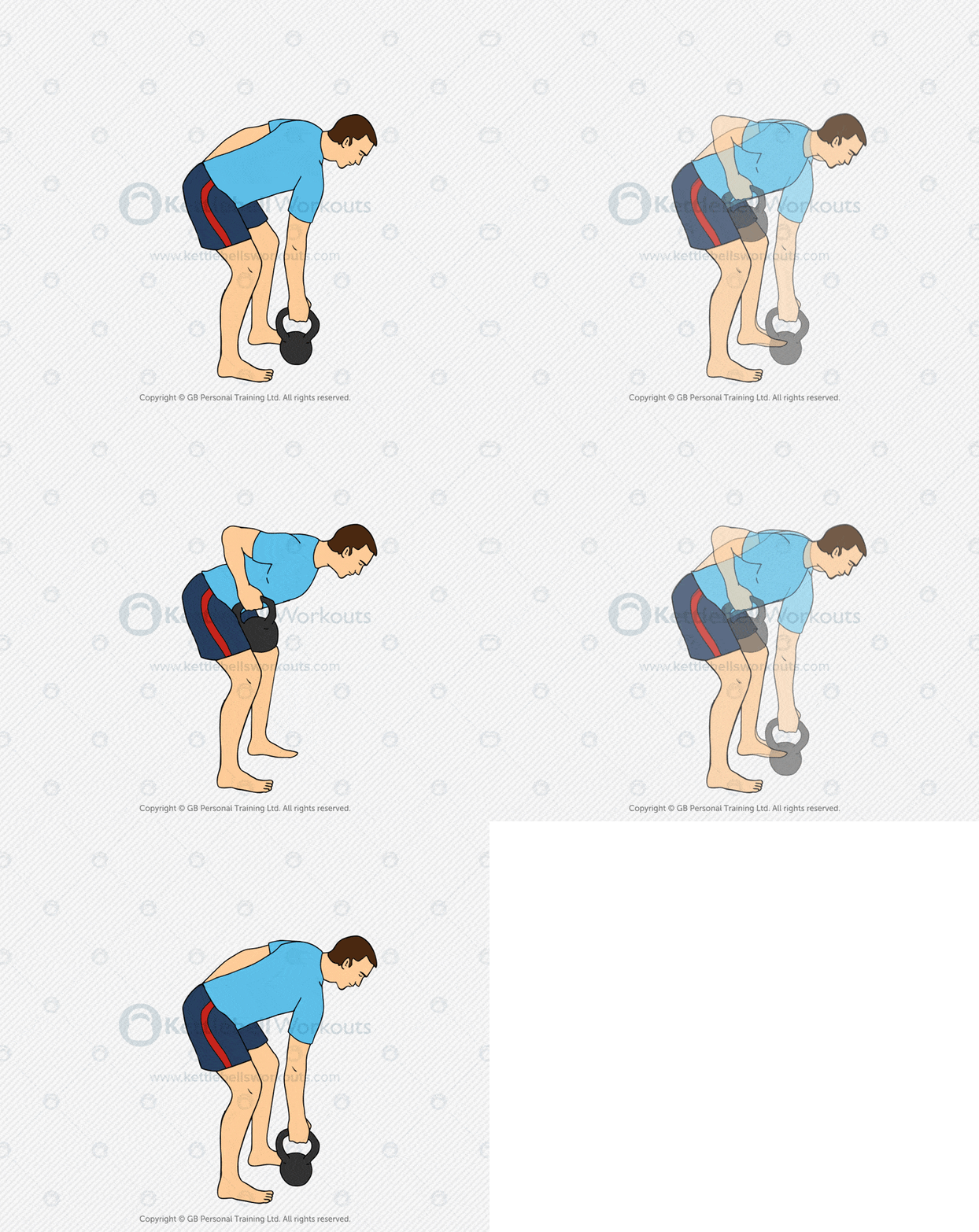
Best for: upper-back strength and balancing the pressing work in a full body routine.
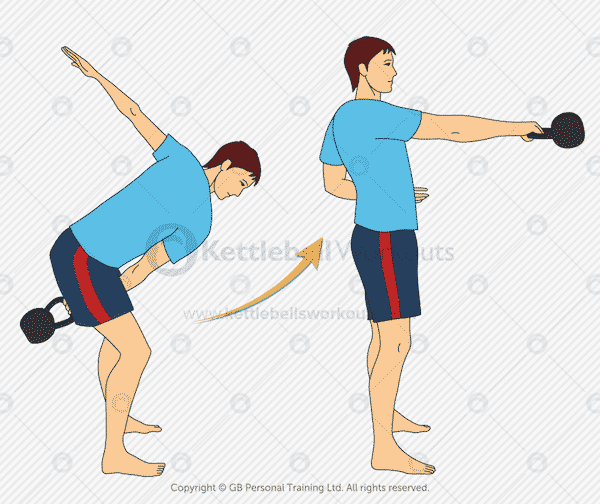
The Bent Over Row is a straightforward pulling exercise that trains the upper back, rear shoulder and arm while the hips and trunk hold the hinge position.
Keep the spine long, brace the trunk and pull the kettlebell towards the ribs without twisting through the torso. If maintaining the hinge becomes the limiting factor, reduce the load or support the free hand on a bench.
Start with: 6 to 12 controlled reps per side.
Carry or Core
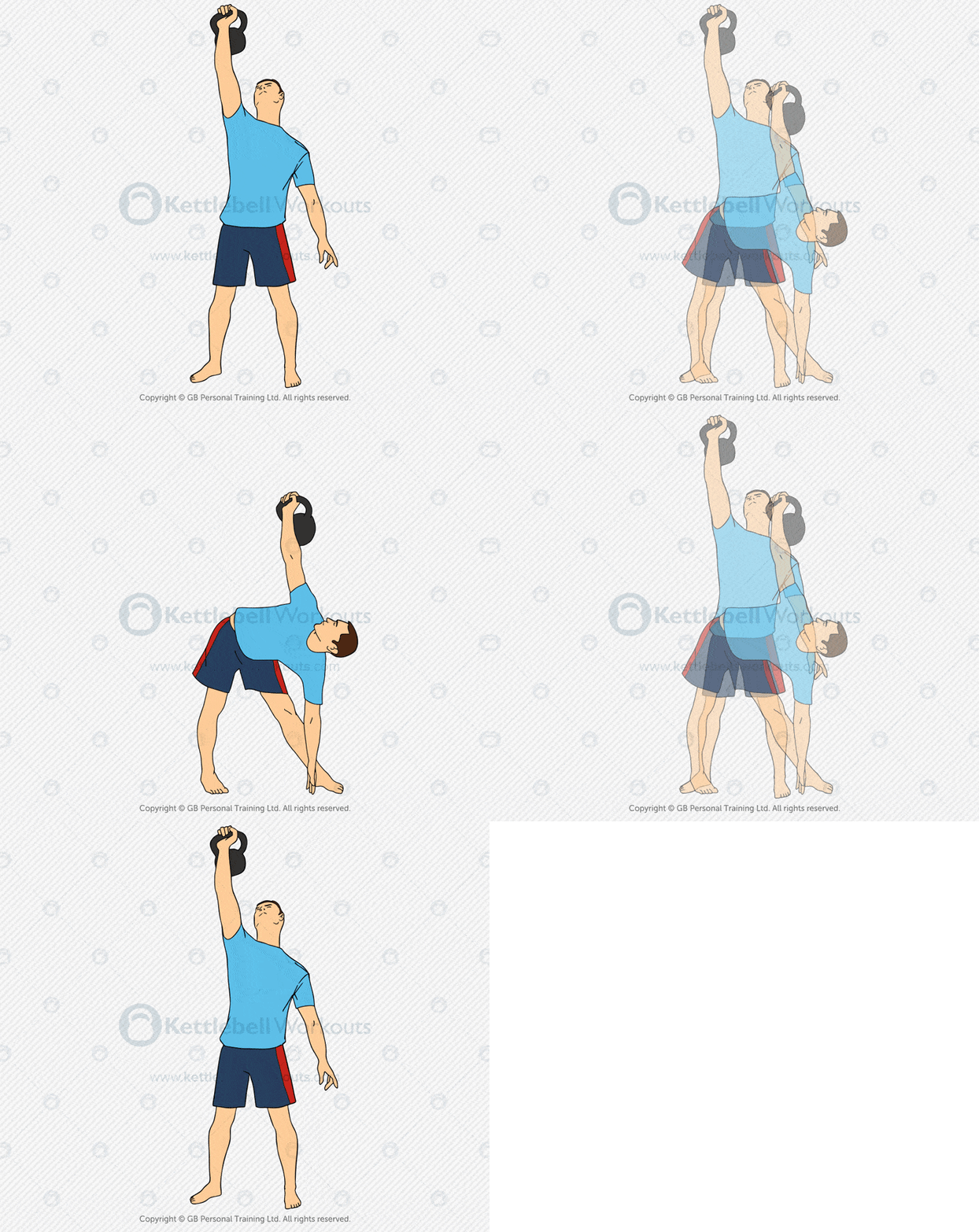
Best for: trunk control, grip, loaded stability and whole-body integration.
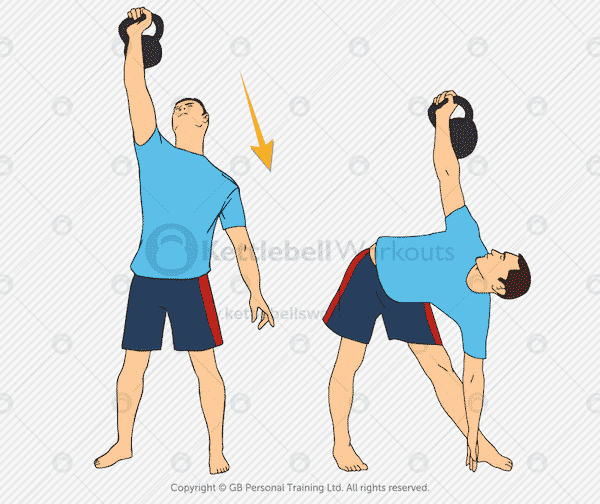
Finish the movement-pattern checklist with a Carry or a core-focused exercise such as the Turkish Get Up or Windmill. Carries are simple to programme, while Get Ups and Windmills add more movement complexity.
The aim is not to exhaust the abdominals in isolation. Choose a movement that helps the trunk organise the rest of the body.
Start with: 20 to 40 seconds of carrying, or 3 to 5 controlled reps per side.
How to Build a Full Body Kettlebell Workout
Step 1: Choose Your Exercises
Pick 1 exercise from each of the 5 movement patterns. Beginners should favour simple exercises they can repeat consistently rather than trying to make every session different.
Step 2: Match the Exercises to Your Level
Use single-kettlebell exercises first. Add double kettlebell work, more demanding ballistic exercises, flows and complexes only when the basic movements are already reliable.
Step 3: Structure the Session
Place technical or explosive movements early, then complete the main strength exercises and finish with carries or simpler conditioning work. You can also organise the session as a circuit when the goal is general fitness.
Step 4: Progress Over Time
Progress by increasing the kettlebell load, adding controlled reps or sets, improving range of motion, or completing the same work with slightly less rest. Do not change everything at once.
3 Full Body Kettlebell Workouts
These 3 routines cover the main search intents around a full body kettlebell workout, from a simple beginner circuit to a more advanced flow.
Rest as needed between exercises. Complete 2 to 4 rounds. Beginners should prioritise clean technique rather than trying to keep the circuit continuously moving.
Complete 3 to 4 rounds with enough recovery to keep the strength exercises strong. This workout suits somebody who already has reliable Clean, Squat, Press and Get Up technique.
Complete 3 to 6 controlled rounds on 1 side before changing sides. The aim is a smooth sequence, not rushing. Reduce the load if the transitions make the technique deteriorate.
When to Progress Your Full Body Kettlebell Workout
Progress when you can complete the programmed work with clean technique and still have some repetition reserve. You do not need to increase the kettlebell every week.
- use a heavier kettlebell when the current load is clearly too easy
- add a small number of repetitions
- add 1 extra round
- reduce rest slightly when conditioning is the goal
- progress to a harder exercise only when the extra complexity adds value
Which Full Body Kettlebell Workout Should You Use?
Beginner: choose Workout 1 and repeat it long enough to improve the same exercises.
Intermediate: use Workout 2 when you are comfortable with Cleans, Racked Squats and overhead work.
Advanced: use Workout 3 only when combining exercises no longer compromises the quality of each individual movement.
How Often Should You Do Full Body Kettlebell Workouts?
For most people, 2 to 3 full body kettlebell workouts per week is a useful starting point. That gives you regular practice while leaving recovery time between harder sessions.
A simple schedule is Monday, Wednesday and Friday, or just 2 non-consecutive days when recovery or other activity demands more space.
Full Body Kettlebell Workouts vs Split Routines
Neither approach is automatically better. Full body training is especially practical when you train 2 to 3 times per week and want strength, conditioning and movement practice in the same programme.
Split routines can make sense when muscle growth is the main goal and you want more volume for individual body parts. Choose the structure that matches the goal rather than assuming 1 format is universally superior.
Kettlebell vs Dumbbell Full Body Workouts
Kettlebells are particularly good for Swings, Cleans, Get Ups, Carries and flowing between exercises. Dumbbells are often easier for highly controlled bilateral pressing and isolation work.
You do not need to choose a side. Both are resistance-training tools, and each can be useful depending on the exercise and goal.
If you like using both tools, try these 9 kettlebell and dumbbell workouts.
How to Make Full Body Kettlebell Training Work
Keep the structure simple: cover the main movement patterns, use exercises that match your current ability and progress the same programme long enough to create an adaptation.
A full body kettlebell routine can be short, challenging and extremely effective without becoming complicated. The quality of the exercise selection and progression matters far more than how many different movements you can squeeze into 1 session.
Related Kettlebell Guides
Use these guides to build or progress your full body programme:
Frequently Asked Questions
What is the best kettlebell weight for a full body workout?
Choose the kettlebell according to the most demanding exercise in the workout. If the same bell is used for everything, it needs to be light enough for your Press while still providing useful resistance for the lower-body exercises.
How often should I do full body kettlebell workouts?
For most people, 2 to 3 sessions per week works well. Training history, workout intensity, sleep and other activity all affect how much recovery you need.
Can I build muscle with full body kettlebell workouts?
Yes. Use sufficiently challenging loads, enough weekly volume and progressive exercises. Rows, Squats and Presses are usually easier to progress for muscle growth than relying only on ballistic exercises.
Are full body kettlebell workouts good for weight loss?
They can support fat loss by combining resistance training with demanding whole-body movement, but nutrition and overall energy balance remain central.
Can I do a full body kettlebell workout with 1 kettlebell?
Yes. A single kettlebell is enough for Swings, Goblet Squats, Presses, Rows, Lunges and Carries. You can build a complete routine without owning multiple kettlebells.
What is the difference between a kettlebell circuit and a full body workout?
A circuit describes how exercises are organised, usually one after another. A full body workout describes what the session trains. A full body workout can be performed as a circuit, straight sets, EMOM, ladder or another format.
Thanks for posting these workouts. I’m getting back into things after some setbacks and this is a great way to get back into a regular routine without going overboard.
Good stuff