
Last Updated on 17 August 2026 by Greg Brookes
Kettlebell complexes let you combine several exercises into one continuous set, making them an efficient way to train strength and conditioning without constantly changing equipment.
I have used complexes for years in my own training and with clients, especially when time is limited. The key is not to throw random exercises together. A good complex uses movements that transition naturally, keeps the technique clean and gives you a clear reason for every exercise in the sequence.
What Is a Kettlebell Complex?
A kettlebell complex is a sequence of 2 or more exercises performed back-to-back without putting the kettlebell down. You normally complete several repetitions of one exercise before moving to the next, then repeat the entire sequence for rounds or sets.

Kettlebell Complexes vs Kettlebell Flows
Complexes and flows both link exercises together, but the way the repetitions are organised is usually different.
Both approaches depend on smooth transitions. The kettlebell should move naturally from one position into the next rather than forcing you to repeatedly reset your grip or stance.
Watch a kettlebell complex in action
This gives you a clear idea of how separate exercises can be linked together without putting the kettlebell down.
Benefits of Kettlebell Complex Workouts
Complexes are especially useful when you want to train several qualities in a short session. Depending on the exercises, weight and repetitions you choose, they can help develop:
- Full-body strength and strength endurance
- Cardiovascular conditioning
- Grip and trunk endurance
- Coordination between different movement patterns
- Work capacity without needing multiple pieces of equipment
How to Build a Kettlebell Complex
I like to start with the basic movement patterns and then choose exercises that connect well together.
1. Choose Exercises That Transition Naturally
A swing can move into a clean, the clean into a squat, and the squat into a press. These transitions make sense because the kettlebell is already in the position needed for the next movement.
2. Keep the Exercise List Manageable
For most complexes, 3 to 6 exercises is plenty. More exercises do not automatically make the workout better.
3. Match the Repetitions to the Goal
- 3 to 5 reps: heavier strength-focused work
- 5 to 8 reps: general strength endurance
- 8 to 12 reps: lighter conditioning-focused work
4. Master Every Exercise First
A complex is not the place to learn a new kettlebell skill. Practise every individual exercise separately before trying to perform it under fatigue as part of a sequence.
If you need a general preparation first, use my kettlebell warm-up routine.
4 Progressive Kettlebell Complex Workouts
These 4 workouts come from my original complex progression. Rather than jumping straight into a long sequence, you begin with 2 movements and progressively add more complexity. Move to the next level only when the previous one feels controlled.
Clean + Reverse Lunge
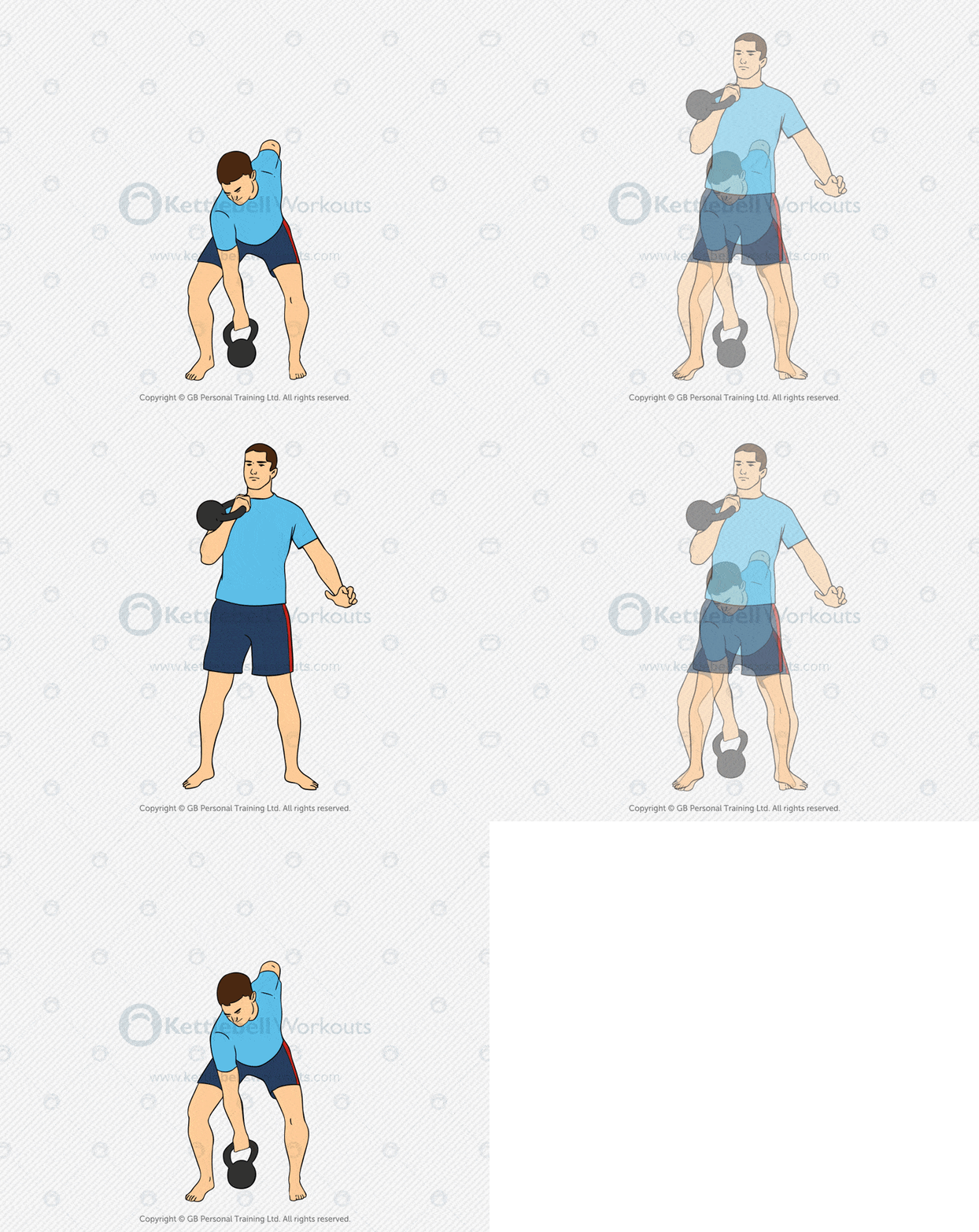 Clean
Clean
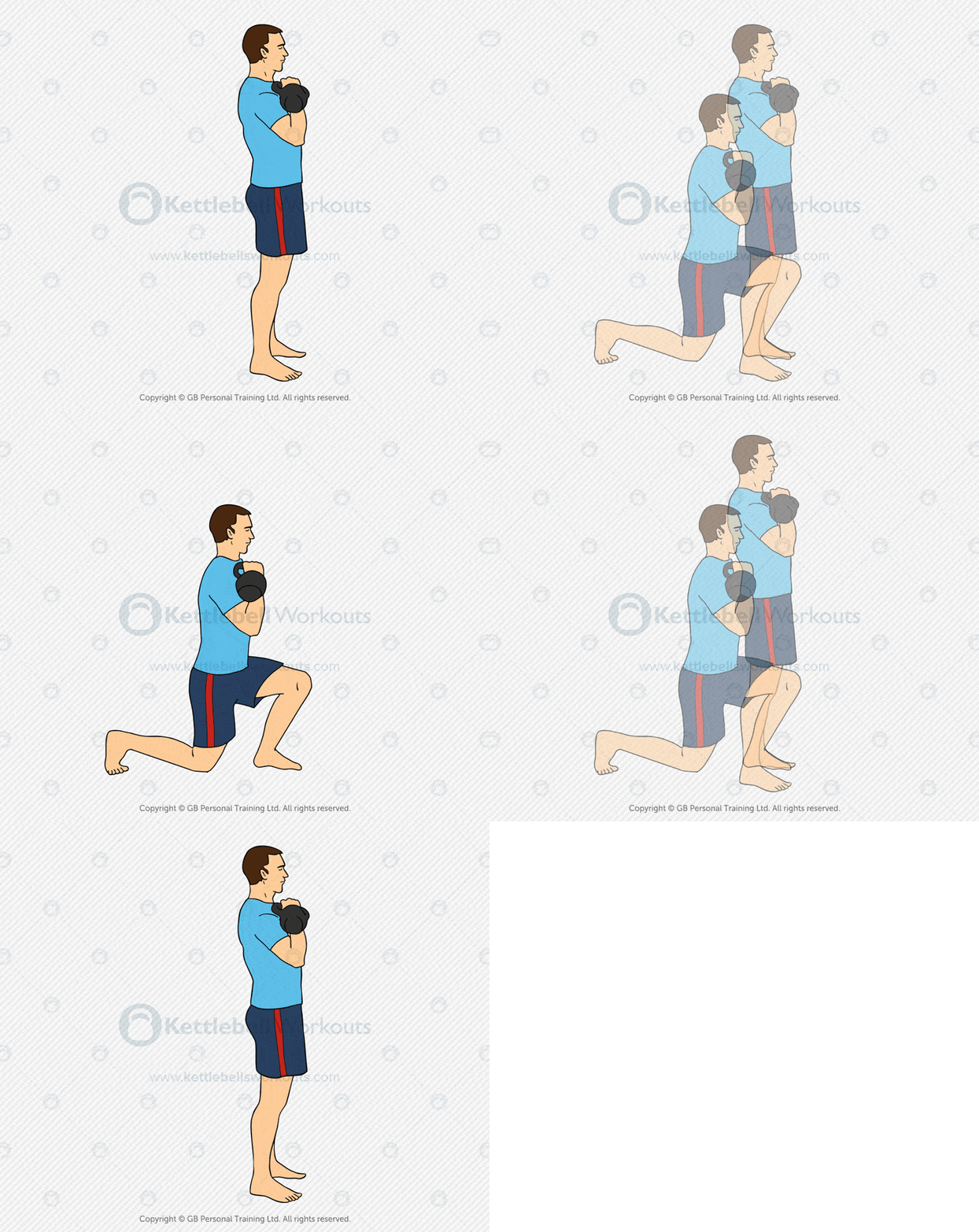 Reverse Lunge
Start with a simple 2-exercise sequence. Clean the kettlebell into the rack, perform a reverse lunge, return to standing, lower the kettlebell and repeat.
Work gradually towards 12 controlled repetitions on one side before changing arms.
Useful technique guides: Kettlebell Clean and Kettlebell Lunge.
Clean + Reverse Lunge and Press
Clean
Reverse Lunge
 Overhead Press
Once Level 1 is comfortable, add an overhead press as you return from the lunge. The legs create momentum and the kettlebell finishes overhead before returning to the rack.
Build towards 12 controlled repetitions on each side. You should already be comfortable with the overhead press before using this variation.
Clean + Squat + Press + Reverse Lunge
Clean
 Squat
Overhead Press
Reverse Lunge
Squat
Overhead Press
Reverse Lunge
Level 3 adds a squat between the clean and press. Keep each part distinct rather than rushing the movements together.
Work towards 12 controlled repetitions per side, but stop the set if technique starts to deteriorate.
Double Clean + Squat + Press + Lunges
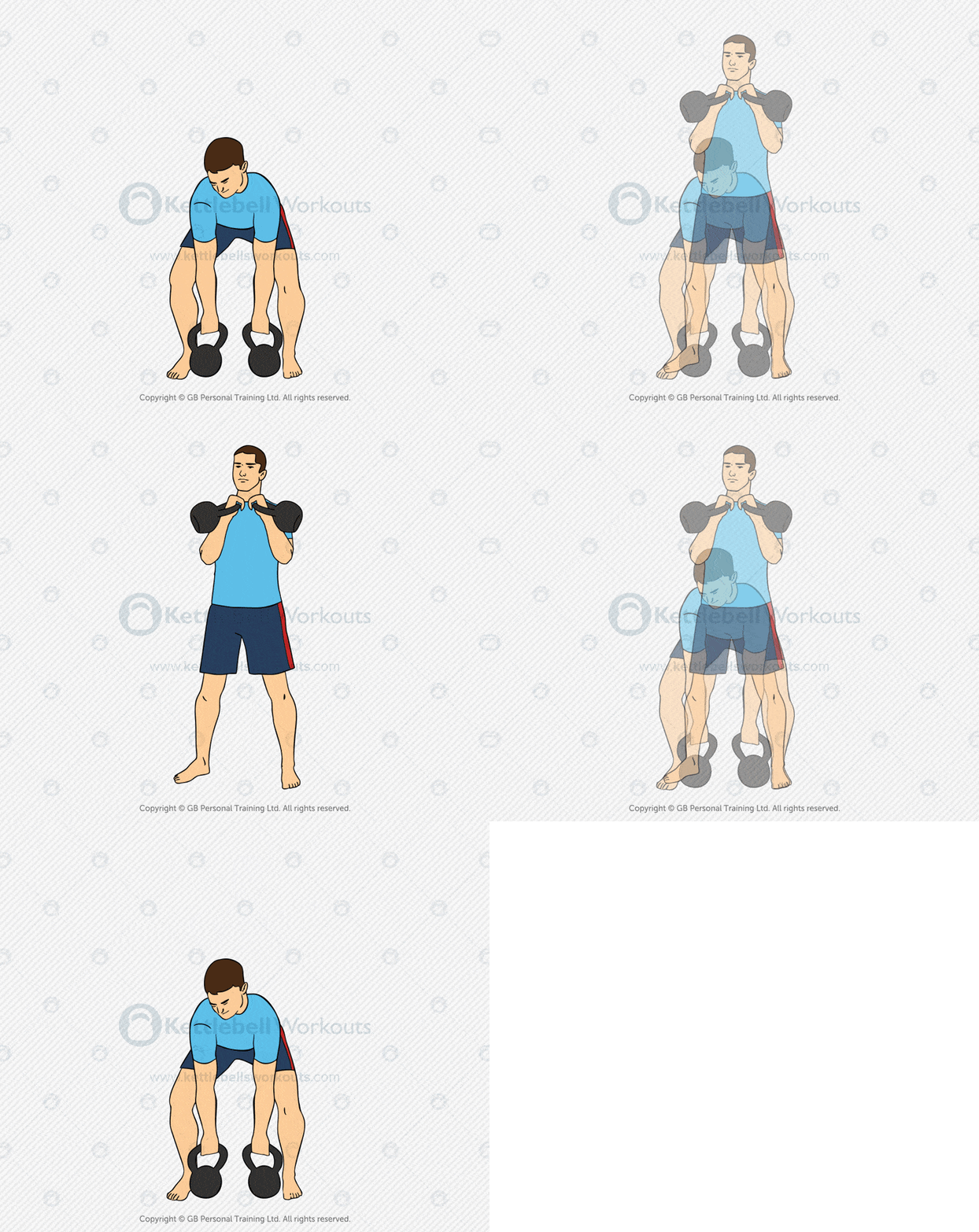 Double Clean
 Double Racked Squat
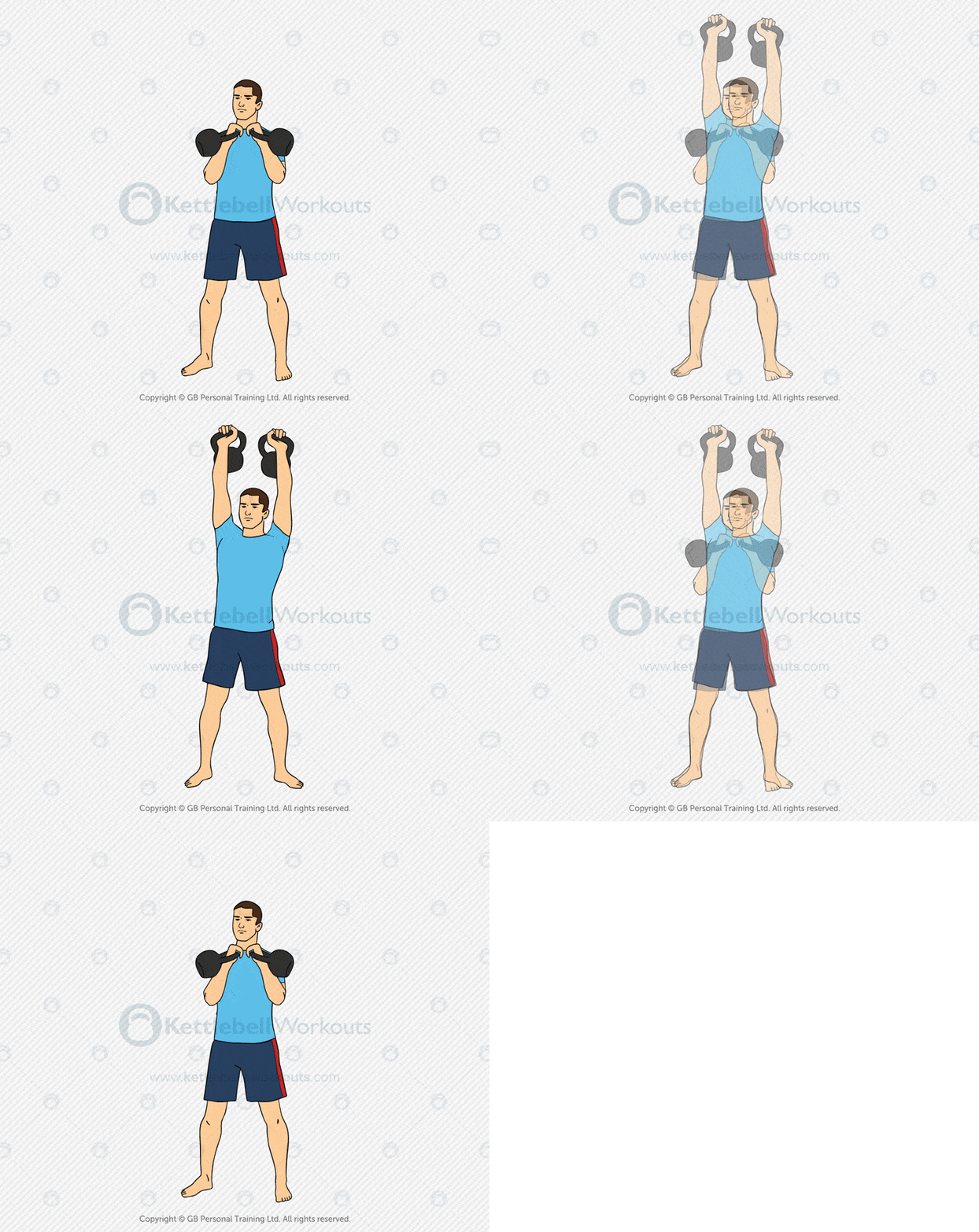 Double Press
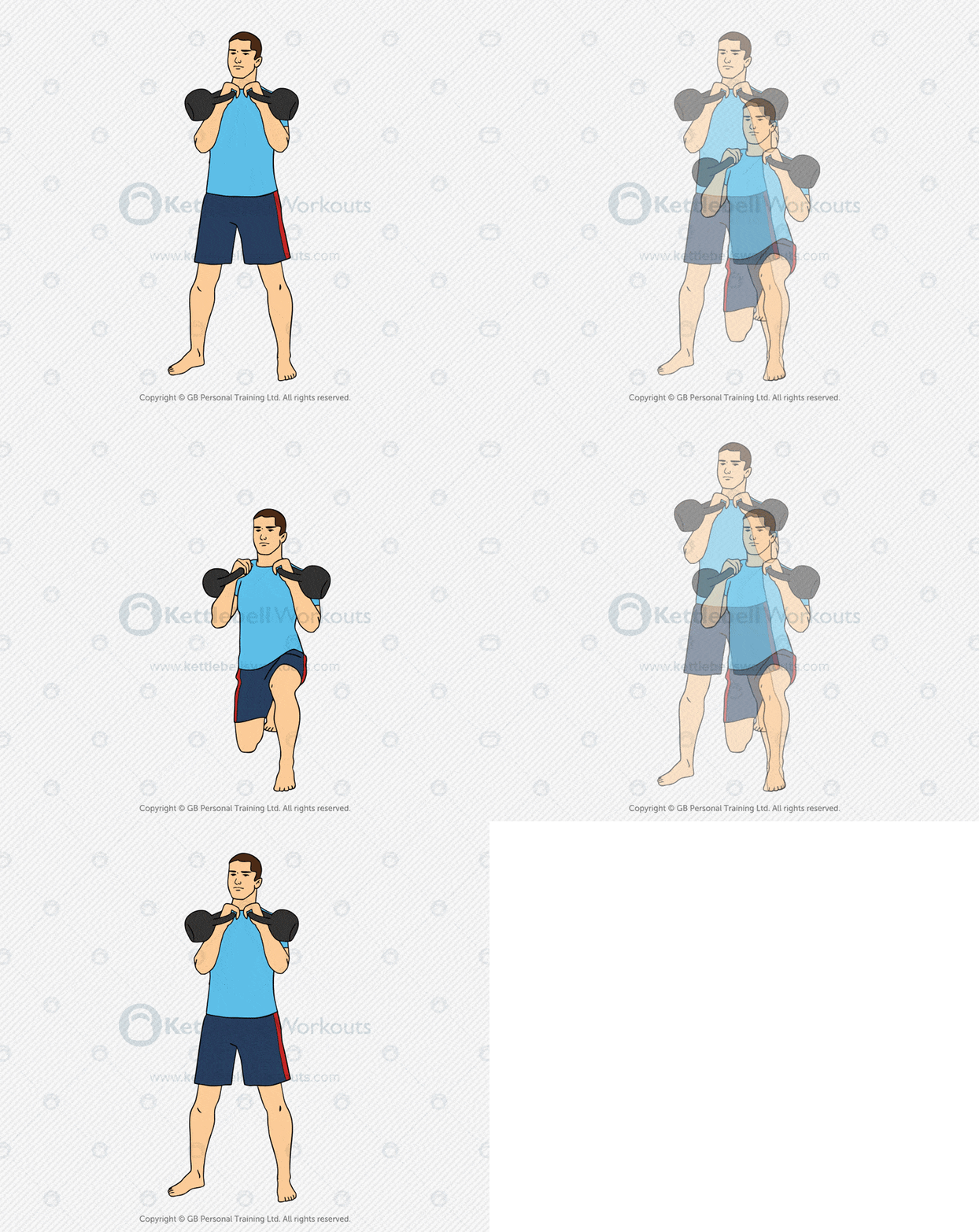 Double Reverse Lunge
The final progression uses 2 kettlebells. Clean both bells, squat, press, then perform a reverse lunge on each side before repeating the sequence.
Do not automatically double the total load you used for the single-kettlebell version. Start lighter while you learn the balance and positioning of 2 kettlebells.
See also: Double Kettlebell Exercises.
How Many Sets?
- Start with 1 to 3 sets of the progressive complexes.
- Rest long enough to restore your breathing and grip before repeating.
- Progress to the next level only when the current sequence remains smooth under fatigue.

3 More Kettlebell Complexes by Training Goal
If you are already comfortable with the basic exercises, these give you 3 additional ways to use complexes within a programme.
Strength and Skill
- Deadlift x 5
- Swing x 5
- Racked Squat x 5
- Overhead Press x 5
- Bent-Over Row x 5
2 to 4 rounds
Rest about 90 seconds.
Strength Endurance
- Single-Arm Swing x 8
- Clean x 8
- Reverse Lunge x 8
- Push Press x 8
- Snatch x 8
Work one side at a time. Rest 60 to 90 seconds between rounds.
Power and Conditioning
- Double Swing x 8
- Double Clean x 5
- Double Front Squat x 5
- Double Push Press x 5
- Double Bent-Over Row x 5
This is an advanced option. Use 2 kettlebells only when your double-kettlebell technique is already established.
Programming Kettlebell Complexes
Complexes work well as short standalone sessions or as finishers after your main strength work. How often you use them depends on the rest of your programme, but there is usually no need to turn every session into a high-fatigue complex workout.
Complexes are only one way to organise kettlebell training. You can compare them with flows, circuits, EMOMs and AMRAPs in my complete Kettlebell Workout Formats Guide.
Frequently Asked Questions
What is a kettlebell complex workout?
A kettlebell complex is a sequence of exercises performed back-to-back without putting the kettlebell down, usually completing several repetitions of each exercise before moving to the next.
What weight should I use for a kettlebell complex?
Choose the weight based on the most technically demanding or weakest exercise in the sequence. It should be light enough that you can maintain control through the entire complex.
How many exercises should be in a kettlebell complex?
For most people, 3 to 6 exercises is enough. Beginners can start with only 2 movements and add complexity gradually.
How many rounds should I perform?
Start conservatively. Around 1 to 3 sets works well for the progressive complexes above, while longer programmed complexes may use several rounds with sufficient rest between them.
Are kettlebell complexes the same as flows?
No. A complex usually uses multiple repetitions of each exercise before transitioning. A flow more often uses 1 repetition of each exercise before repeating the sequence.


Comments