
Last Updated on 19 August 2026 by Greg Brookes
These 7 floor-based kettlebell core exercises give you a simple way to train trunk control, rotation, anti-rotation and the ability to move safely between the floor and standing.
This page is deliberately about floor-based core training. If you are looking for a broader guide to kettlebell exercises for the abdominal muscles, including standing and full-body movements, see my Kettlebell Ab Exercises guide.
Most good kettlebell exercises already ask the trunk to stabilise the spine while the hips and shoulders produce movement. Floor exercises are useful when you want to slow things down and focus more closely on trunk position and control.
Why Use Floor-Based Kettlebell Core Exercises?
Floor work changes the training environment. You have more contact with the ground, less need to balance on your feet and more opportunity to concentrate on the relationship between the ribcage, pelvis and shoulders.
I use these exercises for 4 main reasons:
- Trunk control: learning to resist unwanted extension, rotation or side-bending.
- Shoulder stability: especially during the Half Get Up, Turkish Get Up and Straight Arm Sit.
- Hip and pelvic control: through Hip Thrusts, Get Ups and Deck Squats.
- Floor confidence: practising the ability to move down to the floor and back up again under control.
I would not promise that these exercises will eliminate back pain or create a flat stomach. Back pain has many possible causes, and visible abdominal definition depends heavily on overall body composition. The goal here is simply to build a stronger, better-controlled trunk.
7 Floor-Based Kettlebell Core Exercises
You do not need to perform all 7 in the same session. Choose the movements that match your current ability and the type of core challenge you want.
Kettlebell Half Get Up
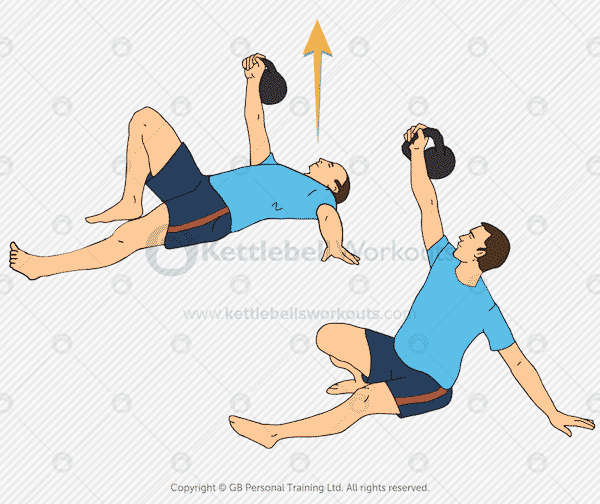
Best for: Rotation, trunk control and shoulder stability.
The Half Get Up is a useful place to begin because it teaches you to connect the trunk, shoulder and opposite hip while moving from the floor. Keep the working arm straight and move slowly rather than trying to sit up with momentum.
Keep the long leg heavy on the floor as you roll onto the forearm and then the hand. If the foot lifts or the movement becomes jerky, reduce the load and shorten the range.
Start with: 3 to 5 controlled reps per side. Use your weaker side first, then match it on the stronger side.
Kettlebell Sit and Press
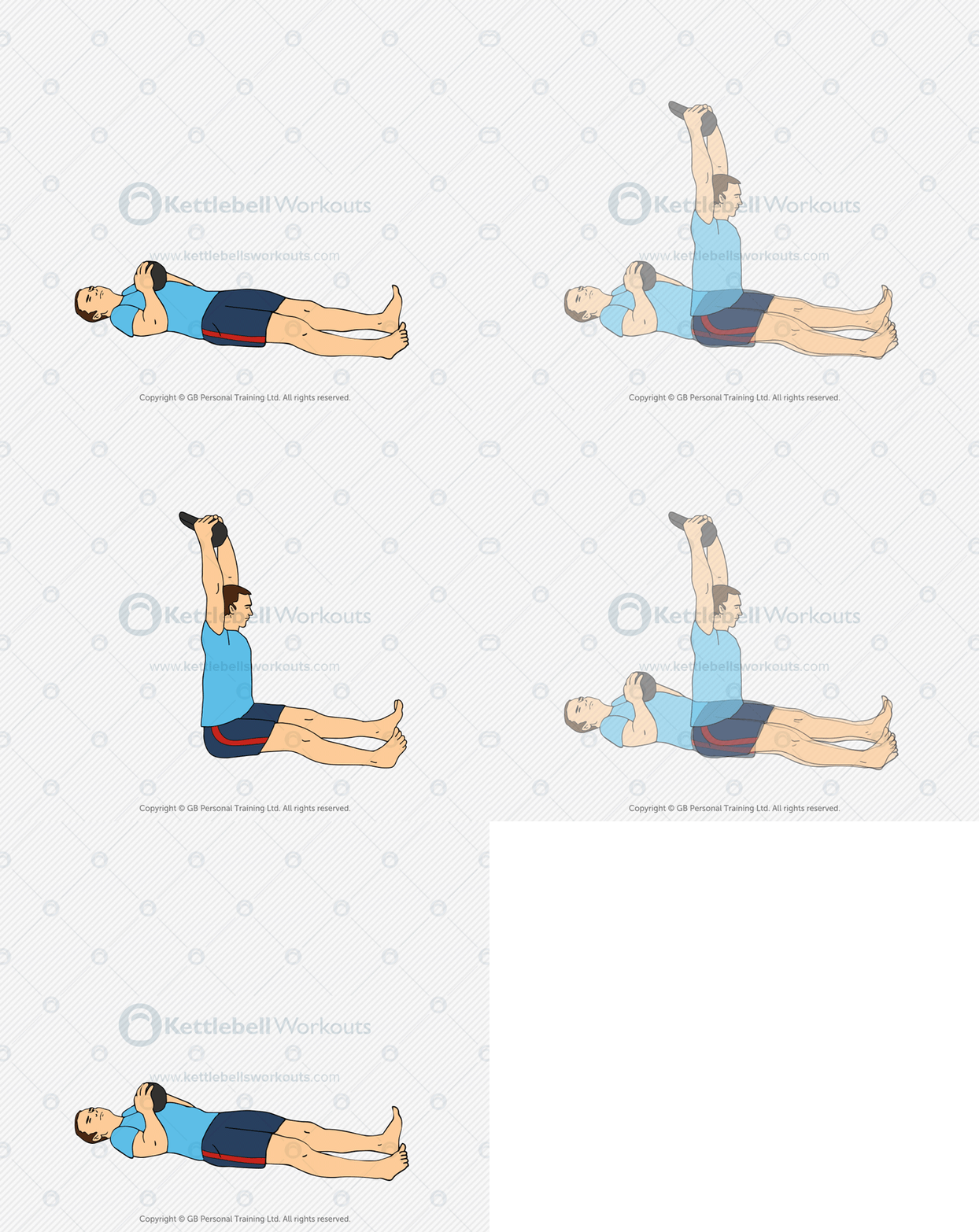
Best for: Anterior core strength, shoulder mobility and controlled spinal flexion.
Start lying tall with the legs extended and hold the kettlebell with both hands. Sit up under control and press the kettlebell overhead as you reach the top.
The lowering phase matters. Resist gravity instead of dropping back to the floor. If straight legs make you round aggressively through the lower back, bend the knees slightly or use a lighter kettlebell.
Start with: 5 to 8 smooth reps with a slow 2 to 3 second lower.
Kettlebell Hip Thrust

Best for: intensive abdominal strength and controlled pelvic movement.
Hold the kettlebell with straight arms above the chest and slowly lift the hips by driving the feet upwards towards the ceiling.
Avoid simply rolling the legs back over the chest or towards the head, because that makes the movement considerably easier. The more vertically you push the feet, or even slightly away from you, the harder the abdominals have to work. Keep the movement deliberate, avoid swinging the legs and lower the hips back to the floor under control.
Start with: 5 to 8 slow repetitions. Focus on control rather than height.
Kettlebell Full Turkish Get Up
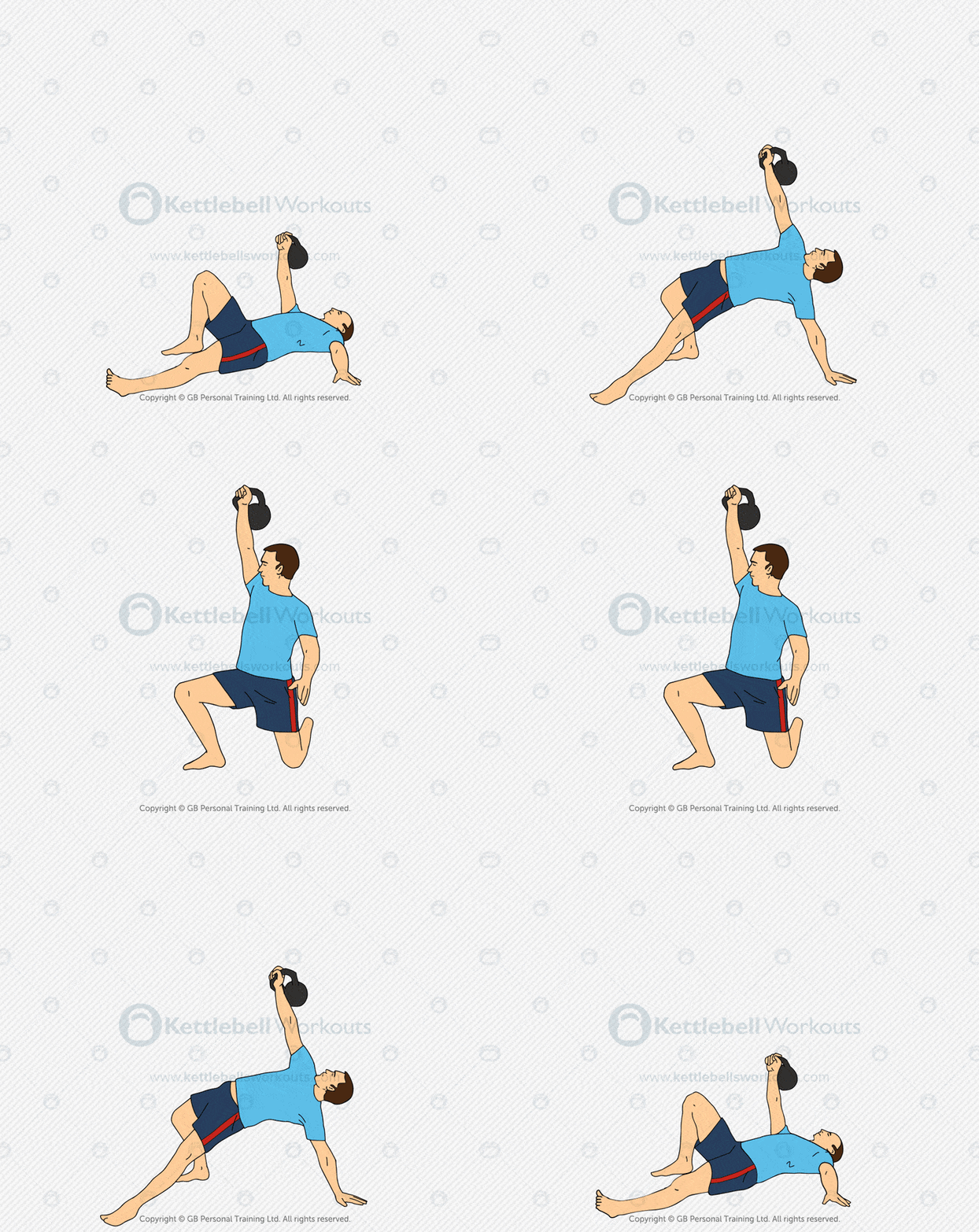
Best for: Full-body trunk control, shoulder stability and getting up from the floor.
The Full Turkish Get Up extends the Half Get Up into a complete transition from lying to standing and back down again. The kettlebell stays overhead while the body changes position underneath it.
Treat every stage as its own movement. Do not rush through the transitions, and do not increase the load until you can reverse the sequence with the same control you used on the way up.
Start with: 1 rep per side. Build to 2 or 3 quality reps per side rather than chasing fatigue.
Kettlebell Straight Arm Sit
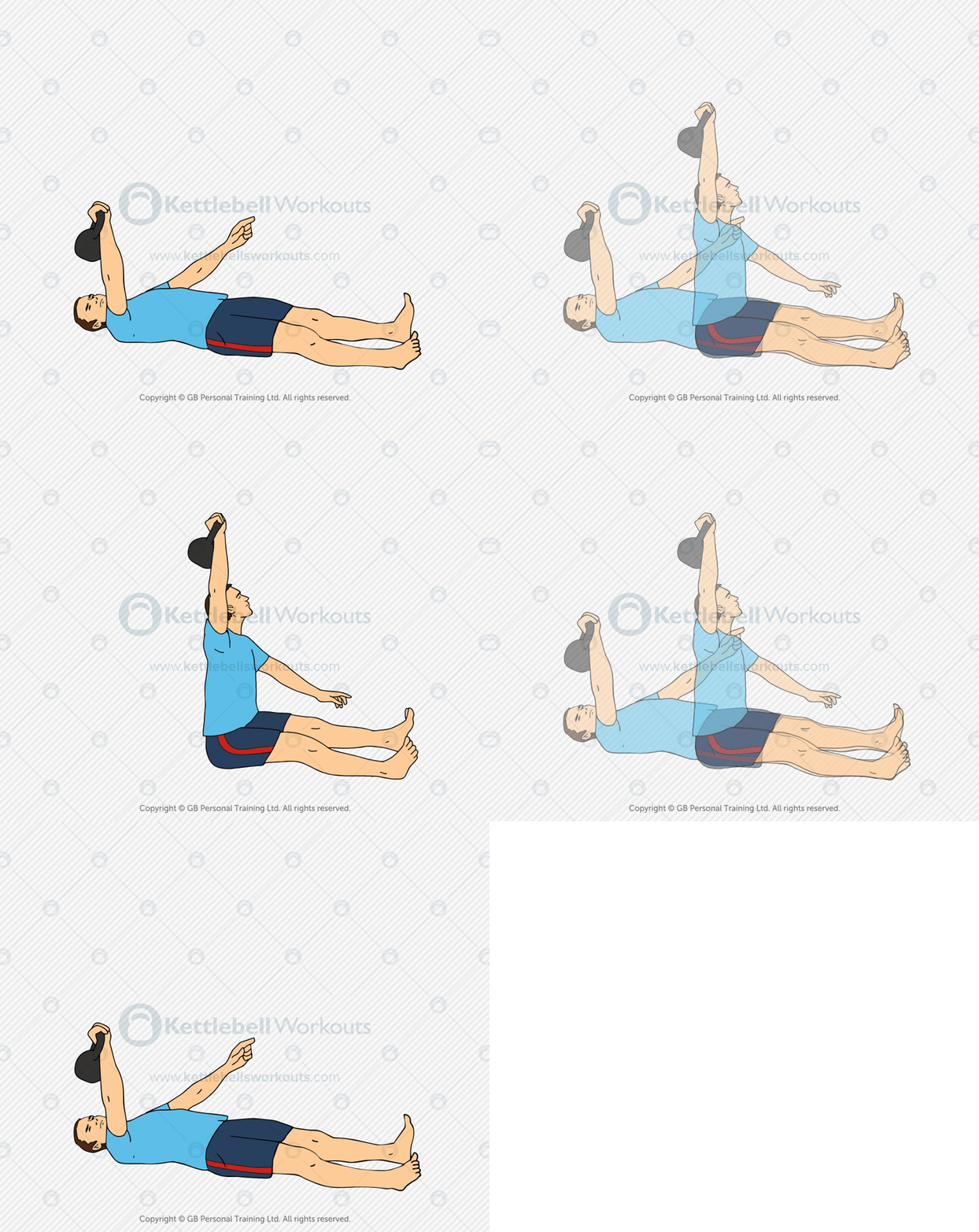
Best for: Anterior core strength and shoulder stability.
The Straight Arm Sit asks you to keep the kettlebell locked out overhead while sitting tall from the floor. Compared with the Sit and Press, the shoulder has to remain stable throughout the entire repetition.
Move slowly and keep the arm vertical. If the kettlebell drifts forwards, reduce the load before trying to force the sit-up.
Start with: 3 to 6 reps per side with a light kettlebell.
Supported Renegade Row
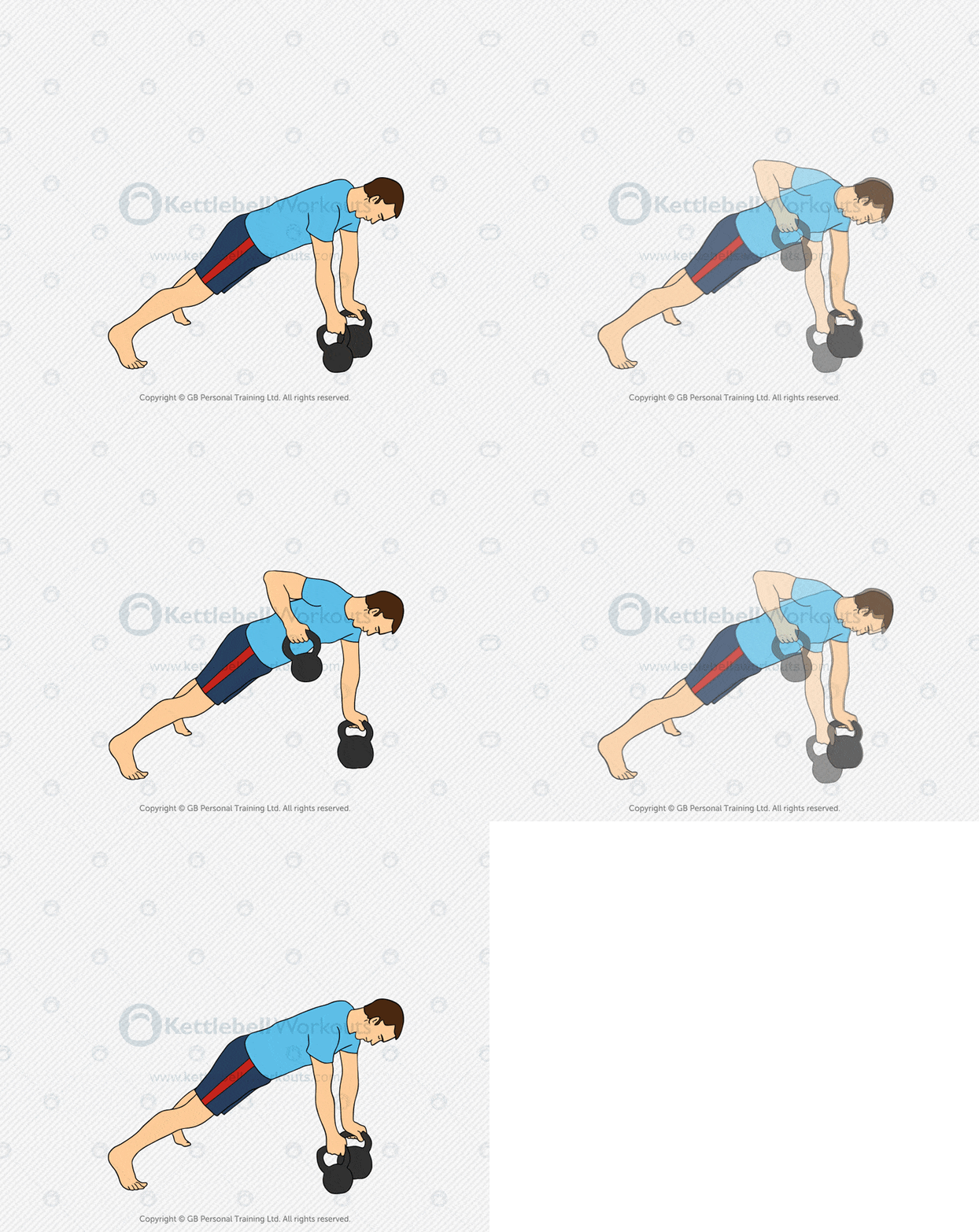
Best for: Anti-rotation core strength with a pulling movement.
The Renegade Row is valuable here because the trunk has to resist rotation while 1 arm rows. However, I do not think the traditional 2-kettlebell floor version is the best starting point for most people.
I prefer placing 1 hand on a solid box or bench and rowing the kettlebell with the other arm. Keep the hips square, brace the trunk and avoid twisting as the kettlebell moves towards the ribs.
Start with: 6 to 10 controlled reps per side. Progress the load only if the pelvis stays level.
Kettlebell Deck Squat
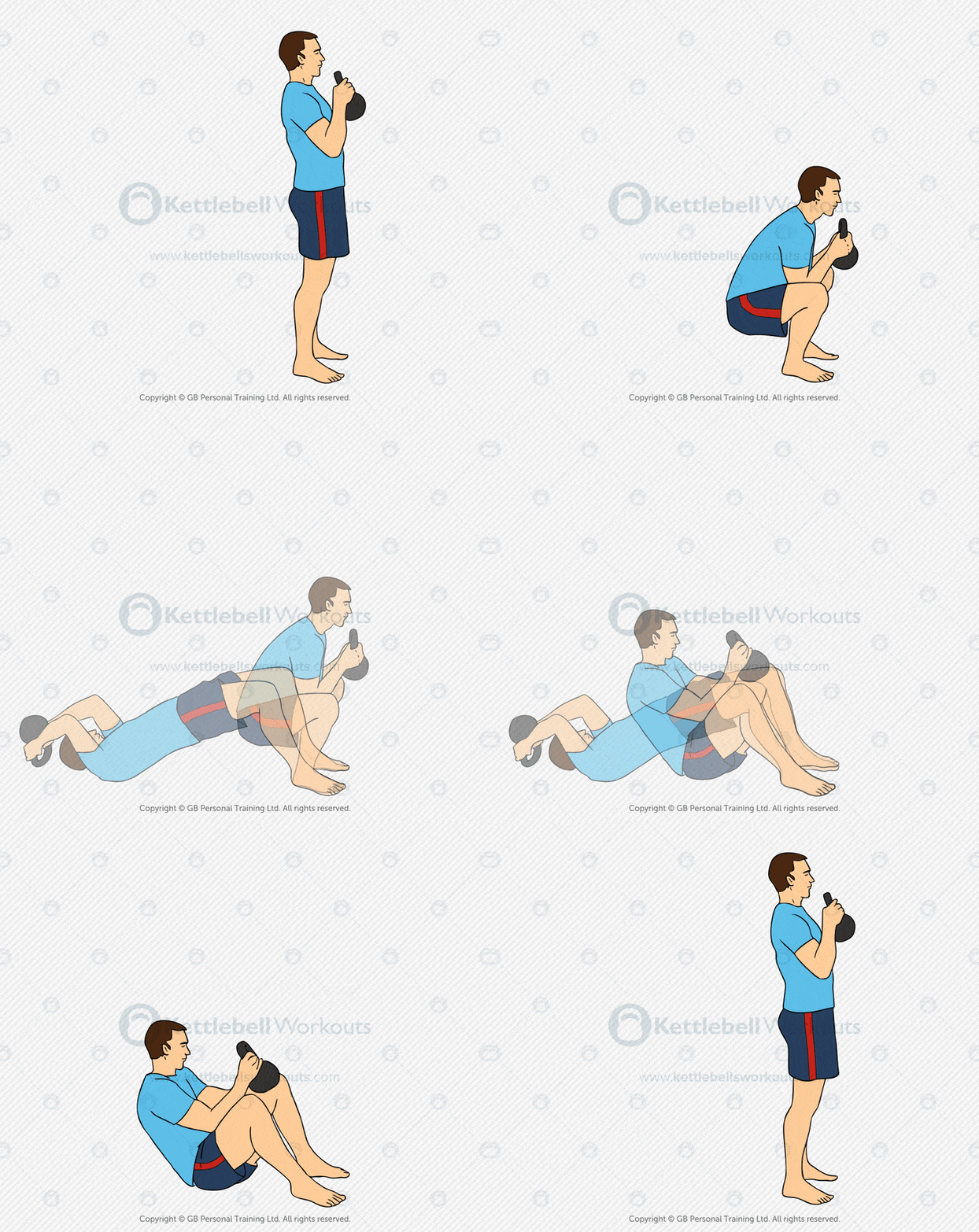
Best for: Trunk flexion, hip mobility and moving from floor to standing.
The Deck Squat links floor work with standing strength. Roll back under control, use the kettlebell as a counterbalance and return through the squat without collapsing forwards.
This is a more advanced movement than it first appears. You need enough ankle, hip and spinal mobility to move smoothly without forcing the position.
Start with: the bodyweight version first. Then use 3 to 6 controlled reps with a light kettlebell.

A Simple Floor-Based Kettlebell Core Workout
For most people, 3 or 4 exercises are enough. Perform the more technical movement first while you are fresh, then move towards the simpler exercises.
Complete 2 to 3 rounds with enough rest to keep the movements controlled. If you are already doing a demanding kettlebell session, you may only need 1 or 2 of these exercises rather than a separate core workout.
How Often Should You Train the Core?
There is no need to train the core hard every day. Remember that swings, squats, carries, presses, rows and Get Ups already involve the trunk.
For additional floor-based work, 1 to 3 short sessions per week is enough for most people. Start at the lower end and increase only if you are recovering well and the extra work is not reducing the quality of your main training.
Where These Exercises Fit
Floor-based kettlebell exercises are best viewed as a supplement to your normal full-body training. They let you slow down and focus on trunk control, shoulder stability and movement between the floor and standing.
If your main goal is specifically abdominal training, go to the Kettlebell Ab Exercises guide. If you want a broader exercise library, see all 52 Kettlebell Exercises.
Related Kettlebell Guides
These guides are the most useful next steps:
Frequently Asked Questions
Are kettlebells good for core strength?
Yes. Many kettlebell exercises challenge the trunk because the body has to control the load while the hips and shoulders move. Get Ups, carries, rows, squats and swings all involve the core in different ways.
What is the difference between core and ab exercises?
Abdominal exercises focus more directly on the abdominal muscles. Core training is broader and includes the muscles that help control the spine, pelvis and ribcage during movement. The 2 categories overlap, but they are not identical.
Can kettlebell core exercises give you a flat stomach?
They can strengthen the muscles around the midsection, but they cannot selectively remove fat from the stomach. Visible abdominal definition depends mainly on overall body composition as well as muscle development.
Should core exercises be done before or after kettlebell training?
Light activation work can be used before training, but I would avoid fatiguing the trunk before heavy or technical exercises. More demanding core work usually fits better towards the end of the session or in a separate short workout.
Is the Renegade Row safe with kettlebells?
The traditional version requires care because a kettlebell can topple while you are supporting bodyweight on the handles. I prefer a supported box or bench variation for most people because it still challenges anti-rotation without placing the fingers under an unstable kettlebell.

Comments