
Last Updated on 18 August 2026 by Greg Brookes
The kettlebell deadlift is one of the best exercises for learning how to hinge at the hips while keeping a load close to the body.
I use the Deadlift as a foundation exercise before progressing to faster hip-hinge movements such as the Swing and Clean. The movement is simple, but learning to push the hips backwards, maintain a strong trunk and stand using the hips rather than the arms is important.
The Single Arm Deadlift adds an extra challenge because the load is held on one side. Your trunk has to resist twisting while the hips and legs produce the movement.
What Is a Kettlebell Deadlift?
A kettlebell deadlift is a hip-hinge exercise where you lift the kettlebell from the floor by pushing the hips backwards, maintaining a controlled trunk and then extending the hips to stand. The kettlebell stays close to the body and the arm acts mainly as a connection between the bell and the body rather than actively pulling the weight upwards.
How to Do a Single Arm Kettlebell Deadlift
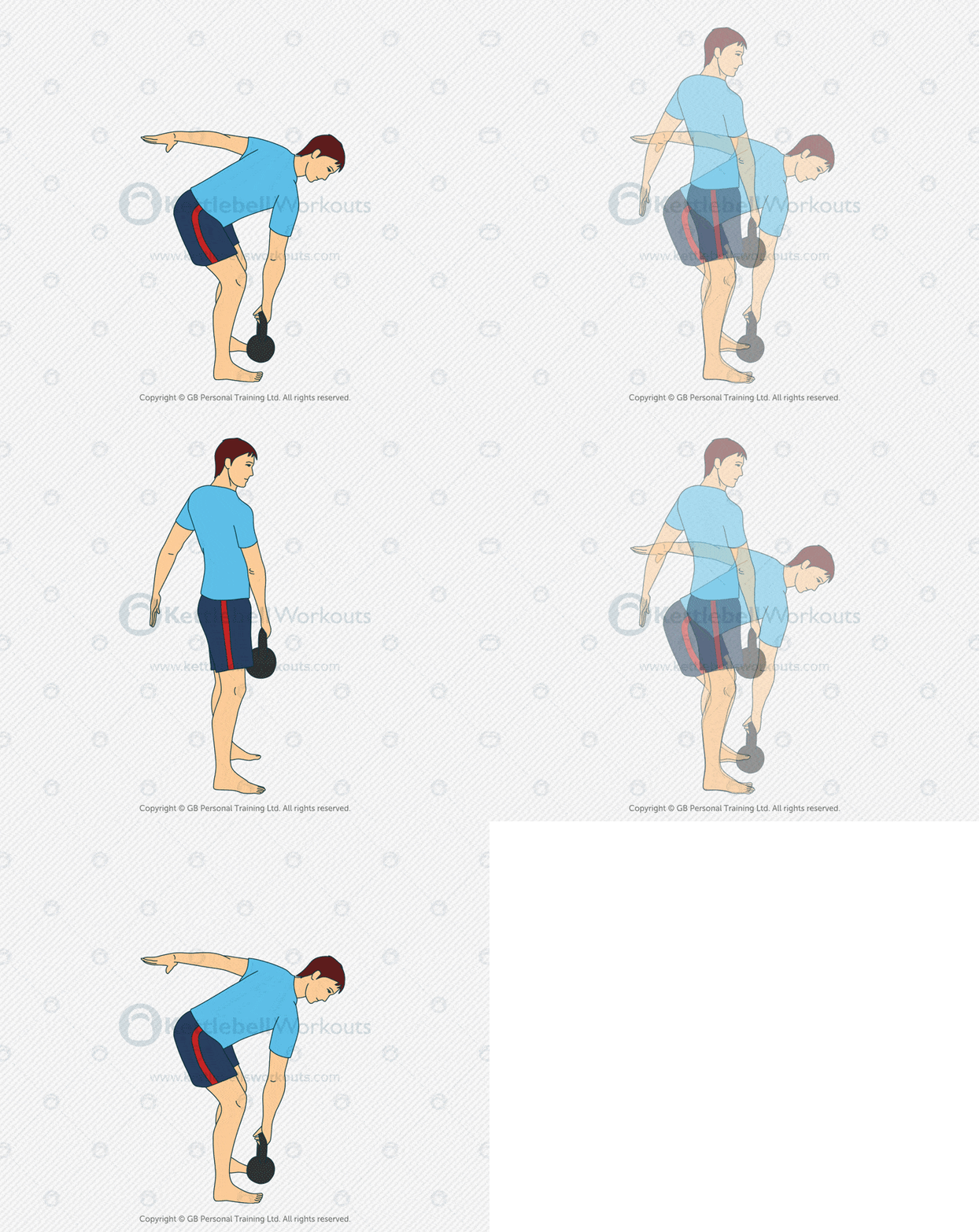
- Stand with the kettlebell on the floor between your feet.
- Keep the feet firmly planted and push the hips backwards.
- Allow the knees to bend naturally while keeping the movement dominated by the hips rather than turning it into a squat.
- Reach down and take hold of the kettlebell with one hand.
- Before lifting, organise the trunk and keep the shoulder connected rather than letting the arm hang loosely from the body.
- Drive the floor away and extend the hips until you are standing tall.
- Pause briefly at the top without leaning backwards or over-squeezing the glutes.
- Push the hips backwards again and return the kettlebell to the floor under control.

Kettlebell Deadlift Muscles Worked
The Deadlift is primarily a lower-body hip-hinge exercise, although the trunk, upper back and grip all contribute to controlling the load.
The glutes extend the hips as you move from the hinged position back to standing.
The hamstrings help control the hip hinge and contribute to hip extension.
The knees bend during the lift, so the quadriceps also contribute as you stand.
The trunk works to maintain position, particularly when the kettlebell is held in one hand.
The back muscles help keep the shoulder connected and the load controlled, but the Deadlift is not a rowing movement.
The hand and forearm maintain a secure connection to the kettlebell throughout the lift.
Why I Teach the Deadlift Before the Swing
The Deadlift allows you to learn the hip hinge slowly. The kettlebell starts and finishes on the floor, so you have time to organise each repetition and correct your position.
The Swing uses the same general hip-hinge pattern but adds speed, momentum and repeated loading. If you struggle to control the Deadlift, adding speed usually makes the problem more difficult.
A sensible progression is:
Hip-Hinge Progression
- Good Morning
- Kettlebell Deadlift
- Single Arm Kettlebell Deadlift
- Two-Handed Swing
- Single-Handed Swing
If the hinge itself is still unfamiliar, my Hip Hinge Exercises guide explains the movement pattern in more detail.
Common Kettlebell Deadlift Mistakes
- Turning the Deadlift into a squat. Some knee bend is normal, but the hips should still travel backwards rather than dropping straight down.
- Reaching for the kettlebell with the back. Move the hips backwards first and only go as low as you can while maintaining control through the trunk.
- Pulling with the arm. The kettlebell should rise because the hips and legs extend, not because you curl or shrug the weight upwards.
- Letting the kettlebell drift forwards. Keep the load close to your centre rather than allowing it to swing away from the body.
- Rotating during the Single Arm Deadlift. Keep the shoulders and hips facing forwards and let the trunk resist the asymmetrical load.
- Leaning backwards at the top. Finish by standing tall. There is no need to push the hips forwards beyond a normal standing position.
- Using too much weight too soon. Increase the load only when the same hinge and trunk position can be repeated consistently.
Kettlebell Deadlift Variations
Once you understand the basic hip hinge, changing the position or number of kettlebells can alter the challenge without changing the fundamental movement.
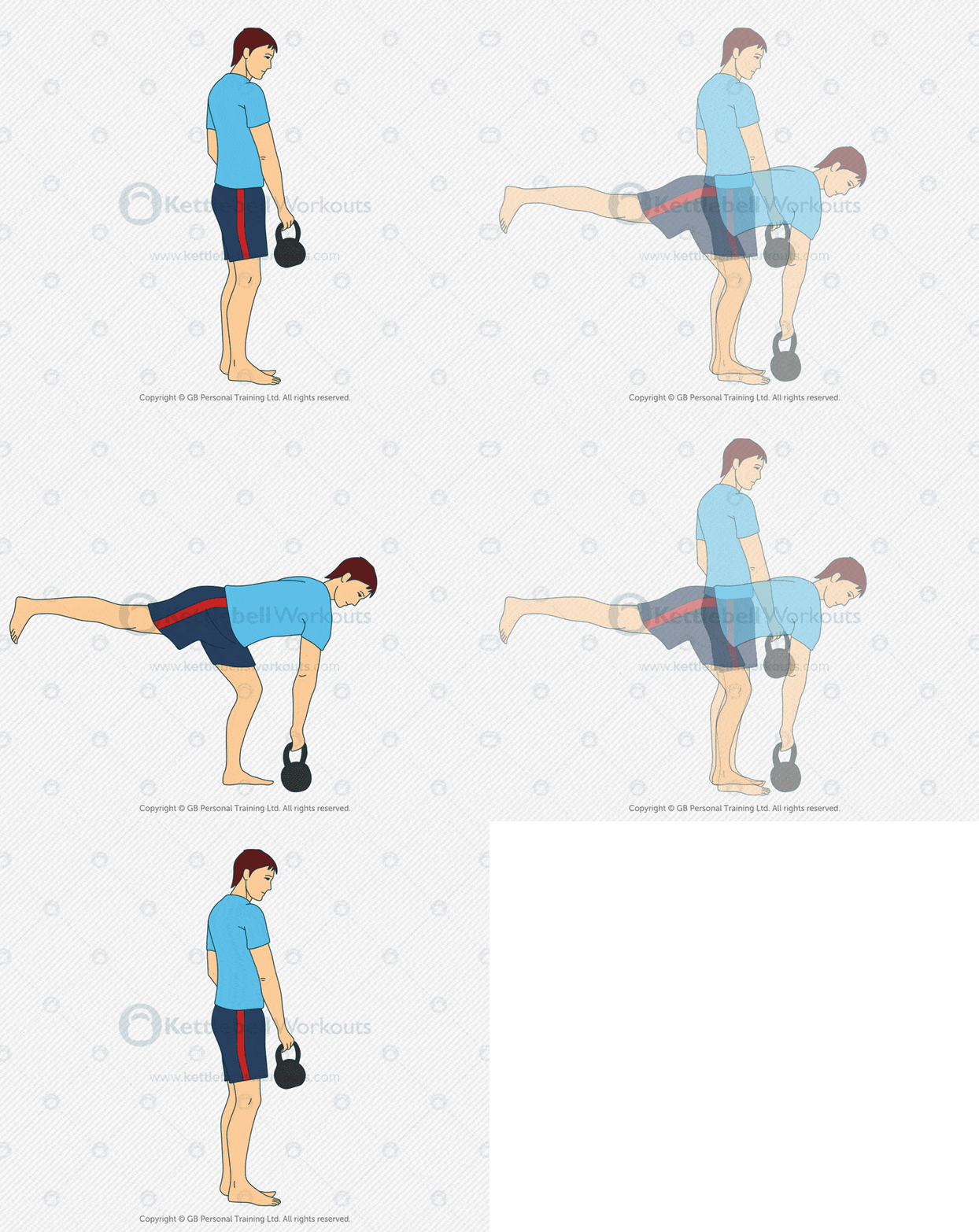
For the balance-focused variation, see my full Kettlebell Single Leg Deadlift guide.
How to Programme Kettlebell Deadlifts
For beginners, I prefer controlled repetitions rather than fast circuits. The Deadlift is a good place to build strength and practise the hinge before adding more demanding ballistic exercises.
Simple Deadlift Practice
- Single Arm Deadlift: 5 to 8 reps left
- Single Arm Deadlift: 5 to 8 reps right
- Rest 45 to 90 seconds
- Repeat 2 to 4 sets
Keep the repetitions low enough that every lift starts from a controlled position. If your technique changes as the set continues, stop the set rather than forcing extra repetitions.
You can also pair Deadlifts with a knee-dominant exercise such as the Goblet Squat for a simple lower-body strength session.
When to Increase the Kettlebell Weight
Increase the weight when your current kettlebell feels controlled from the first repetition to the last and you can maintain the same hip hinge, trunk position and path of the bell.
The goal is not simply to lift the heaviest kettlebell you can get off the floor. A heavier weight is useful only if the movement remains the same.
Related Kettlebell Exercises

Frequently Asked Questions
What muscles does the kettlebell deadlift work?
The glutes and hamstrings are the main hip extensors, while the quadriceps contribute as the knees straighten. The core, upper back, grip and forearms help maintain position and control the kettlebell.
Is the kettlebell deadlift good for beginners?
Yes. I use the Deadlift as one of the main exercises for teaching the hip hinge before progressing to faster movements such as the Swing. Start with a load and range you can control.
Should I use 1 hand or 2 hands?
A Two-Handed Deadlift is usually the simplest starting point because the load is centred. The Single Arm version adds an anti-rotation challenge and is a useful progression once the basic hinge is comfortable.
Why does my back round during a kettlebell deadlift?
You may be reaching lower than your current hip-hinge range allows, or trying to reach the kettlebell without moving the hips backwards sufficiently. Raise the kettlebell on a stable surface and practise a shorter range while you improve the hinge.
How many kettlebell deadlifts should I do?
For technique and general strength work, 5 to 8 controlled repetitions per side for 2 to 4 sets is a sensible starting point. Stop the set if your hinge or trunk position begins to change.
Should I learn the Deadlift before the Swing?
Yes. That is the progression I prefer. The Deadlift lets you learn the hip hinge slowly before adding the speed and momentum of the Swing.

What size KB’s do you recommend? I see you use only 1 -2 different weights. Would it be advantageous to grab a bigger one for Deadlifts (like 60lbs or more) versus doing more reps with a lighter weight?
What are your thoughts on that? thanks!
Yes you can certainly lift much heavier with the deadlift movement pattern but then you may be stuck when using that kettlebell with other exercises. I have a complete article on buying and selecting kettlebells here.
These workouts look fun, interesting and challenging. I can’t wait to start using them in my daily workout routine. Thank you!