
Last Updated on 20 August 2026 by Greg Brookes
You do not need dozens of complicated kettlebell exercises to build a strong and capable body.
The most useful exercises cover the major movement patterns: squat, hinge, lunge, push, pull, carry and more dynamic full-body movements. From there, progress comes from improving technique, using appropriate resistance and gradually making the training more challenging.
Below are 21 kettlebell exercises I use and recommend, ranging from simple foundations through to advanced single and double-kettlebell movements.
What Are the Best Kettlebell Exercises for Men?
For most men, the best kettlebell exercises are not the most complicated ones. Start with a Goblet Squat, Deadlift, Row and Press. Add the Swing once your hip hinge is reliable, then progress to movements such as the Clean and Press, High Pull, Snatch and double-kettlebell exercises as your skill and strength improve.
Choose Exercises by Goal
There is also no single kettlebell weight that every man should use. The correct weight depends on the exercise, your training history and how well you can control the movement. For more detail, see my guide to choosing your starting kettlebell weight.
Upper Body Kettlebell Exercises for Men
These movements place more emphasis on pulling, pressing and shoulder control, although kettlebell exercises still require the trunk and lower body to stabilise the load.
Kettlebell Halo

The Halo is a useful shoulder preparation exercise and a good way to practise keeping the ribcage and trunk controlled while the kettlebell moves around the head.
Coaching cue: Keep the head still, keep the kettlebell close and make the movement smooth rather than fast.
Try: 5 to 10 circles in each direction.
Kettlebell Bent Over Row
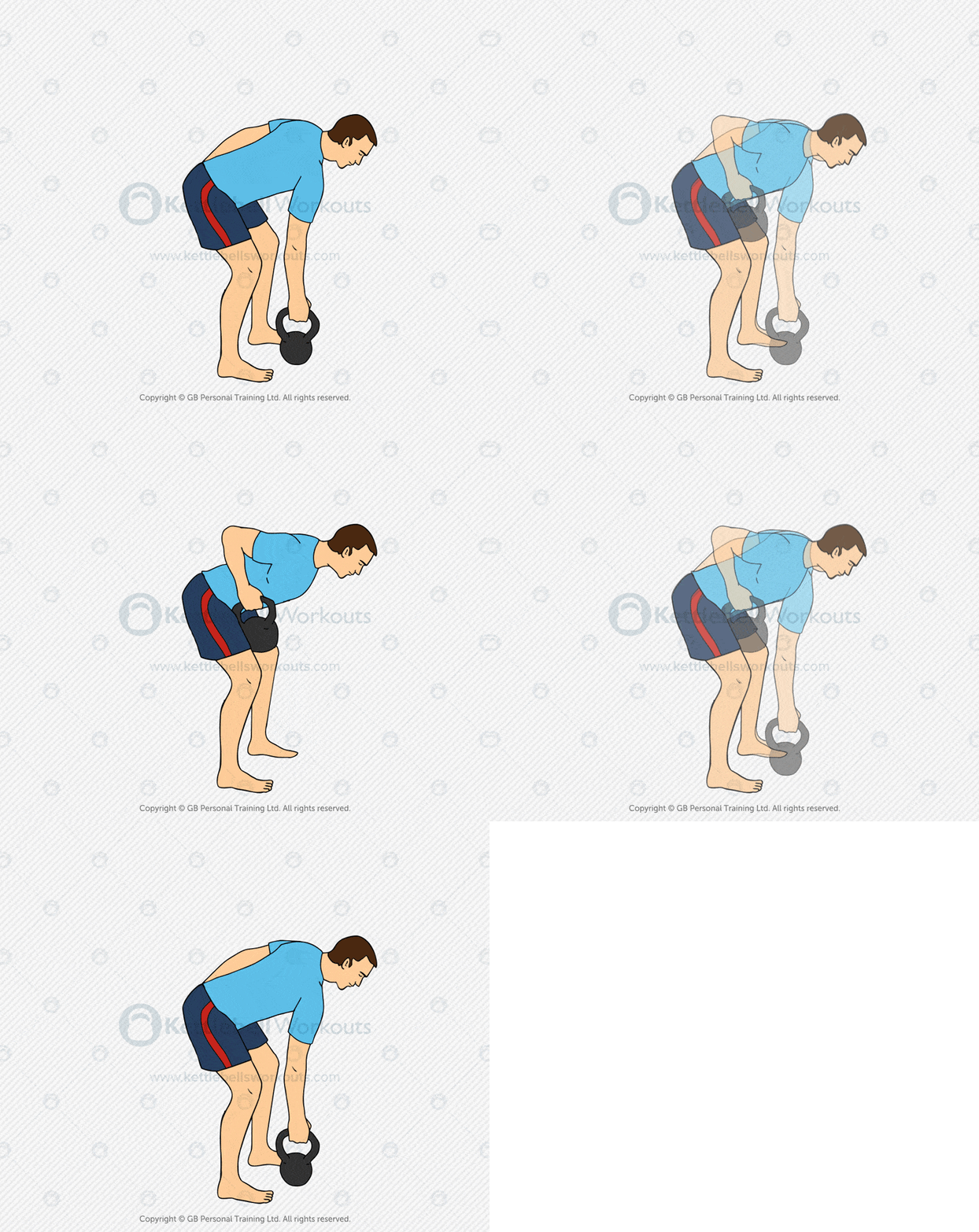
The Bent Over Row is one of the most useful kettlebell pulling exercises. It lets you train the back directly while also maintaining a strong hip hinge and trunk position.
Coaching cue: Pull the elbow back towards the hip rather than shrugging the kettlebell up towards the shoulder.
Try: 6 to 12 controlled reps per side.
Kettlebell Turkish Get Up
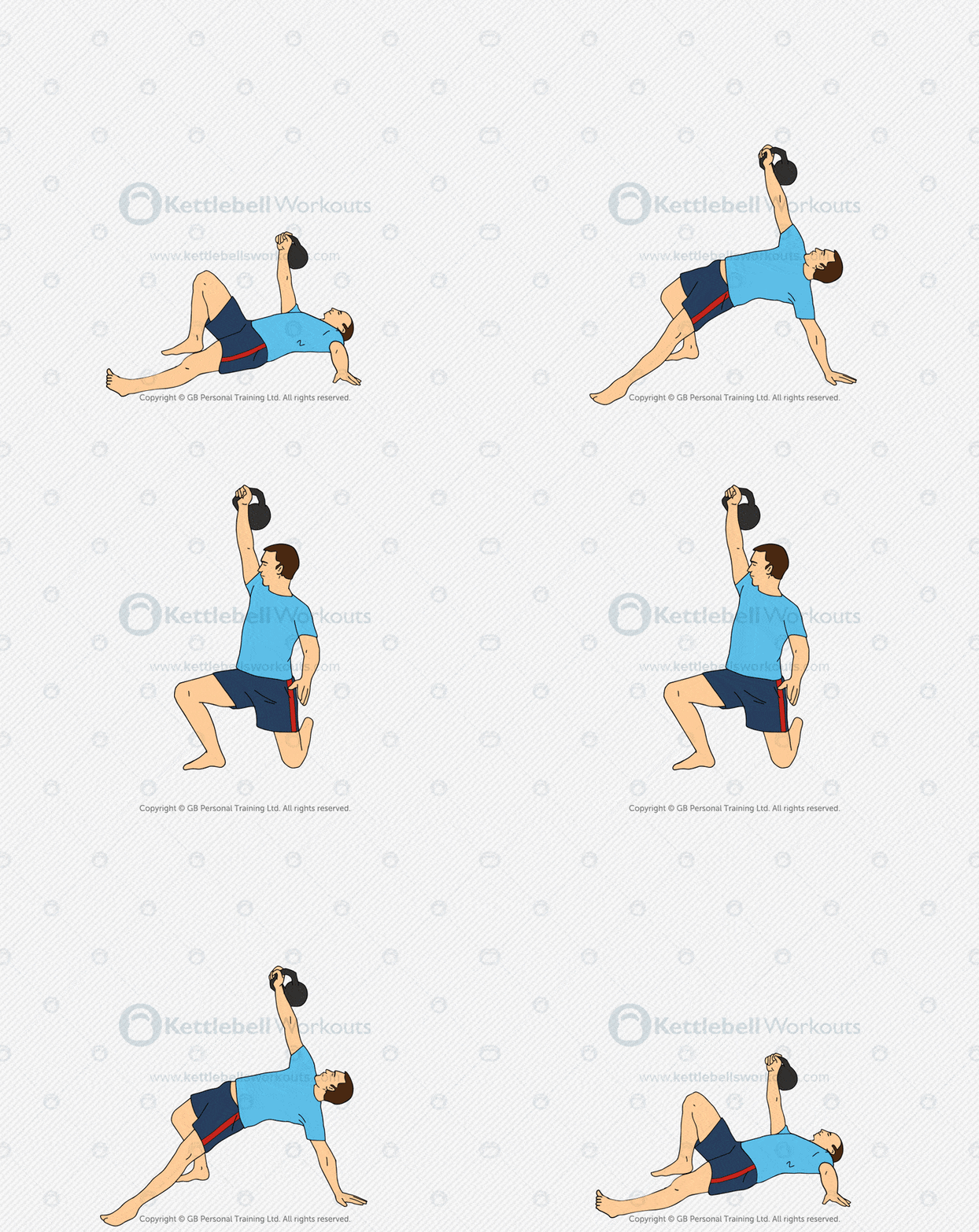
The Turkish Get Up combines shoulder stability, trunk control, hip movement and coordination. Learn the sequence without load first, then add a light kettlebell and progress gradually.
Coaching cue: Move one position at a time and keep the kettlebell stacked securely over the supporting shoulder.
Try: 1 to 3 slow reps per side.
Kettlebell Half Kneeling Press

The Half Kneeling Press is a good stepping stone towards stronger overhead pressing because the lower-body position encourages you to organise the hips and trunk while the arm presses overhead.
Coaching cue: Squeeze the glute on the kneeling side and avoid leaning backwards as the kettlebell rises.
Try: 5 to 8 reps per side.
Kettlebell Push Press

The Push Press uses a short leg drive to help move the kettlebell through the hardest part of an overhead press. It is useful for working with a heavier bell once you can already control the rack and overhead positions.
Coaching cue: Dip straight down, drive through the floor and finish tall with the kettlebell stacked overhead.
Try: 5 to 8 reps per side.
Lower Body Kettlebell Exercises for Men
Squats, hinges and lunges build the lower-body strength that supports almost every other kettlebell movement.
Kettlebell Goblet Squat
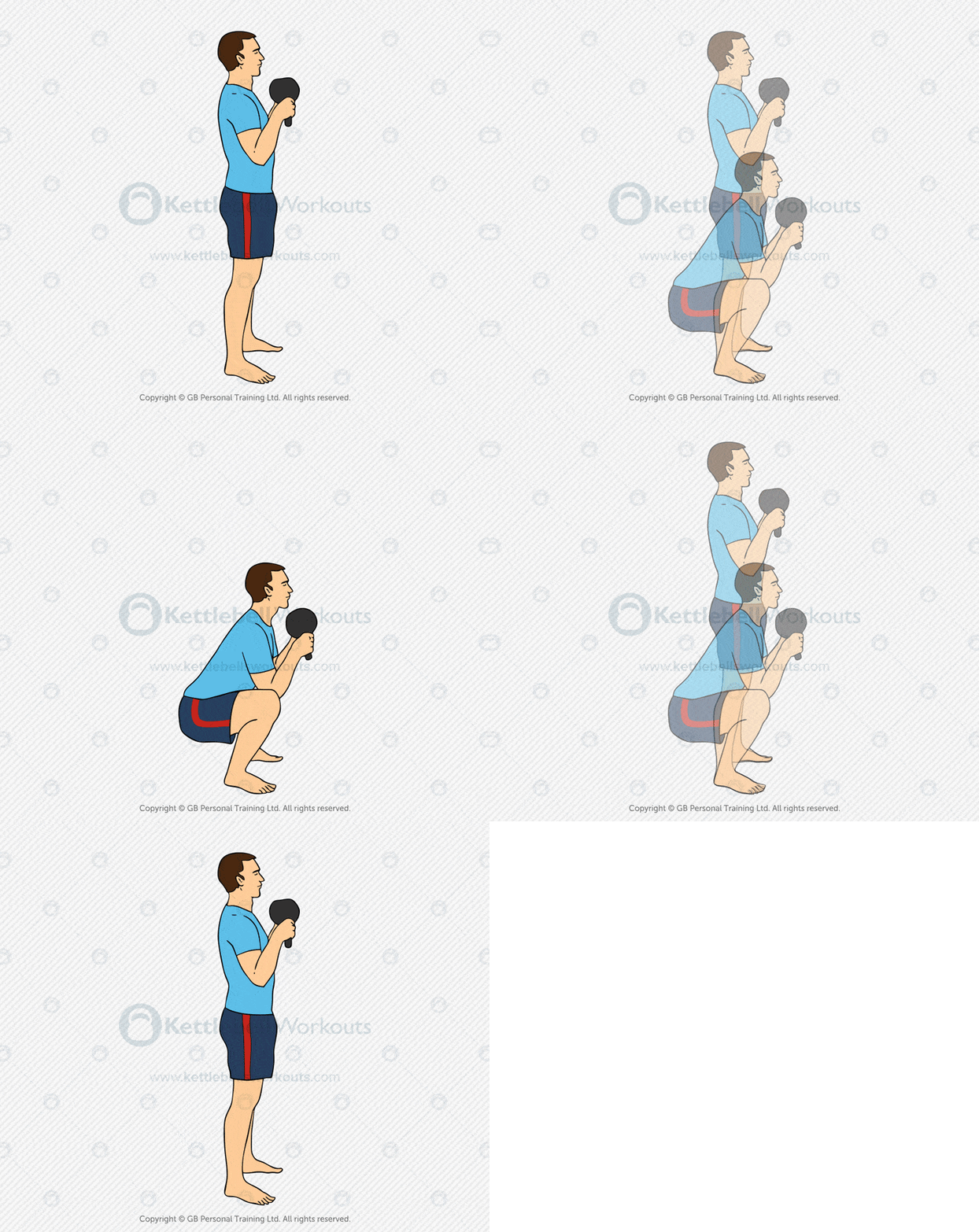
The Goblet Squat is one of the best places to start lower-body kettlebell training. Holding the bell in front gives you a useful counterbalance while you learn to sit between the hips and maintain a strong torso.
Coaching cue: Keep the whole foot connected to the floor and let the knees track in the same direction as the toes.
Try: 8 to 12 controlled reps.
Kettlebell Single Arm Deadlift
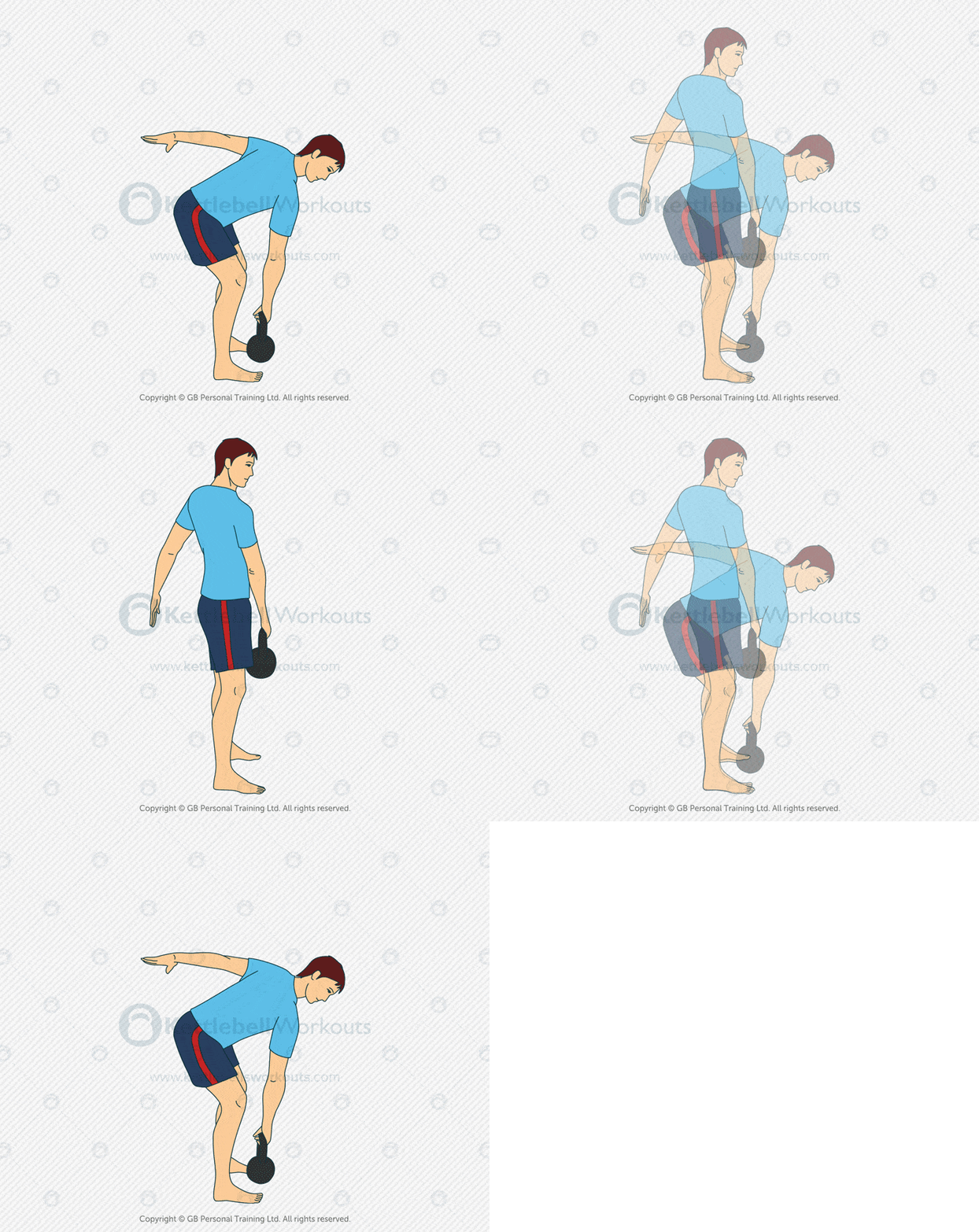
The Single Arm Deadlift teaches the hip hinge from the floor and adds an anti-rotation challenge because the load is held on one side. It is an excellent foundation before learning the Swing.
Coaching cue: Push the hips backwards first, keep the kettlebell close and stand by extending the hips rather than pulling with the arm.
Try: 5 to 8 reps per side.
Kettlebell Racked Reverse Lunge
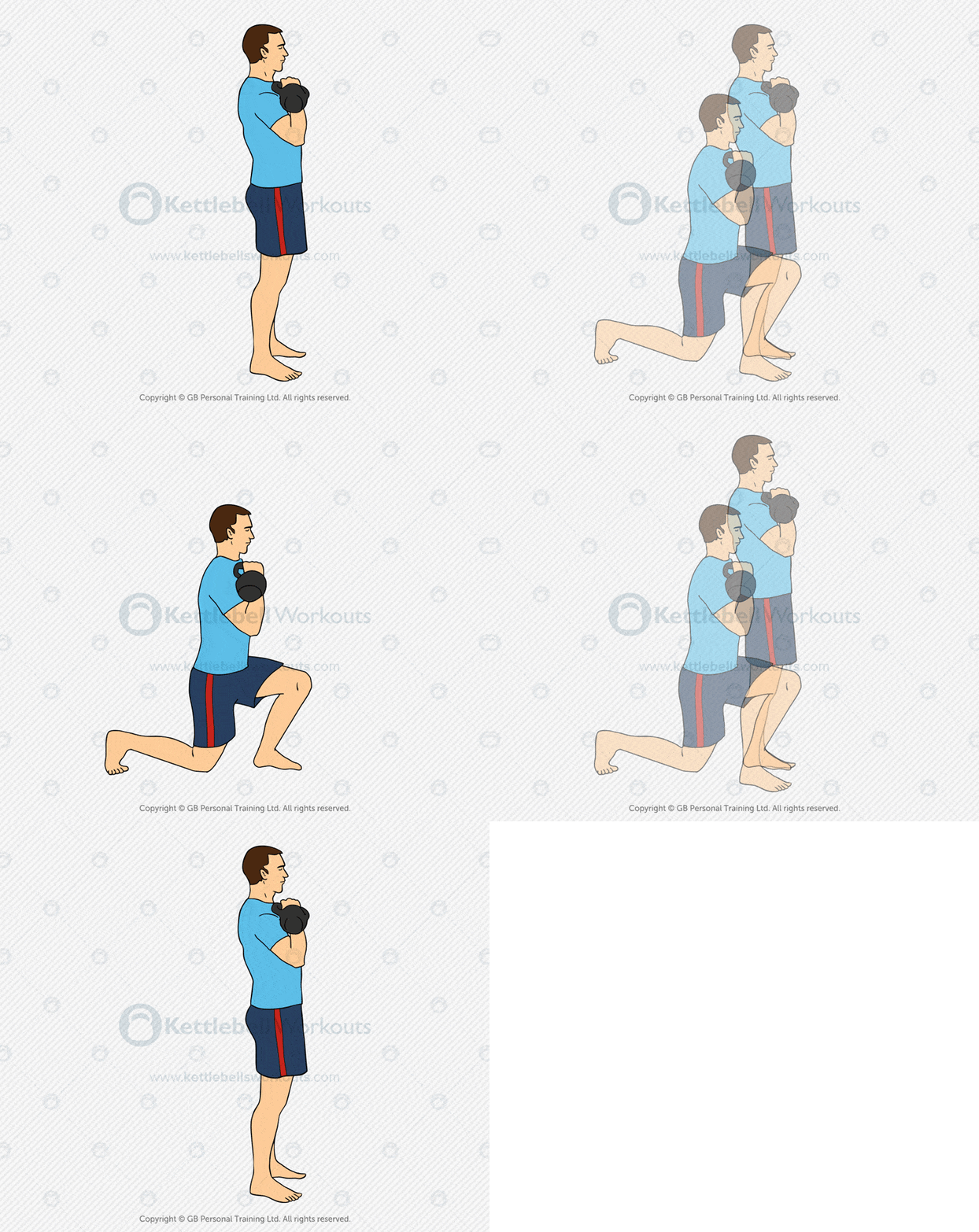
The Racked Reverse Lunge trains single-leg strength while the offset rack position adds a useful trunk-stability challenge. It is a natural progression once basic squats and bodyweight lunges are comfortable.
Coaching cue: Step back far enough to lower under control while keeping the front foot firmly planted.
Try: 5 to 8 reps per side.
Kettlebell Pistol Squat
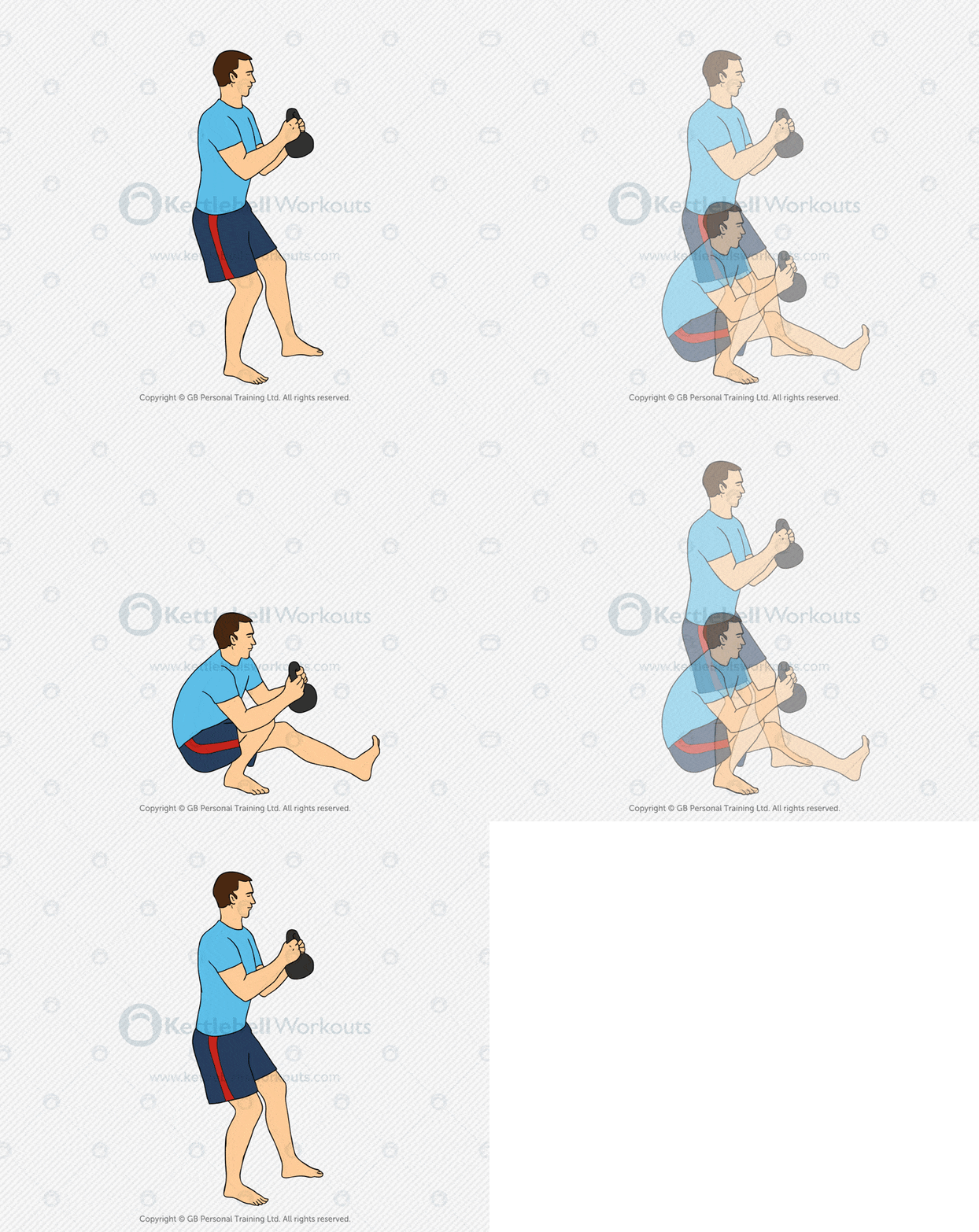
The Pistol Squat is a demanding single-leg strength exercise that also requires ankle and hip mobility, balance and control. The kettlebell can act as a counterbalance, but the movement should be earned progressively.
Coaching cue: Control the descent and use only the depth you can maintain without collapsing through the foot, knee or trunk.
Try: 1 to 5 quality reps per side.
Kettlebell Side Lunge
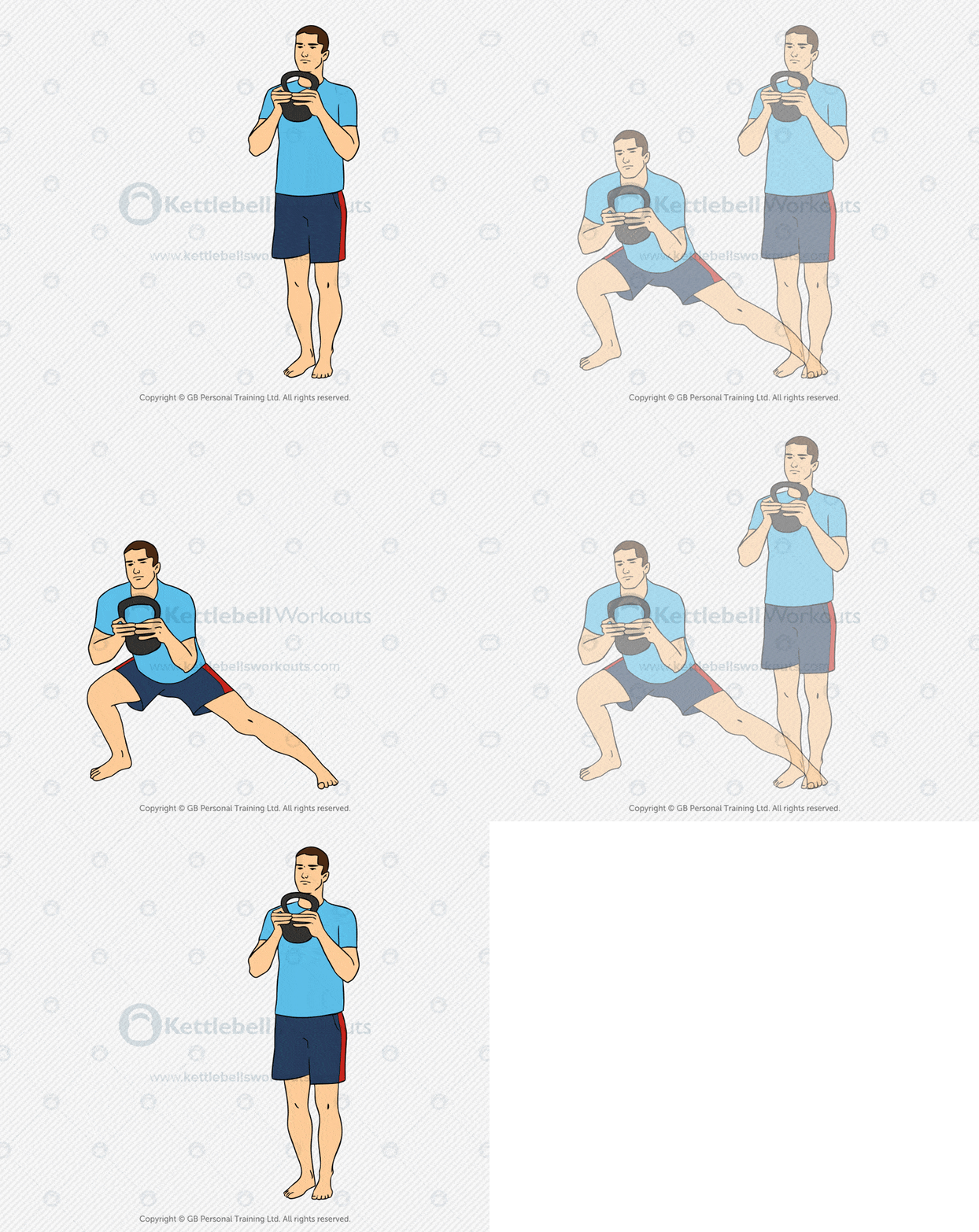
The Side Lunge adds lateral movement to a programme that can otherwise become dominated by forward-and-back patterns. It strengthens the hips and inner thighs while challenging control in a different plane.
Coaching cue: Sit the hips back into the working leg while keeping the other leg long and the working foot flat.
Try: 5 to 8 reps per side.
Kettlebell Double Lunge

The Double Lunge links a reverse lunge and a forward lunge on the same side. It increases time under tension and coordination without requiring a large amount of load.
Coaching cue: Move smoothly through the standing position and keep control as you change from the reverse to the forward lunge.
Try: 4 to 6 cycles per side.
Full Body Kettlebell Exercises for Men
These exercises link the hips, trunk and upper body together. The faster ballistic movements are excellent for conditioning, but only after the underlying positions and timing are reliable.
Kettlebell Single Arm Swing
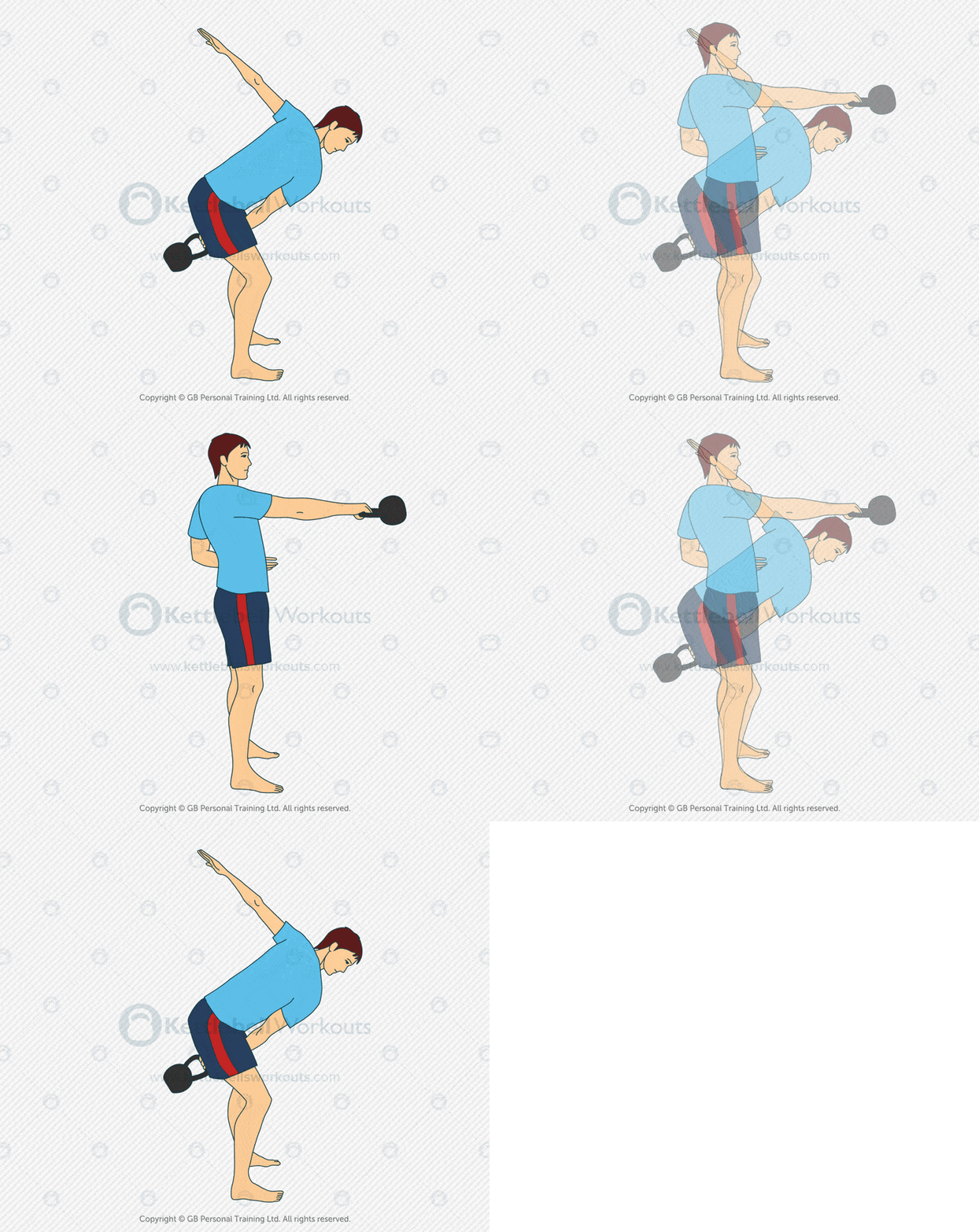
The Single Arm Swing is a ballistic hip-hinge exercise. Compared with the Two-Handed Swing it places more demand on the grip and anti-rotation control, but the power should still come from the hips rather than the shoulder.
Coaching cue: Snap the hips forwards and let the kettlebell float. Do not lift it with the arm.
Try: 10 to 20 reps per side.
Kettlebell Thruster

The Thruster combines a squat and overhead press into one continuous movement. The upward drive from the legs helps move the kettlebell overhead, making it an efficient full-body exercise.
Coaching cue: Stand strongly from the squat and carry that momentum into the press rather than pausing between the 2 movements.
Try: 5 to 8 reps per side.
Kettlebell Clean and Press
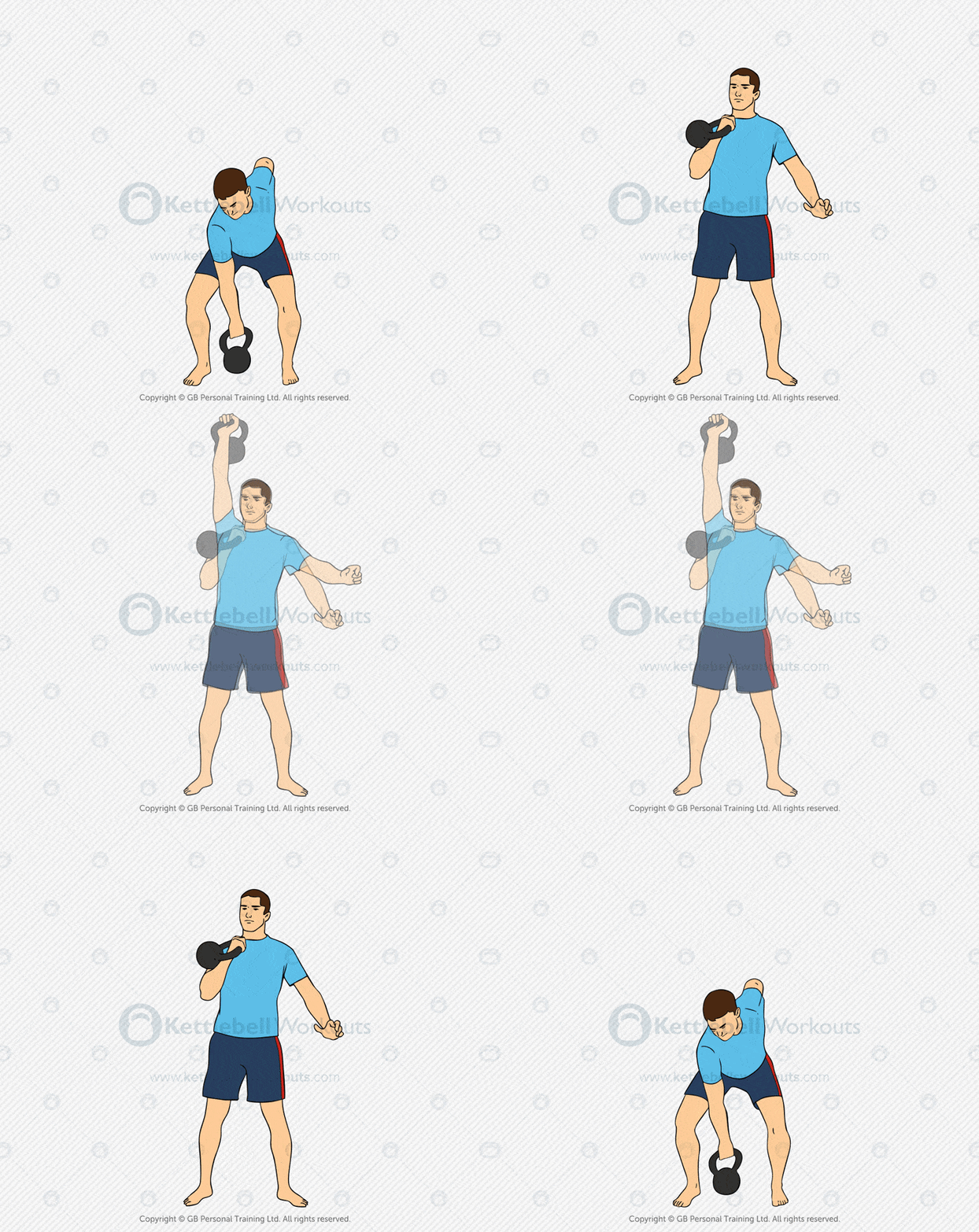
The Clean and Press is one of my favourite kettlebell strength combinations because it takes the kettlebell from below the hips to a controlled overhead position while involving most of the body.
Coaching cue: Keep the Clean close to the body, settle the kettlebell in the rack, then press without leaning backwards.
Try: 3 to 6 reps per side.
Kettlebell High Pull
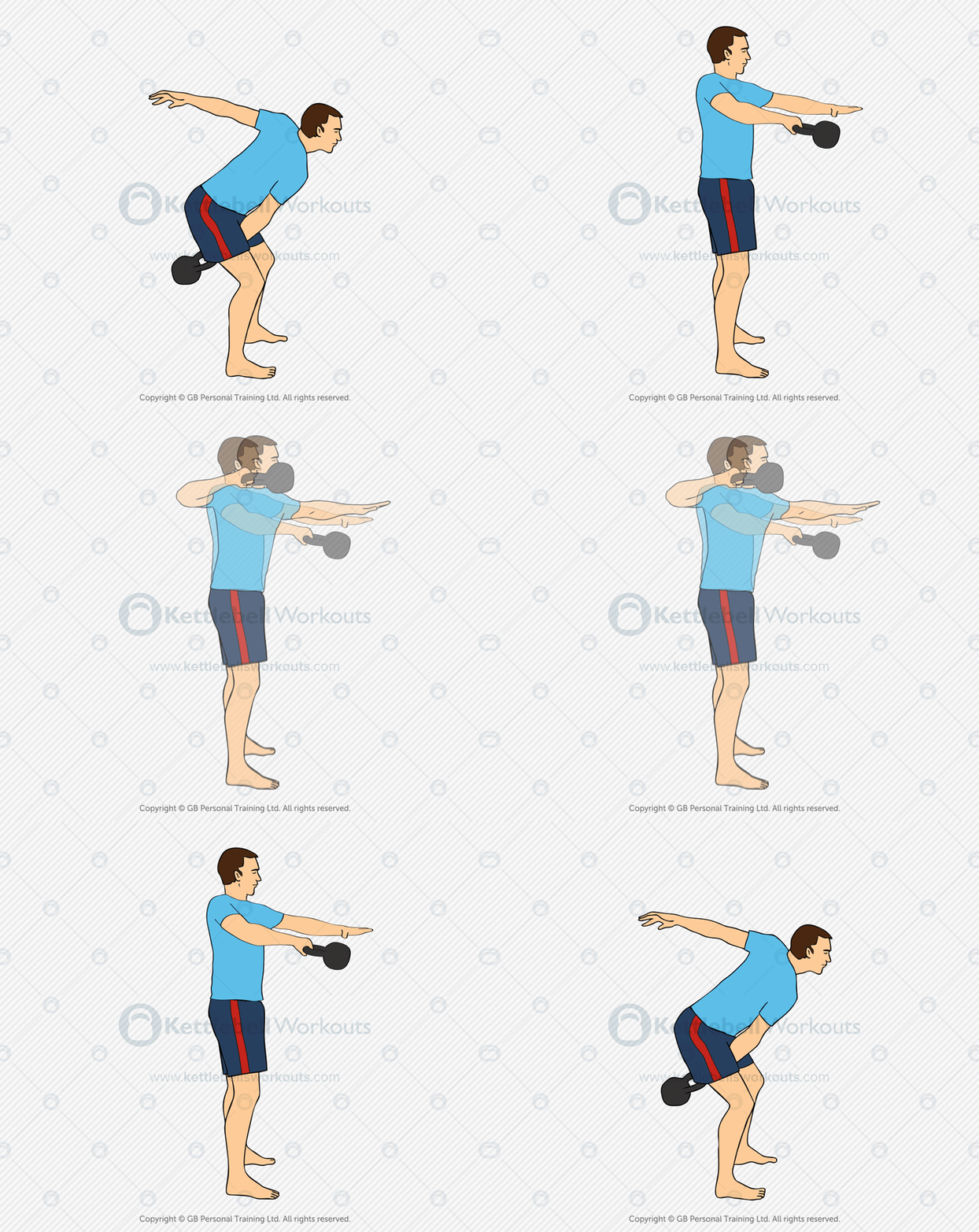
The High Pull is a fast, technical progression from the Single Arm Swing and an excellent conditioning exercise. The hips create the momentum while the upper body redirects the kettlebell rather than trying to row it upwards.
Coaching cue: Drive from the hips, keep the elbow high and connected, then actively push the kettlebell back into the next swing.
Try: 5 to 10 reps per side with a lighter bell than you normally Swing.
Kettlebell Snatch
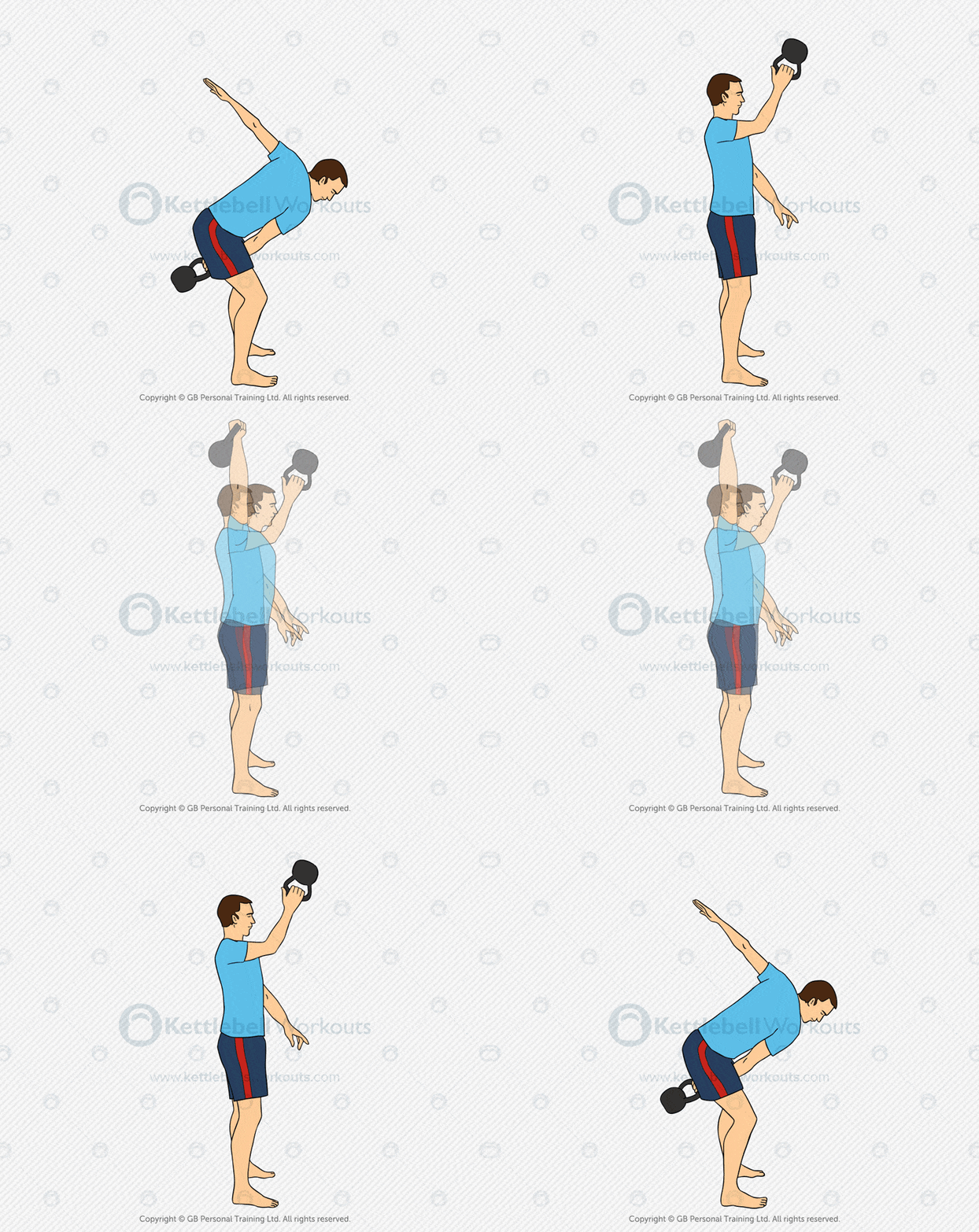
The Snatch takes the kettlebell from the swing into an overhead lockout in one continuous movement. It is a powerful conditioning exercise, but it should come after the Swing, Clean and High Pull are already technically sound.
Coaching cue: Keep the kettlebell travelling close to the body and punch the hand through at the top so the bell wraps smoothly around the wrist.
Try: 5 to 10 reps per side.
Kettlebell Deck Squat
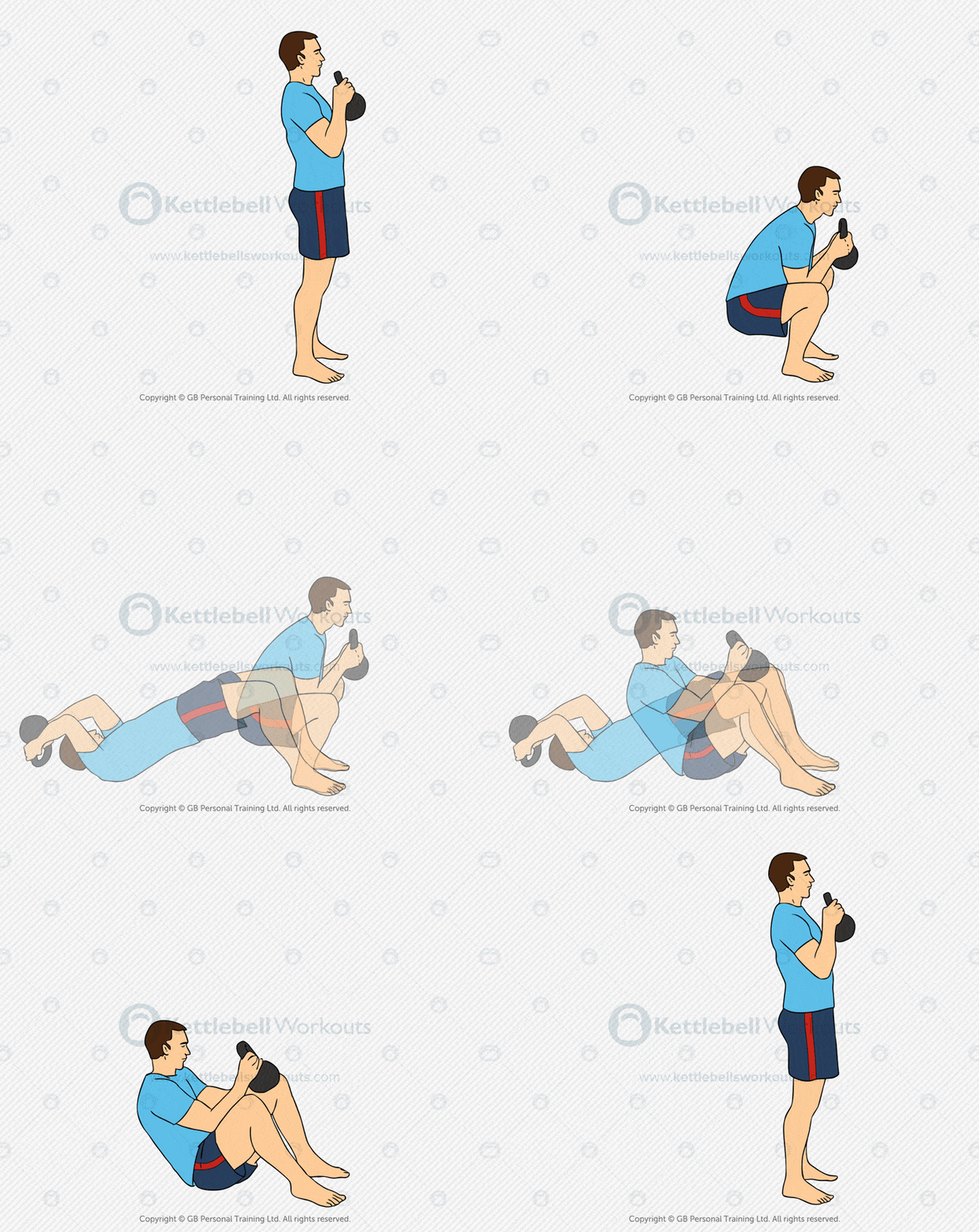
The Deck Squat combines a squat, controlled roll and return to standing. It requires good hip mobility and coordination and is better treated as an athletic movement than a heavy strength lift.
Coaching cue: Use the roll smoothly to create momentum but keep control as the feet return to the floor and you stand.
Try: 3 to 8 controlled reps.
Advanced and Double Kettlebell Exercises
Using 2 kettlebells can increase the total load, but it also increases the technical and positional demands. Master the single-kettlebell version before adding another bell.
Double Kettlebell Single Leg Deadlift

Using 2 kettlebells gives the Single Leg Deadlift a more balanced load and lets you focus on strengthening the standing hip and hamstrings. The exercise still demands good balance and hinge control.
Coaching cue: Keep the hips square and make the movement come from the standing hip rather than reaching towards the floor with the shoulders.
Try: 4 to 6 slow reps per side.
Double Kettlebell Clean, Squat and Press
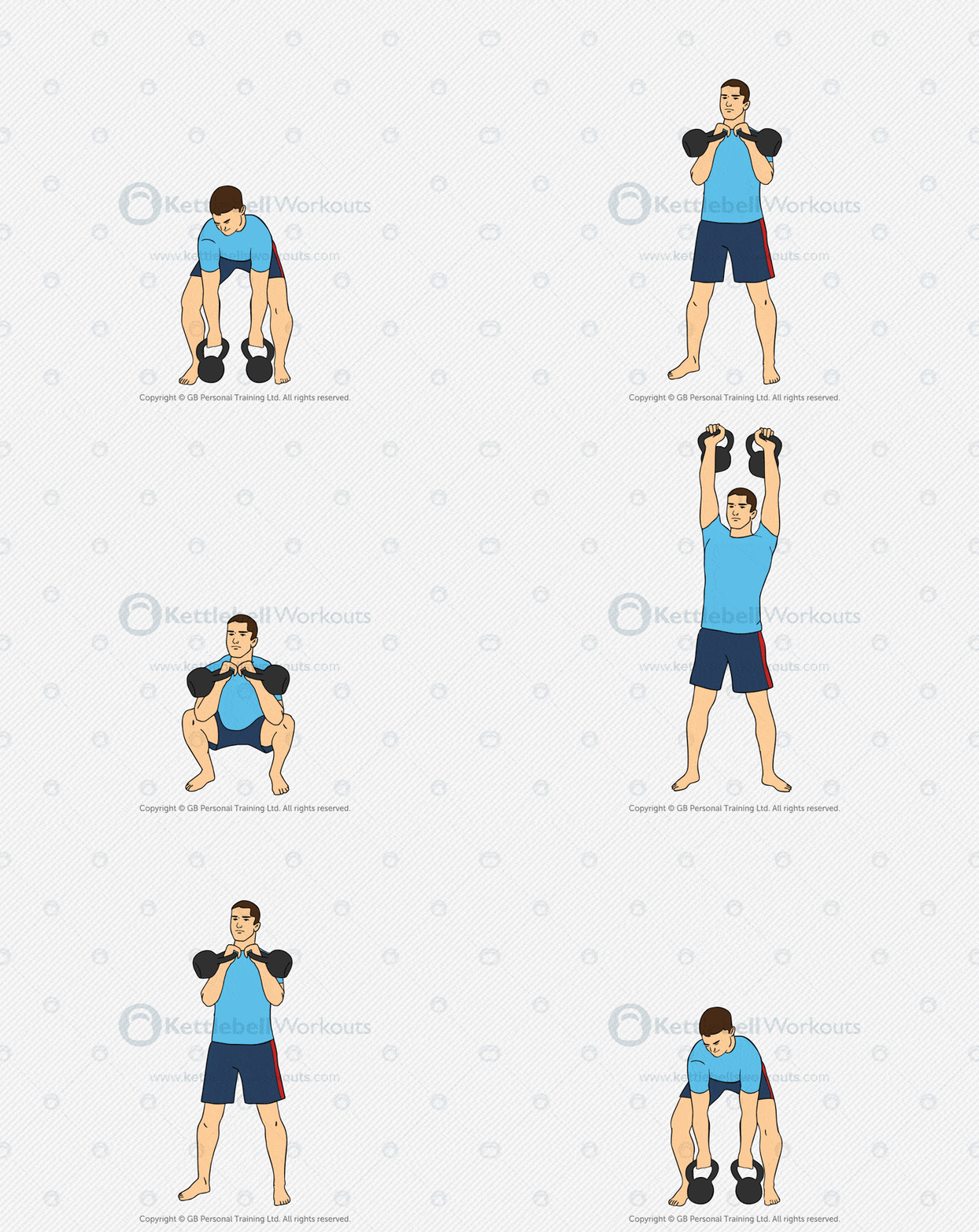
This is a demanding full-body complex combining a Double Clean, Front Squat and Overhead Press. Each component should be comfortable with 2 kettlebells before you try to link them together.
Coaching cue: Think clean, settle, squat, stand, press. Do not rush the transitions.
Try: 3 to 6 continuous reps.
Kettlebell Renegade Row

I mainly use the Renegade Row as an anti-rotation core exercise rather than as a primary back-strength movement. My preferred version has one hand supported on a box or bench so you can challenge the trunk without relying on 2 upright kettlebells for stability.
Coaching cue: Keep the hips square and resist rotation. If you use 2 kettlebells, they must have stable flat bases and you should already be very comfortable with the exercise.
Try: 5 to 8 slow reps per side.
Double Kettlebell Alternating Clean

The Double Alternating Clean is fast and highly technical. One kettlebell travels towards the rack while the other returns to the backswing, so timing and a reliable hip hinge are essential.
Coaching cue: Keep both kettlebells close to the body and let the hips create the rhythm. Learn the standard Clean first.
Try: Begin with short 15 to 30 second sets.
How to Turn These Exercises Into Training
You do not need all 21 exercises in the same session. For most workouts, choose a small number of movements that complement rather than duplicate each other.
A Simple Exercise Selection
- 1 knee-dominant exercise: Goblet Squat or Reverse Lunge
- 1 hip-hinge exercise: Deadlift or Swing
- 1 pull: Bent Over Row
- 1 press: Half Kneeling Press, Push Press or Clean and Press
- Optional conditioning or skill exercise if appropriate
For complete sessions and progressions rather than individual exercises, see my Kettlebell Workouts for Men.
Related Kettlebell Guides

Frequently Asked Questions
Can men build muscle using kettlebells?
Yes. Kettlebells can provide enough resistance for muscle growth when the exercises can be progressively overloaded and your training, food and recovery support that goal. Having access to several kettlebell weights makes progression easier.
What kettlebell weight should men use?
There is no single correct weight for every man. Use a kettlebell you can control for the specific exercise. Technical overhead exercises will usually require less weight than Deadlifts, Squats and Swings.
How many kettlebell exercises should I do in one workout?
Usually 3 to 5 well-chosen exercises are enough. Cover the important movement patterns and focus on improving them rather than continually adding more exercises.
What should a beginner learn first?
Start with simple controlled movements such as the Goblet Squat, Deadlift, Row, Halo and Half Kneeling Press. Learn the hip hinge before progressing to the Swing and other ballistic exercises.
Are kettlebells good for conditioning?
Yes. Ballistic exercises such as Swings, High Pulls and Snatches can create a strong conditioning effect, but technique should be established before speed or fatigue is added.

Hi Greg
Now I’m in my 70’s I’m finding weight training with dumbbells a bit of a grind. My son suggested I try kettlebells. I found your website and found the information very informative and the videos excellent. I’m excited about the the delivery of my 12kg kettlebell. Thank you very much for sharing your expertise. David S.
I’ve been working out with a 12 kg kettlebell for close to a month now, as 12 kg seems to be the weight that provides a challenge for me without being overwhelming.
For warm-ups and transitioning from one exercise to another I primarily do halos, slingshots and good mornings. For upper body conditioning my current regimen consists of regular rows and push presses.
For lower body workouts I do goblet squats and single-arm deadlifts, but I’m also looking to eventually add single-leg deadlifts and double lunges into my regimen.
For my full-body workout regimen, my mainstay is the kettlebell swing (two-handed, in the process of transitioning to one-handed), thrusters, and clean and press, and also experimenting with the high pull.
Currently my goals would be to progress to using 16 kg kettlebells for my workouts, and to be able to perform the kettlebell snatch and half Turkish get up so I can add them into my daily regimen too.
Cheers I’m going to try these exercises and get back to you