
Last Updated on 17 August 2026 by Greg Brookes
A workout finisher is a short block added to the end of your main training session.
It is not there to rescue a poor workout or to make every session as exhausting as possible. I use finishers when I want a brief conditioning challenge after the important strength or skill work is already complete.
The 4 kettlebell finishers below progress from a simple Swing and Slingshot combination through to more technical flowing complexes.
What Is a Kettlebell Finisher?
A kettlebell finisher is a short conditioning block performed at the end of a workout. Keep it simple, use exercises you already know well and stop when fatigue starts to change your technique.
Before You Use a Finisher
Finishers are performed when you are already tired, so exercise selection matters more than novelty.
1. Kettlebell Swing Finisher
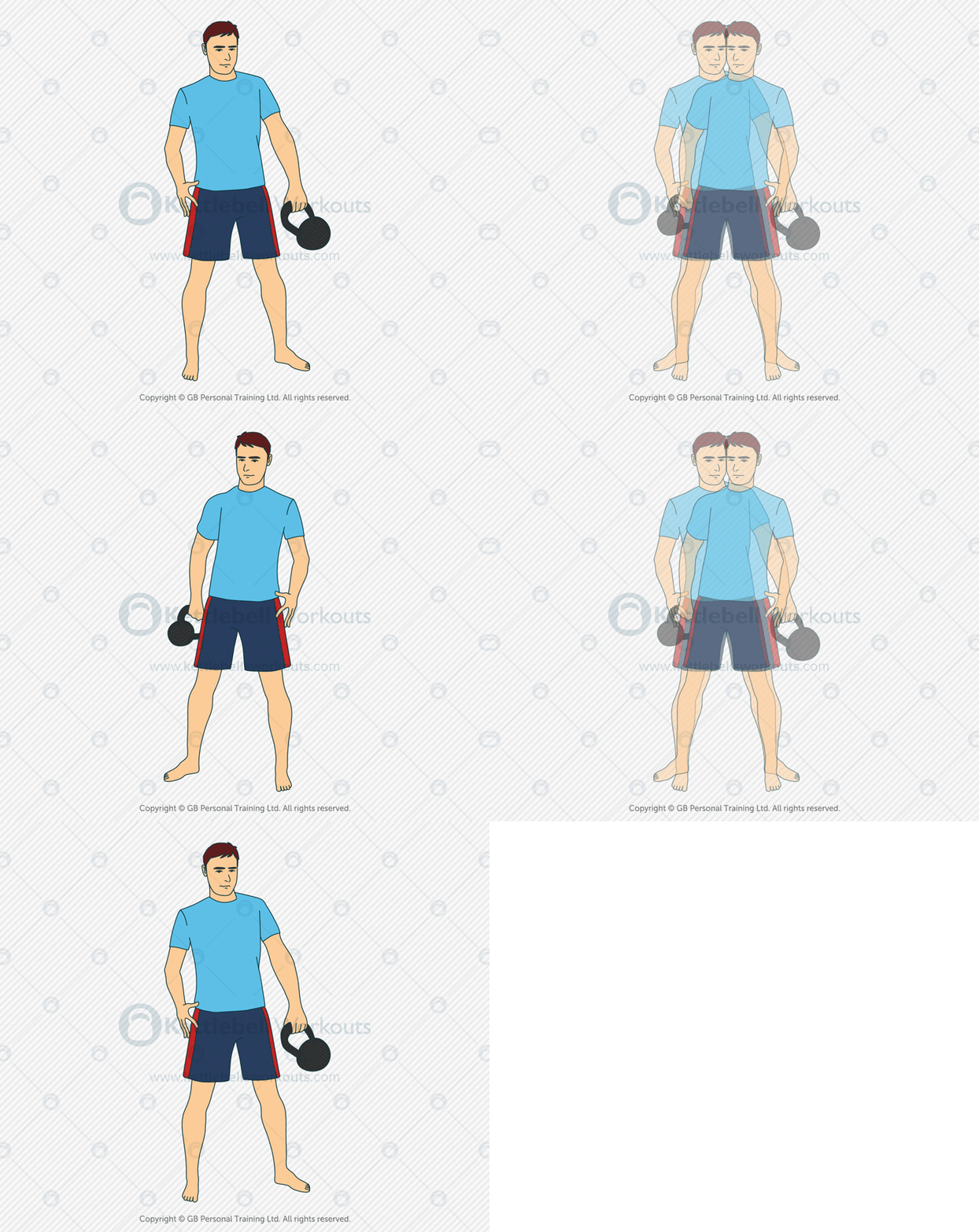
This is the simplest of the 4 finishers. The Two Handed Swing provides the conditioning challenge while the Slingshot keeps you moving as active recovery.
Workout
- Two Handed Swing x 15 to 20 reps
- Slingshot x 10 reps each direction
- Repeat for 5 to 10 rounds
Move directly from the Swings into the Slingshots and, where possible, keep hold of the kettlebell between exercises. The Slingshot should feel like active recovery rather than another maximal effort.
2. Kettlebell Legs Finisher
This finisher combines a Reverse Lunge with a Thruster. Both exercises use the knee-bend pattern and the Thruster adds an overhead drive, so this is considerably more demanding than the first workout.
Workout
- Reverse Lunge x 10 reps left
- Thruster x 10 reps left
- Reverse Lunge x 10 reps right
- Thruster x 10 reps right
- Repeat for 8, 6, 4 and 2 reps per exercise
Complete both exercises on one side before changing sides. Rest only as much as you need to keep the repetitions clean.

3. Kettlebell Flow Finisher
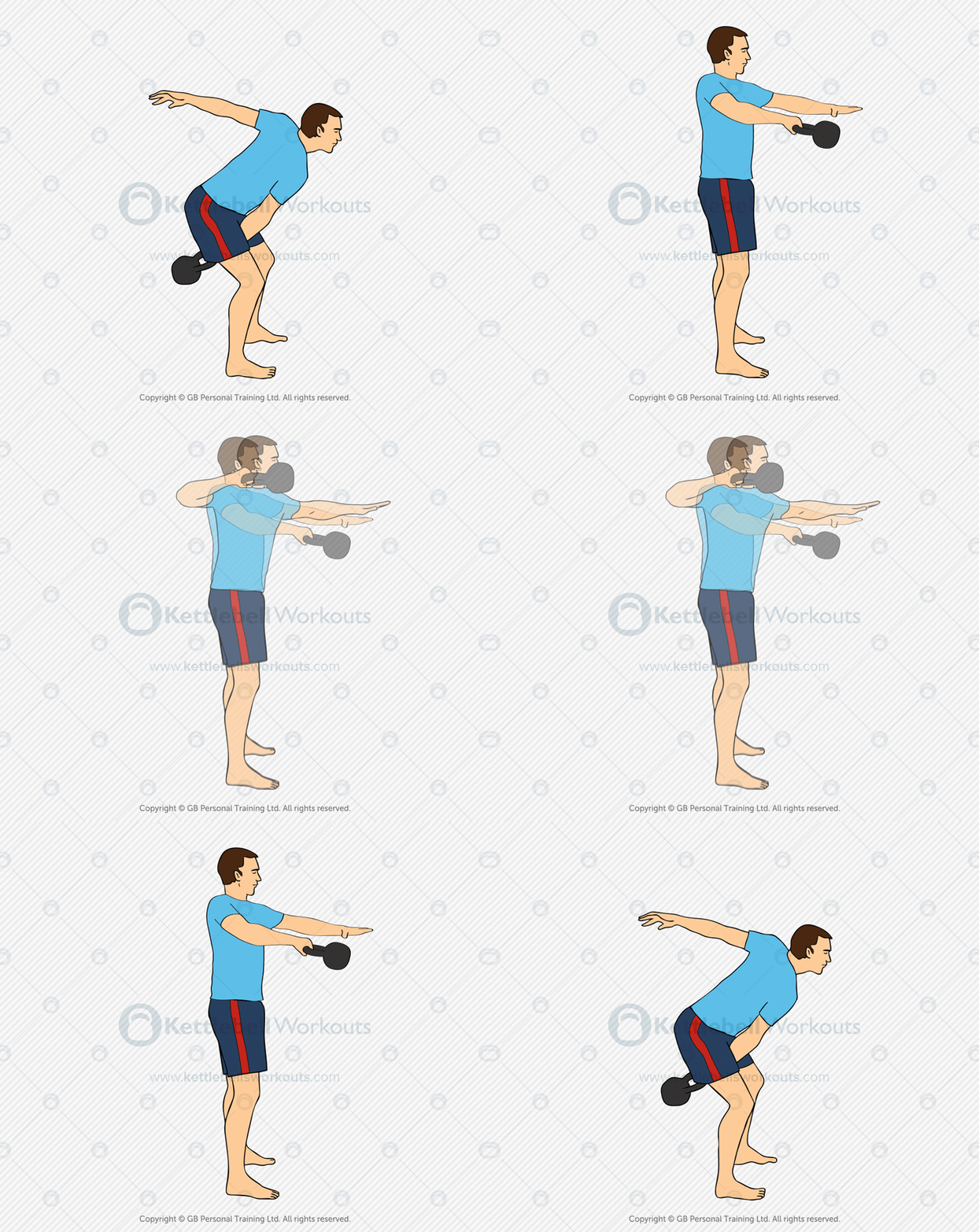
This workout links 3 ballistic exercises together on one side before changing hands. You should already be very comfortable with the One Hand Swing, High Pull and Snatch before attempting this sequence under fatigue.
Workout
- One Hand Swing x 10 reps left
- High Pull x 10 reps left
- Snatch x 10 reps left
- Repeat on the right
- Continue with 9, 8, 7 and so on
The exercises should flow from one to the next without putting the kettlebell down. The goal is smooth movement, not racing through a technically poor Snatch.
4. Double Kettlebell Complex Finisher
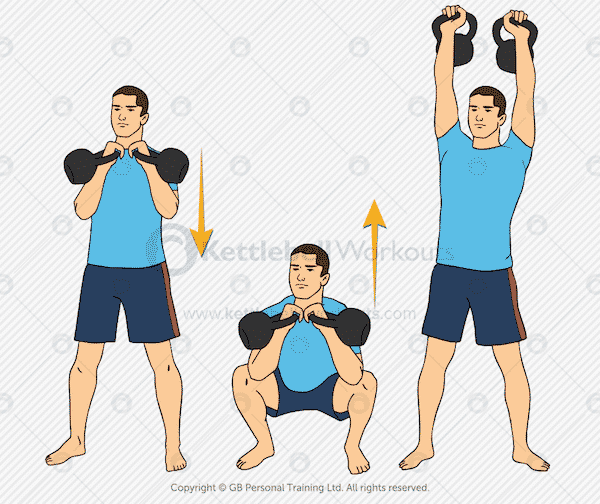
The final finisher combines the Clean, Squat and Press into one continuous double-kettlebell exercise. Because every repetition contains several movements, keep the total volume sensible.
Workout
- Double Clean, Squat and Press x 10 reps
- Rest 30 to 90 seconds
- Repeat while technique remains strong
Clean both kettlebells into the rack, squat, then use the drive from the legs to press the kettlebells overhead. Return them to the rack under control before beginning the next repetition.
How Often Should You Use Kettlebell Finishers?
You do not need a finisher after every workout. Add one when it suits the purpose of the session and when you still have enough concentration to perform the chosen exercises properly.
For most training plans I would treat finishers as optional conditioning rather than a compulsory final punishment. If your main workout has already been demanding, there is nothing wrong with finishing there.
Related Kettlebell Conditioning
A finisher is only one way to organise conditioning. These related guides explain the neighbouring formats and how they differ.

Frequently Asked Questions
What is a kettlebell finisher?
A kettlebell finisher is a short conditioning block added to the end of your main workout. It normally uses simple exercises or combinations that you already know well.
How long should a kettlebell finisher last?
Keep it short. Many useful finishers can be completed within 5 to 10 minutes depending on the exercises, load and rest periods.
Are kettlebell finishers good for beginners?
Not for someone who is still learning basic kettlebell technique. The simplest finisher on this page is suitable for someone new to finishers only if they already perform the Swing and Slingshot confidently.
Do I need a finisher after every workout?
No. Your main training comes first. Use a finisher when you want some additional conditioning and your technique is still good enough to train safely.
Can I use kettlebell swings as a finisher?
Yes. The Two Handed Swing works particularly well because it is simple and cyclical, provided your Swing technique is already well established.


Comments