
Last Updated on 19 August 2026 by Greg Brookes
A push-pull workout is a simple way to organise upper-body training: pair a pushing movement with a pulling movement, then repeat. With kettlebells, that usually means combining presses or push-ups with rows, high pulls or other pulling patterns.
You do not need an exact one-for-one balance in every single session, and matching pushes and pulls does not guarantee an injury-free body. But as a programming method, it is an easy way to make sure your training includes both sides of the upper body rather than doing nothing but presses.

Why Use Kettlebell Push-Pull Workouts?
The main benefit is organisation. Rather than training only the muscles you can see in the mirror, a push-pull format reminds you to include both pressing and pulling patterns.
Workout 1: Row + Push-Up
The simplest and best place to start.
| Exercise | Reps |
|---|---|
| Kettlebell Regular Row | 5 to 12 each side |
| Push-Up | As many clean reps as you can perform |
| Rest | 60 seconds, then repeat for 3 rounds |
This is essentially the original first workout and I still like it. The bent-over row gives you a straightforward pulling exercise and the push-up provides an effective horizontal push without needing a second piece of equipment.
Kettlebell Regular Row
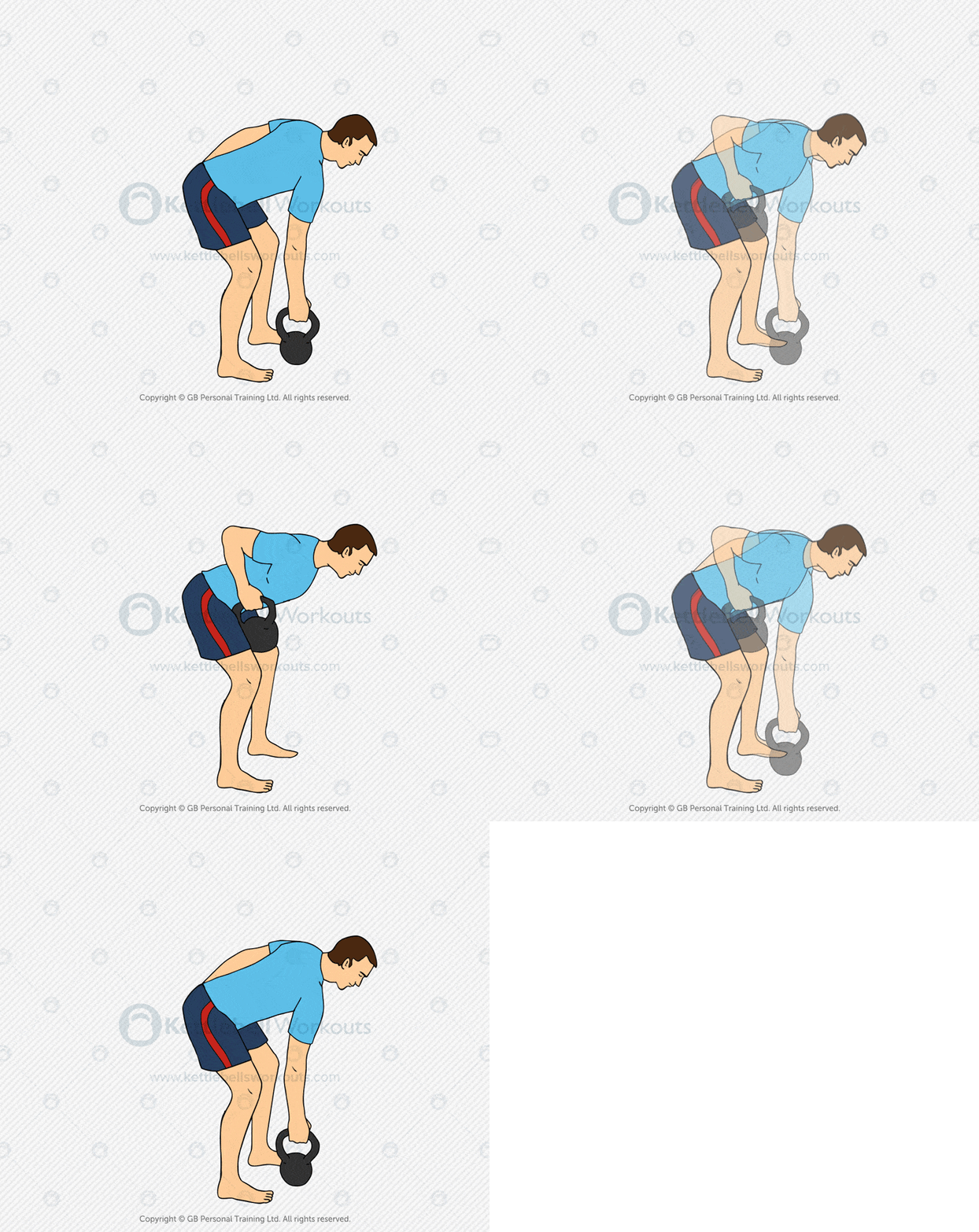
Hinge forwards from the hips, keep the torso stable and row the kettlebell back towards the hip. The row should be controlled rather than turned into a shrug or torso twist.
Coaching cue: Pull the elbow towards the back pocket and pause briefly at the top.
Push-Up
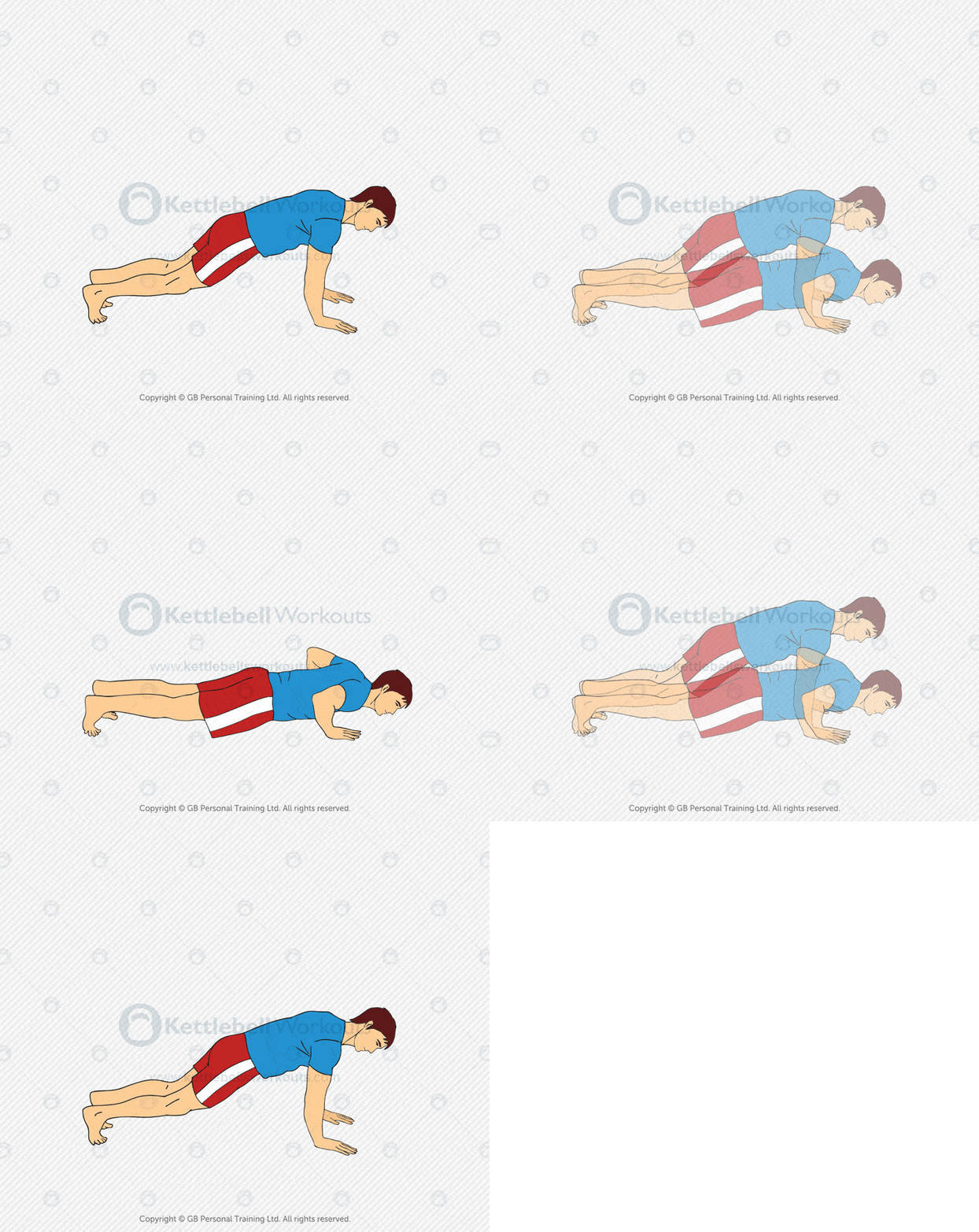
The push-up trains the chest, shoulders, triceps and trunk. If full push-ups are too difficult, elevate the hands on a bench or sturdy surface and gradually lower the height as you become stronger.
Coaching cue: Keep the body in one straight line and lower the chest between the hands rather than letting the head reach forwards.
Workout 2: High Pull + Push Press
A more dynamic push-pull pairing.
| Exercise | Reps |
|---|---|
| Kettlebell High Pull | 5 to 8 each side |
| Kettlebell Push Press | 5 to 8 each side |
| Rest | 60 to 90 seconds, then repeat for 3 rounds |
The original version used the Renegade Row here. I no longer think the unstable double-kettlebell version is the best choice inside a workout, particularly when a safer and more useful pulling option is available.
The High Pull makes this second workout more technical and more cardiovascular. It is not a heavy back-building row. The hips create the momentum, while the upper back and arm guide and redirect the kettlebell.
Kettlebell High Pull
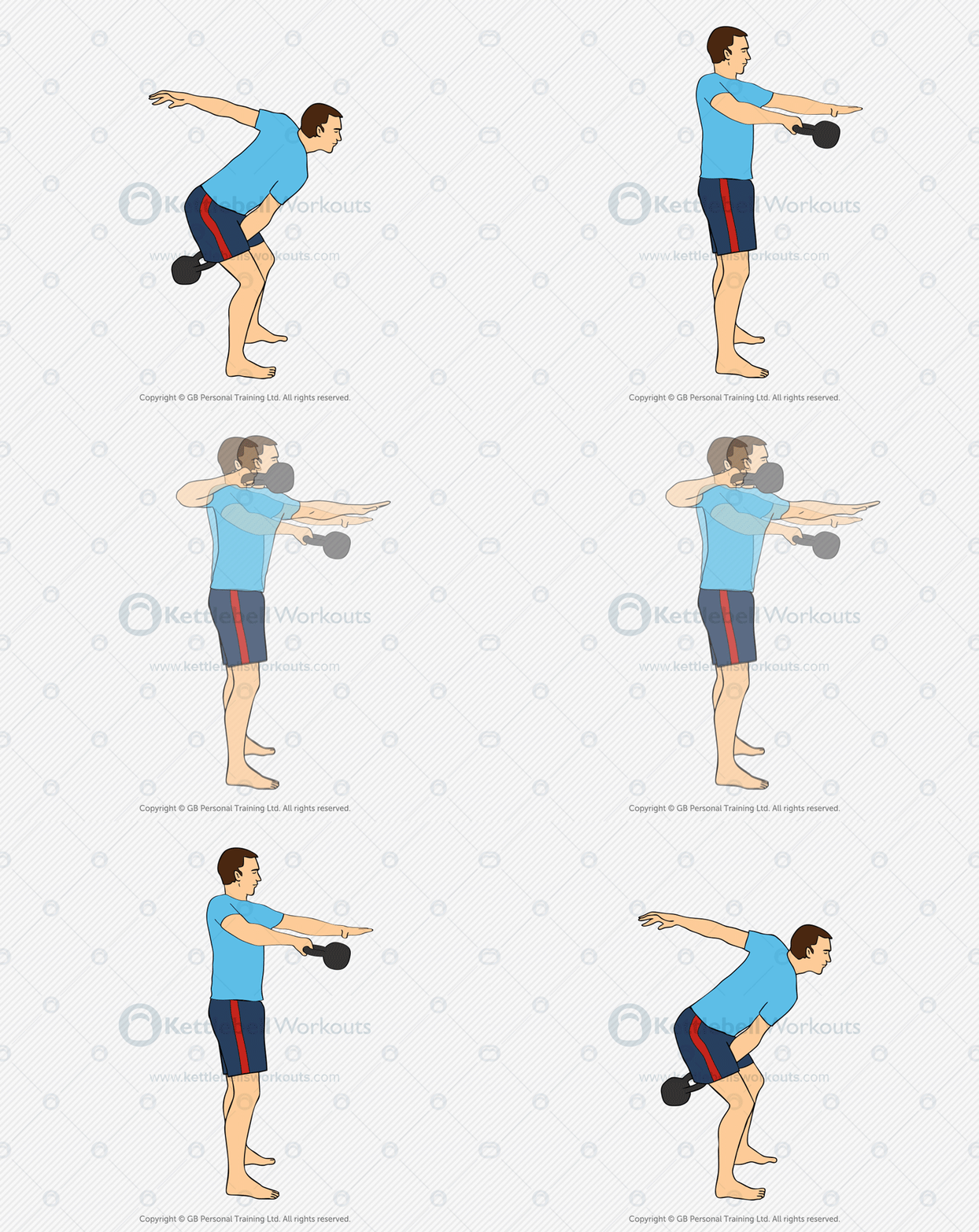
The High Pull starts like a one-handed swing. As the kettlebell rises, the elbow travels high and the bell is redirected towards the body before being actively pushed back into the next backswing.
Coaching cue: Keep the handle, forearm and shoulder connected. Do not let the kettlebell float away from you.
Kettlebell Push Press

The Push Press uses a small amount of leg drive to start the kettlebell moving before the arm finishes the press overhead. It allows you to use more load than a strict press while still demanding good overhead control.
Coaching cue: Dip briefly through the knees, drive the floor away and finish tall with the kettlebell stacked overhead.
Want More Kettlebell Exercise Ideas?
Download my free 52 Kettlebell Exercises guide and keep the complete exercise library for your own workouts.

Workout 3: Snatch + Turkish Get-Up
An advanced full-body challenge.
| Exercise | Reps |
|---|---|
| Kettlebell Snatch | 5 to 12 each side |
| Turkish Get-Up | 1 to 3 each side |
| Rest | 60 to 90 seconds, then repeat for 3 rounds |
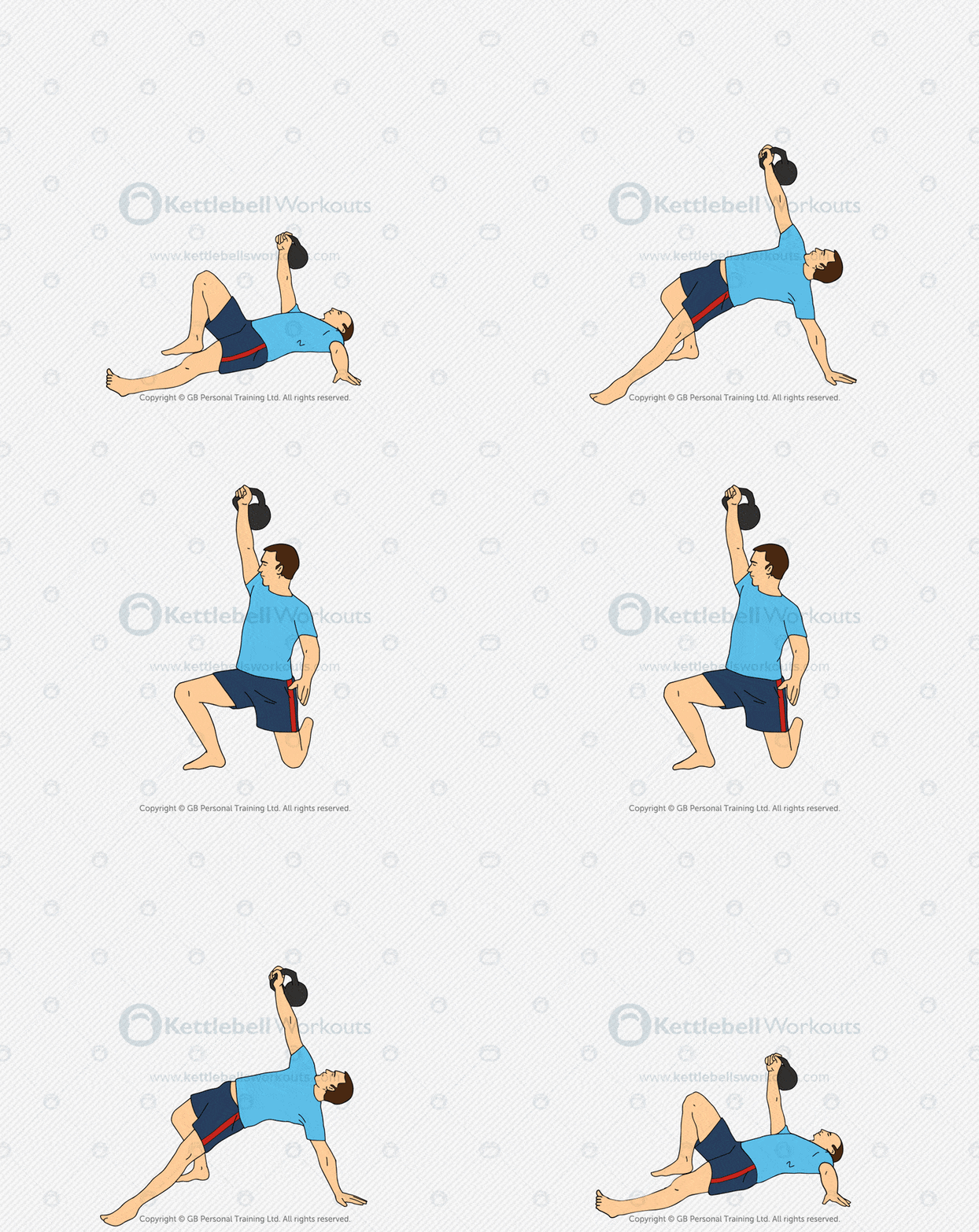
This is the original advanced pairing, but it is worth describing it accurately. The Snatch is a ballistic, pull-dominant movement powered mainly by the hips. The Turkish Get-Up is not simply a pushing exercise. It is a full-body strength, mobility and overhead-stability exercise.
That makes this less of a strict upper-body push-pull superset and more of a demanding full-body workout for experienced kettlebell users.
Kettlebell Snatch
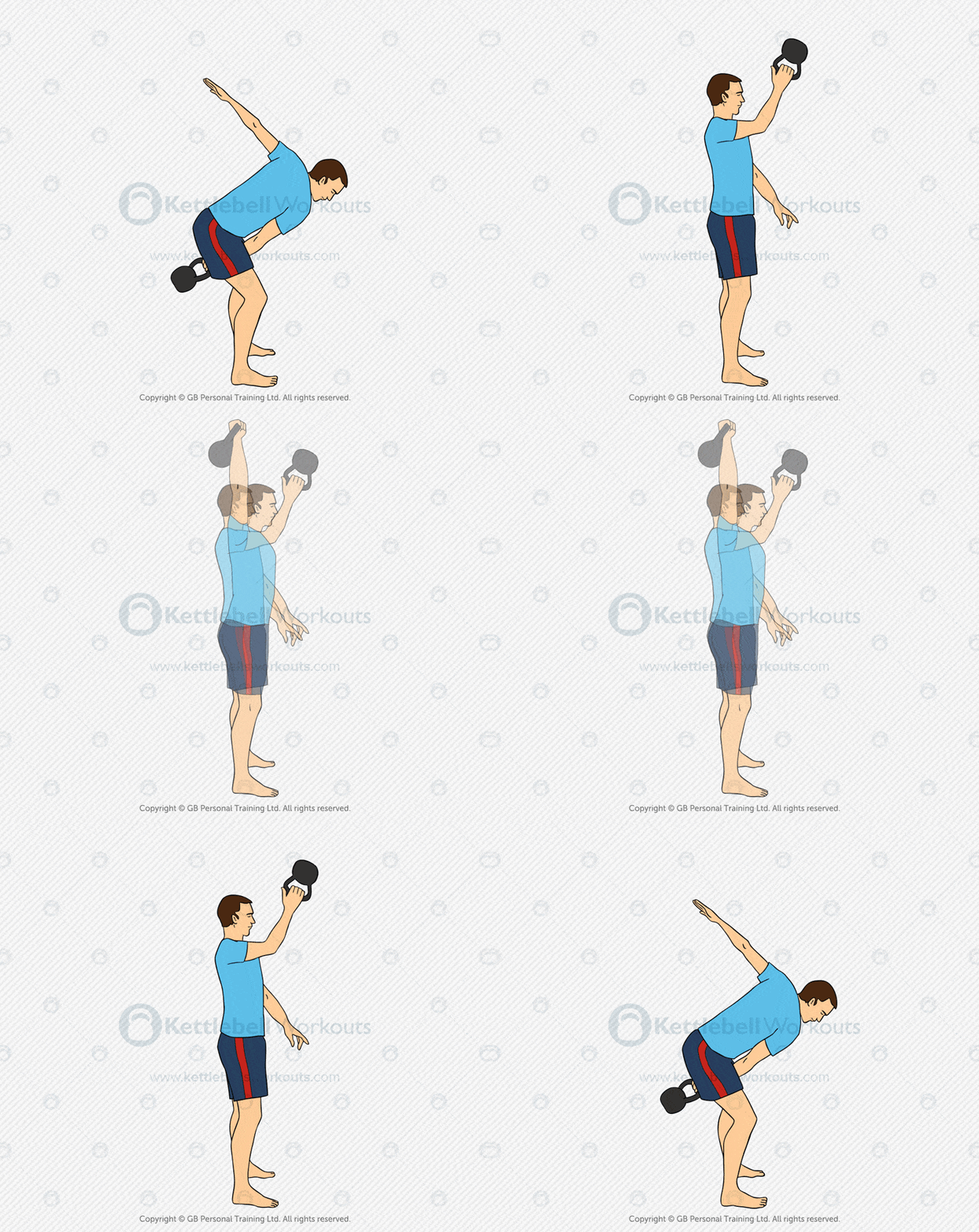
The Snatch takes the kettlebell from the backswing to overhead in one continuous movement. Most of the force comes from the hips, with the arm guiding the bell and controlling the overhead finish.
Coaching cue: Keep the kettlebell close to the body and punch the hand through the handle as the bell reaches the top.
Best Kettlebell Push Exercises
For most people, the main kettlebell pushing options are the strict Overhead Press, Push Press, Half-Kneeling Press and combinations such as the Clean and Press. I also like the Push-Up because it gives you a horizontal pushing pattern that kettlebells do not provide particularly well on their own.
If your goal is chest development specifically, kettlebells are not the ideal tool. Push-ups and conventional dumbbell or barbell pressing usually provide better horizontal pressing options.
Best Kettlebell Pull Exercises
For upper-back strength, start with rows. The Bent-Over Row is more useful as a primary back-strength exercise than unstable variations such as the Renegade Row.
High Pulls, Cleans and Snatches also involve pulling actions, but they are ballistic movements driven strongly by the hips. I use them more for power, technique and conditioning than as replacements for heavy rowing.
Frequently Asked Questions
What is a kettlebell push-pull workout?
It is a workout that pairs pushing movements such as push-ups or presses with pulling movements such as rows or High Pulls. The exercises can be alternated as supersets or performed as separate sets.
Can you do push and pull on the same day?
Yes. There is no requirement to separate pushing and pulling into different days. Combining them in one workout is a simple way to create a balanced upper-body session.
What are the best kettlebell pull exercises?
For upper-back strength, I would prioritise the Bent-Over Row and other stable row variations. High Pulls and Snatches are useful pulling movements too, but they are more ballistic and depend heavily on hip power.
What are the best kettlebell push exercises?
The Overhead Press, Push Press and Half-Kneeling Press are all effective kettlebell pushing exercises. Push-ups are also worth including because they add a horizontal pushing pattern without needing another piece of equipment.
How often can I do these workouts?
That depends on the load, your training experience and what else you do during the week. Start by allowing enough recovery that your next session can be performed with good technique rather than forcing a fixed frequency.
Final Thoughts
Push-pull training does not need to be complicated. Choose one effective pull, one effective push and perform both well. Once that foundation is strong, you can introduce more technical movements such as High Pulls and Snatches.
The 3 workouts above progress from basic strength to more dynamic and technical kettlebell training, while still keeping the underlying push-pull idea easy to understand.


Great workouts Greg as usual. I was just wondering, would it be ok to split exercises in to a pull day and a push day maybe?
Yes that is possible Marco and excxatly what I do in my Muscle Building program.
Hi Greg
I’m new to kettlebells but have found your 4 beginners circuits on Youtube to be incredibly helpful. Just wondering; any plans to post your 3 Push Pulls on there as well? It’s so easy to stream from my iPad to the TV and follow along.
Thanks George, yes I’ll be filming a lot more of my workouts later in the year and adding them to the website. If you subscribe to my newsletter I’ll let you know when they are available.