
Last Updated on 19 August 2026 by Greg Brookes
Kettlebell workout formats are different ways of organising the same exercises. You can use Swings, Squats, Presses, Rows and Lunges in an EMOM, circuit, AMRAP, ladder or interval workout and create a completely different training effect.
The format should support your goal. Some structures control work and recovery precisely, some help you accumulate volume, and others prioritise movement quality, conditioning or efficiency.
This page is the overview. Each major format below links to a dedicated guide where you can see complete programming examples.
How to Use These Kettlebell Workout Formats
Start with the training effect you want, then choose the format that makes that effect easiest to control.
You do not need to change formats every week. Keep a useful structure long enough to improve at it, then change it when your goal or programming needs change.
Core Kettlebell Workout Formats
Kettlebell AMRAP Workouts
AMRAP means As Many Rounds or Reps As Possible. Set a fixed total time and accumulate as much quality work as you can while pacing yourself.
The defining feature is the fixed overall time, not maximum speed.
Kettlebell EMOM Workouts
EMOM means Every Minute on the Minute. Complete prescribed work at the start of each minute, then rest for whatever time remains.
The recovery created inside each minute makes EMOM useful for strength, power, technique or conditioning.
Kettlebell Circuit Workouts
A circuit is a sequence of exercises performed in order, then repeated for planned rounds or time.
Circuits can be easy, moderate or demanding. The sequence defines the format, not the intensity.
Kettlebell Flow Workouts
Flows link exercises so the transition itself becomes part of the training. Each movement should lead naturally into the next.
They work well for coordination, mobility, movement skill and controlled conditioning.
Kettlebell Complex Workouts
A complex is a prescribed sequence of exercises performed consecutively, usually without putting the kettlebell down.
Unlike a true flow, the emphasis is on completing the planned exercises and repetitions rather than making every transition fluid.
Kettlebell Interval Workouts
Interval training alternates planned periods of work and recovery. Ratios such as 30/30, 40/20 or 45/15 can be adjusted to the exercise and goal.
All HIIT uses intervals, but not all interval training is HIIT.
Kettlebell Tabata Workouts
Classic Tabata uses 20 seconds of work and 10 seconds of rest for 8 rounds, giving a 4-minute block.
That fixed 20/10 protocol is what separates Tabata from general interval training.
Kettlebell HIIT Workouts
HIIT uses genuinely high-intensity work bouts with enough recovery to reproduce strong efforts.
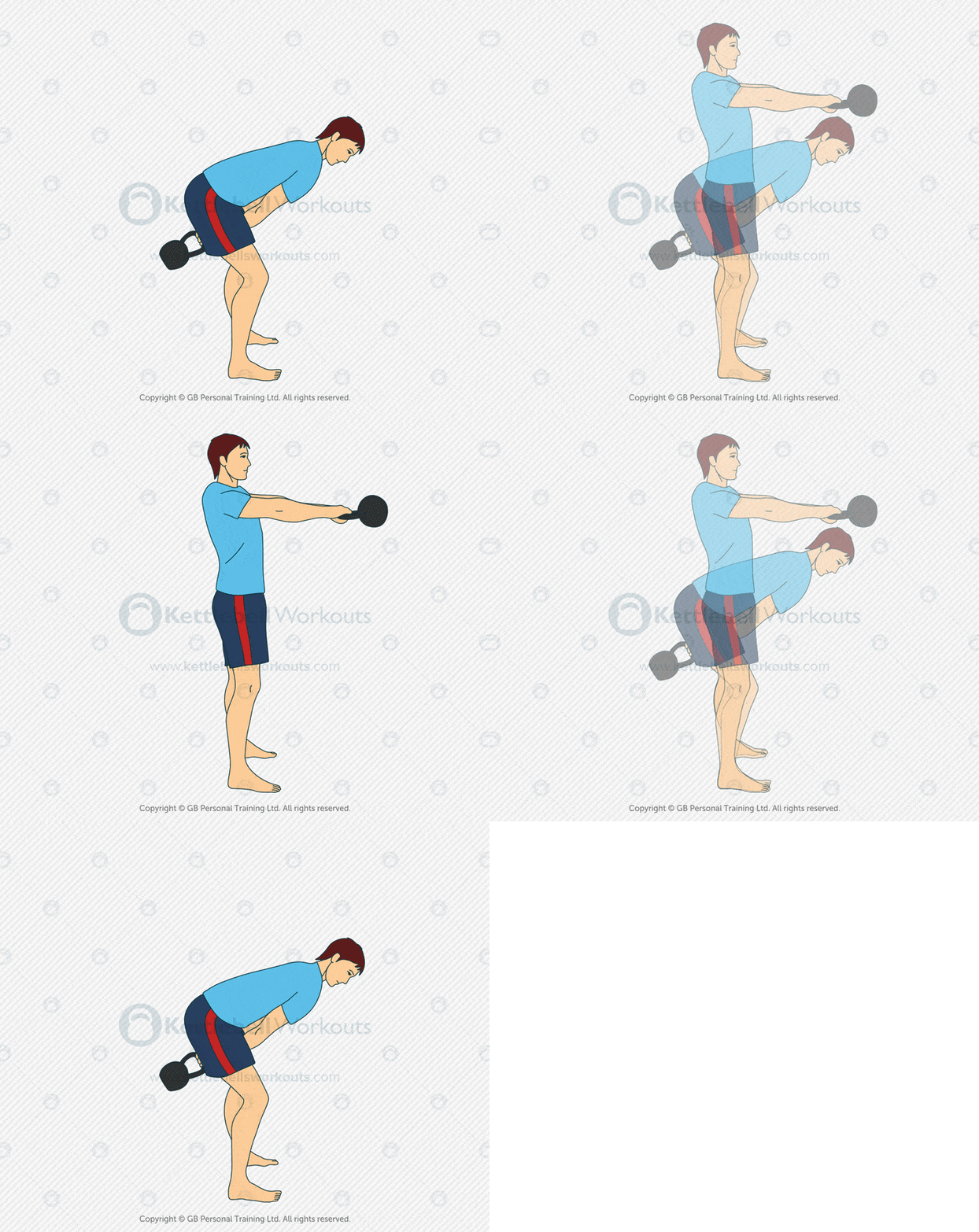
Ballistic exercises such as Swings and High Pulls can suit HIIT well when technique is already established.

Other Useful Kettlebell Workout Structures
Kettlebell WODs
A WOD simply means Workout of the Day. It is not one specific programming method, so a kettlebell WOD may use circuits, AMRAP, intervals, ladders or another structure.
Kettlebell Pyramid Workouts
Pyramids increase repetitions, load or time to a peak and then reduce them again. They create a natural rise and fall in training volume.
Kettlebell Ladder Workouts
Ladders progressively increase or decrease repetitions across sets. They are useful for accumulating volume while keeping each individual set manageable.
Kettlebell Superset Workouts
Supersets pair 2 exercises together with little or no rest between them. They are a simple way to organise strength work efficiently.
9 Simple Ways to Structure a Kettlebell Workout
These programming methods are useful even when you are not following one of the named formats above. They also give you simple ways to change a workout without constantly changing exercises.
1. Max Reps
Choose one exercise and a fixed time, then complete as many technically sound repetitions as possible. This works best with movements you already perform confidently.
For example, complete as many quality Two-Handed Swings as possible in 5 minutes, resting whenever needed.
2. Circuits
Select 3 to 6 exercises and perform them in sequence. Rest after the complete round, then repeat. This is one of the easiest ways to organise a full-body kettlebell workout.
See the dedicated Kettlebell Circuit Workout guide.
3. Density Training
Density training asks you to complete a fixed amount of work in less time, or more work in the same time, while preserving technique.
For example, complete 5 rounds of a short circuit and record the total time. Repeat the workout later and aim to improve the result without rushing the repetitions.
4. Interval Training and HIIT
Intervals alternate work and recovery. HIIT is the high-intensity end of that spectrum, where the work periods are deliberately hard enough that meaningful recovery is required.
Use the Interval guide for work-to-rest ratios and the HIIT guide for high-intensity programming.
5. Tabata Training
Use 20 seconds of work followed by 10 seconds of rest for 8 rounds. Choose an exercise you can perform repeatedly without technique breaking down as fatigue rises.
See the Kettlebell Tabata Workouts guide.
6. Repetition Ladders
Increase or decrease the repetitions from set to set. A simple 1, 2, 3, 4, 5 ladder accumulates 15 repetitions without requiring one long set.
Ladders work particularly well with strength exercises such as Presses, Squats and Rows.
7. Movement Ladders
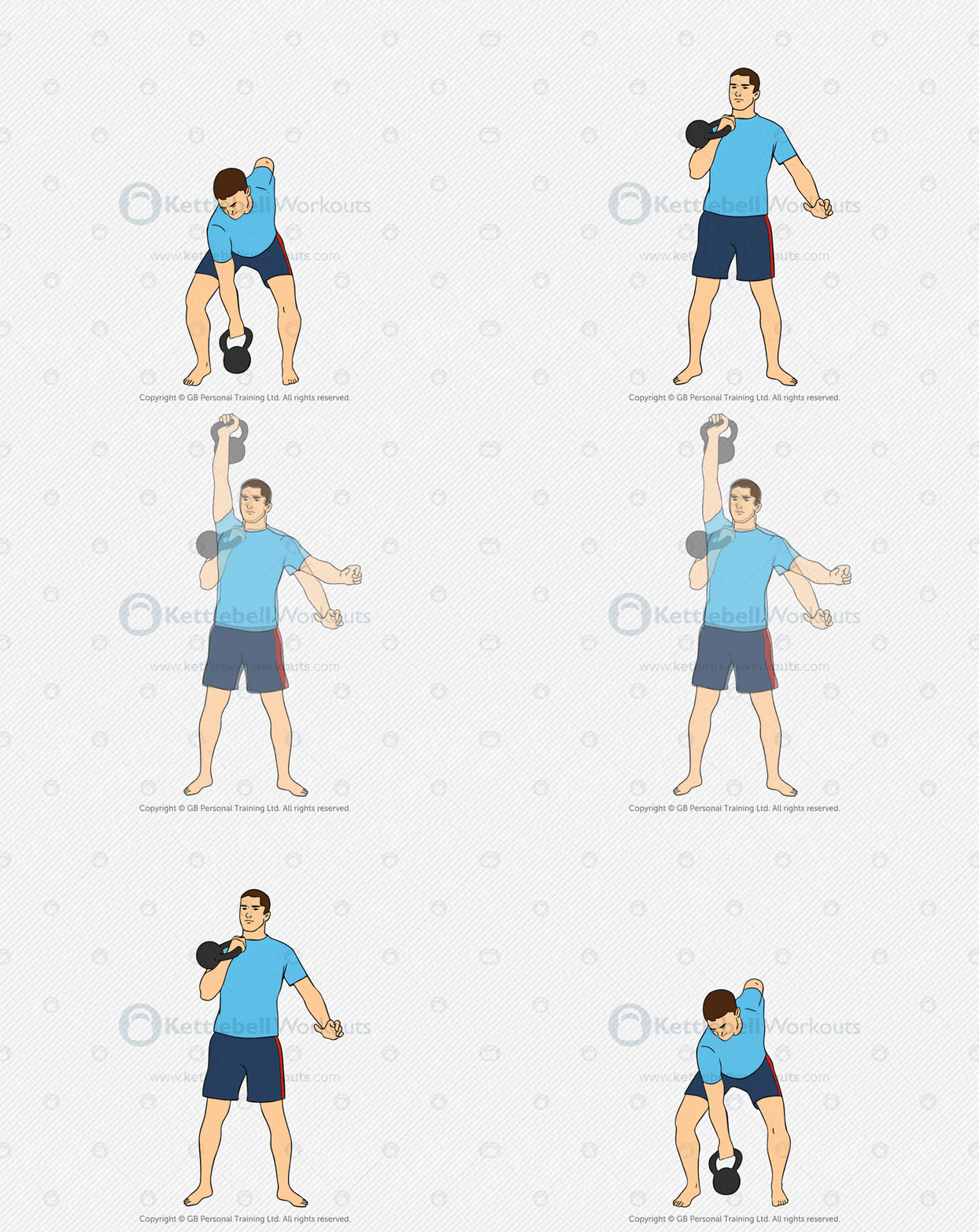
Add one exercise to the sequence at each stage. For example: Swing; Swing + Clean; Swing + Clean + Press; then add a Squat.
This can be a useful way to learn a longer complex or flow because the sequence develops gradually.
8. Resistance Ladders
Keep the exercise and repetition target similar while changing the kettlebell load across sets. This method only works when you have suitable weight options and every load remains technically appropriate.
9. Timed Reps
Instead of counting repetitions, work for a fixed period such as 30 or 40 seconds. This is useful for cyclical movements such as Swings and for simple circuit stations.
If you also prescribe the recovery period, you have moved into structured interval training.
Which Kettlebell Workout Format Should You Choose?
There is no single best format. The right choice depends on what you are trying to control.
Prefer the workout to be chosen for you? Try my Kettlebell Workout Generator.
Related Kettlebell Training Guides
Final Thoughts
Workout formats are tools. Use them to organise the exercises you already know rather than treating every new structure as a completely new programme.
Once you understand how each format controls work, recovery, volume and exercise order, you can build far more variety without needing dozens of new kettlebell exercises.
Frequently Asked Questions
What are kettlebell workout formats?
They are different ways of organising exercises, repetitions, work periods and recovery. Examples include EMOM, AMRAP, circuits, intervals, flows and complexes.
Which kettlebell workout format is best for conditioning?
Intervals, circuits, AMRAP, HIIT and Tabata can all be effective. The best choice depends on the intensity you want, the exercises being used and how precisely you need to control recovery.
Can beginners use kettlebell workout formats?
Yes, provided the exercises themselves are already familiar. Simple circuits and low-volume EMOMs are often easy formats to understand because the structure is predictable.
How often should I change kettlebell workout formats?
There is no need to change just for variety. Keep a format while it is helping you progress, then change it when your training goal or programming needs change.
What is the difference between ladder and pyramid workouts?
A ladder progressively increases or decreases repetitions across sets. A pyramid rises to a peak and then comes back down again.



Hi Greg. When thinking about an annual program, how can we combine these exercise formats? Where all formats (strength, endurance, cardio, fat loss and muscle) will be important to work at some point when thinking about the long term. Thanks!
Good question Eric and a big topic for this comment section. Basically you cycle through all the different formats every 2 – 6 weeks traditionally starting with higher reps end endurance and finishing with lower reps and power.
Hi Greg! Thanks for your email providing these details. With the above 12 methods, how to sequence them in my routine?
Thanks in advance!
Hello Iris, have another look through the article and see which workout format you are drawn to based on your specific goals.