
Last Updated on 13 August 2026 by Greg Brookes
Kettlebell ladder workouts are one of my favourite ways to make simple exercises feel structured, progressive and surprisingly engaging.
Instead of performing the same number of repetitions every set, a ladder changes the target as you move through the workout. You might climb from 1 rep to 5, work down from 10 to 1, or add another exercise each round.
The format gives you a clear target to chase without needing lots of exercises or complicated programming. I have used ladders with clients for years because they make it easy to accumulate useful training volume while keeping each individual set manageable.
Simple definition: a kettlebell ladder is a workout where the repetitions, or sometimes the number of exercises, increase or decrease in a planned sequence. The ladder is the structure. The exercise, load, rest and top rung determine whether the session feels more like strength work or conditioning.
What Is a Kettlebell Ladder Workout?
A repetition ladder changes the number of reps from one set, or rung, to the next. A simple 1 to 5 ladder looks like this:
That single ladder contains 15 repetitions. Complete it 3 times and you have accumulated 45 repetitions without ever performing more than 5 continuously.
This is one reason ladders can feel psychologically easier than being told to complete a large total from the start. You only need to focus on the next rung.
4 Useful Types of Kettlebell Ladder
Ascending Ladders
Start with a low number of repetitions and add reps with each rung.
I like ascending ladders for exercises where I want the early sets to feel comfortable and allow the body to settle into the movement.
Descending Ladders
Begin with the largest set and reduce the repetitions as fatigue develops.
This can work well for simpler exercises when you want the longest set completed while you are freshest.
Alternating-Side Ladders
For single-sided exercises, perform the same rung on the left and right before moving up.
This is particularly useful for presses, cleans and other unilateral movements because both sides receive the same work.
Movement Ladders
Instead of adding repetitions, add another exercise each round.
Movement ladders are more of a circuit format. They are useful when variety and full-body conditioning are the main goals.
Why I Like Ladder Workouts
Ladders are not magic. Their value comes from the way they organise work.
- They make volume easier to manage. Smaller sets can help you accumulate repetitions without one long fatiguing effort.
- They create clear short-term targets. Focusing on the next rung can make a session feel more motivating.
- They are easy to progress. You can add another ladder, raise the top rung, increase the load or shorten the rest.
- They work with many goals. The same structure can support strength practice, muscular endurance or conditioning depending on the exercise and loading.
- They keep simple workouts interesting. You can create a useful session with 1 or 2 exercises rather than continually searching for new movements.

How to Programme Kettlebell Ladders
The ladder itself is only a framework. These are the decisions that make the workout appropriate.
3 Kettlebell Ladder Workouts
These are the 3 formats from the original article, cleaned up and organised so you can use them immediately.
1. Clean and Press Strength Ladder
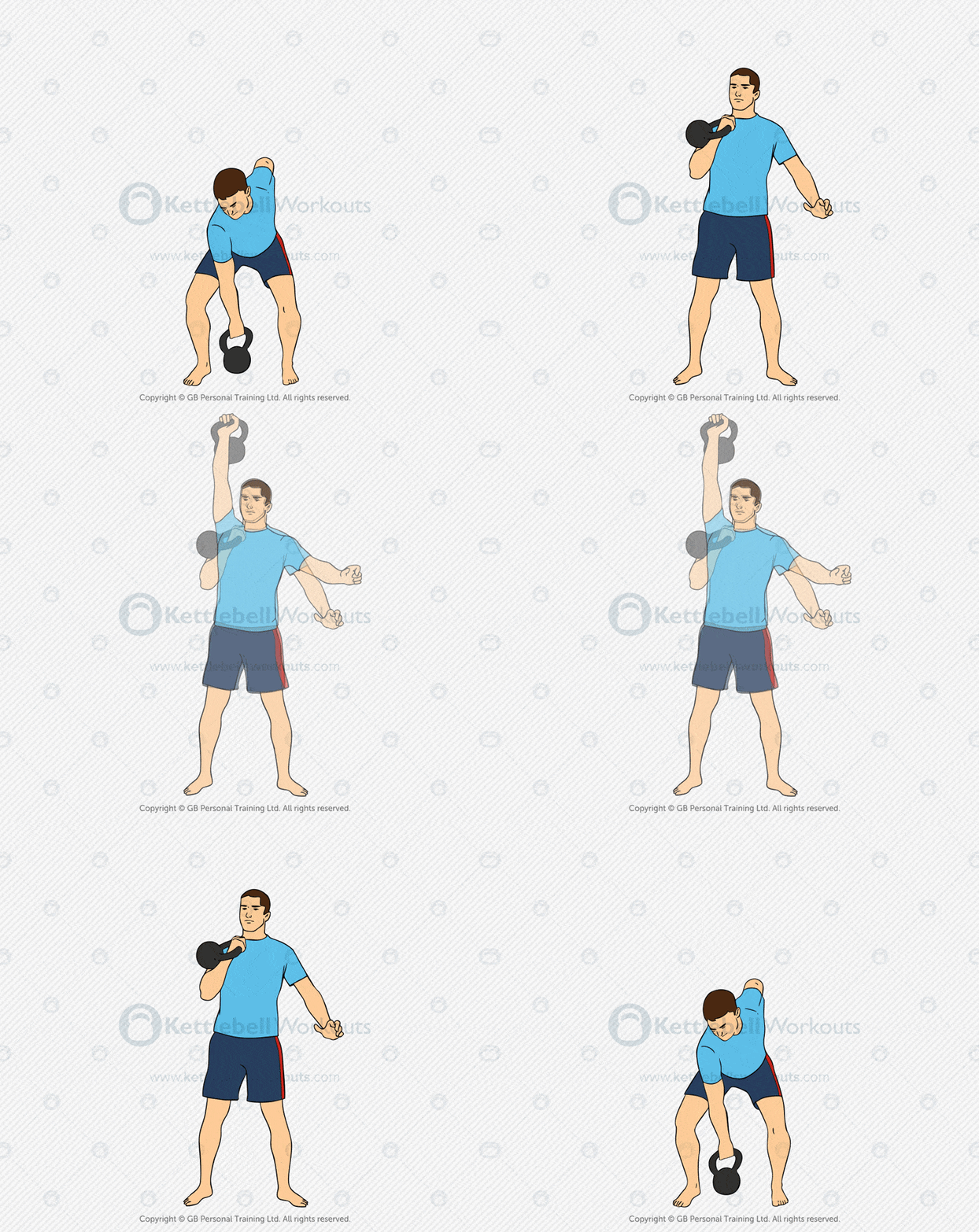
Format: 1 to 5 reps each side, repeated for 3 ladders.
- Clean and Press left: 1 rep
- Clean and Press right: 1 rep
- Then 2 each side
- Then 3 each side
- Continue to 5 each side
Rest as needed between rungs. After reaching 5, rest for around 60 seconds or longer if required, then begin again at 1.
Why I like it: the low rungs give you repeated quality practice while the total volume builds without needing a long continuous set.
2. Swing Conditioning Descending Ladder
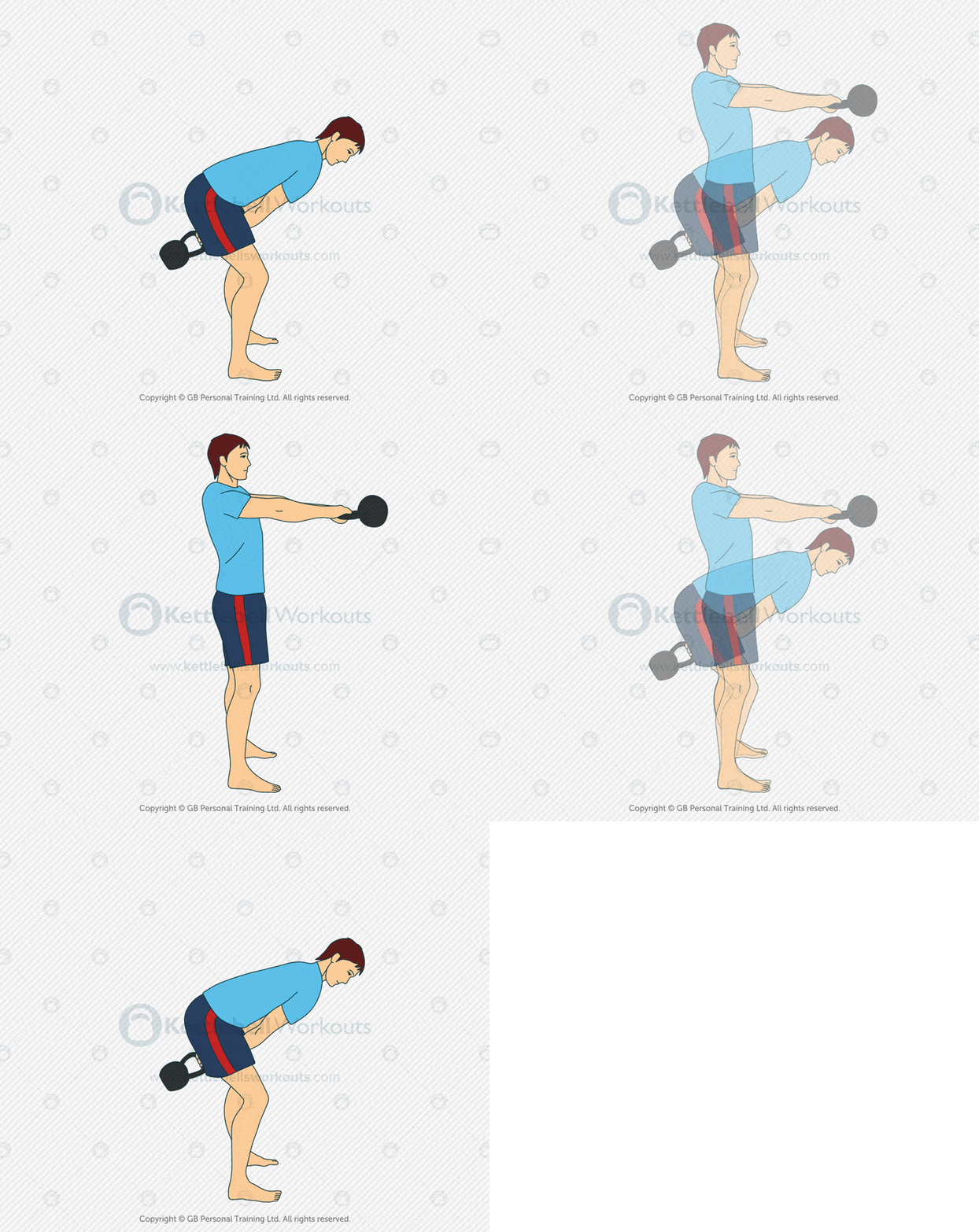
Format: descend from 10 reps to 1 rep.
- 10 Two-Handed Swings
- Rest 20 seconds
- 9 Two-Handed Swings
- Rest 20 seconds
- Continue down to 1 rep
This gives you 55 total Swings. The sets become shorter as fatigue develops.
Keep it appropriate: use a kettlebell you can swing crisply for every rung. Increase the rest rather than allowing the Swing to turn into a tired squat-and-lift.
3. Movement Ladder Circuit
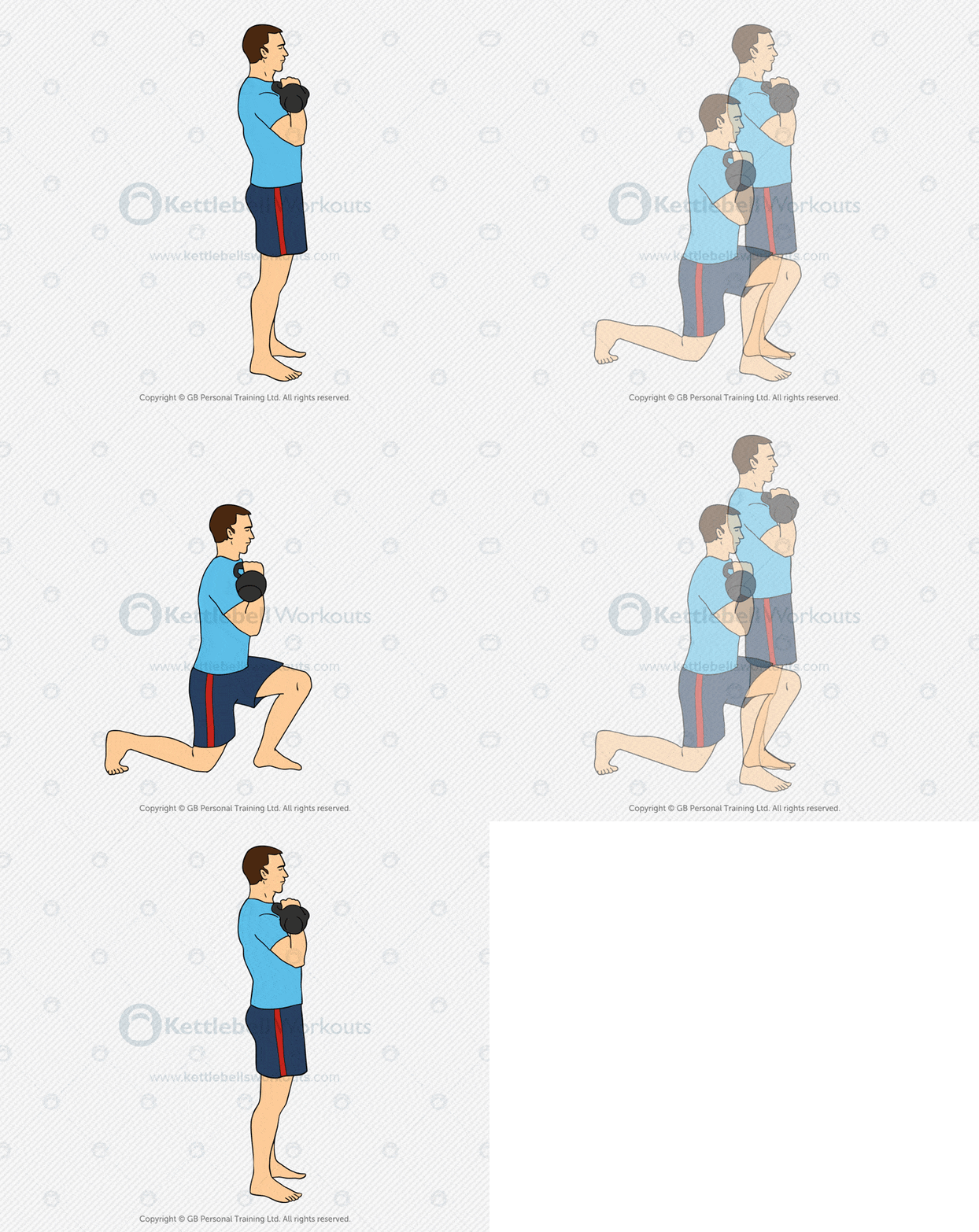
Format: add 1 exercise each round.
- Round 1: Swing x 10
- Round 2: Swing x 10 + Goblet Squat x 10
- Round 3: add Clean and Press x 5 each side
- Round 4: add Reverse Lunge x 5 each side
Rest as needed between rounds. Because each round becomes longer, avoid rushing the transitions just to keep the heart rate high.
Why I like it: movement ladders give you variety without making the session random. The workout grows in a predictable way as each round adds another task.
How I Use Ladders in Practice
I particularly like ladders when somebody needs more training volume but gets bored by straight sets. The changing target makes the session feel as though it is moving somewhere.
For strength work, I keep the rungs low enough that every repetition remains deliberate. For conditioning, I am happy to let the accumulated work raise the heart rate, but I still do not want technique deteriorating just to complete the format.
The ladder should serve the exercise. The exercise should never be sacrificed to finish the ladder.
Where Ladder Workouts Fit
Ladders are one of many useful ways to organise kettlebell training. They work especially well when you want a clear progression within a single session without constantly changing exercises.
If you enjoy this style of training, you can also experiment with EMOM workouts, kettlebell circuits, flows and complexes.
Related Kettlebell Guides
These are the most useful next steps if you want to build more variety into your programming:
Frequently Asked Questions
What is a kettlebell ladder workout?
It is a structured workout where the repetitions, or sometimes the number of exercises, change in a planned sequence. A simple example is 1 rep, 2 reps, 3 reps, 4 reps and 5 reps.
Are kettlebell ladders good for beginners?
They can be, provided the exercises are already familiar. Keep the top rung low, use manageable loads and stop before fatigue changes the movement.
How heavy should the kettlebell be for a ladder?
Choose the load according to the hardest rung, not the easiest one. You should be able to complete the top set with clean technique and without grinding through the final repetitions.
Can kettlebell ladders be used for conditioning?
Yes. Swings and movement ladders can create a strong conditioning effect when rests are relatively short. Technique still determines how quickly you should progress.
What is the difference between a ladder and a pyramid?
A ladder usually moves in 1 direction, such as 1 to 5 or 10 to 1. A pyramid climbs and then comes back down within the same sequence, for example 1, 2, 3, 4, 5, 4, 3, 2, 1.


Hi Greg, I did ladder for fat loss yesterday, awesome
How long is the rest period between the ladder reps for mass and the rest periods between the sets cheers Scott
Usually around 1-1.5 for mass and 2-3 minutes for strength Scott.
Hi greg while doing the ladder reps for mass could you recommend any kettlebell excersisis for adding mass to the chest
Hello Scott, kettlebells are not the correct tool for adding mass to the chest, I’d work on push ups or single arm push ups instead. You will get chest activation from many of the pushing kettlebell exercises but they are not optimal for mass.
Greg: if I were to add a squat to the fat loss routine and still keep the swing in the routine, what would you suggest for a sequence?
Mike, you could replace the overhead press with the thruster (squat and press) that way you still only have to perform 3 exercises 🙂