
Last Updated on 13 August 2026 by Greg Brookes

The kettlebell overhead hold is one of the simplest ways to build confidence and control in the overhead position before adding more movement. Once you can hold the bell comfortably, you can progress to walking, lunging, squatting, rotating and eventually more dynamic overhead exercises.
These 7 overhead kettlebell exercises challenge shoulder stability in progressively different ways. Some are almost completely static at the shoulder, while others keep the arm overhead as the rest of the body moves underneath it.
If overhead work causes pain rather than normal muscular effort, reduce the load or range and choose a variation you can control comfortably.
Why Use Static Holds Before Dynamic Overhead Exercises?
An overhead press asks you to move a load into position. An overhead hold asks you to maintain that position once the kettlebell is there. Separating those 2 skills can be very useful, particularly when you are learning overhead technique or returning to overhead training.
The rotator cuff, deltoid, upper back, trunk and many other muscles all contribute to keeping the arm and kettlebell organised overhead. Their roles overlap, so I would not think of overhead stability as a few small “stabiliser muscles” working while the larger muscles switch off.
Instead, use static holds to practise the position under a manageable load. Once you can maintain good control, progress by adding walking or lower-body movement before increasing the kettlebell weight.
7 Overhead Kettlebell Static Hold Exercises
The exercises progress from a basic single-arm overhead hold and walk through increasingly demanding movements. You do not need to master all 7 before pressing overhead. Choose the variations that match your current mobility, strength and experience.
Kettlebell Overhead Hold and Walk
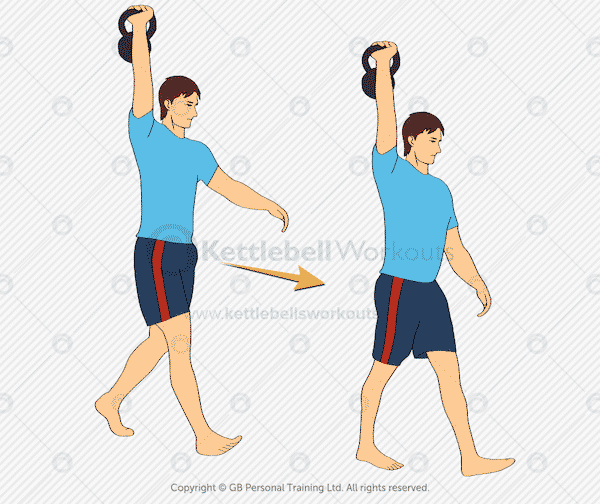
Best for: learning the overhead lockout and building confidence under load.
This is the best place to start. Press or assist the kettlebell into a comfortable overhead position, then hold it still before adding any walking. Keep the wrist stacked, the elbow straight and the ribcage controlled rather than leaning away from the kettlebell.
Once a stationary hold feels secure, turn it into an overhead walk or carry. Walk normally and let the shoulder blade settle into the position that feels strong rather than deliberately forcing the shoulder down.
Start with: 10 to 30 seconds per side. Build towards controlled walking only after the static hold feels solid.
Kettlebell Overhead Warm Up

Best for: overhead stability while changing levels and moving between standing and kneeling.
This drill keeps the kettlebell overhead while you step back into a reverse lunge, move to tall kneeling and then return to standing. The shoulder has to maintain the overhead position while the rest of the body changes underneath it.
Move slowly enough that the kettlebell remains stacked over the shoulder. Keep the trunk controlled and avoid turning the drill into a race.
Start with: 3 to 5 controlled repetitions per side before progressing towards 5 to 10.
Kettlebell Windmill
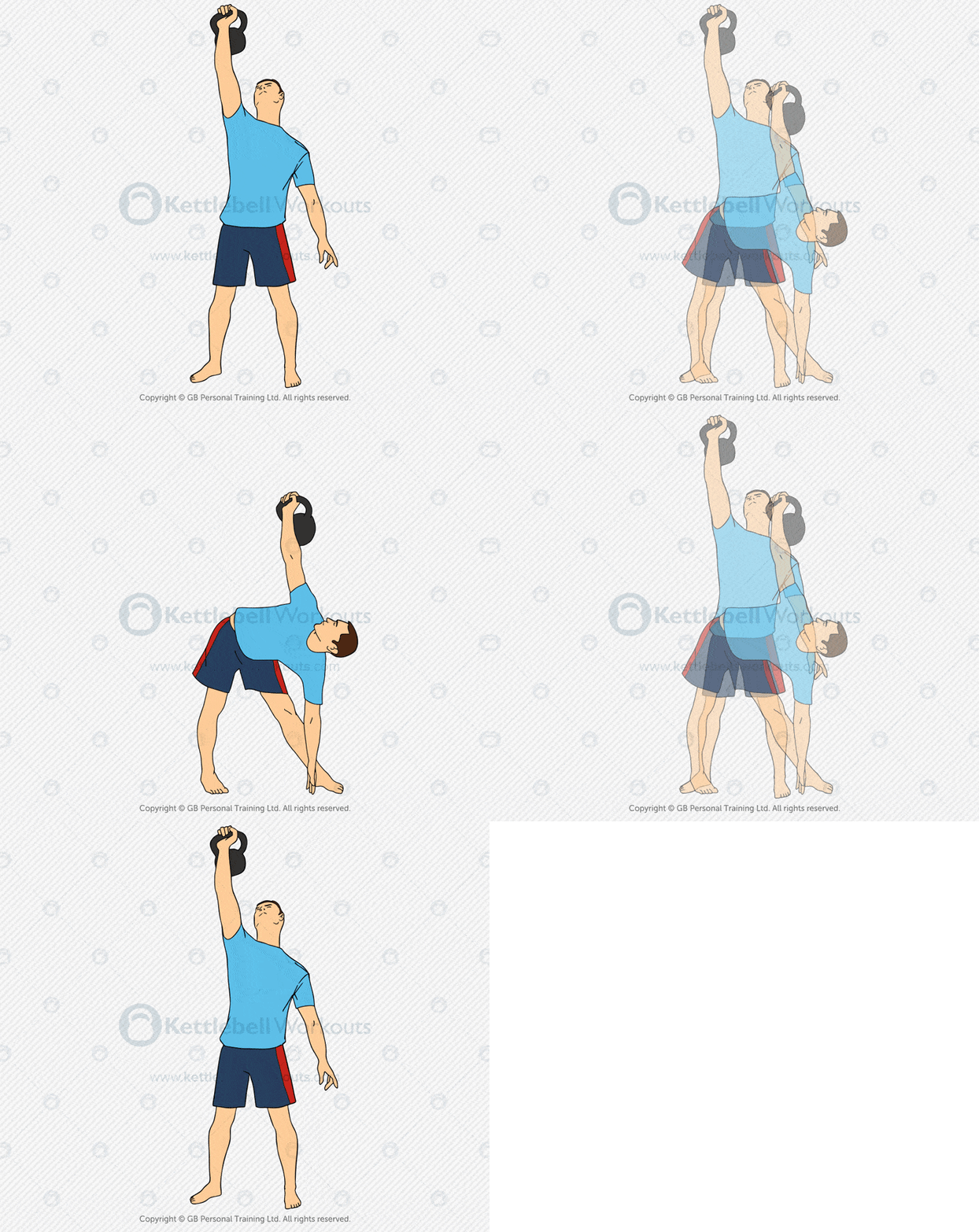
Best for: overhead control through hip movement and trunk rotation.
The Windmill challenges shoulder stability from changing body angles rather than simply holding still. The arm stays vertical while the hips move backwards and the torso rotates underneath the kettlebell.
Practise the movement unloaded first. Keep your eyes on the kettlebell, maintain a comfortable shoulder position and only descend as far as your hip and hamstring mobility allows without losing control.
Start with: 3 to 5 slow reps per side with a light kettlebell.

Kettlebell Overhead Squat

Best for: overhead stability combined with squat strength and upper-back mobility.
The Overhead Squat is considerably more demanding than a basic overhead hold because the shoulder has to stay organised as the hips and knees move through a deep range.
You should already be comfortable with Goblet Squats and with holding the kettlebell overhead. Keep the arm long, the ribcage controlled and use only the squat depth that lets you maintain the kettlebell over your base of support.
Start with: 3 to 6 controlled reps per side with a light kettlebell.
Kettlebell Overhead Lunge

Best for: shoulder stability while the legs and pelvis move underneath the load.
Holding a kettlebell overhead changes the balance demands of the lunge and asks the trunk to remain organised as you step. I prefer the reverse lunge as the first variation because it is usually easier to control.
Keep the kettlebell stacked overhead and avoid arching the lower back to create extra range. Master the lunge itself before adding a challenging overhead load.
Start with: 5 to 8 reverse lunges per side.
Kettlebell Turkish Get Up
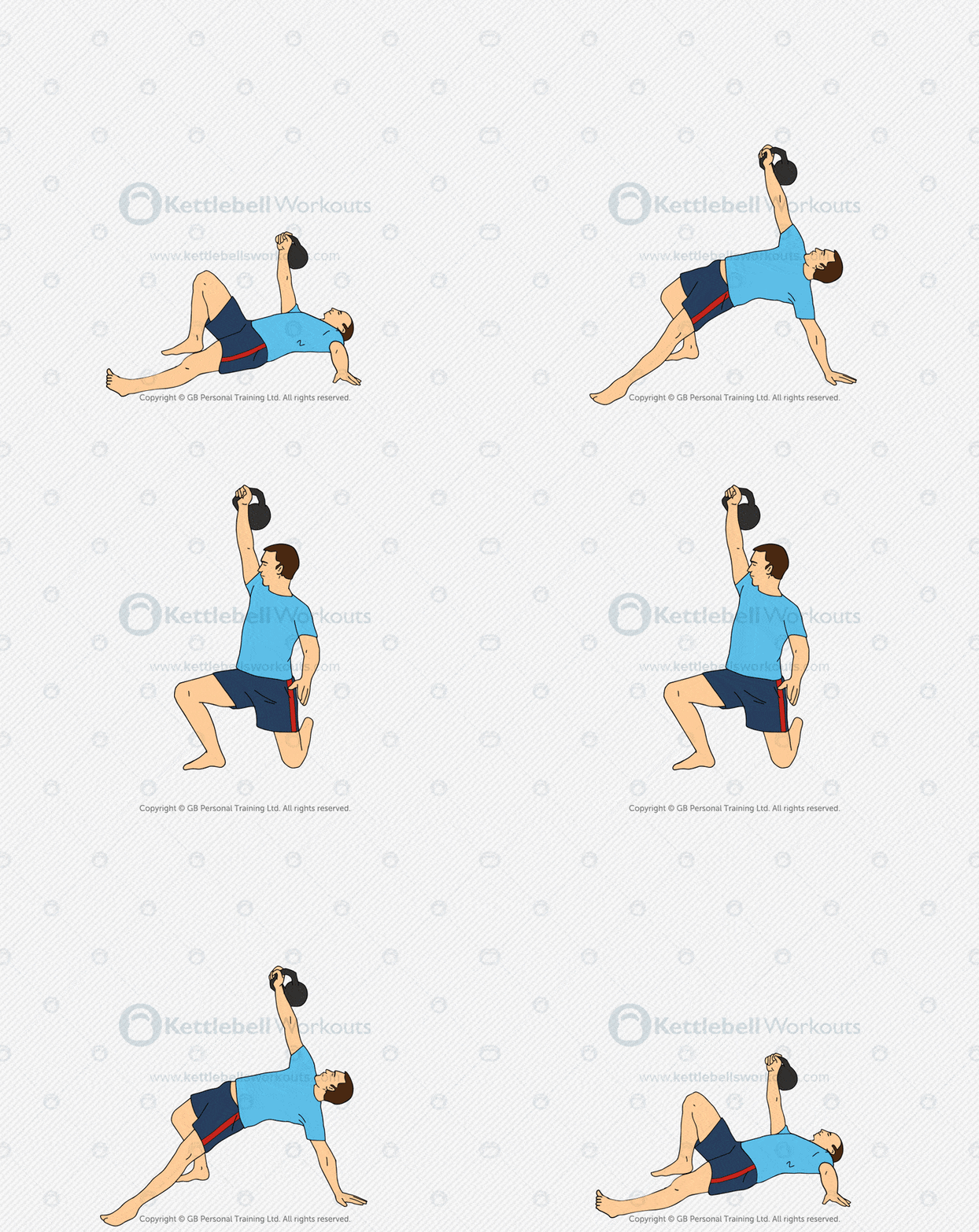
Best for: shoulder control through multiple angles and whole-body transitions.
The Turkish Get Up is one of the most complete ways to train an overhead position because the shoulder has to remain organised as you move from lying to standing and back down again.
Learn the sequence without weight first, then use the Half Get Up before progressing to the full movement. Keep your attention on the kettlebell and move deliberately through every transition.
Start with: 1 to 3 slow reps per side.
Kettlebell Overhead Straight Arm Sit
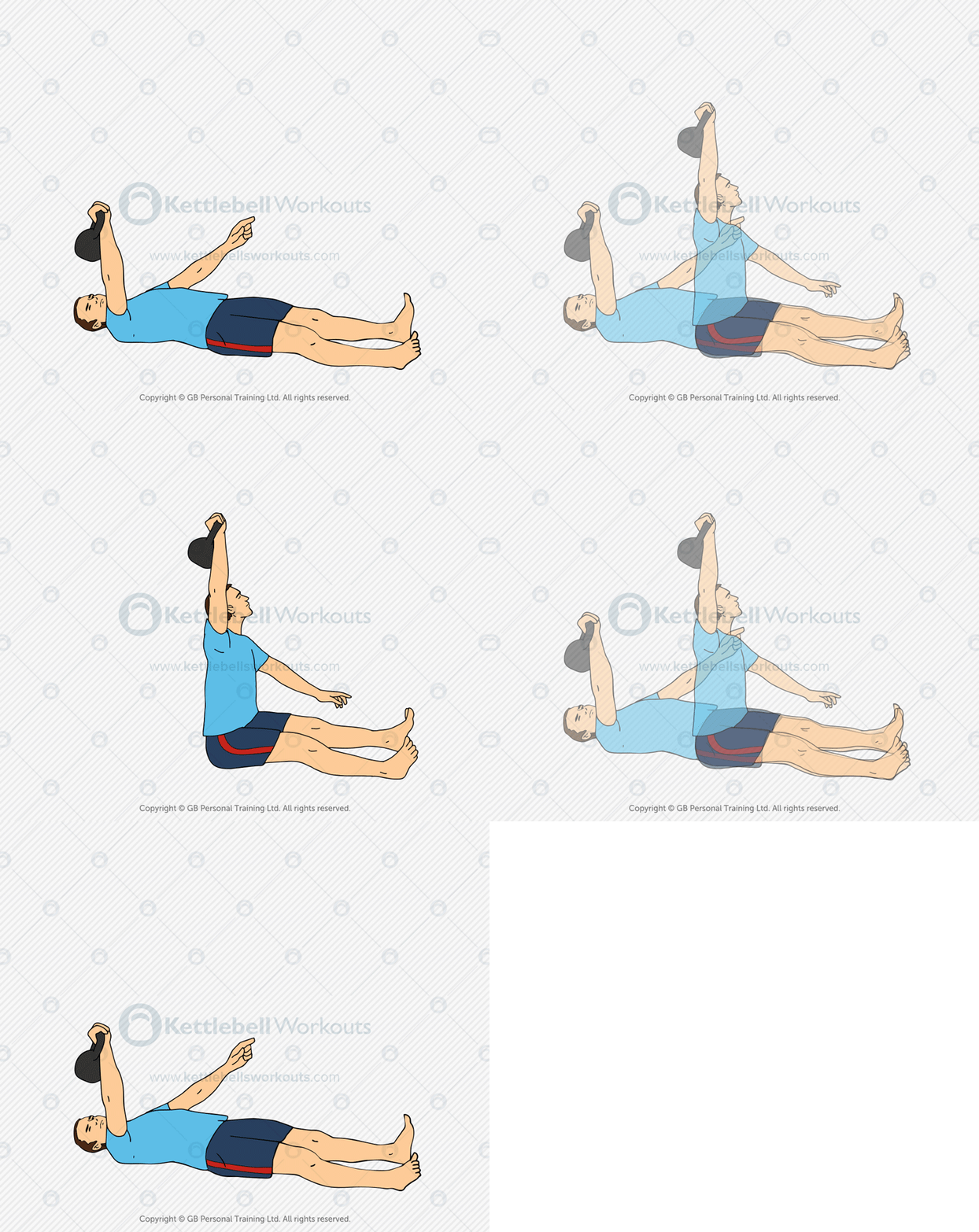
Best for: trunk strength while maintaining a long overhead arm.
The Straight Arm Sit takes the kettlebell from a horizontal starting position into a vertical overhead position as you sit up. The shoulder has to stay controlled while the abdominals produce the movement.
Keep the arm straight and lower back to the floor slowly. If tight hamstrings make the movement awkward, allow a small knee bend rather than forcing the legs completely straight.
Start with: 5 to 8 slow reps per side with a controlled lowering phase.
Advanced Option: Bottoms Up Overhead Hold

Best for: adding a much greater grip and alignment challenge to the overhead position.
The bottoms up position makes the kettlebell far less forgiving. Small changes in wrist, elbow or shoulder position are immediately exposed because the bell wants to tip.
Learn the Bottoms Up Clean first and practise short holds before trying to move overhead. Use a light kettlebell, stay somewhere you can safely step away and never fight a bell that is beginning to fall.
Start with: 3 to 5 second bottoms up holds before progressing overhead.
How Long Should You Hold a Kettlebell Overhead?
For a basic single-arm kettlebell overhead hold, quality matters more than chasing a long time. Start with short holds and stop before the position deteriorates.
- Beginner static hold: 10 to 20 seconds per side
- Building control: 20 to 30 seconds per side
- Overhead walk: 20 to 60 seconds per side
- Moving exercises: usually 3 to 8 controlled reps per side
If your wrist bends, elbow softens, ribcage lifts aggressively or you begin leaning away from the kettlebell, finish the set. Longer is not automatically better.
Kettlebell Overhead Hold Technique
The exact shoulder-blade position will vary between people and between exercises, but these coaching points work well for most kettlebell overhead holds:
- keep the wrist stacked rather than allowing the kettlebell to pull it backwards
- straighten the elbow without aggressively forcing it beyond your normal lockout
- keep the kettlebell balanced over your base of support
- control the ribs and pelvis rather than leaning backwards to create overhead range
- breathe normally instead of turning every hold into a maximum brace
- use a load that allows a stable, repeatable position
Progressing Your Overhead Kettlebell Holds
The basic kettlebell overhead hold is the foundation. From there, adding walking creates an overhead carry, while Windmills, Lunges, Squats and Get Ups challenge the same overhead position as the rest of the body moves through increasingly complex patterns.
Progress in whichever direction solves your actual limitation. If you lack confidence overhead, spend more time on basic holds. If the hold is strong but movement underneath it is difficult, use the Warm Up, Windmill or Get Up. If everything is controlled, then heavier loads and more dynamic pressing can make sense.
The goal is not simply to survive with a kettlebell above your head. It is to own the overhead position well enough that the shoulder, trunk and lower body can work together without unnecessary compensation.
Related Kettlebell Guides
Use these guides to develop your overhead training further:
Frequently Asked Questions
What does a kettlebell overhead hold work?
An overhead hold trains the shoulder and upper-back muscles that control the arm, while the grip, trunk and lower body help keep the kettlebell balanced over your base of support.
How long should I hold a kettlebell overhead?
Start with 10 to 20 controlled seconds per side. Build towards 20 to 30 seconds before making the exercise harder through walking, movement or additional load.
Is an overhead kettlebell walk the same as an overhead carry?
Yes. Both describe walking while holding the kettlebell overhead. The exercise challenges the overhead position while the body has to control each step.
Are kettlebell overhead holds good for shoulder stability?
They can be an effective way to train shoulder control under load, especially when progressed from a simple static hold into walking and controlled whole-body movements.
Should I keep my shoulder down during an overhead hold?
Do not aggressively force the shoulder away from the ear. The shoulder blade needs to rotate as the arm moves overhead. Aim for a comfortable, controlled position rather than trying to pin it down.
What weight should I use for an overhead kettlebell hold?
Use a kettlebell you can place overhead safely and control without leaning, bending the wrist or losing the elbow position. Increase the load only after the position is repeatable on both sides.


Great article! Thanks
Sorry, I didn’t get it. Am I supposed of be still and just hold a weight above my head or must I move? I figured that “static” meant the first option. I’m currently doing a 45″-overhead walk x arm (load kg 12).
Start with just a static hold Stefano and then once that is comfortable you can add in some walking.