
Last Updated on 7 August 2026 by Greg Brookes

A good kettlebell clean should feel smooth. The bell travels close to your body, your hand moves around the handle, and the kettlebell arrives softly in the rack without crashing onto your wrist.
If the kettlebell keeps banging your forearm, the problem is usually not toughness or wrist strength. It is the path of the kettlebell, the timing of your hand insertion, or both.
The clean is also an important skill because it gives you an efficient way to move the kettlebell into the rack position for presses, squats, lunges and longer combinations.
How to Clean a Kettlebell Step by Step
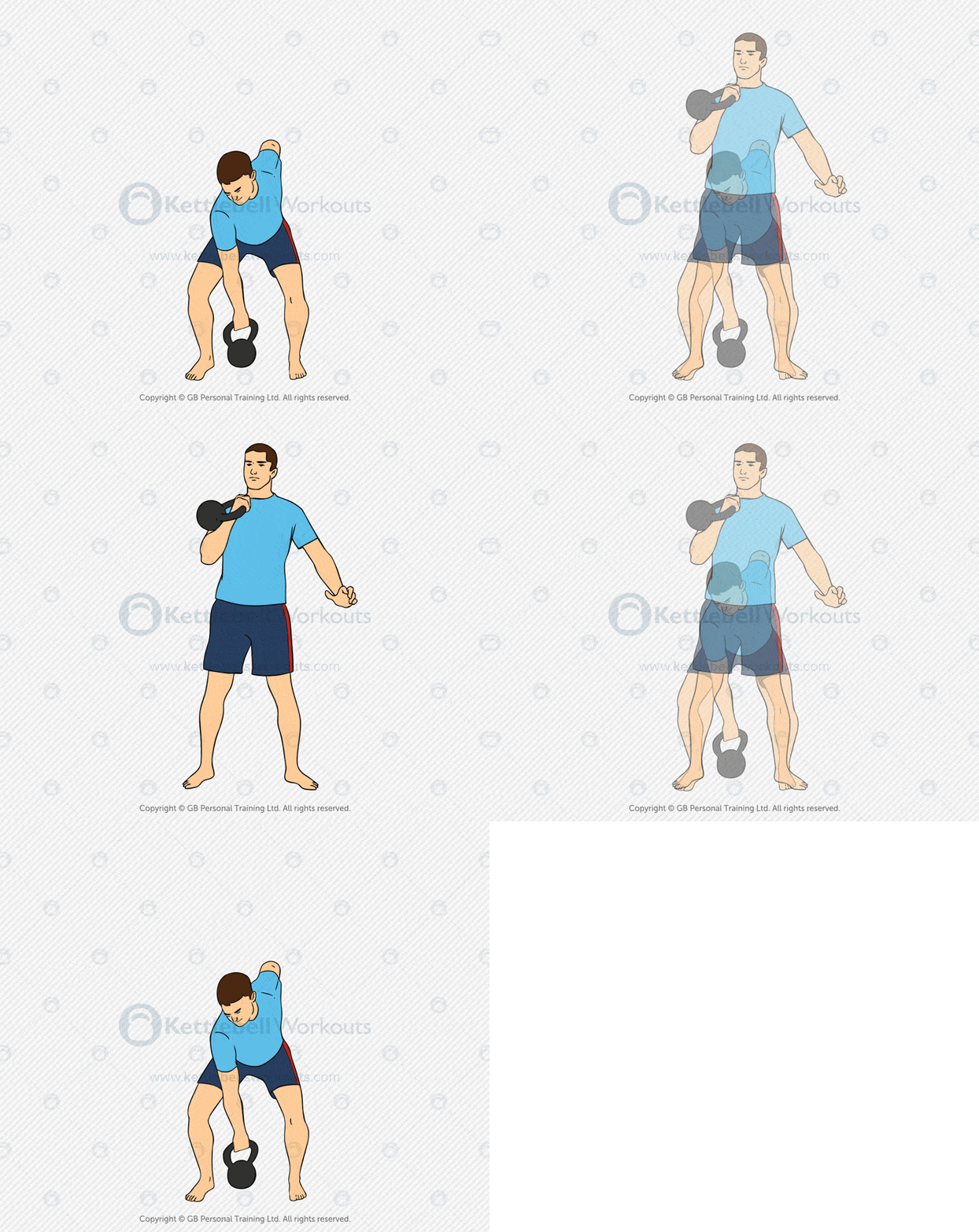
- Set up the hinge. Place the kettlebell slightly in front of you, push the hips backwards and keep the spine long.
- Hike the kettlebell back. Grip with one hand and pull the kettlebell back between the legs as you would for a one-handed swing.
- Drive from the hips. Extend the hips and let that power move the kettlebell upwards. Do not curl it with the arm.
- Keep the bell close. The elbow stays near the ribs so the kettlebell travels upwards rather than making a large arc away from you.
- Insert the hand. As the kettlebell rises, guide your hand deeply through the handle and let your arm wrap around the bell.
- Finish softly in the rack. The kettlebell rests against the forearm and upper arm, the wrist stays neutral and the elbow remains close to the body.
The 3 Things That Make a Clean Work
You can make the clean unnecessarily complicated. In practice, I concentrate on 3 things.
How to Stop the Kettlebell Banging Your Wrist
The bruised-forearm problem usually begins much earlier than the moment of impact. If the kettlebell has already travelled too far away from you, it has to swing back towards the arm with speed.
4 Kettlebell Clean Drills
Rather than repeating full cleans and hoping they improve, isolate the pieces that usually cause the problem.
What Should the Rack Position Feel Like?
The clean is not finished until you own the rack position. If the wrist, elbow and torso are disorganised at the top, the clean will never feel efficient.
How to Lower the Kettlebell from the Rack
The return is part of the clean too. Do not simply let the kettlebell fall away from the chest.
Guide the elbow slightly away from the body, allow the handle to rotate through the hand and reconnect the kettlebell with the hinge. As the bell drops, push the hips backwards so the weight travels between the legs under control.
If the kettlebell pulls heavily on your hand or drops suddenly, use a lighter bell and practise the return separately.
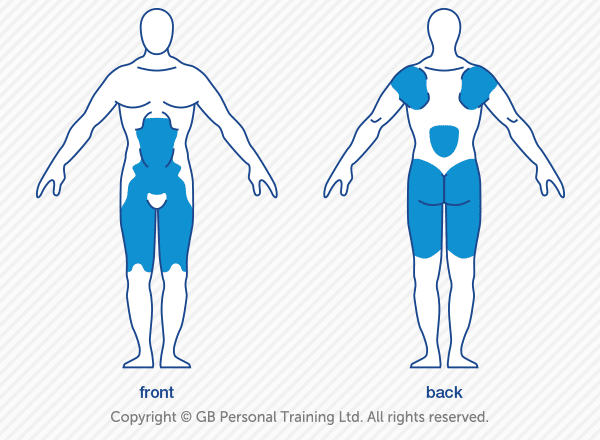
Muscles Worked During the Kettlebell Clean
The clean is a hip-hinge movement, so the glutes and hamstrings provide much of the drive. The upper back, shoulder, forearm and grip help guide and stabilise the kettlebell as it reaches the rack.
- Glutes
- Hamstrings
- Core
- Upper back and lats
- Shoulders
- Forearms and grip

Common Kettlebell Clean Mistakes
Kettlebell Clean Variations
Once the standard clean is reliable, these variations give the movement a different purpose. I would learn them separately rather than trying to turn this page into a tutorial for every type of clean.
Use the clean to establish a strong rack before pressing overhead.
A precision variation that demands much more grip, timing and control.
Links the clean into a full-body strength and conditioning sequence.
Adds balance and cross-body control to the clean pattern.
Combines lateral leg work with the timing of the clean.
Starts from a hanging position rather than a full backswing and can be useful for focused technique practice.

Do Not Rush the Variations
The standard clean should arrive quietly in the rack before you add presses, squats, balance challenges or bottoms-up work.
What Kettlebell Weight Should You Use?
Use a kettlebell that lets you practise the clean repeatedly without losing the bell path or rack position. While learning, it often makes sense to use less weight than you would for your normal two-handed swing.
The graphic below shows the general starting ranges I have historically used with new kettlebell trainees, but treat them as a guide rather than a rule. Training history, body size and current strength all matter.

The useful test is simple: you should be able to practise several clean repetitions without the weight forcing you to curl the bell, lean backwards or accept a heavy impact on the forearm.
Simple Kettlebell Clean Practice
If your goal is technique, keep the practice short enough that each repetition still looks and feels the same.
Repeat for 2 to 4 rounds. Stop the set when the clean starts becoming noisy or the kettlebell begins striking the forearm.
What to Learn After the Clean
Once you can clean the kettlebell comfortably, the rack position becomes the starting point for many other exercises.
Frequently Asked Questions
Why does the kettlebell hit my wrist during a clean?
The kettlebell is usually travelling too far away from the body or your hand is entering the handle too late. Keep the elbow close, guide the bell upwards and move your hand around the handle before the kettlebell has a chance to flip over it.
Is the kettlebell clean an arm exercise?
No. The clean is driven primarily by the hips. The arm guides the kettlebell and helps control the rack position, but trying to curl the bell with the arm usually makes the technique worse.
Should I learn the swing before the clean?
I prefer people to understand the hip hinge and one-handed swing first because the clean uses the same basic hip drive. The clean then changes the path of the kettlebell so it finishes in the rack rather than continuing forwards.
What is the correct kettlebell rack position?
The kettlebell should rest comfortably against the forearm and upper arm with the wrist neutral, elbow close to the body and torso upright. You should not need to lean backwards or bend the wrist to support the weight.
Is the clean better than the kettlebell swing?
No. They have different jobs. The swing is excellent for repeated hip-hinge work, while the clean gives you a controlled way to bring the kettlebell into the rack for other exercises.
Can I practise kettlebell cleans every day?
You can practise them frequently when the load and volume are modest, but there is no requirement to clean every day. If your grip, timing or rack position deteriorates, more repetitions are unlikely to improve the skill.

Hi Greg. I love your site which I discovered recently while looking online for tutorials on how to do a kettlebell clean! I’ve mastered the exercise now and am focusing on getting my rep range up before moving onto other more complex movements.
Regarding reps you say to work to 25, or 1 min of cleans. But is that for just one set? What if you’re doing say 3 sets? How many reps would you suggest aiming for in that case?
At present I can do 3 sets of say 8 reps.
Thanks!
Sharon
Hey! Love the details and smooth movement patterns. Thoughts on coming from the hang position?
Hi Greg-Love your work! I’m a 68 yr old guy who does resistance training to augment my competitive cycling, have been doing deadlifts for years(100kgs X6reps). Have recently learnt I have a couple of bulging discs in my neck, symptoms are mild and GP not concerned, normal for my age apparently! Question is……are there kettle exercises that I should avoid? (I appreciate the need for proper technique)Cheers,Rob. Melbourne
Depending on which areas Robert, I imagine the L5 S1 area? In which case I would be very careful with kettlebell swings.
I was shocked just how easy the clean can be when you snap your hips. It almost feels like cheating! The bell just pops right into position before I even have a chance to think about it. Thanks!
HI Greg, I love you KB workout, I got to say my diet isn’t the greatest thing. I am sure if I followed your eating plan along with the workout I would be doing much better but otherwise I love your workouts. I am on week 6 with the fat loss program. Do you have a blog or reviews where people post progress?
Well done Sabrina, keep up with the training. Yes your nutrition is very important if your goals are fat loss.
Hi Greg,
I’m thinking of starting the Kettlebell Clean and I think that your instructions very clear and useful. Thank you.
Hello, I am new to Kettlebell and am not very strong. Would like to get my arms toned up as well as my stomach area
Just got the email with this instruction on cleans today as I’m about to start into cleans in your Beginner 12 Week KB Workout. Your instructions and routines are great and I’ve really noticed some good results, particularly in my core. Thanks for all you put into your website!
My pleasure Bill, I’m pleased the info was helpful.
All technic looks really clear , but what about breathing , I think it’s also very important thing
Very true Ted, I have an article on how to breathe during exercise here
This is awesome! I just taught a clean to beginner today and this post gave me a great summary of everything to go over in the next session. Thank you, Greg, you’ve done it again 🙂
My pleasure Kat, hope the session goes well.