
Last Updated on 14 August 2026 by Greg Brookes
Double Kettlebells Let You Add Load Without Changing the Basic Movement Patterns
Once you are comfortable with 1 kettlebell, using 2 bells can dramatically increase the loading potential for Squats, Lunges, Rows, Presses, Cleans and Deadlifts. That makes double-kettlebell training particularly useful for strength and muscle gain.
Double kettlebell training is not automatically better than using 1 bell. It is simply another way to create more load and a different training challenge.
If you are still learning the basic kettlebell movements, stay with 1 bell. Once your Clean, Squat, Lunge, Press and hinge patterns are well established, doubles become a very useful progression.

Why Use 2 Kettlebells?
The biggest advantage is simple: more total load. Strong legs and backs can quickly outgrow a single kettlebell, especially for Squats, Lunges and Rows.
Using 2 kettlebells also changes the way the trunk has to stabilise the body, particularly when both bells are held in the rack or overhead.
Double Kettlebell Workout
This is a demanding full-body session. It works best for experienced kettlebell users who already know the individual exercises.
Rest 2 to 3 minutes after the full sequence and repeat for 2 to 3 rounds.
There is no need to rush between exercises. If grip, breathing or technique deteriorates, rest before continuing.
5 Double Kettlebell Exercises
The following 5 exercises cover power, strength, muscle and trunk control. The goal is not to collect complicated double-kettlebell tricks, but to use movements that give you a clear training benefit.
Double Alternating Clean

Best for: Power, coordination and conditioning
Start with 1 kettlebell in the rack while the other hangs between the legs. Alternate the Clean so 1 bell rises as the other returns to the bottom position. Keep the hips doing the work rather than curling the bells.
Starting point: Practise the single-arm Clean first, then use low-rep alternating sets.
Double Kettlebell Windmill

Best for: Shoulder stability, trunk control and mobility
The lower kettlebell adds load while the upper bell demands shoulder stability. This is an advanced variation, so the regular Windmill should already feel very comfortable before adding a second bell.
Starting point: Use light bells and 3 to 5 controlled reps each side.
Double Clean, Squat & Press
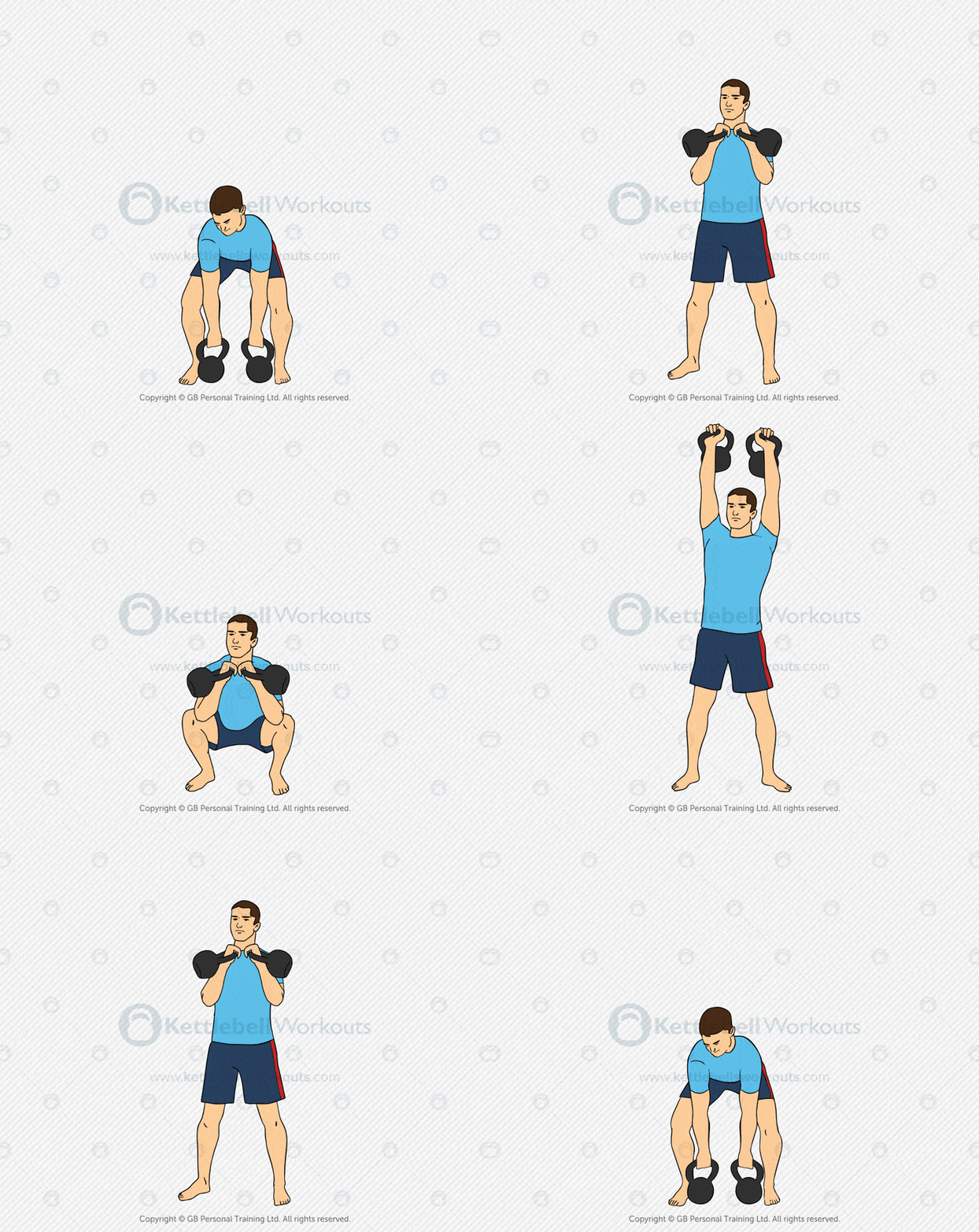
Best for: Full-body strength endurance and muscle
Clean both bells to the rack, Squat under control, then stand and Press. Because several large movements are combined, fatigue builds quickly. Keep the load challenging but leave enough reserve to maintain clean technique.
Starting point: 3 to 6 controlled reps per set.
Double Kettlebell Single-Leg Deadlift

Best for: Glutes, hamstrings and unilateral strength
Holding 2 kettlebells allows more loading without needing a single very heavy bell. Keep the hips square and use light support if balance becomes the limiting factor rather than the posterior-chain muscles.
Starting point: 3 sets of 6 to 10 reps each side.
Double Kettlebell Lunge
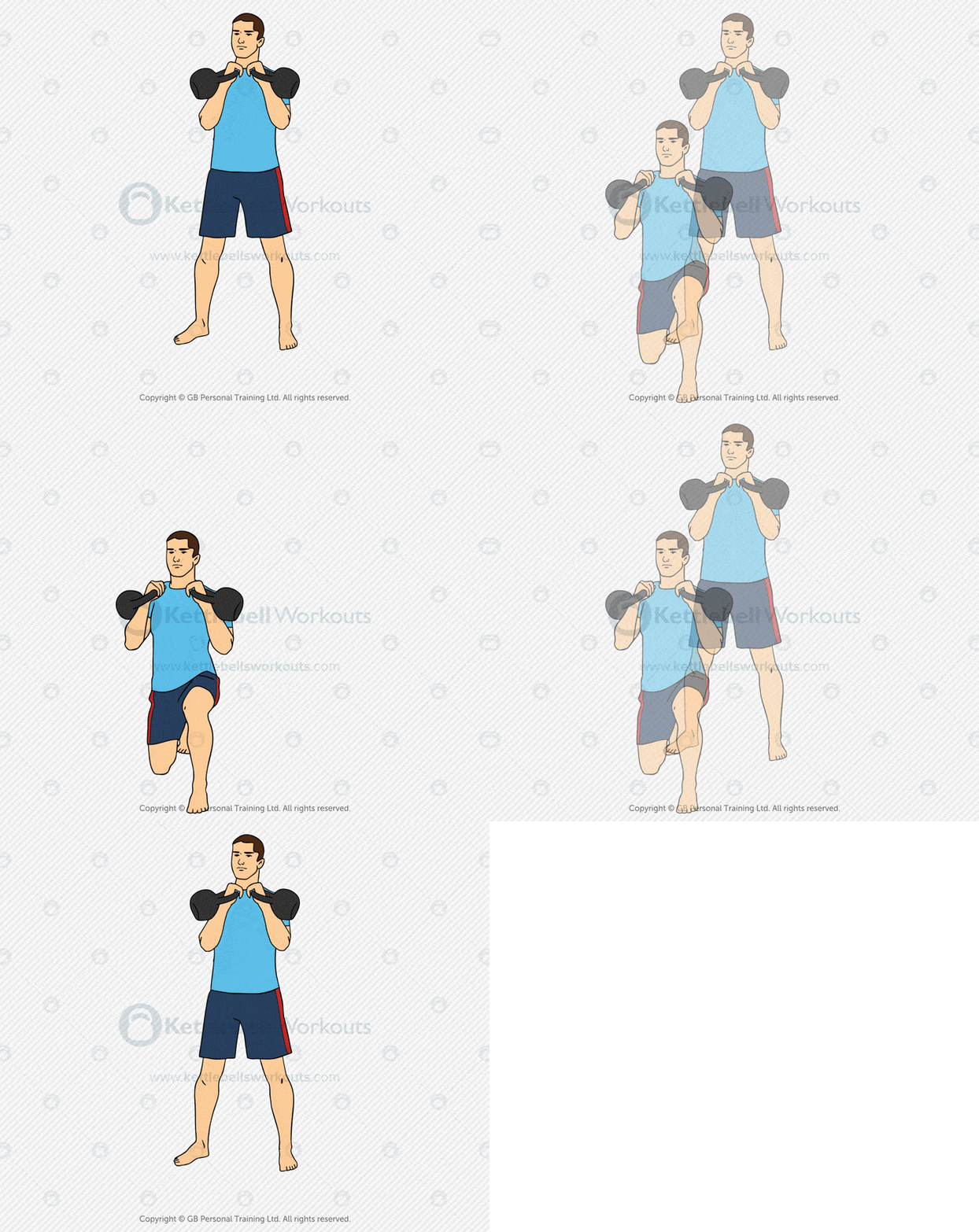
Best for: Quads, glutes and lower-body strength
Double kettlebells make Lunges a much more convincing strength and muscle exercise because each leg has to manage meaningful load. Use the rack position for more trunk demand or hold the bells at your sides if that is more comfortable.
Starting point: 3 sets of 6 to 12 reps each side.

What About Double Kettlebell Swings?
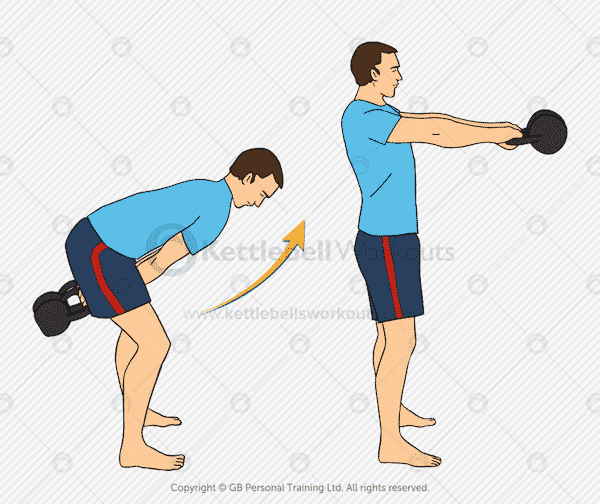
Double Swings can be useful for power and conditioning, but they are not my first choice for strength or hypertrophy. The bells also need enough room to pass safely between the legs, which makes stance and hand position more important.
If your main goal is getting stronger, use my Kettlebell Strength Training guide. If the priority is muscle growth, see Build Muscle With Kettlebells.
How to Progress Double Kettlebell Training
Do not progress by making every session faster. Keep the exercises consistent long enough to improve them, then add repetitions, load or useful sets gradually.
For example, you might start a Double Front Squat at 3 sets of 6 reps, build towards 3 sets of 10, then move to heavier kettlebells and return to the lower end of the rep range.
When Not to Use 2 Kettlebells
Stay with 1 kettlebell if the second bell causes your technique to break down, makes the exercise unnecessarily awkward or does not provide any meaningful advantage.
For many exercises, particularly Turkish Get-Ups, Halos and some mobility-based movements, adding a second kettlebell simply makes the exercise more complicated rather than more useful.
Related Kettlebell Guides
Frequently Asked Questions
Are 2 kettlebells better than 1?
Not automatically. Two kettlebells are useful when you need more total load or want to train both sides simultaneously. One kettlebell is usually better while learning the movements.
Do I need 2 kettlebells of the same weight?
Matching kettlebells are simplest for bilateral Squats, Rows and Presses. Unequal bells can be used deliberately, but the asymmetry creates a different training effect and is not necessary for most people.
Are double kettlebell exercises good for muscle gain?
Yes. Double Front Squats, Lunges, Rows and Presses can provide substantially more loading than many single-kettlebell variations, which makes them useful for hypertrophy.
Are double kettlebell exercises good for strength?
Yes, particularly when a single kettlebell no longer provides enough resistance. Heavy Double Front Squats, Rows, Presses and Lunges are all useful strength exercises.
Should beginners use 2 kettlebells?
Usually not at first. Learn the basic movement with 1 kettlebell, then add a second bell once the exercise feels technically reliable.


Sometimes I am bored with regular Kettlebell workouts, but this new challenge inspires me again. My lighter kettlebell(original one) won’t be lonely anymore. Thank you for all the helpful tips!
That is good to hear Joannie
It would be helpful for you to provide guidance on what weight the Kettlebell’s should be when doing a double or dual exercise. For example, “If you use a 16 kg Kettlebell for single exercises, then start with 2x Kettlebells each of Y Kg for dual exercises”. Greatly appreciate if you publish here or email me. Thanks
Yes, good question Seamus. I’ve added the relevant info to the article above.