
Last Updated on 18 August 2026 by Greg Brookes

Most people can start kettlebell training with just one kettlebell. You only need a matching pair when you specifically want to perform double-kettlebell exercises.
The more useful second purchase is often a different weight, because the kettlebell that suits your overhead press may eventually be too light for your deadlift, squat or swing.
This guide explains how many kettlebells you really need, when one kettlebell is enough, when two different weights make sense, and when a matching pair becomes useful.
Short answer: start with 1 kettlebell. Add a heavier or lighter kettlebell when one weight no longer suits all your exercises. Buy a matching pair only when double-kettlebell training becomes part of your programme.
The 3 Most Useful Kettlebell Setups
Best starting point. Low cost, simple to learn and ideal for unilateral exercises, carries, squats, rows, presses and swings.
Usually the most useful upgrade because different movements require different amounts of resistance.
Useful later for double cleans, front squats, presses, rows, lunges and heavier strength-focused training.
How Many Kettlebells Do I Need for a Workout?
You can perform a huge range of productive workouts with one kettlebell. For beginners, that is usually the best place to start.
One kettlebell lets you learn the basic movement patterns without doubling the load or making the setup more complicated. It also encourages single-arm and single-side training, which increases the demand on your trunk and helps you notice differences between sides.
You do not need to own several kettlebells before you can make progress. First learn to squat, hinge, row, press, carry and eventually swing well with the equipment you already have.
Do not choose the number of kettlebells before choosing the correct weight. If you are still deciding what load to start with, use my starting kettlebell weight guide.
Benefits of Single vs Double Kettlebells
Training with One Kettlebell
- Cheaper and simpler for beginners.
- Excellent for unilateral strength.
- Creates useful anti-rotation and trunk demand.
- Makes it easy to train one side at a time.
- Works for most foundational kettlebell exercises.
- Ideal if you train at home with limited space.
Training with Two Kettlebells
- Allows greater total loading.
- Trains both sides at the same time.
- Useful for double front squats, cleans and presses.
- Can make strength sessions more time efficient.
- Creates a more symmetrical external load.
- Requires stronger technique and more recovery.
Neither option is automatically better. Single-kettlebell training is often more than enough for general fitness, conditioning and unilateral strength. Double-kettlebell training becomes useful when your goal shifts towards heavier loading, greater strength or more advanced programming.
Should Your Second Kettlebell Be Heavier or the Same Weight?
For most people, a different weight is the more useful second kettlebell.
Your body can usually handle much more load in a deadlift, squat or swing than in an overhead press or Turkish Get Up. If you own only one weight, that bell may eventually become too easy for the larger lower-body exercises while still being challenging overhead.
| Situation | Most Useful Next Purchase | Why |
|---|---|---|
| Your current bell is too light for swings and squats | A heavier kettlebell | Lets the stronger lower-body movements continue progressing. |
| Your current bell is too heavy for presses or get-ups | A lighter kettlebell | Allows better technique on smaller or more technical movements. |
| You want double front squats, cleans or presses | A matching kettlebell | Creates a balanced double-kettlebell setup. |
| You want maximum variety with minimum equipment | A different weight | Gives you more appropriate loading options across more exercises. |
Progression from One Kettlebell to Two Kettlebells
Move to double-kettlebell training because it solves a programming problem, not simply because you have been using one kettlebell for a certain number of months.
A good time to introduce doubles is when:
- you have mastered the basic single-kettlebell versions of the movement;
- your current setup no longer provides enough loading for your strength goals;
- you can maintain a strong rack position with both kettlebells;
- you want to train both sides simultaneously;
- your recovery is good enough for the greater total load.
Progress does not always mean buying more weight. You can also increase repetitions, sets, density, range of motion, exercise difficulty or movement quality. See ways to progress kettlebell workouts without simply adding load.
Do You Need Two Kettlebells of the Same Weight?
No. You only need a matching pair if the exercise or programme specifically benefits from equal loading on both sides.
If you already own two different kettlebells, you can use them together for some double-kettlebell exercises. The unequal loading creates an additional trunk-control challenge.
When using mismatched weights, switch the heavier kettlebell from side to side between sets so that the loading is balanced across the session.
For repeated double cleans, double front squats and double presses, a matching pair is usually simpler because both sides receive the same external load.
Double Kettlebell Exercises for Starters
If you are ready for double-kettlebell training, begin with movements you already understand rather than jumping straight into complicated complexes.
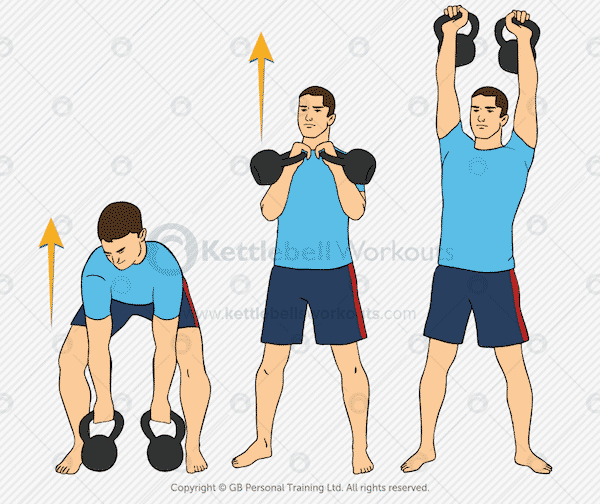
Double Clean and Press
The double clean and press increases total loading substantially. Make sure you can clean each kettlebell smoothly into the rack position before combining the movement with an overhead press.
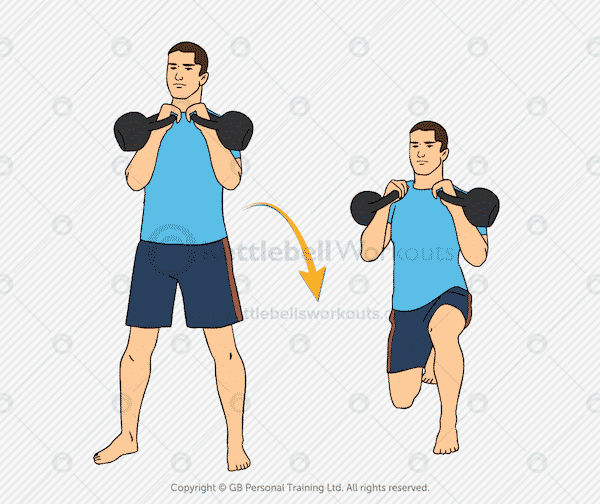
Double Racked Reverse Lunge
The double racked lunge loads the legs heavily while the trunk maintains an upright position. Use lighter kettlebells than you would for a single-bell version until the extra total load feels controlled.
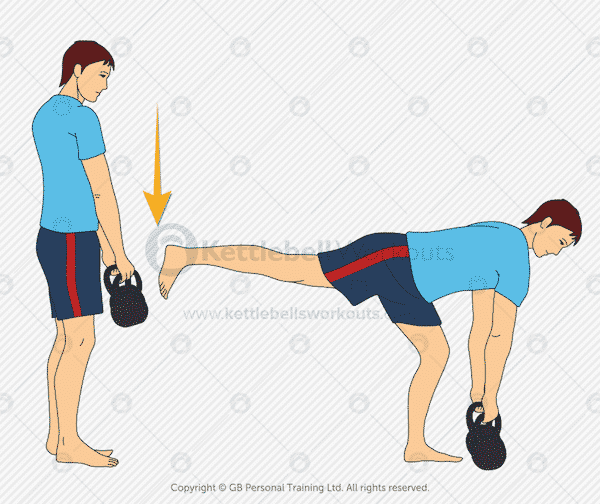
Double Kettlebell Single-Leg Deadlift
Two kettlebells increase the total loading while keeping the weight distributed more evenly. Only use this variation once the single-kettlebell version is stable and technically consistent.
Two kettlebells do not automatically mean a better workout. Doubles increase total loading and can reduce the unilateral challenge that makes single-kettlebell training so useful. Use them when they support your goal, not simply because they look more advanced.
Choosing Your Kettlebell Setup
- Need to choose your first weight? See Which Kettlebell Should I Start With?
- Need help choosing the type or brand? See my Kettlebell Buying Guide.
- Only own one kettlebell? You can still build highly effective sessions using single-kettlebell exercises and workouts.
One vs Two Kettlebells FAQs
Should you buy kettlebells in pairs?
Not when you are starting. One kettlebell is enough for most beginners. Buy a matching pair later only if double-kettlebell exercises become a meaningful part of your training.
How many kettlebells does a beginner need?
Usually one. A beginner will get more value from learning the fundamental movements well than from buying several kettlebells immediately.
Should my second kettlebell be the same weight?
Usually not. A different weight often gives you more useful training options because lower-body exercises can generally handle more resistance than overhead and highly technical movements.
Can I use two kettlebells of different weights together?
Yes, for many exercises. Switch the heavier kettlebell between sides from set to set so that the asymmetric loading is balanced across the session.
When should I start using two kettlebells?
Start using two when your single-kettlebell technique is solid and the extra total load supports your training goal. There is no fixed timetable.
Is one kettlebell enough to build strength and fitness?
Yes. One kettlebell can provide excellent strength and conditioning training, particularly when you use unilateral exercises and progress the programme intelligently. Eventually you may want additional weights so that different exercises can be loaded appropriately.
So, How Many Kettlebells Do You Really Need?
Start with one good kettlebell that suits the exercises you are learning. Add another weight when your first kettlebell becomes either too heavy for some movements or too light for others.
A matching pair is an optional later progression for people who specifically want double-kettlebell strength work. It is not a requirement for getting strong, fit or proficient with kettlebells.
For most home trainees, a small selection of useful weights will eventually provide more value than simply owning pairs of every size.


I am an older amateur tennis player. I want to do kettlebell(s) to stay in good shape for tennis during off season. (I only play outside.) and avoid injury. I need a recommendation on what to buy. I will start with one. Or, I will consider “adjustable.” Thanks.
I’ve recently started using two kettlebells during my workouts, and it’s really a great way to add intensity to my workout. It challenges my core so much that I really have to work harder than before to do some half get-ups or cleans as the final exercise.
Also, one thing I did before going with two bells in my regular workouts was work on cleaning with two bells. Cleaning 50 and 60 lbs had become fairly easy after a year, but doubling that weight turned it into a whole other animal. Working on cleaning two 35 and 40 pounders helped me get to where I can clean pairs of the bigger bells reasonably well.
And for the single-leg deadlift, I like to use different weights in each hand, like 50 and 25, or 60 and 35. This allows me to add more weight and still keep the rotational aspect that works the core-sling system.
I have an 18kg and a 24kg kettlebells. Do i need a 20kg or 22kg to bridge the gap ?
You should be OK Jun, you can use the Push Press if the overhead press is too much