
Last Updated on 13 August 2026 by Greg Brookes

The kettlebell slingshot, also known as the kettlebell around the world, is a simple hand-to-hand drill that develops grip, coordination and trunk control while keeping the kettlebell moving smoothly around the body.
You may also see it called the around the body pass, kettlebell circles or simply KB slingshot. Whatever name you use, the movement is the same: the kettlebell travels continuously around the hips as you pass it from hand to hand.
I use the Slingshot most often as a warm-up, a light movement between harder exercises, or a way to practise relaxed kettlebell handling without adding much fatigue.
What Is the Kettlebell Slingshot?
The Slingshot is a circular kettlebell exercise performed around the waist. You pass the kettlebell from 1 hand to the other in front of the hips, then change hands again behind the body.
The aim is not to rotate the torso with the kettlebell. Instead, the trunk stays relatively still while the arms guide the bell around you. That makes the exercise useful for practising hand-to-hand transfers, maintaining posture and resisting unwanted sway or rotation.
Kettlebell Slingshot Demonstration
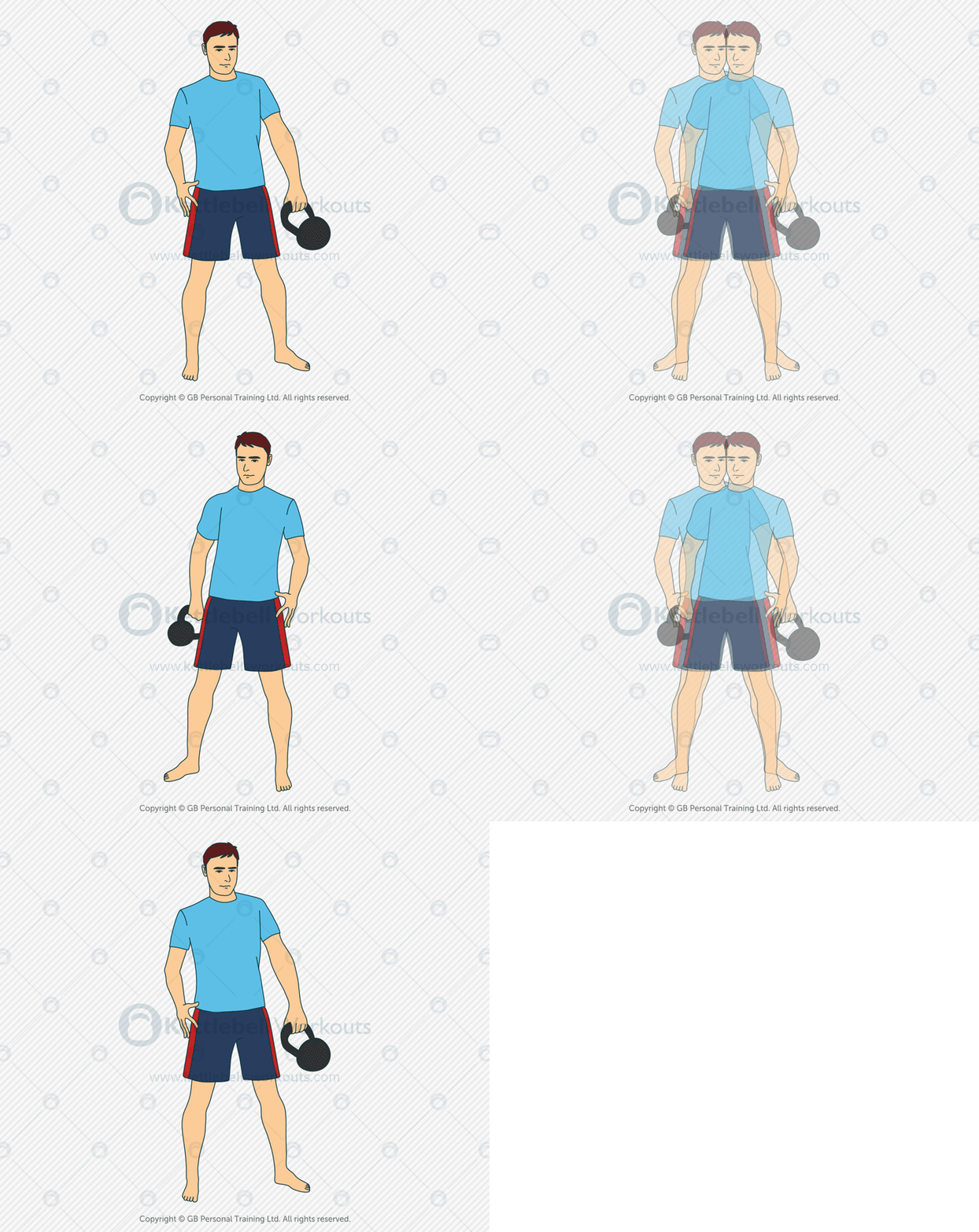
Best for: learning the hand-to-hand transfer and keeping the kettlebell close to the body.
Keep the bell travelling just outside the hips rather than allowing it to swing far away from you. The closer the kettlebell stays to the body, the easier it is to control.
Practise both directions. Most people immediately discover that 1 direction feels more natural than the other.
Start with: 10 controlled passes each direction using a light kettlebell.
Kettlebell Slingshot Benefits
The Slingshot is not a major strength exercise, but it earns its place because it does several smaller jobs particularly well:
- Grip endurance: repeated hand-to-hand transfers challenge the fingers, hands and forearms.
- Coordination: you have to release and receive the kettlebell smoothly without looking for the handle.
- Core control: the trunk resists being pulled around by the moving kettlebell.
- Shoulder movement: the arms travel around the torso through a comfortable, relatively low-load range.
- Warm-up value: the continuous movement raises body temperature without demanding heavy effort.
Kettlebell Slingshot Muscles Worked
The forearms and grip do much of the obvious work, while the shoulders guide the kettlebell and the trunk muscles keep the body from following the bell around.
The main areas involved are:
- forearms and grip
- shoulder stabilisers
- abdominals and obliques
- upper back
- glutes and trunk stabilisers helping maintain posture
I would think of the Slingshot primarily as a coordination, grip and trunk-control exercise, rather than trying to isolate 1 particular muscle.
How to Do the Kettlebell Slingshot Step by Step
Start standing before experimenting with kneeling variations. Standing gives you more room to learn the hand changes and recover easily if the timing is slightly off.
Common Slingshot Mistakes
- Following the kettlebell with the torso: stay tall and let the arms move around you.
- Holding the kettlebell too far away: keep the orbit compact and close to the hips.
- Rushing the hand change: prioritise a clean transfer over speed.
- Using too much weight: this is a poor exercise for testing maximum grip strength.
- Only training 1 direction: perform clockwise and anti-clockwise repetitions.
Simple Warm-Up Before Slingshots
You do not need an elaborate warm-up for a light Slingshot, but these movements work well if the shoulders feel stiff:
- shoulder rolls, 10 each direction
- arm circles, 10 each direction
- light kettlebell Halos, 5 each direction
- 20 seconds of relaxed marching while keeping the trunk tall

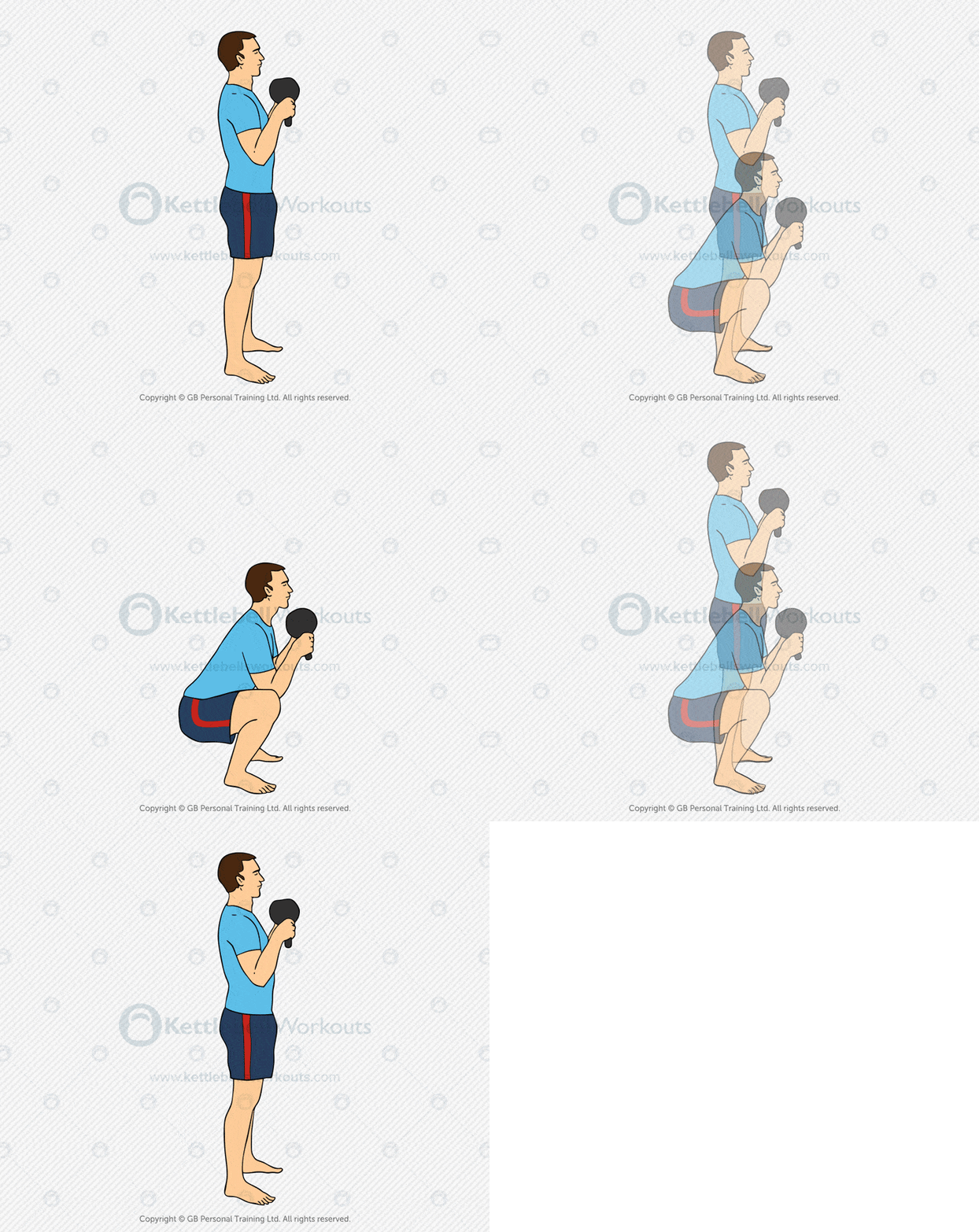
Kettlebell Halo
The Halo complements the Slingshot because the kettlebell travels around the head rather than the hips, creating a different shoulder and upper-back challenge.
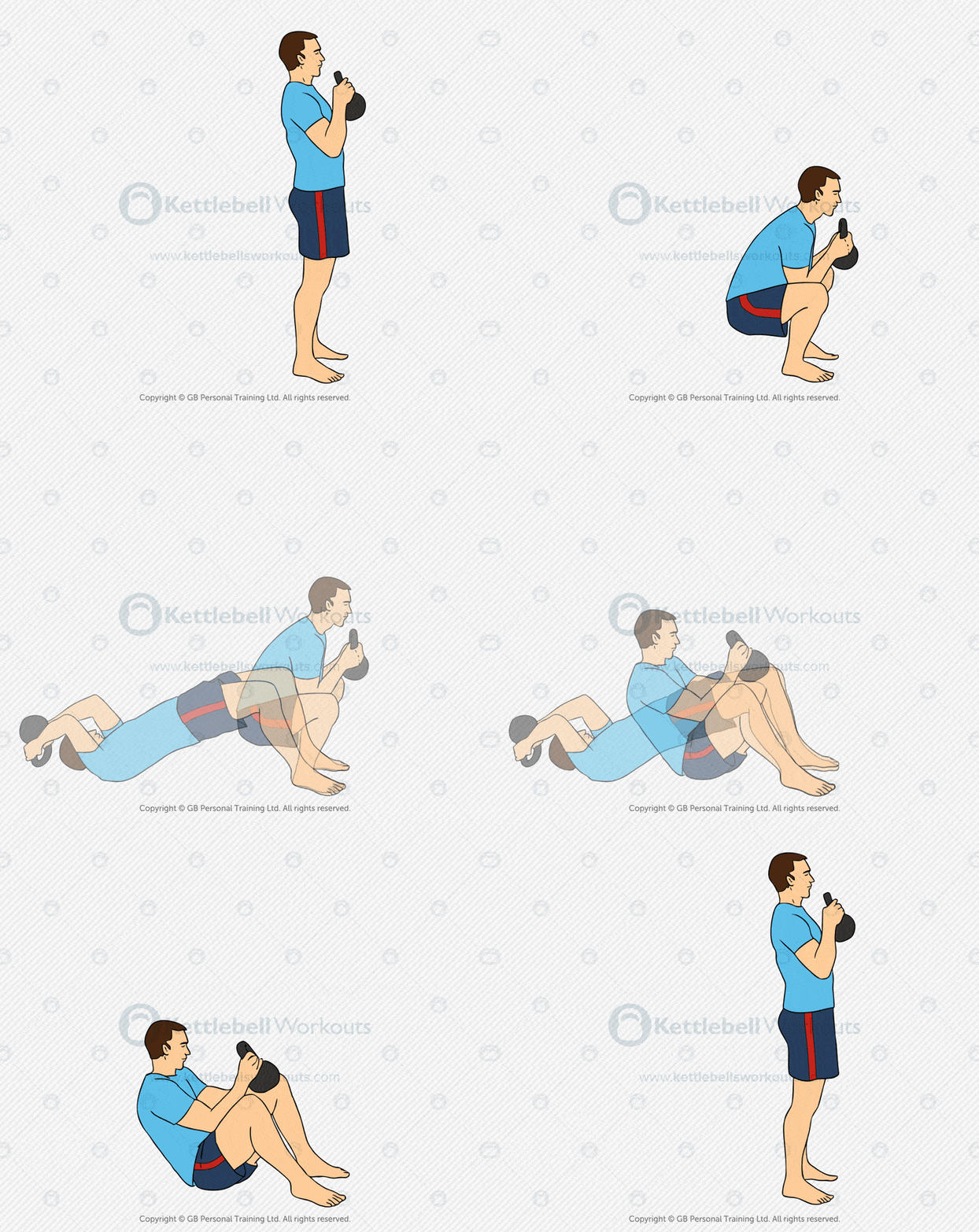
Goblet Squat
The Slingshot can flow directly into the Goblet Squat once you bring the kettlebell back to the front of the body.
Programming Tips and Reps
The Slingshot works best with a load you can control comfortably. It is usually better to add a little time or a few more passes before increasing the kettlebell weight.
- Beginner: 10 passes each direction
- Warm-up: 20 to 30 seconds each direction
- Active recovery: 20 to 30 seconds between harder exercises
- Grip endurance: 30 to 60 seconds each direction with a manageable bell
Keep the rhythm smooth enough that the exercise still feels like practice rather than a fight with the kettlebell.
When to Use the Kettlebell Slingshot
I most often use it in 4 places:
- near the start of a session as part of the warm-up
- between heavier exercises as light active recovery
- inside circuits when I want continuous movement without adding another demanding lift
- as a simple way to practise grip and kettlebell handling
Kettlebell Slingshot Workout Example
This simple 4-minute circuit alternates the Slingshot with basic kettlebell and bodyweight movements. Use a light enough kettlebell that the transitions remain smooth.
Rest as needed, then repeat for up to 3 rounds. If you are using the circuit purely as a warm-up, 1 round may be enough.
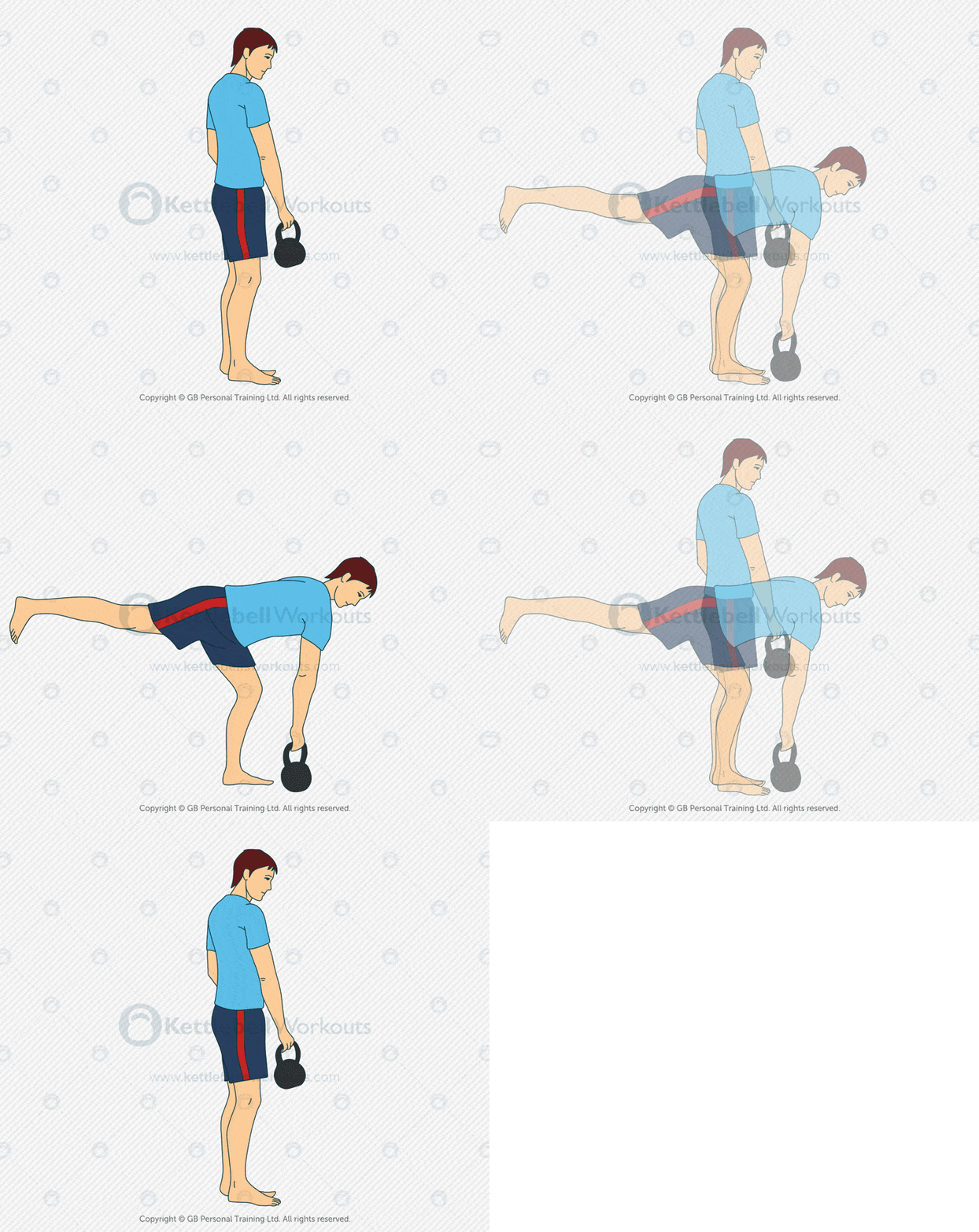
For the deadlift technique, see my Kettlebell Deadlift guide.

How I Use the Slingshot
One reason I like the Slingshot is that it gives you something useful to do between harder exercises without turning every rest period into more hard work.
It can also be a good first exercise when somebody is learning to handle a kettlebell. The load stays low, the bell remains close to the body and you get repeated practice changing hands.
Kettlebell Slingshot vs Kettlebell Halo
These exercises are sometimes grouped together because both move the kettlebell around the body, but they have different jobs.
- Slingshot: travels around the hips and places more emphasis on hand changes, grip and trunk control.
- Halo: travels around the head and places more emphasis on shoulder and upper-back movement.
They work very well together in a warm-up, particularly when both are performed with a light kettlebell.
Who Is the Slingshot Best For?
The movement is accessible enough for many beginners, provided they start light and have enough room around them. It is also useful for experienced kettlebell users who want a simple warm-up or flow transition.
If gripping, reaching behind the back or passing the kettlebell causes shoulder pain, choose another warm-up exercise rather than forcing the movement.
Related Kettlebell Guides
These are the most useful next steps:
Frequently Asked Questions
What is a kettlebell around the world?
It is another name for the Kettlebell Slingshot, where the kettlebell is passed continuously around the hips from hand to hand.
What are the benefits of the kettlebell slingshot?
It is useful for grip endurance, coordination, trunk control, warm-ups and practising hand-to-hand kettlebell transfers.
What muscles does the kettlebell slingshot work?
The forearms and grip work continuously, while the shoulders guide the kettlebell and the abdominals, obliques and other trunk muscles help keep the body stable.
How many kettlebell slingshots should I do?
Start with around 10 controlled passes in each direction. For warm-ups, 20 to 30 seconds each way also works well.
Can beginners do kettlebell slingshots?
Yes. Use a light kettlebell, keep the orbit close to the body and concentrate on clean hand changes rather than speed.

I have a shoulder injury from years of high volume bar dips. Started doing sets of kettlebell
swings followed by slingshots and planks for an hour with forty pounds. Shoulder is doing great.
I’m seventy and feeling strong.
How do you determine what weight to use?
Take a look at this article on selecting the correct kettlebell Nancy.
Excellent instruction and very clear training videos. Very motivating.
Hi
Can you please elaborate on how the kettlebell is held in this exercise, i.e., loose or tight. Also, the kind of grip that is employed (In palms or fingers, etc)
Yes Deepak, it’s a loose grip with the kettlebell taken into the palms, you will discover what feels natural when you start performing the exercise.
Thanks a lot
Deepak
You a great coach and inspiration!
Keep up the good work
What muscles does this works aside from shoulders?
Hi Kate, the slingshot works your grip strength (which diminishes as you age), your shoulder mobility and stability, and core muscles.
Slingshot is one of my favourite workouts too.