
Last Updated on 10 August 2026 by Greg Brookes

If lunges are uncomfortable, you do not have to stop training your legs. The best replacement depends on what part of the lunge is causing the problem.
You may dislike the balance demands, find the deep knee bend uncomfortable, struggle with walking lunges, or have toe pain when the rear foot bends underneath you.
Below are 5 lunge alternatives I use to keep training the legs, hips and glutes while changing the part of the movement that is causing difficulty.
First, Why Do Lunges Hurt?
Knee pain has many possible causes, so I would not assume that weakness, tightness or poor technique is always responsible.
If a particular lunge variation causes discomfort, changing the movement can let you continue training while reducing the aggravating position. You can then decide whether to return to lunges later.
If knee pain is severe, follows an injury, comes with significant swelling, locking or giving way, or you cannot comfortably bear weight, get appropriate medical assessment rather than trying to exercise through it.
| If This Is the Problem | Try This First | Why |
|---|---|---|
| Walking lunges feel awkward | Step-Up | Still trains one leg at a time without travelling forwards. |
| Balance limits your lunges | Goblet Squat | Both feet stay planted while you continue training the squat pattern. |
| Deep knee bending is uncomfortable | Single-Leg Deadlift | Loads the hips and hamstrings with much less knee bend. |
| Weight-bearing knee movement is uncomfortable | Bridge | Trains the glutes and hamstrings from the floor. |
| Rear-toe position causes pain | Bulgarian Lunge on Instep | Keeps the rear toes extended rather than curled underneath. |
5 Alternatives to Lunges
Kettlebell Step-Up
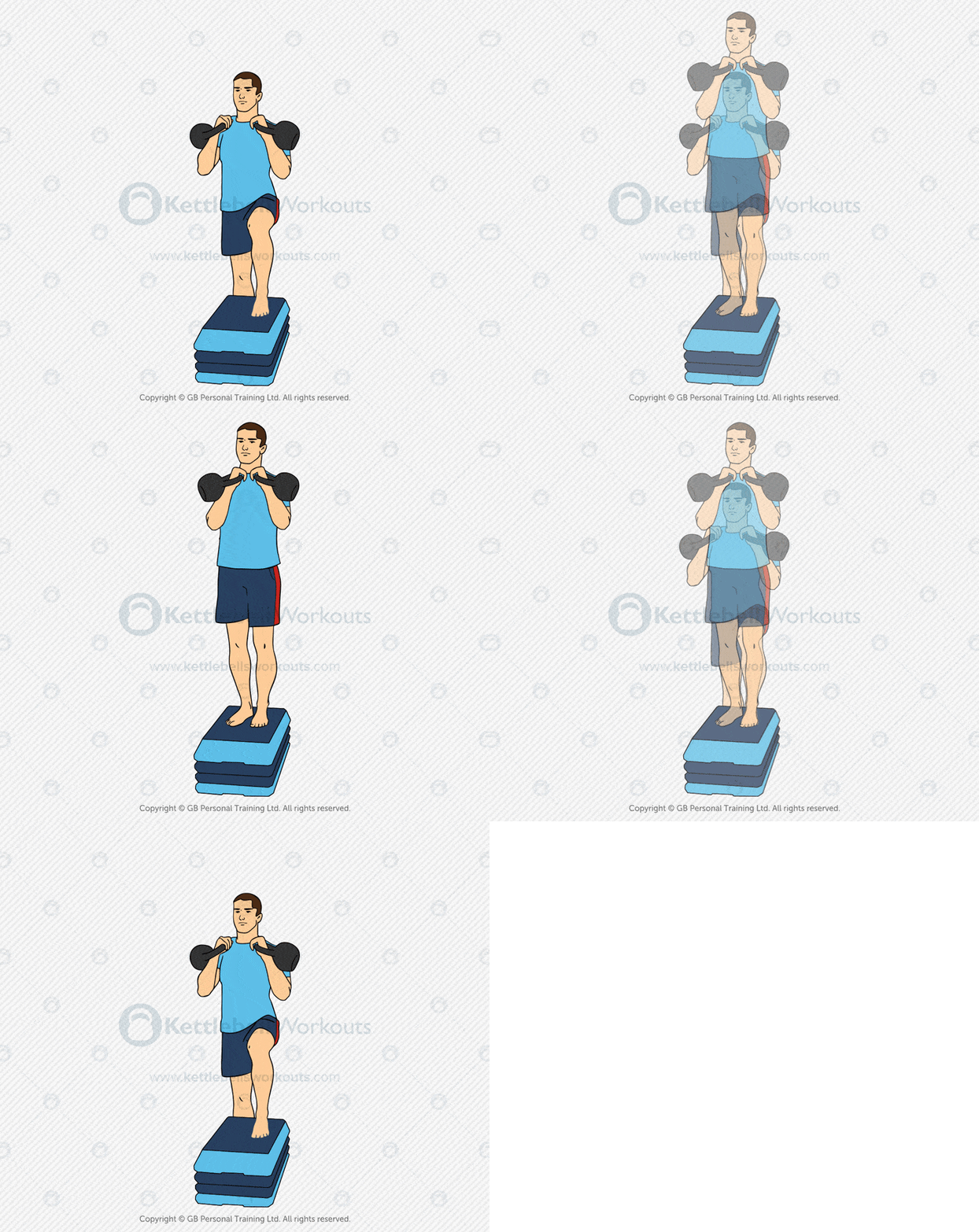
Best replacement for: walking lunges and people who want a simpler single-leg pattern.
The Step-Up is my first choice for many people replacing walking lunges. You still load one leg at a time, but you remove the forward travelling step and the need to catch your balance in a split stance.
Choose a step height you can control. Drive through the foot on the step rather than bouncing off the rear leg.
Start with: 6-10 repetitions per side. Use a lower step or hand support if balance is the limiting factor.
Kettlebell Goblet Squat
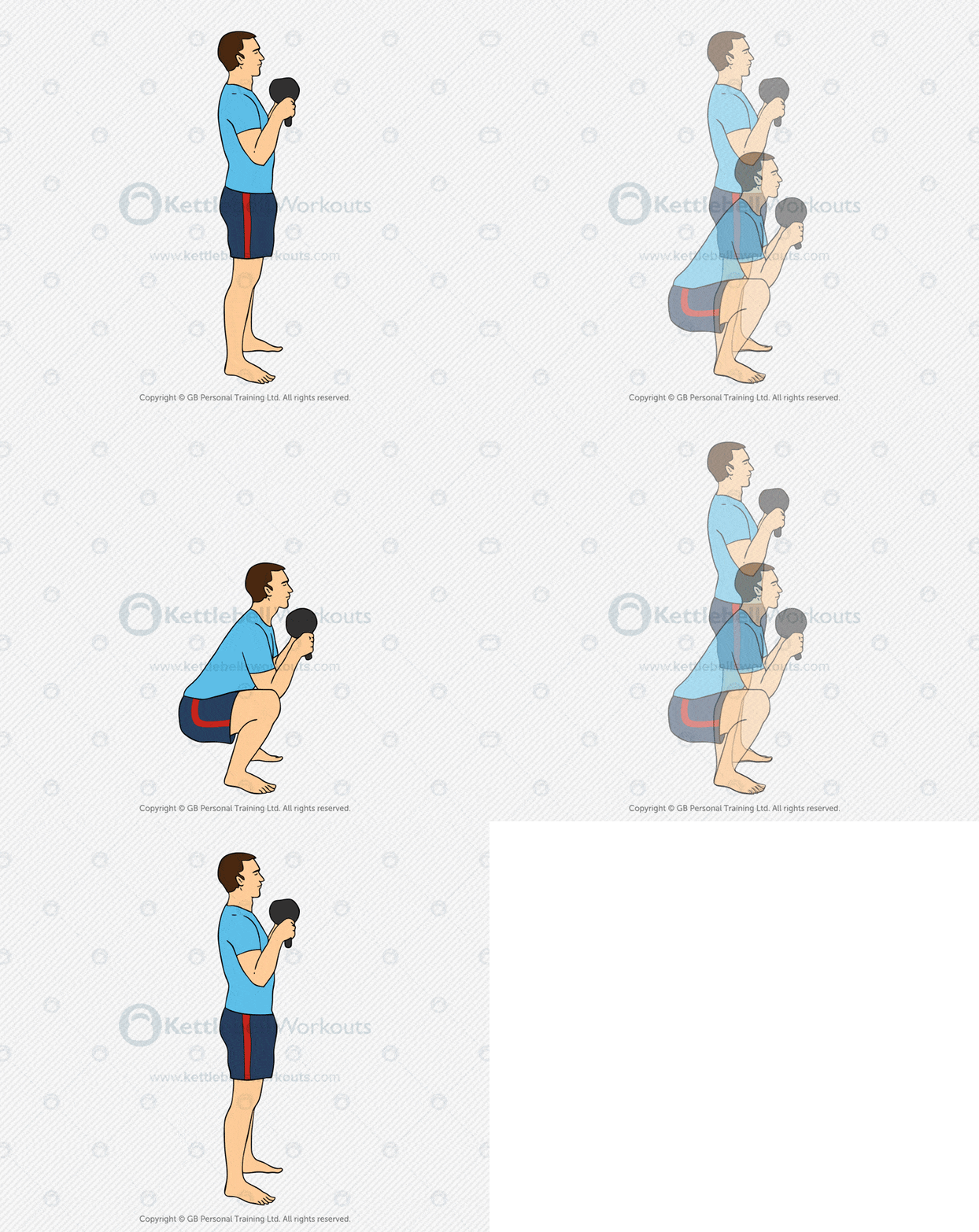
Best replacement for: lunges when balance or single-leg loading is the main difficulty.
The Goblet Squat trains the quadriceps and glutes with both feet planted. That removes much of the balance challenge created by lunges while still keeping a strong knee-bend movement in your programme.
Use only the depth that feels controlled. A chair or box can give you a consistent target while you build strength.
Start with: 6-10 controlled repetitions.

Kettlebell Single-Leg Deadlift
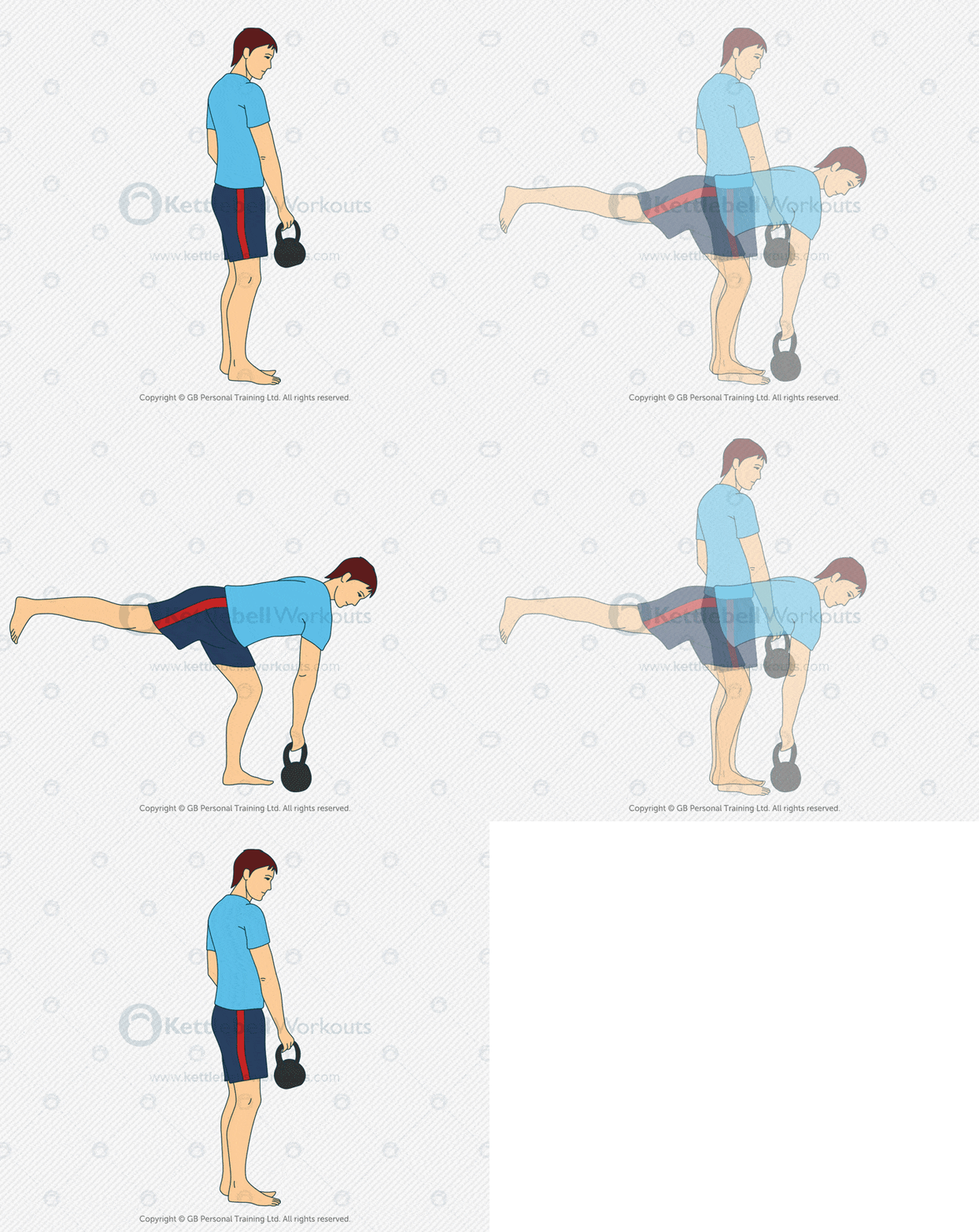
Best replacement for: keeping single-leg training while reducing the amount of knee bend.
The Single-Leg Deadlift shifts more work towards the hips, glutes and hamstrings. The standing knee stays softly bent, but you do not move into the deep knee flexion used during a lunge.
Balance can be demanding, so learn the movement with bodyweight first and use support if necessary.
Start with: 5 slow repetitions per side before adding much load.
Bodyweight Bridge
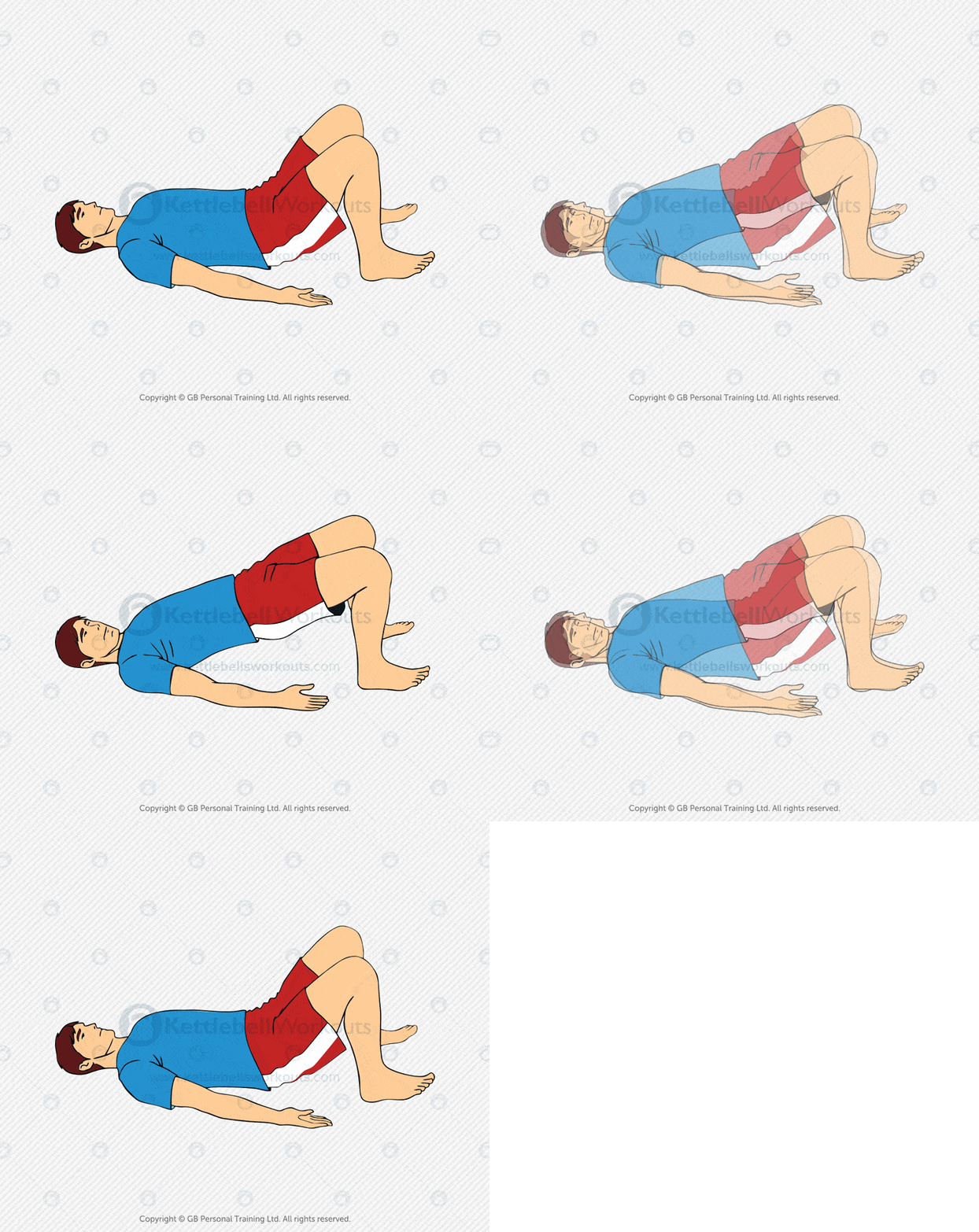
Best replacement for: people who need to temporarily avoid loaded standing knee-bend exercises.
The Bridge trains the glutes and hamstrings from the floor. It does not reproduce the full lunge pattern, but it lets you continue strengthening the back of the hips without balancing on one leg or loading a deep knee bend.
Drive through the heels and stop when the hips are fully extended rather than arching excessively through the lower back.
Start with: 10-15 controlled repetitions using bodyweight.
Bulgarian Lunge on the Instep

Best replacement for: toe pain caused by curling the rear toes underneath during a regular lunge.
This is the one option on the list that still closely resembles a lunge. Elevating the rear foot with the top of the foot resting on the support removes the curled-under rear-toe position.
Bodyweight can be challenging enough. Add a kettlebell only when you can control the front leg and keep your balance.
Start with: bodyweight for 5-8 repetitions per side.
What Is the Best Alternative to Walking Lunges?
For most people, I would start with the Step-Up. It keeps the unilateral leg-strength element but removes the forward travel and repeated change of balance that makes walking lunges awkward.
If balance itself is the issue, the Goblet Squat is simpler because both feet remain planted. If you still want a one-leg exercise but want less knee bend, use the Single-Leg Deadlift.
What Can Replace Reverse Lunges?
A reverse lunge is already often easier to control than a forward lunge, but if you still want to replace it, choose according to the quality you are trying to keep:
Can You Use Dumbbells Instead of Kettlebells?
Yes. The movement choice matters more than the implement for this purpose. Step-Ups, Goblet Squats, Single-Leg Deadlifts and Bulgarian Lunges can all be loaded with dumbbells if that is what you have available.
The Bodyweight Bridge does not require either.
Should You Eventually Return to Lunges?
Not necessarily. You can build strong legs without lunges.
However, if your goal is to regain the lunge pattern, use the alternatives above to maintain strength and then reintroduce an easier lunge variation when it feels appropriate.
A supported reverse lunge, shallow reverse lunge or split squat can be useful stepping stones before returning to deeper or walking lunges.
Frequently Asked Questions
What exercise can I do instead of lunges?
Step-Ups are a good single-leg replacement, Goblet Squats work well when balance is the problem, and Single-Leg Deadlifts are useful when you want less knee bend.
What is a good lunge alternative for bad knees?
There is no single replacement for every type of knee discomfort. If deep knee bending is uncomfortable, a hip-dominant movement such as a Single-Leg Deadlift may be better tolerated. If standing exercise itself is uncomfortable, a Bridge changes the loading more substantially.
What can I do instead of walking lunges?
Step-Ups are my first choice because they still train one leg at a time without requiring you to travel forwards and repeatedly catch your balance.
What can replace reverse lunges?
Use Step-Ups if you want another unilateral leg exercise, Goblet Squats for a stable knee-bend pattern, or Single-Leg Deadlifts if you want more hip and hamstring emphasis.
Are squats a good substitute for lunges?
Yes, if your goal is general leg and glute strength. Squats remove much of the single-leg and balance demand, so they are not an identical replacement but can train many of the same large lower-body muscles.
What if lunges hurt my toes?
If the problem comes from curling the rear toes under, a Bulgarian Lunge performed with the top of the rear foot resting on a bench or step can remove that position. You can also use any of the non-lunge alternatives above.


This is great. I currently have a damaged spine but intended to start doing lunges again anyway but about 3 months ago I tripped and fell and 2 more toes pulled apart. I didn’t think anything much of it after a week but since I tried to do lunges I can only do one leg unable to alternate as the toes won’t bend on the on I hurt. It’s driving me mad I’m so fat and only lunges really help me tone. So cant wait try these. Thanks
Thank you – for those of us with patellofemoral arthritis, lunges are painful not necessarily due lack of strength, but to the irritation of osteocytes that have formed. I have had one knee replaced and trying to keep the patella as pain free as possible is a top priority!
Greg, thank you so much for this article! I am 37 and lunges have always been hard on my knees and toes, but they have been near impossible since I had toe surgery 2 years ago for hallux limitus. These alternate kettlebell moves are exactly what I need, especially since I like working with kettlebells. I just can’t thank you enough for posting this because I was having such a difficult time finding reasonable alternatives. You have taken a great weight off my shoulders…and knees…and toes. 🙂