
Last Updated on 18 August 2026 by Greg Brookes
Kettlebell endurance training is about sustaining useful work for longer without allowing technique to break down.
That can mean improving muscular endurance, grip endurance, whole-body work capacity or your ability to repeat kettlebell exercises over time.
Cardiovascular fitness contributes to all of these, but this page is not simply another cardio workout guide. The focus here is on maintaining repeated quality work with kettlebells.
Endurance is not one single quality. You can build local muscular endurance in a movement such as the press, grip endurance during carries, or whole-body work capacity across repeated kettlebell rounds. The workout should match the type of endurance you actually want to improve.
Why Use Kettlebells for Endurance?
Kettlebells allow strength-based and ballistic exercises to be repeated for time, repetitions or rounds, which makes them useful for building muscular endurance and work capacity.
If your main goal is specifically cardiovascular conditioning, use the dedicated kettlebell cardio workouts. Here, the emphasis is the ability to keep producing good kettlebell repetitions over time.
How Kettlebell Endurance Training Works
You can increase endurance by gradually asking the body to sustain more total work without letting technique deteriorate.
| Method | What You Progress | Best Use |
|---|---|---|
| Longer sets | Time or repetitions | Local muscular endurance |
| More rounds | Total volume | Whole-body work capacity |
| Shorter rests | Density | Conditioning and repeated-effort endurance |
| More difficult exercise | Movement demand | Advanced endurance once technique is solid |
Do not progress every variable at once. If you add time, repetitions and load simultaneously, it becomes difficult to know what actually improved and easier for fatigue to overwhelm technique.
Key Kettlebell Exercises for Endurance
The best endurance exercises are ones you can repeat efficiently while maintaining good positions under fatigue.
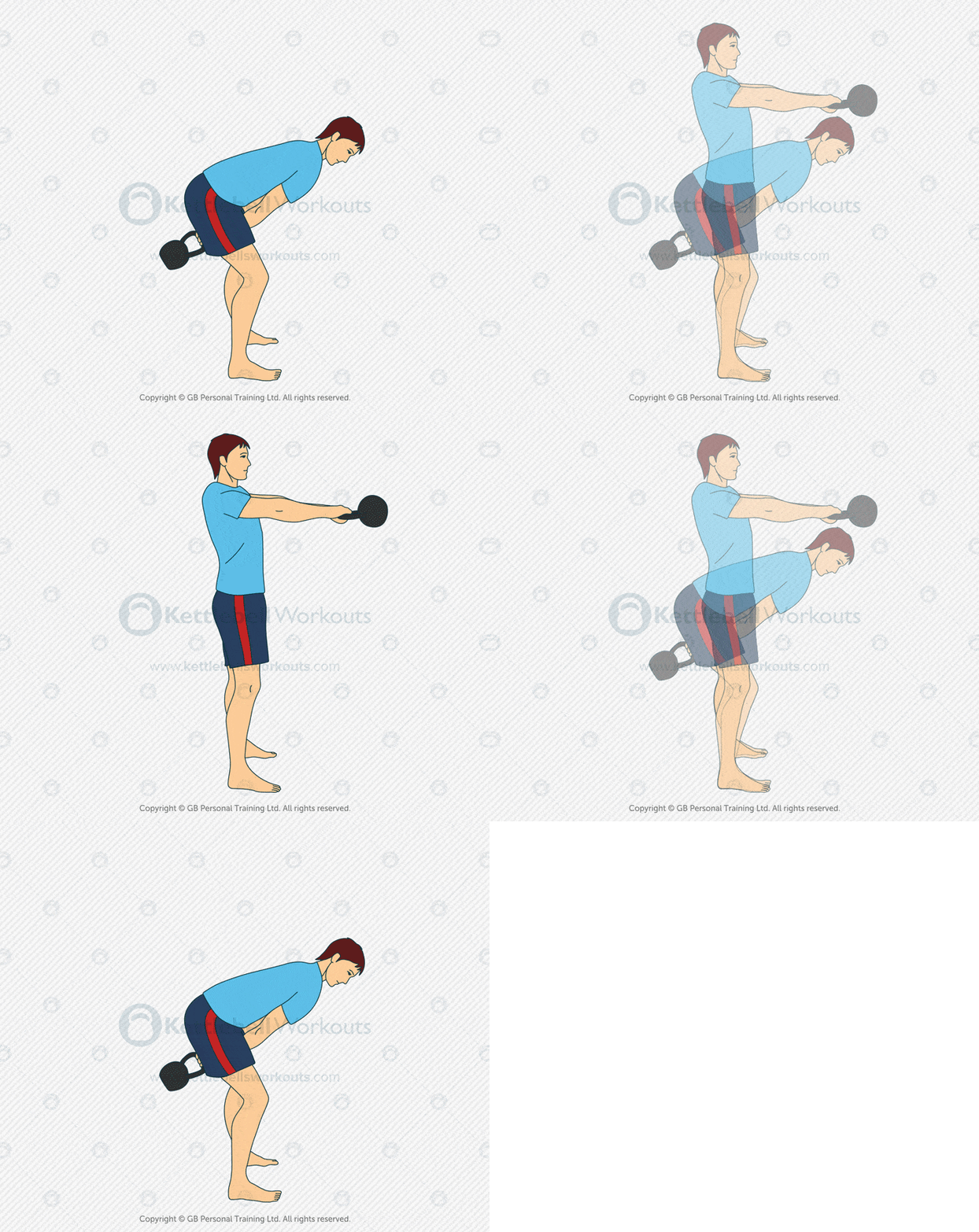
Kettlebell Swings
Swings are one of the most useful kettlebell endurance exercises because they can be repeated rhythmically and involve a large amount of muscle mass.
End the set if the hinge becomes increasingly squat-dominant, the arms begin lifting the bell, or breathing and grip fatigue make the movement ragged.
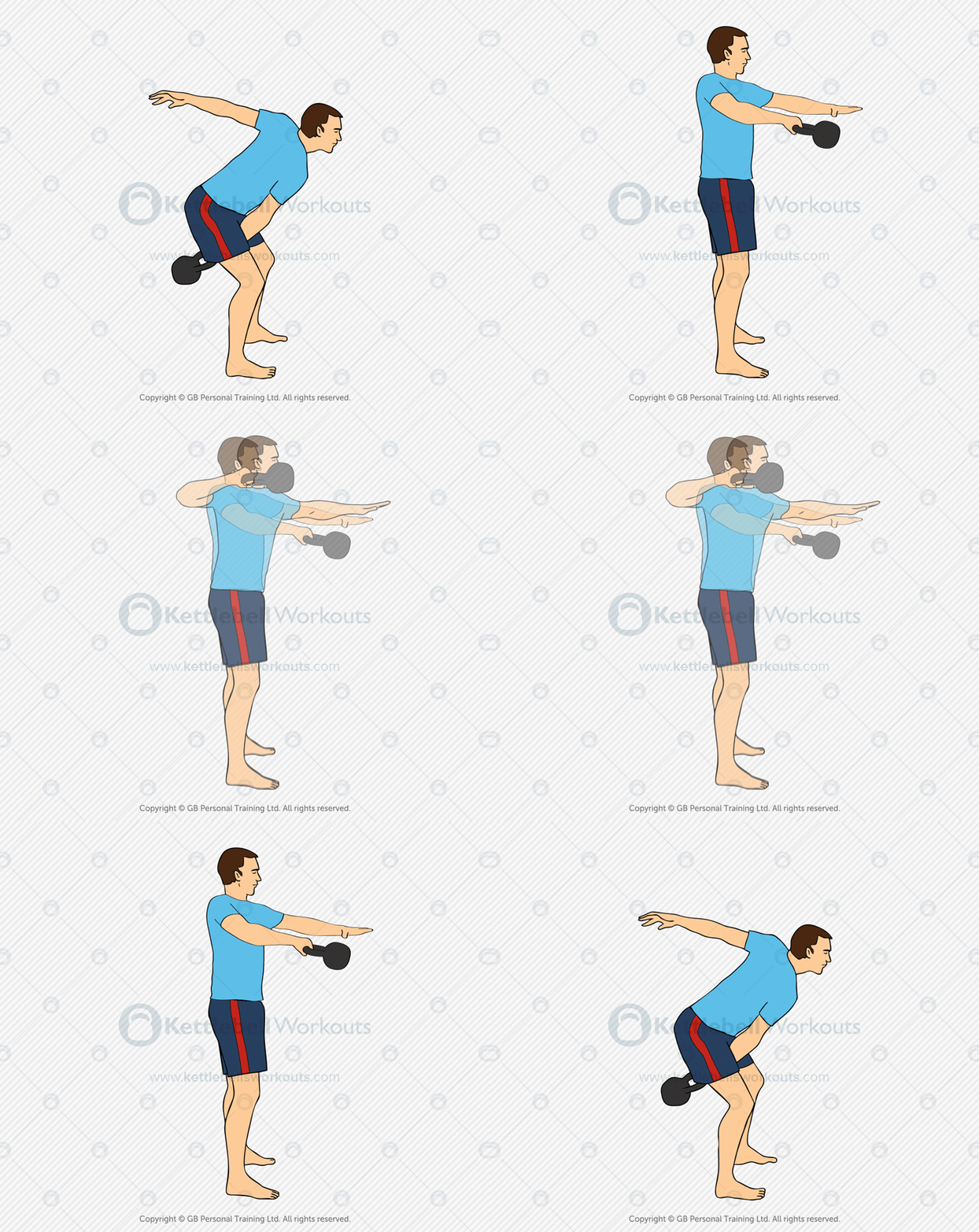
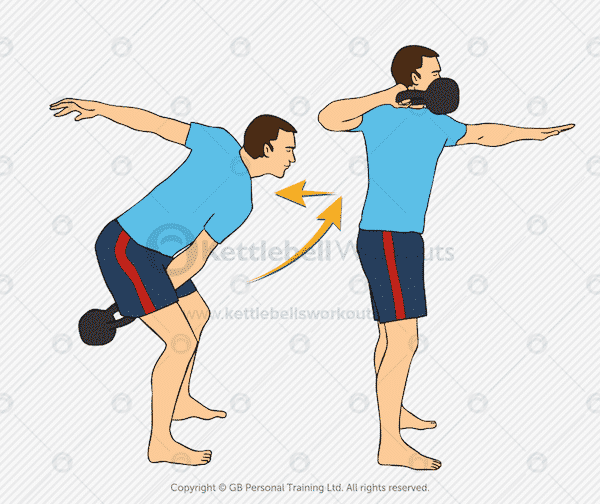
Kettlebell High Pulls
High pulls can build repeated hip and upper-back endurance, but they are more technical than basic swings.
Use them only when the kettlebell path remains smooth and the shoulder does not begin doing the work that should be coming from the hips.
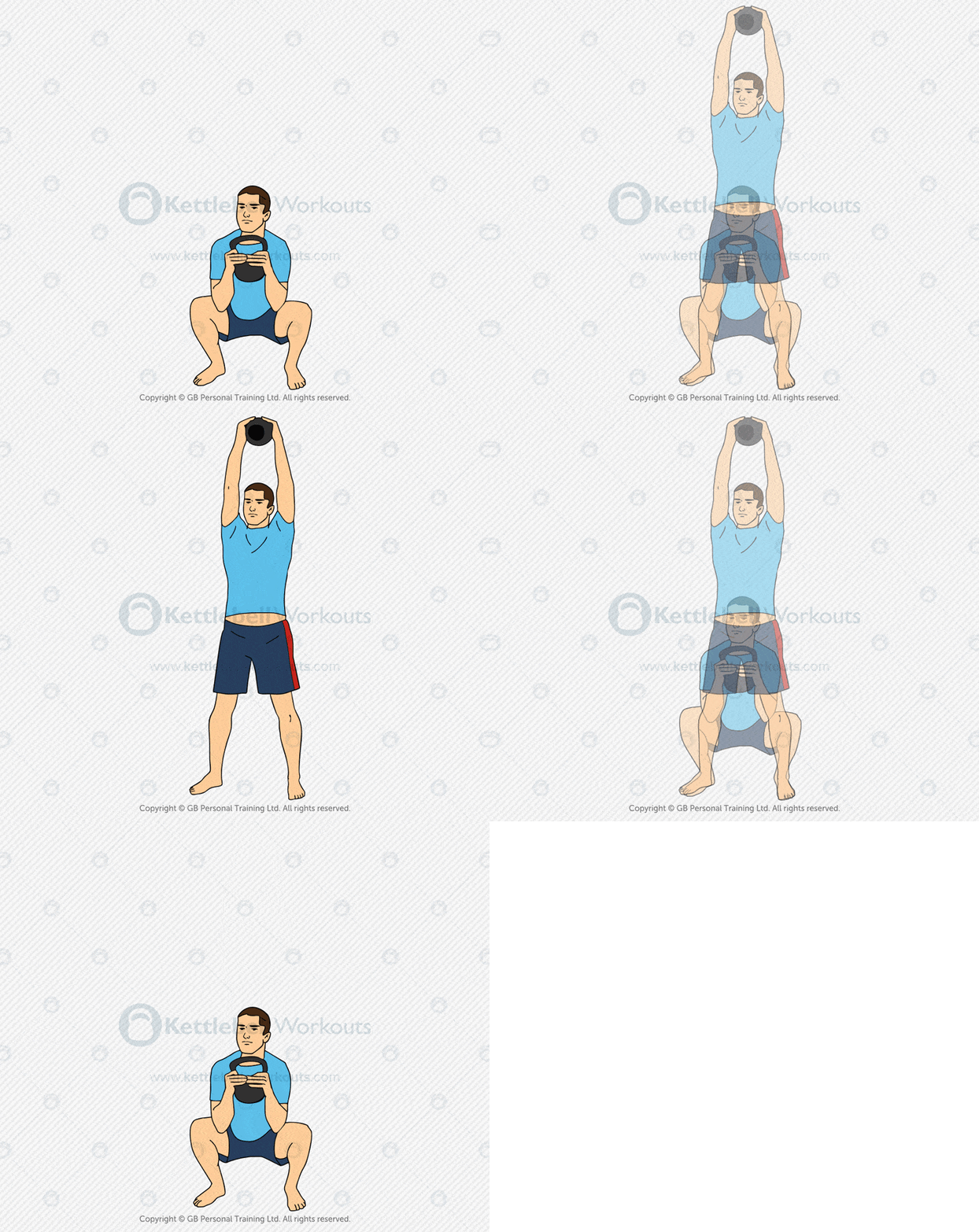
Kettlebell Squat and Press
This combines lower- and upper-body endurance in one exercise and can raise the whole-body demand quickly.
Because the movement uses several joints and muscle groups, it is better suited to moderate repetitions than long fatigue-driven sets where pressing mechanics begin to deteriorate.
Sample Kettlebell Endurance Workouts
The following examples are intentionally scalable. Start below your maximum and leave enough margin to keep the final round looking similar to the first.
1. Swing Endurance EMOM
- 10 to 15 two-handed swings at the start of each minute
- Rest for the remainder of the minute
- Start with 8 to 10 minutes
- Progress towards 12 to 15 minutes only if technique stays consistent
2. Controlled Density Circuit
- 10 swings
- 6 high pulls each side
- 6 goblet squats
- Rest as needed
- Repeat for 10 to 15 minutes
The goal is not to sprint through as many rounds as possible. Use a repeatable pace and track how much good-quality work you can sustain.
3. Timed Endurance Intervals
- 30 seconds one-arm swings, left
- 30 seconds one-arm swings, right
- 30 seconds clean to squat, alternating sides
- 60 seconds rest
- Repeat for 4 to 6 rounds
This gives you a clear work-and-recovery structure instead of forcing you to hold the kettlebell continuously for 12 to 15 minutes.
4. Advanced Continuous Complex
- 5 swings each side
- 3 cleans each side
- 3 squat to presses each side
- Put the kettlebell down and rest 60 to 90 seconds
- Repeat for 4 to 5 rounds
Experienced lifters can reduce the rest or link additional movements later, but continuous grip should not become the only reason the set ends.
Progressing Your Kettlebell Endurance Training
Endurance improves when you can tolerate more useful work while keeping the quality of that work acceptable.
- Increase duration gradually. Add a minute or a round rather than doubling the session.
- Add repetitions cautiously. More reps are useful only if technique remains consistent.
- Reduce rest only when appropriate. Shorter rest increases density, but it can also turn a technical kettlebell session into a fatigue test.
- Increase load last. A heavier kettlebell may improve strength-endurance, but it also changes the difficulty of every repetition.
- Track repeatability. A good endurance session should allow reasonably similar performance from early rounds to late rounds.
If your goal changes from endurance to maximal strength, power or cardiovascular conditioning, change the programming rather than trying to make one workout serve every purpose.
Endurance work should not mean poor repetitions for longer. If grip, breathing or local muscle fatigue causes technique to deteriorate, shorten the set, reduce the reps or increase the rest.
Where Endurance Fits in Your Kettlebell Training
- For cardio-focused sessions: Kettlebell Cardio Workouts
- For explosive work: Kettlebell Power Workouts
- For pure strength: Kettlebell Workouts for Strength
- For choosing a different goal: Kettlebell Workouts by Goal
Frequently Asked Questions
How often should I do kettlebell endurance workouts?
Frequency depends on the rest of your programme, your training age and how demanding the sessions are. Some people may use 1 endurance session per week, while others can tolerate 2 or 3. The important point is that endurance work should not consistently undermine strength, recovery or technique.
Can kettlebell swings replace running?
Kettlebell swings can provide a strong cardiovascular and muscular endurance challenge, but they are not a direct replacement for running if your goal is specifically to improve running performance. Training should reflect the activity you want to get better at.
What weight kettlebell should I use for endurance?
Choose a load that lets you complete the planned interval, set or round with consistent technique. There is no universal 15 to 20 rep rule because the appropriate load depends on the exercise, work duration, rest periods and your experience.
Are kettlebell endurance workouts good for beginners?
Yes, once basic technique is reliable. Beginners should use shorter sets, lower total volume and generous rest periods before progressing towards longer continuous work.
What’s the difference between kettlebell endurance and cardio?
Cardio training emphasises the cardiovascular system. Kettlebell endurance can also target local muscular endurance, grip endurance and the ability to repeat strength-based movements over time. The two overlap, but they are not identical.
Final Thoughts
Kettlebells are useful endurance tools because they allow repeated full-body work without requiring a large amount of equipment.
The key is to progress the amount of quality work you can sustain rather than simply extending every workout until technique breaks down. Build time, repetitions and density gradually, and use the type of endurance that best matches your actual goal.
For a broader overview of how endurance fits alongside strength, power, cardio, muscle and longevity, use the Kettlebell Workouts by Goal guide.

Comments