
Last Updated on 19 August 2026 by Greg Brookes
Kettlebell power training is about producing force quickly while movement quality and speed remain high.
That makes power training different from simply making a workout exhausting. Swings, cleans, high pulls, push presses and snatches can all develop explosive intent, but only when the repetitions stay crisp enough to remain powerful.
The goal is not to collect as many fast repetitions as possible. The goal is to produce high-quality explosive repetitions, recover, and then repeat them.
Power is the ability to express force quickly. Strength contributes to power, but power also depends on how rapidly you can produce that force. This is why a technically strong but slow repetition and a fast explosive repetition are not the same training stimulus.
Why Train Power with Kettlebells?
Kettlebells are well suited to power training because many of their best-known exercises are ballistic. The swing, clean, high pull and snatch all use rapid hip extension and coordinated whole-body movement.
Power also has a different training purpose from pure strength or endurance.
| Quality | Main Emphasis | Typical Kettlebell Approach |
|---|---|---|
| Strength | Producing high force | Heavier controlled presses, squats, rows and carries |
| Power | Producing force quickly | Fast, crisp swings, cleans, high pulls, push presses and snatches |
| Endurance | Sustaining work | Longer sets, repeated rounds or extended work periods |
These qualities overlap, but the programming emphasis changes. A swing set that starts explosive and ends slow because of fatigue is gradually becoming less of a power set and more of a conditioning challenge.
Key Kettlebell Power Exercises
You do not need a long exercise list. A handful of well-practised ballistic movements can cover most kettlebell power training.
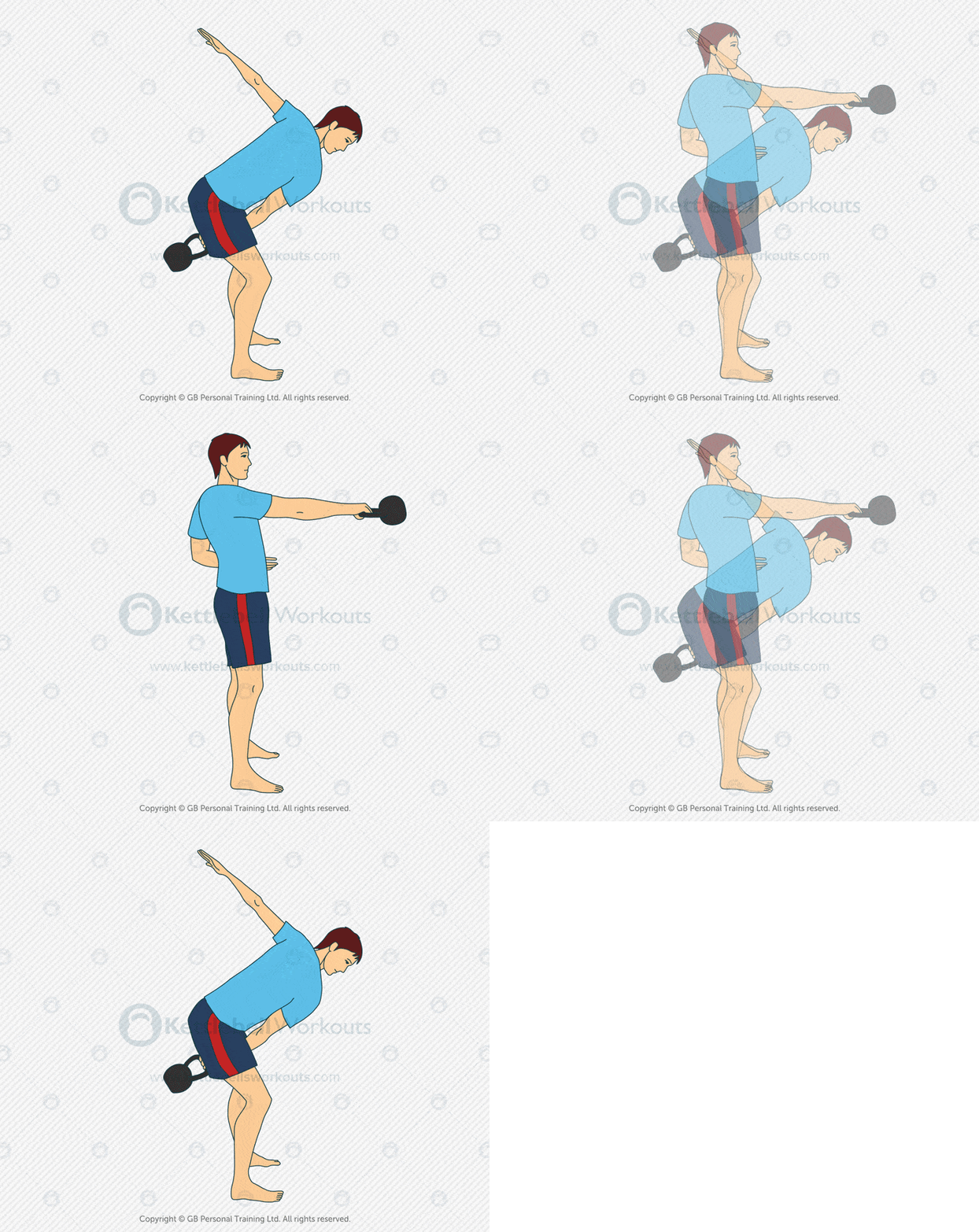
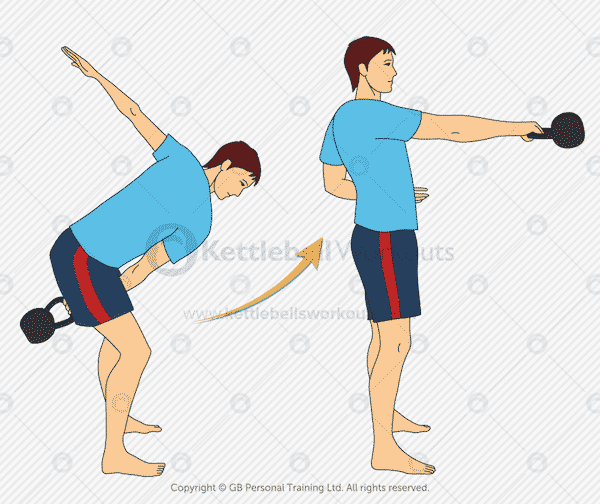
Kettlebell Swings
The swing is the foundation of kettlebell power training. It teaches rapid hip extension while the upper body guides rather than lifts the kettlebell.
For power work, keep sets short enough that the bell continues to move sharply. If the swing becomes slow, squatty or increasingly arm-dominant, the set has gone on too long.
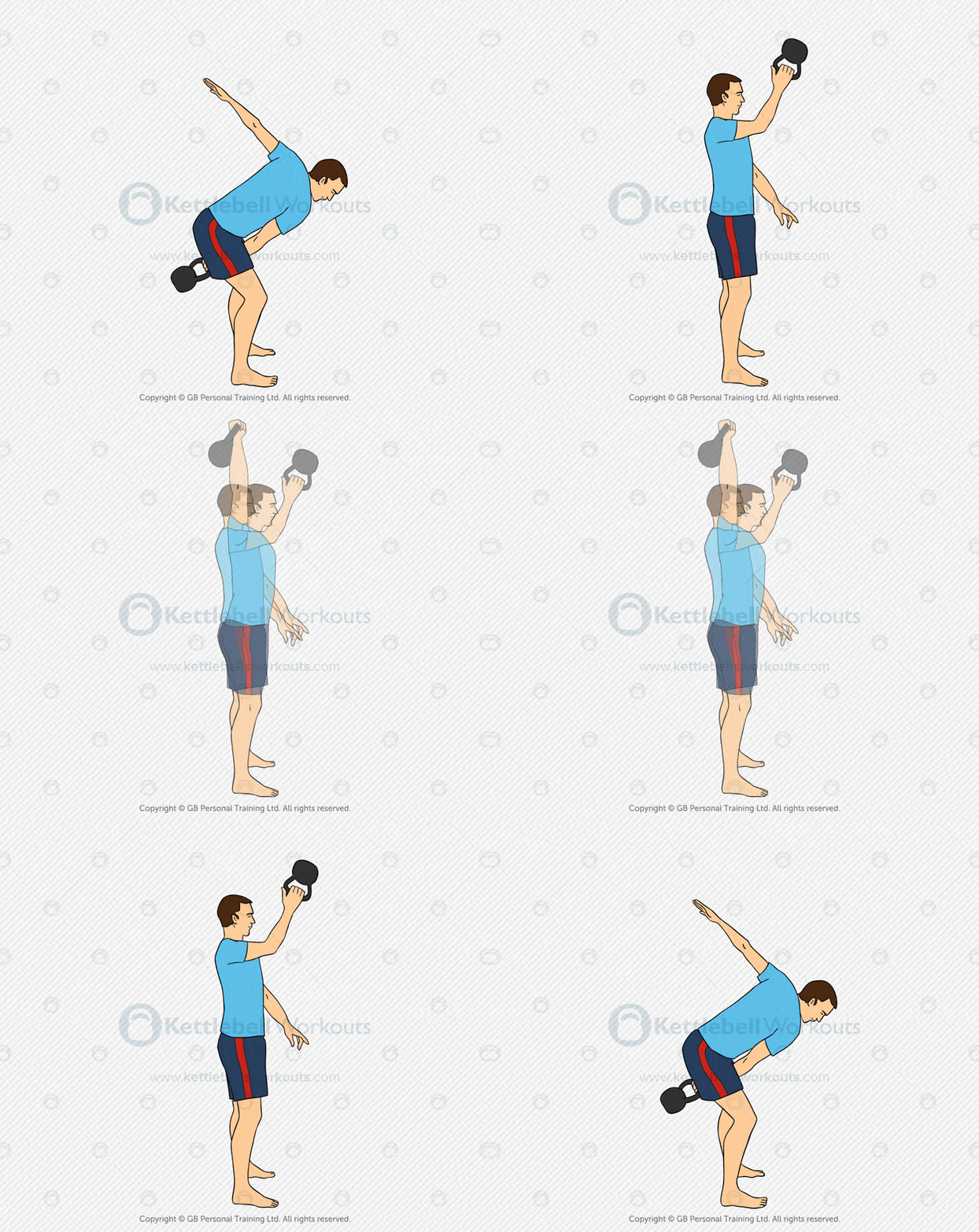
Kettlebell Snatches
The snatch extends the hip-driven power of the swing into an overhead finish. It is a higher-skill exercise, so technique should already be dependable before it is used for dedicated power work.
Use low enough repetitions that the lockout, hand insertion and kettlebell path remain clean rather than deteriorating into a conditioning grind.
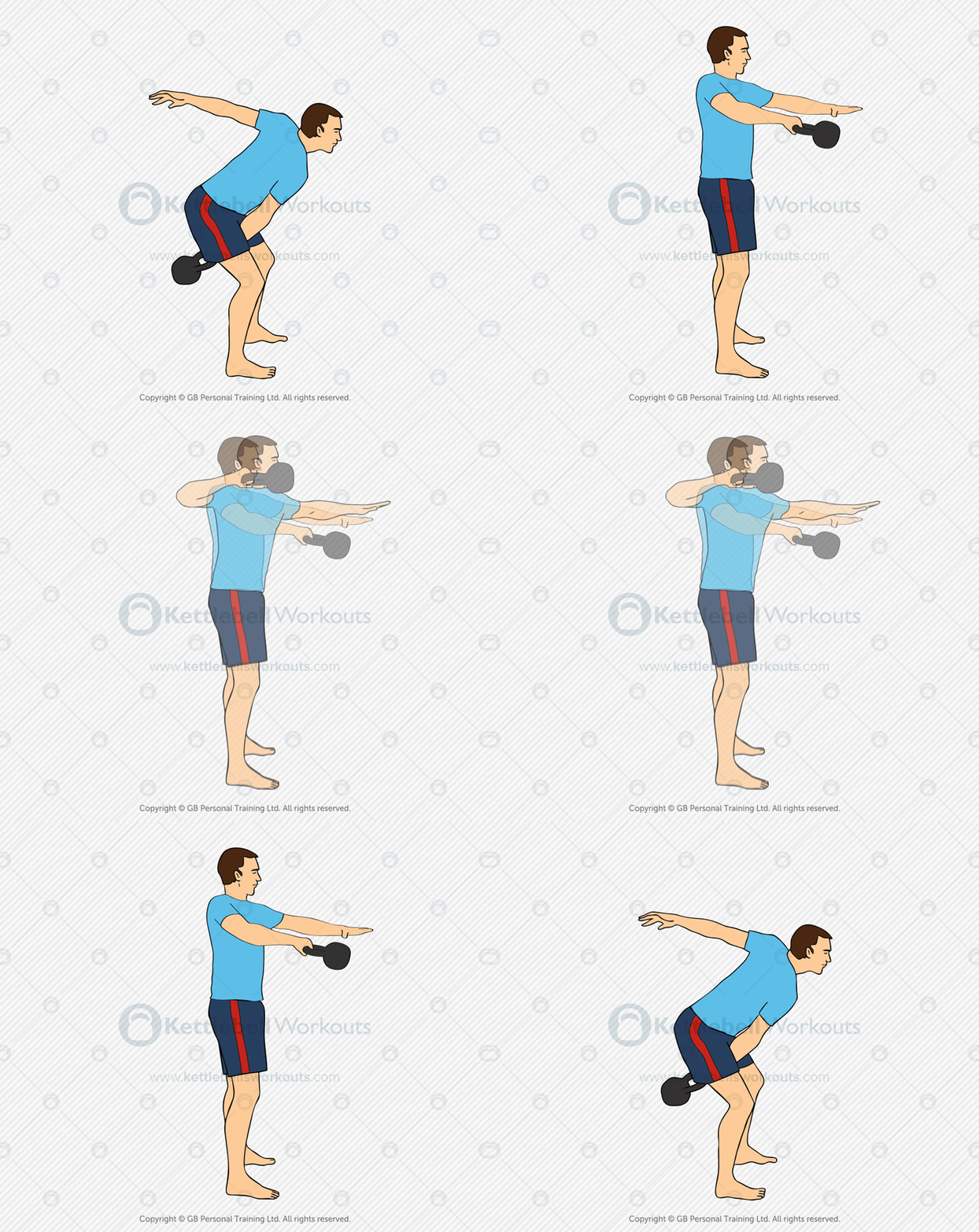
Kettlebell High Pulls
The high pull is another hip-driven ballistic exercise and can be a useful bridge between the swing and snatch.
The kettlebell should continue to feel accelerated by the hips rather than muscled upwards by the shoulder and arm.

Kettlebell Clean to Push Press
The clean to push press links explosive hip extension with a powerful overhead drive. Unlike a strict press, the legs deliberately contribute to the movement.
Keep the clean controlled into the rack and make the push press fast without turning it into a loose or unstable overhead finish.
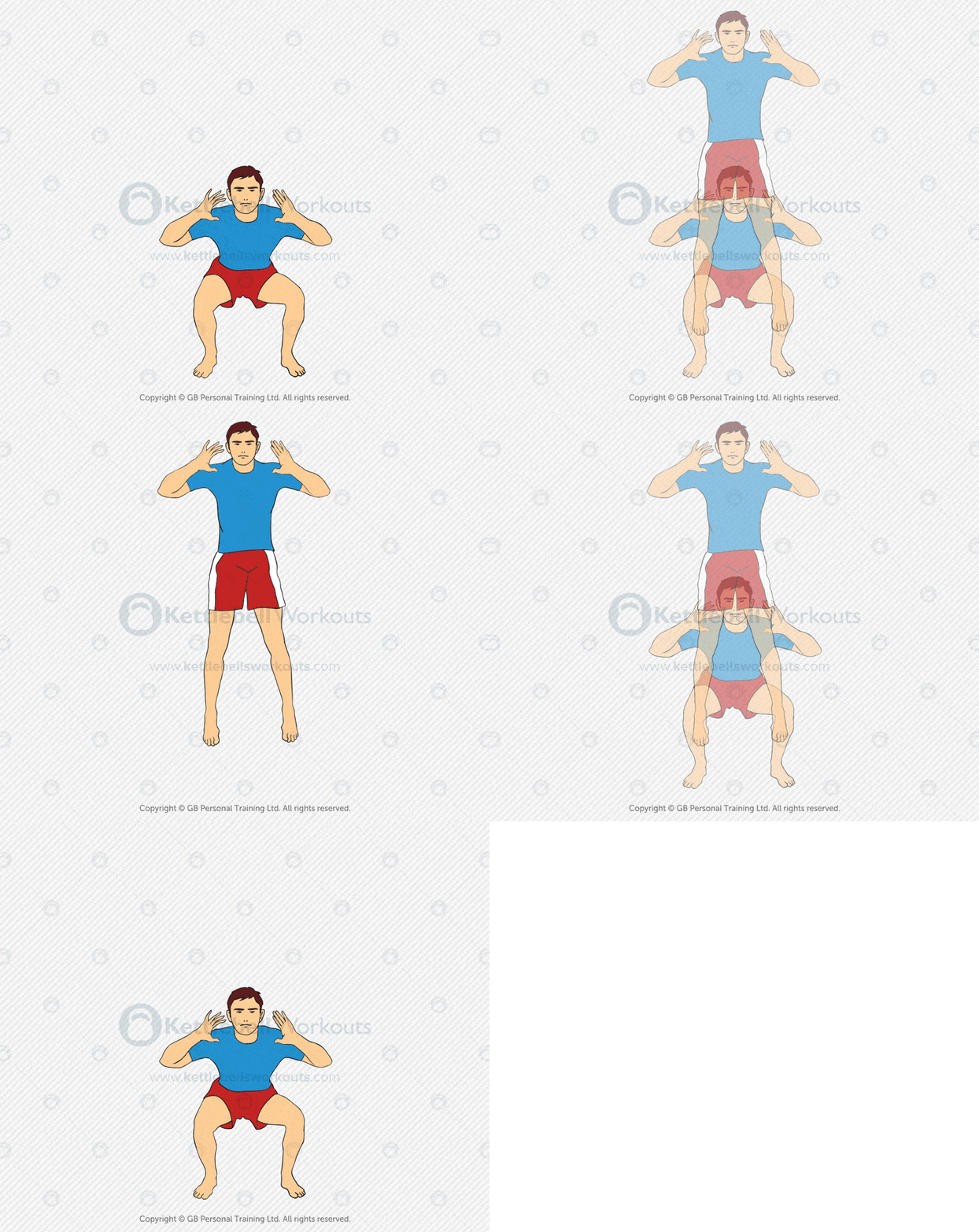
Jump Squats: Optional and More Advanced
Jumps can train lower-body explosiveness, but you do not need to add kettlebell load for them to be effective.
For many people, bodyweight jump squats are the cleaner starting option. Loaded jump squats should be reserved for people who already land quietly, control knee and hip position, and have a clear reason to add external load.
Sample Kettlebell Power Workouts
These sessions deliberately use fewer repetitions and more recovery than a typical conditioning circuit. The aim is to preserve speed and technical quality.
1. Power EMOM
- Minute 1: 6 powerful swings each side
- Minute 2: 3 to 5 snatches each side
- Repeat for 8 to 10 minutes
Finish the repetitions early in the minute and use the remaining time to recover. This should not feel like a race against the clock.
2. Power Complex
- 5 swings each side
- 3 high pulls each side
- 2 snatches each side
- Rest 90 seconds to 2 minutes
- Repeat for 3 to 4 rounds
The repetitions remain deliberately low. The complex should feel coordinated and explosive, not like you are trying to survive the final exercise.
If you want a longer conditioning-style complex, use the dedicated kettlebell complex workouts instead.
3. Explosive Strength Circuit
- 3 to 5 bodyweight jump squats
- 3 to 5 clean to push presses each side
- Rest 90 seconds to 2 minutes
- Repeat for 3 to 4 rounds
Keep every jump and push press sharp. If the jump height clearly drops or the push press becomes a slow grind, extend the rest or finish the session.
Progressing Your Kettlebell Power Training
Progressing power training is not simply about doing more and more repetitions.
- Own the technique first. Do not chase speed in a movement you cannot yet control slowly.
- Improve intent and crispness. The same kettlebell can become more powerful when you accelerate it better.
- Add small amounts of volume. Add a set or a few total repetitions without allowing movement speed to deteriorate.
- Increase load when appropriate. A heavier bell can develop power if you can still move it fast enough for the chosen exercise.
- Protect recovery. More rest may be a progression if it lets you produce higher-quality output.
Power does not always mean using a light kettlebell, and strength does not always mean moving slowly. The useful load is the one that lets you express force quickly while maintaining the technique you want to train.
Common Power-Training Mistakes to Avoid
- Turning every power session into cardio: if fatigue is driving the session more than speed, the emphasis has changed.
- Using too many reps: ballistic exercises often lose quality before people are willing to stop the set.
- Going too heavy: a load that turns every repetition into a grind is no longer serving the same power goal.
- Chasing speed before technique: faster poor movement is still poor movement.
- Using complexes for everything: complexes are useful, but straight sets with full recovery are often better when maximum quality is the priority.
- Confusing difficulty with effectiveness: making the workout exhausting does not automatically make it better for power.
Power work magnifies mistakes. If you cannot maintain a stable rack, overhead position, hip hinge or landing pattern at a controlled speed, build that foundation before adding more velocity.
Who Should Be Cautious with Kettlebell Power Training?
Ballistic training is not automatically unsafe, but it gives you less time to correct a poor position once the kettlebell is moving quickly.
Start with slower strength and skill work first if you:
- are new to kettlebell training;
- have not yet learned a reliable hip hinge and swing;
- cannot control the rack or overhead position;
- have pain during the movement;
- are returning after a long lay-off and have lost basic strength or coordination.
Where a medical or musculoskeletal condition affects training, get individual guidance from an appropriate qualified professional rather than relying on a generic power programme.
Coach’s Insight: Greg’s Take
One of the easiest mistakes with kettlebell power training is to judge the session by how tired you feel afterwards.
I prefer to judge it by the quality of the repetitions. Did the swing stay sharp? Did the clean arrive softly in the rack? Did the snatch remain smooth? Did the push press still look explosive at the end?
If the answer is yes, you trained power. If every repetition became slower and more ragged as the session continued, you probably drifted into conditioning.
Where Power Fits in Your Kettlebell Training
- For pure strength: Kettlebell Workouts for Strength
- For workout formats: Kettlebell EMOM Workouts, Kettlebell Complexes and Kettlebell Circuits
- For choosing another training outcome: Kettlebell Workouts by Goal
- For sport-specific power and conditioning: see my kettlebell workouts for MMA fighters
Frequently Asked Questions
How often should I train kettlebell power?
There is no single ideal frequency. Many people can include 1 to 3 power-focused sessions or short power blocks per week, depending on training age, total workload, sport demands and recovery. Quality matters more than forcing a fixed weekly number.
Can beginners do kettlebell power workouts?
Beginners should first learn the underlying movement patterns and basic kettlebell skills. Once the hinge, swing, rack and overhead positions are reliable, short low-volume power work can be introduced gradually.
What’s the difference between strength and power training?
Strength is primarily about producing force. Power adds a speed component, meaning how quickly that force can be expressed. The two qualities overlap, but the programming emphasis differs.
Can kettlebell swings build power?
Yes. The kettlebell swing uses rapid hip extension and is one of the most useful kettlebell exercises for practising explosive force production when technique and repetition speed remain high.
How many reps should I use for kettlebell power?
Use enough repetitions to practise powerful movement without allowing speed or technique to deteriorate. Shorter sets are usually more appropriate than long fatigue-driven sets when power is the main goal.
Final Thoughts
Kettlebells are excellent tools for developing explosive movement because swings, cleans, high pulls, push presses and snatches all reward coordinated force production.
The key is to programme them as power exercises rather than simply fast conditioning exercises. Keep the repetitions crisp, rest enough to repeat high-quality efforts and stop the set when speed or technique clearly falls away.
Power is only one training goal. Use the Kettlebell Workouts by Goal guide to see how it fits alongside strength, muscle, cardio, endurance and longevity training.

Comments