
Last Updated on 17 August 2026 by Greg Brookes
EMOM stands for “Every Minute on the Minute”. At the start of each minute, you complete a prescribed amount of work, then use whatever time remains as recovery.
That built-in rest is what makes EMOM training so useful. You can keep the session highly structured while still allowing enough recovery to preserve technique, speed or strength from one minute to the next.
With kettlebells, EMOMs work particularly well with simple repeatable movements such as swings, squats, cleans and presses. The key is choosing a workload that fits comfortably inside the minute rather than trying to fill all 60 seconds with exercise.
What Is a Kettlebell EMOM Workout
A kettlebell EMOM workout begins a set of repetitions at the start of every minute. Once the repetitions are complete, you rest until the next minute begins.
For example, if 10 swings take 20 seconds, you have approximately 40 seconds to recover before the next set starts.
Benefits of Kettlebell EMOM Workouts
EMOMs give you a simple framework for controlling both work and recovery without constantly watching a timer during the set.
EMOM vs Other Timed Kettlebell Formats
EMOM is different from ordinary interval training because the recovery is not prescribed separately. It is simply the time left over after you complete the work for that minute.
For a complete comparison, see my Kettlebell Workout Formats guide.
Using Movement Patterns in EMOM Programming
I like to think about EMOMs in terms of movement patterns because it keeps the programming purposeful rather than turning every minute into a random exercise.
A single-exercise EMOM is often the cleanest way to use the format. Repeating one movement lets you practise the same skill under a predictable amount of fatigue without unnecessary transitions.
How to Structure a Kettlebell EMOM Workout
1. Choose the Duration
Start with the shortest duration that gives you enough quality work. Around 8 to 12 minutes is a sensible entry point, while experienced trainees may extend the format towards 15 to 20 minutes or beyond when the workload remains appropriate.
2. Select Your Exercise
Use an exercise you already perform reliably. Swings, squats, cleans and presses all work well because they are easy to prescribe by repetitions and repeat on a consistent schedule.
3. Determine Reps Per Minute
The repetitions should leave enough time to recover before the next minute begins. There is no rule that you must work for 30 to 45 seconds.
4. Warm Up Thoroughly
Prepare the joints and rehearse the exercise before the timer begins. See my Kettlebell Warm-Up guide if you need a structured preparation sequence.
Sample Kettlebell EMOM Workouts
These examples show how the same EMOM structure can be used for different exercises and training levels.
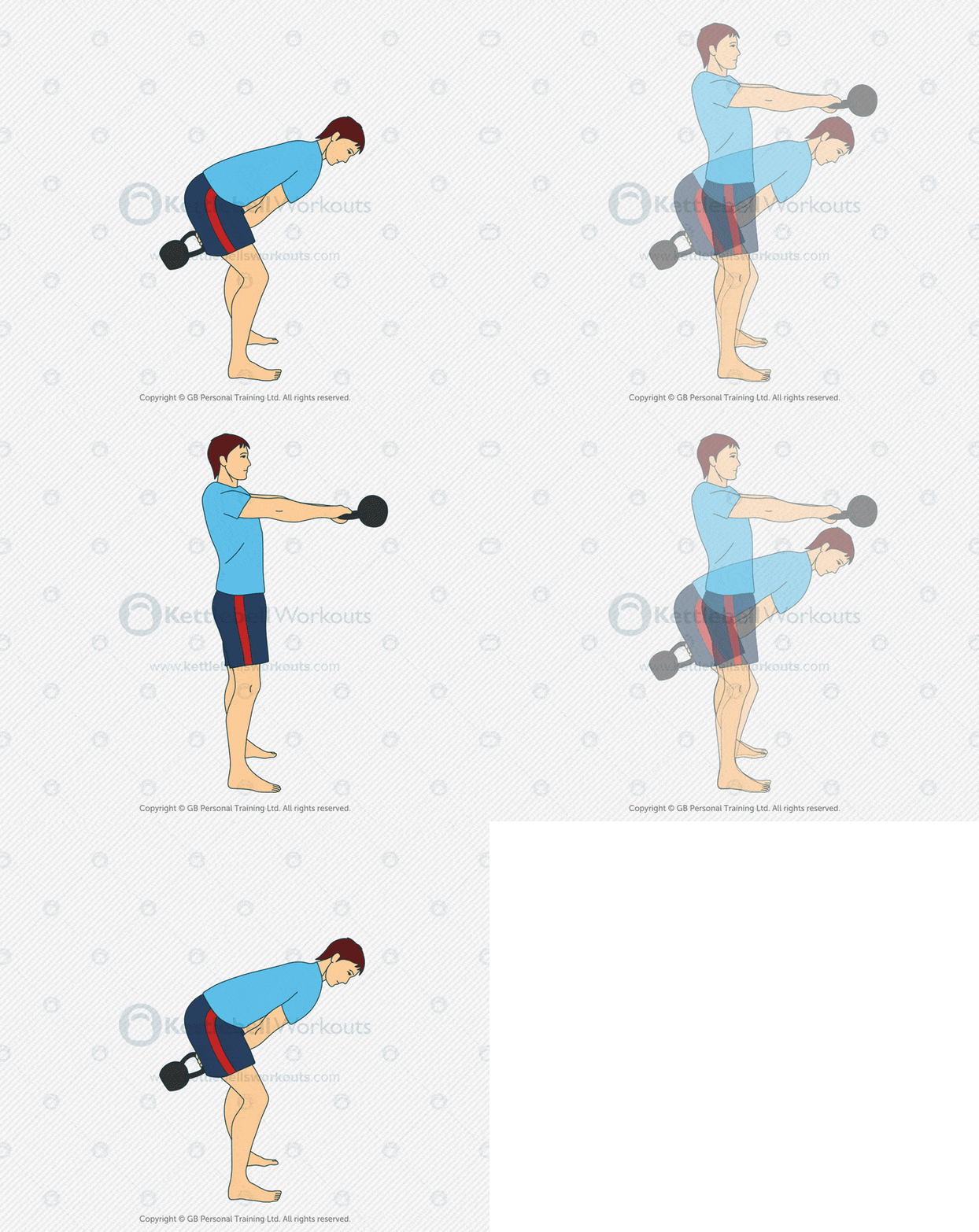
Beginner EMOM: Swings (10 Minutes)
This is the simplest place to start because the Swing is rhythmic and the workload is easy to measure. Keep the repetitions crisp and use the recovery to reset your breathing and stance.
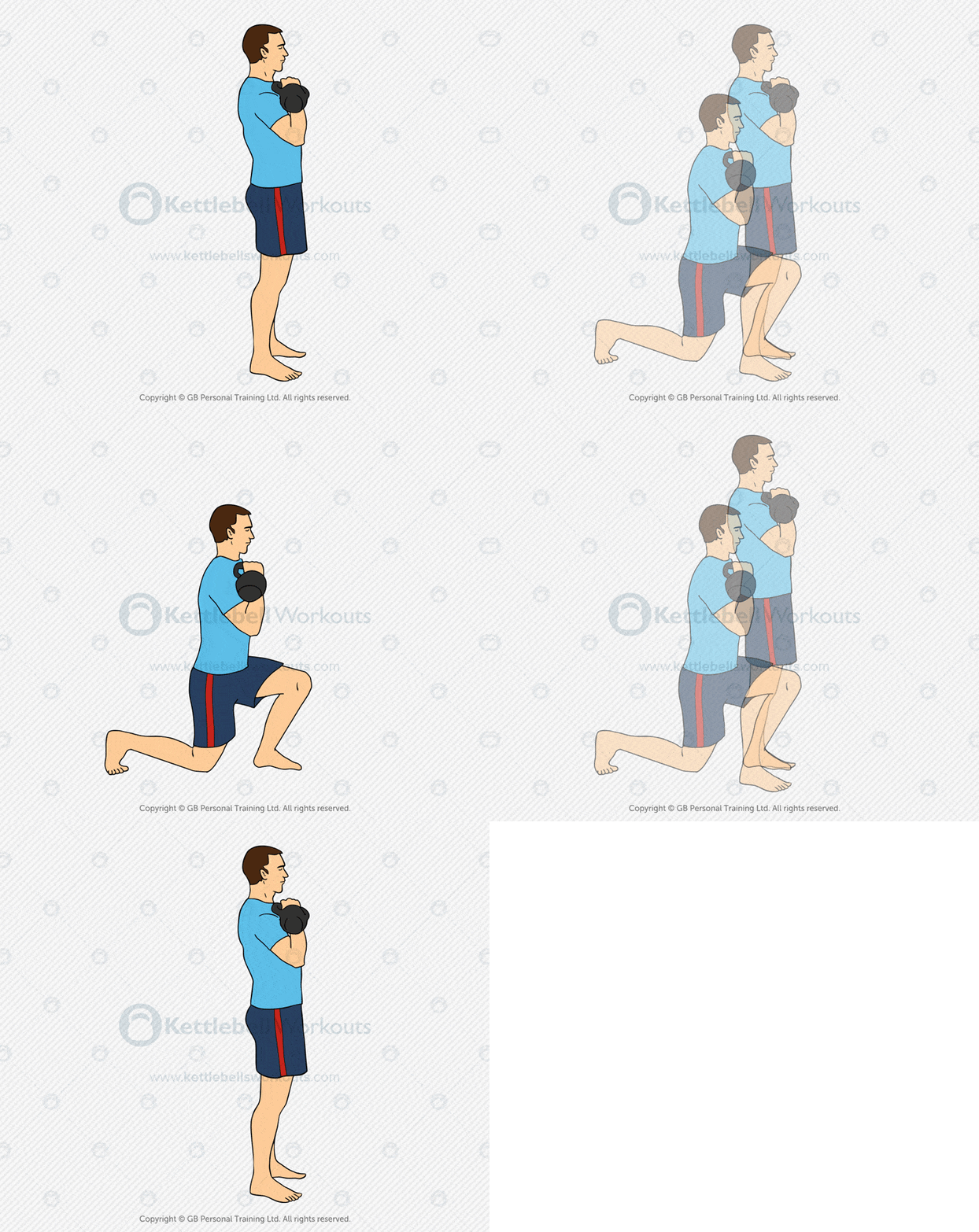
Intermediate EMOM: Racked Squat (12 Minutes)
The lower repetition count leaves more recovery than a high-repetition conditioning EMOM and makes the format better suited to controlled strength-endurance work.

Advanced EMOM: Clean and Press (15 Minutes)
Use a load that allows every Clean to land quietly in the rack and every Press to remain controlled. If the repetition speed slows dramatically, reduce the reps rather than racing the clock.


Programming Tips for Kettlebell EMOM Workouts
How I Use EMOMs in Kettlebell Training
I get the most value from EMOMs when the prescription stays simple. Rather than filling every minute with several unrelated exercises, I usually prefer 1 movement or a very small number of movements with a clear purpose.
The recovery is not a weakness in the workout. It is what allows you to start the next minute with intent.
How to Make Kettlebell EMOM Training Work
Choose a familiar exercise, prescribe a realistic number of repetitions and leave enough recovery for the next minute to begin cleanly. If you need more conditioning demand, increase the workload gradually rather than turning the EMOM into continuous exercise.
For other ways to organise kettlebell conditioning, compare my Interval Workouts, HIIT Workouts, Tabata Workouts and Cardio Workouts.
Frequently Asked Questions
How long should a kettlebell EMOM workout be?
8 to 12 minutes is a useful starting point. More experienced trainees can extend the workout when the repetitions, load and recovery remain appropriate.
What weight kettlebell is best for EMOM workouts?
Use a weight that lets you complete the prescribed repetitions with consistent technique while still leaving the intended amount of recovery before the next minute begins.
What makes EMOM different from AMRAP?
EMOM gives you a new set at the start of every minute and usually includes built-in recovery. AMRAP uses a fixed total time in which you accumulate as much quality work as possible.
Can I do EMOM workouts every day?
You do not need to. EMOM is simply a workout structure, so frequency depends on the exercise, load, volume and the rest of your training week.
Are EMOM workouts good for conditioning?
Yes. When you use repeatable exercises and a workload that leaves limited but sufficient recovery, EMOMs can create a strong conditioning effect without removing structure from the session.


Comments