
Last Updated on 14 August 2026 by Greg Brookes
A Good Kettlebell Program Is More Than a Random Workout
The simplest way to build a complete kettlebell training plan is to choose a clear goal, cover the major movement patterns, decide how often you can train, then progress the same core exercises long enough to improve them.
If you keep collecting kettlebell workouts but never know what to do from one week to the next, you do not need more exercises. You need a plan.
This guide shows you how to build a kettlebell workout plan from the ground up, including exercise selection, sets and reps, weekly frequency, workout formats, progression and complete 2-, 3- and 4-day examples.
You can use the framework with 1 kettlebell or several, and adjust it for strength, muscle, conditioning or general fitness.
The 4 Decisions That Build Your Kettlebell Program
Step 1: Choose the Main Goal of Your Kettlebell Plan
You can improve several qualities at once, but your programme becomes much easier to organise when 1 goal has priority.
Strength
Use heavier loads, lower to moderate repetitions and longer recovery. Build the programme around Squats, Deadlifts, Rows and Presses rather than turning every exercise into a circuit.
Muscle
Use enough load and weekly volume to make the target muscles work hard. Controlled Squats, Rows, Presses and Lunges usually do more of the work than high-repetition Swings.
Conditioning
Use exercises you can perform safely while breathing hard. Swings, Cleans, Carries and simple circuits work well when technique is already established.
If you are unsure which direction suits you, start with my Kettlebell Workouts by Goal guide.
Step 2: Choose Exercises by Movement Pattern
A balanced kettlebell programme does not need dozens of exercises. I would normally start by covering the major patterns below, then add anything specific to your goals.
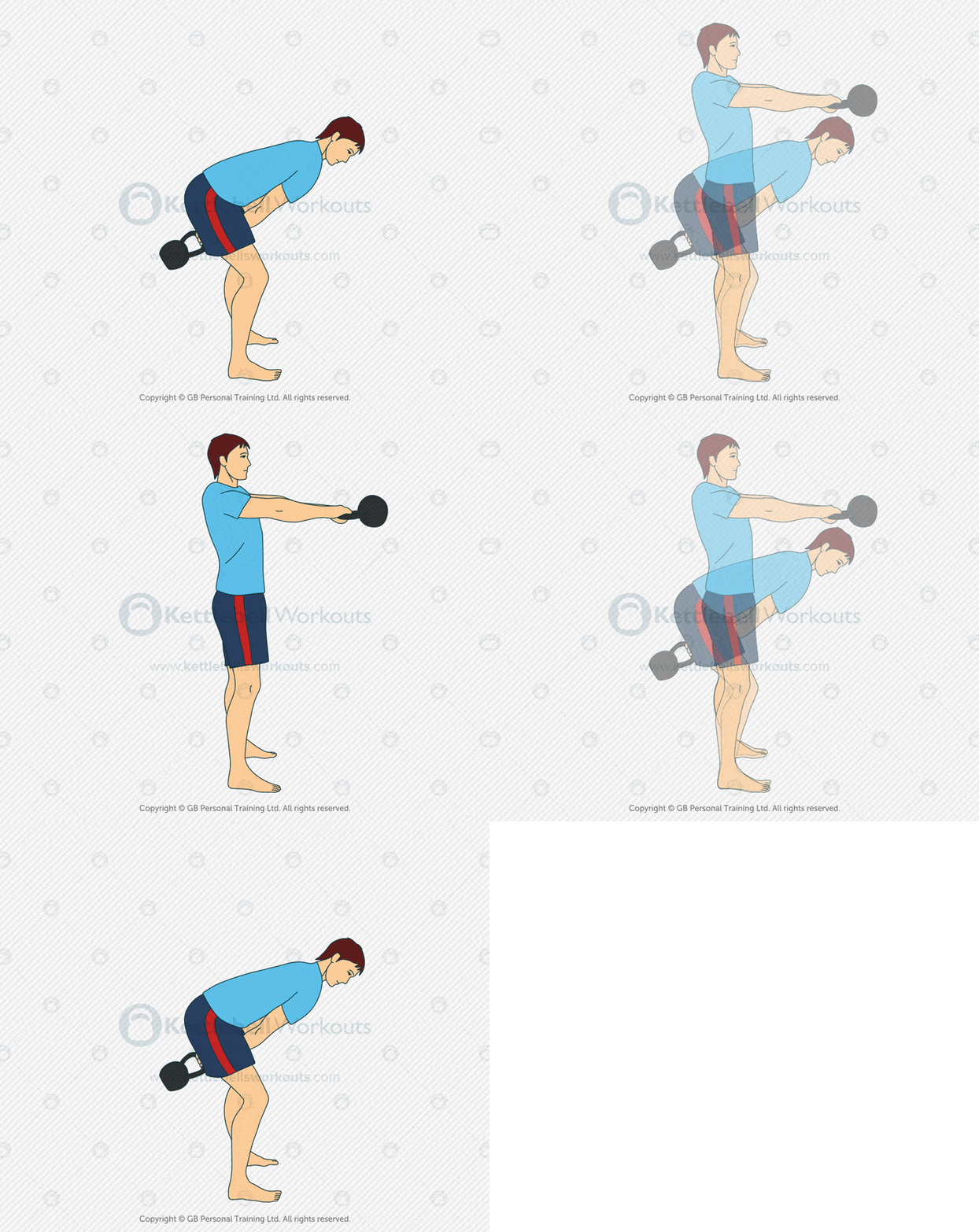 Two-Handed Kettlebell Swing
Hip hinge
Two-Handed Kettlebell Swing
Hip hinge
Train the hips and posterior chain. Beginners can start with a Deadlift before progressing to faster exercises.
Learn the Kettlebell Swing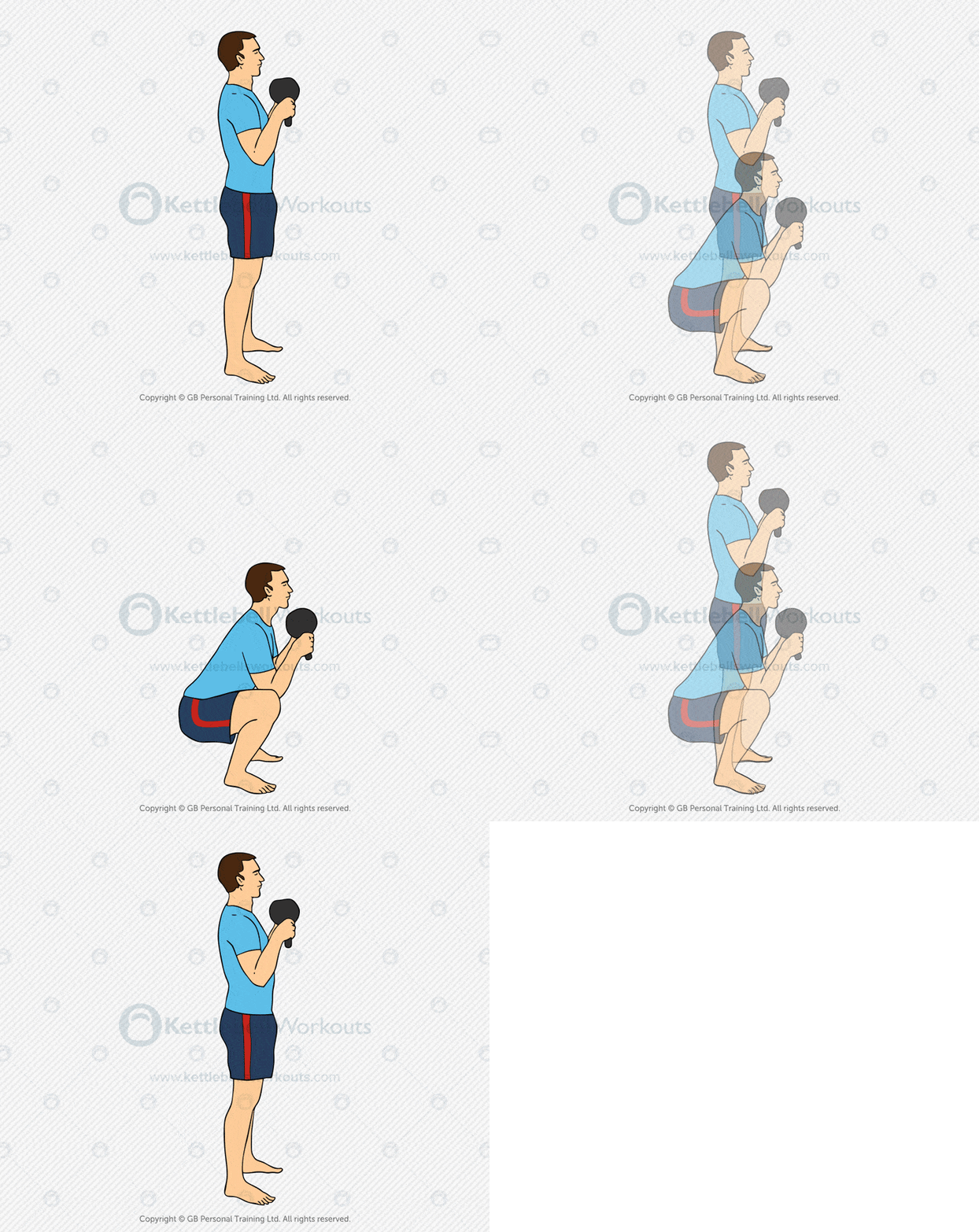 Kettlebell Goblet Squat
Knee bend
Kettlebell Goblet Squat
Knee bend
Use a Squat, Lunge or Step Up variation to train the legs through a controlled range.
Learn the Goblet Squat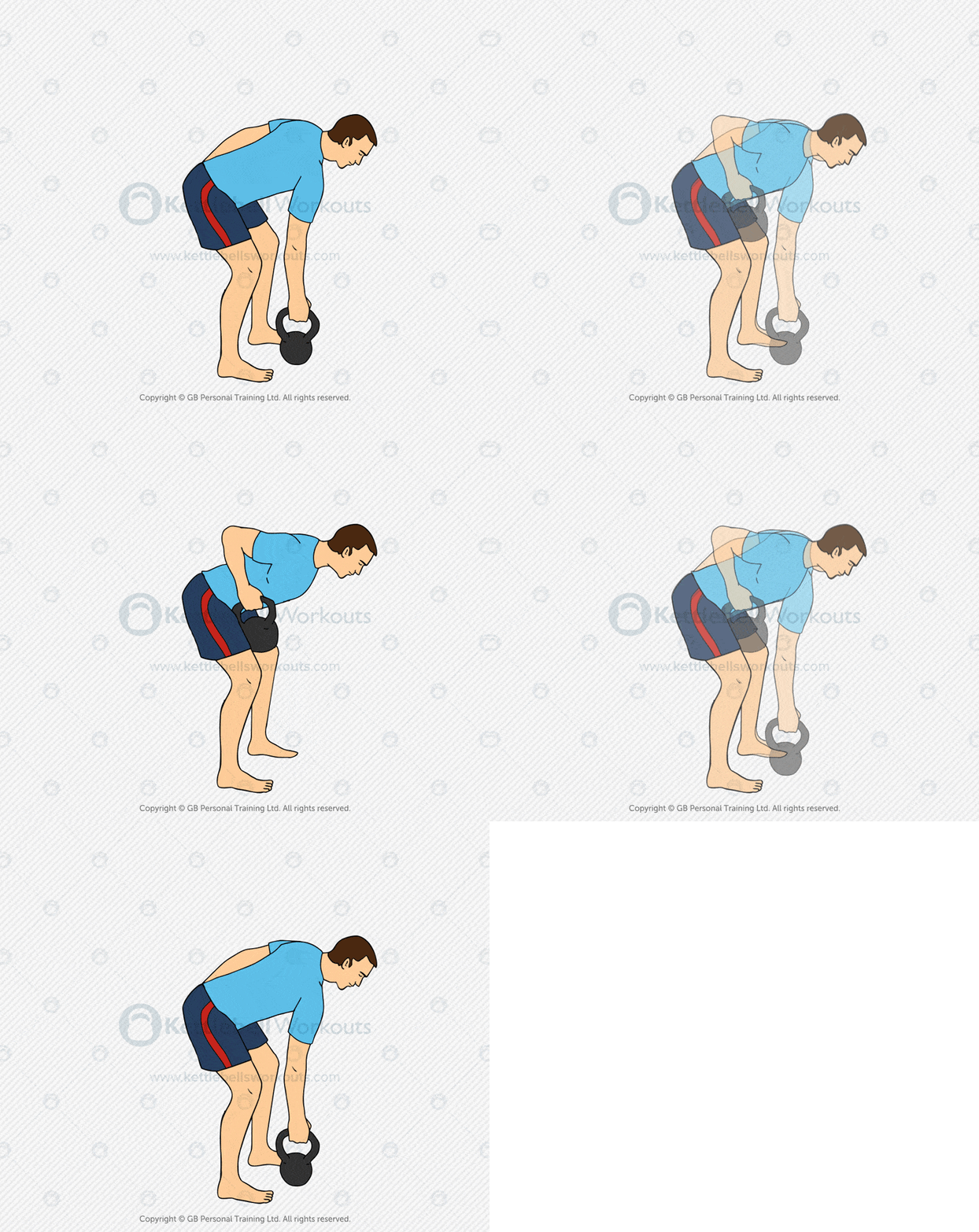 Kettlebell Bent Over Row
Pull
Kettlebell Bent Over Row
Pull
Rows provide a simple way to strengthen the upper back and arms while balancing your pressing work.
See Kettlebell Row variations Kettlebell Overhead Press
Push
Kettlebell Overhead Press
Push
Press horizontally or overhead according to your equipment, shoulder comfort and goals.
Learn the Overhead Press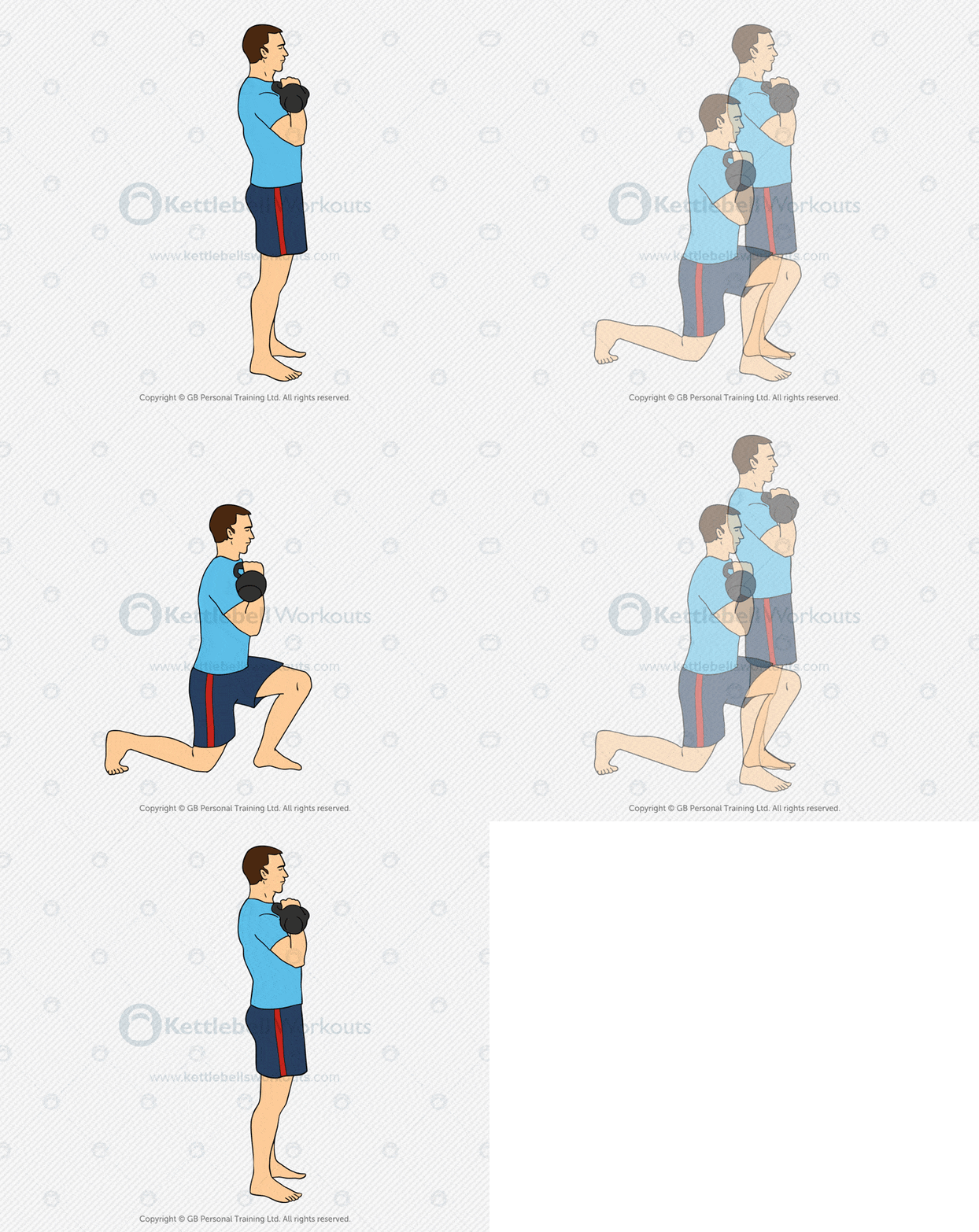 Kettlebell Racked Reverse Lunge
Single-leg work
Kettlebell Racked Reverse Lunge
Single-leg work
Lunges and single-leg exercises build unilateral strength and add balance and coordination.
See Kettlebell Lunge variations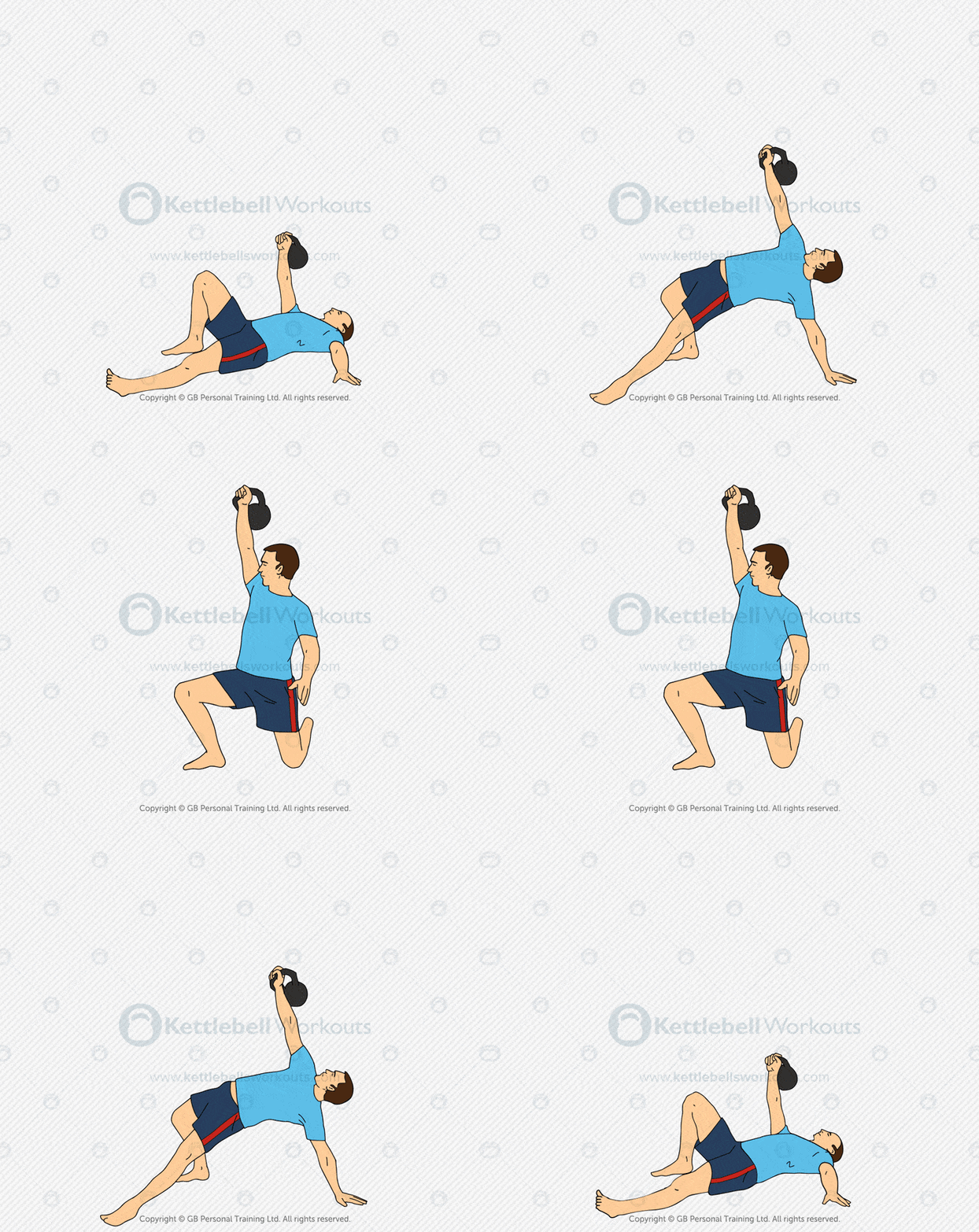 Kettlebell Turkish Get Up
Carry / trunk control
Kettlebell Turkish Get Up
Carry / trunk control
Loaded carries and Get Ups add grip, trunk strength and control without needing another complicated workout.
Learn the Turkish Get UpStep 3: Decide How Many Days Per Week You Can Train
Do not begin with the schedule you wish you could follow. Start with the schedule you can repeat for the next 8 to 12 weeks.
For many people, 2 to 4 kettlebell sessions per week is enough. Beginners often do well with 2 or 3 full-body sessions. More experienced trainees can use 4 days if the workload is divided intelligently.
For more detail, see my guides to how often to perform kettlebell workouts and kettlebell training splits.
Step 4: Choose Sets, Reps and Rest
There is no single kettlebell rep range that works for every exercise. A Turkish Get Up, Goblet Squat and Swing should not automatically receive the same prescription.
My kettlebell reps guide explains the relationship between exercise choice, load, repetitions and training goal in more detail.

Step 5: Choose a Workout Format
The format is how you organise the exercises. It should come after you have chosen the goal and movements, not before.
Best when strength or muscle is the priority and you want full focus on 1 exercise before moving on.
Useful for general fitness when you want to move through several patterns with less total rest.
EMOM, AMRAP and intervals can work well for conditioning once the exercises are technically reliable.
See the full Kettlebell Workout Formats guide for EMOM, AMRAP, circuits, flows, complexes, Tabata and more.
3 Complete Kettlebell Weekly Training Plans
These examples show how the framework fits together. They are templates, not rules.
2-Day Kettlebell Plan: Simple Full-Body Strength
Full Body A
Full Body B
3-Day Kettlebell Plan: General Strength + Conditioning
Conditioning Day
4-Day Kettlebell Plan: More Training Volume
The 4-day option only makes sense if you want more total work and recover well from it. If 2 or 3 sessions are producing progress, there is no prize for adding another day.
How to Progress Your Kettlebell Plan
A programme works because you improve it, not because you replace it every week.
- Add a small number of repetitions while technique remains solid.
- Add a set when you need more total work.
- Increase the kettlebell weight when the current load no longer challenges the target range.
- Move from an easier exercise variation to a harder one.
- Use shorter rest periods when conditioning is the goal, not when strength quality is the priority.
- Keep notes so you can see whether the programme is actually improving.
See 7 Ways to Progress Kettlebell Workouts Without Adding More Weight and Understanding Progressive Overload.
How Long Should You Follow the Same Kettlebell Program?
Keep the important exercises stable long enough to improve them. Changing a small accessory exercise is very different from rebuilding the entire programme every few days.
A useful block may last several weeks before you make a meaningful change. If the programme is still producing better technique, more repetitions, more load or better conditioning, there is usually no reason to abandon it.
For more structured long-term planning, see my kettlebell periodization guide.
Common Kettlebell Programming Mistakes
Novelty feels productive but makes progression difficult to measure.
If every exercise is rushed into a circuit, strength and muscle work often become under-loaded.
A smaller menu performed well is usually easier to progress than 12 movements squeezed into every session.
Do not let Swings and Presses crowd out Rows and other pulling movements.
Training frequency should match the difficulty of the sessions and your ability to recover.
If you do not know what you did last week, it is difficult to know what should improve this week.
The Simplest Kettlebell Program That Works
If all of this feels complicated, start here:
That simple structure is more useful than constantly searching for the perfect kettlebell routine.
Related Kettlebell Guides
Frequently Asked Questions
How do I create a kettlebell workout plan?
Choose a main goal, select exercises that cover the major movement patterns, decide how many days per week you can train, then choose sets, reps and a workout format that support the goal. Keep enough consistency to measure progress.
What is a good weekly kettlebell routine?
For many people, 2 to 3 full-body sessions per week provide an excellent starting point. More experienced trainees can use 4 days if the workload is divided sensibly and recovery remains good.
Can I build a complete program with 1 kettlebell?
Yes. A single kettlebell can be used for hinges, Squats, Lunges, Rows, Presses, Carries and conditioning. You may eventually want several weights because different exercises tolerate different loads.
How many exercises should be in a kettlebell workout?
Many effective sessions need only 4 to 6 exercises. The exact number depends on the goal and whether you are using straight sets, circuits or another workout format.
Should I do the same kettlebell workout every week?
Keep the important movements consistent long enough to progress them. You can make small changes when useful, but constantly replacing the entire workout makes progress difficult to measure.
How long should a kettlebell program last?
Follow a training block for several weeks while it continues to produce measurable progress. Change the plan when goals change, progress stalls or the current structure no longer matches your needs.


Comments