
Last Updated on 14 August 2026 by Greg Brookes
Balance Training Should Make You Stronger, Not Just Better at Wobbling
The most useful kettlebell balance exercises combine stability with strength, coordination and control. Start with support when needed, then gradually reduce assistance as your movement becomes more reliable.
Balance is a skill, but it is also a strength quality. If the muscles around the hips, legs and trunk cannot control your body, simply standing on 1 leg for longer only gets you so far.
The 7 exercises below progress from controlled single-leg movements to advanced kettlebell exercises that challenge balance under load.
You do not need to use all 7. Choose 2 or 3 that match your current ability and practise them consistently.
How to Start Kettlebell Balance Training
Use the easiest version that lets you move with control. Holding a wall, chair, pole or door frame is not cheating. It often lets you train the working leg harder because balance is no longer the limiting factor.
As your control improves, reduce the amount of support before making the exercise more complicated.
Why Kettlebells Work Well for Balance
Kettlebells make it easy to load 1 side of the body at a time. That means the hips, trunk and feet have to control both your body and the offset weight.
This is one reason unilateral kettlebell exercises can be so useful for balance. You are not practising balance in isolation. You are practising it while producing force.
7 Kettlebell Balance Exercises
The exercises are listed roughly from more accessible to more advanced. You can stay with the first 2 or 3 for a long time and still make excellent progress.
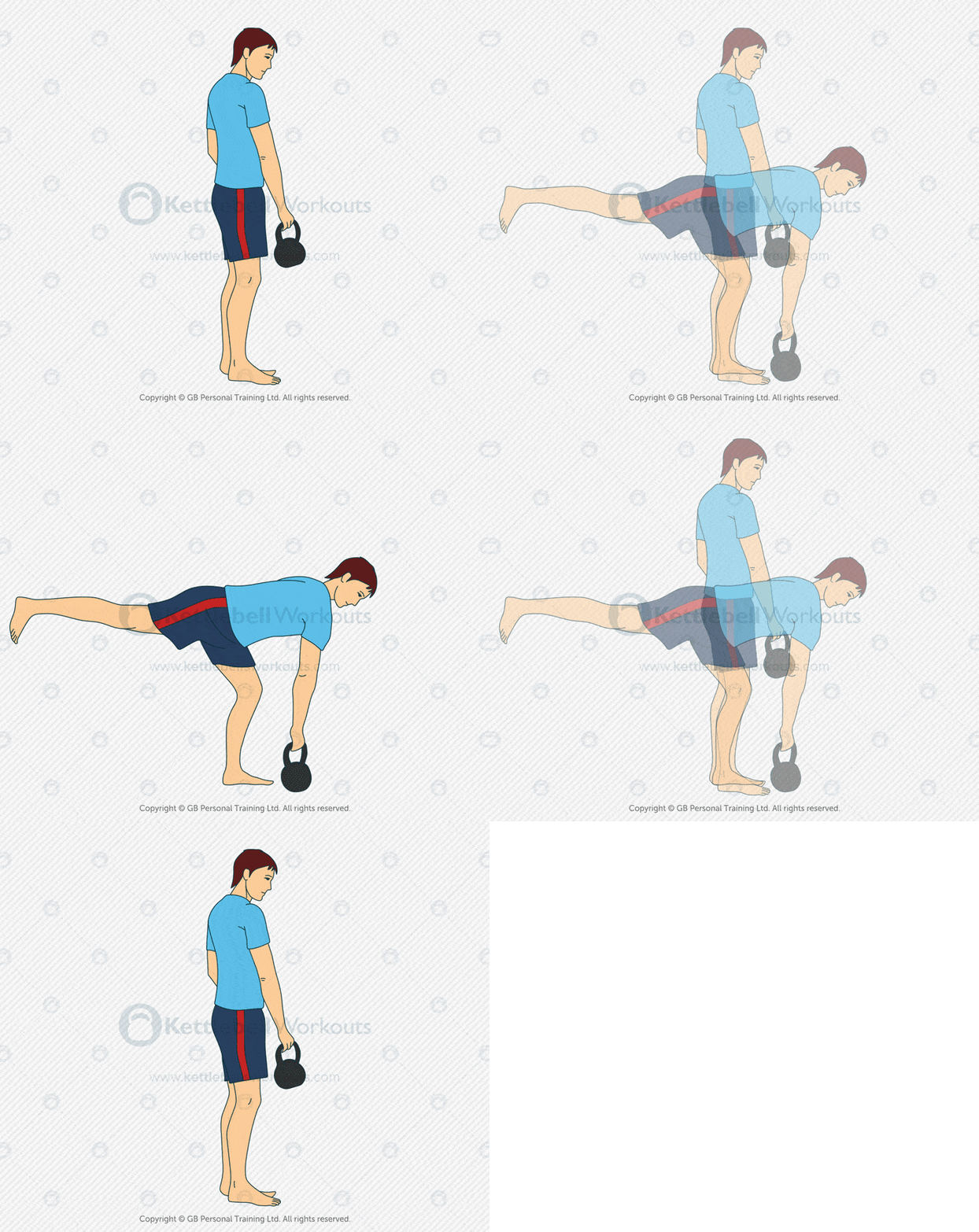
Kettlebell Single-Leg Deadlift
This is one of the most useful kettlebell exercises for combining balance with meaningful strength work. The goal is not to wobble around. Use a wall, chair or pole for light support if that lets you load the hip more effectively.
Balance focus: Keep the standing knee softly bent, hinge from the hip and keep the pelvis square.
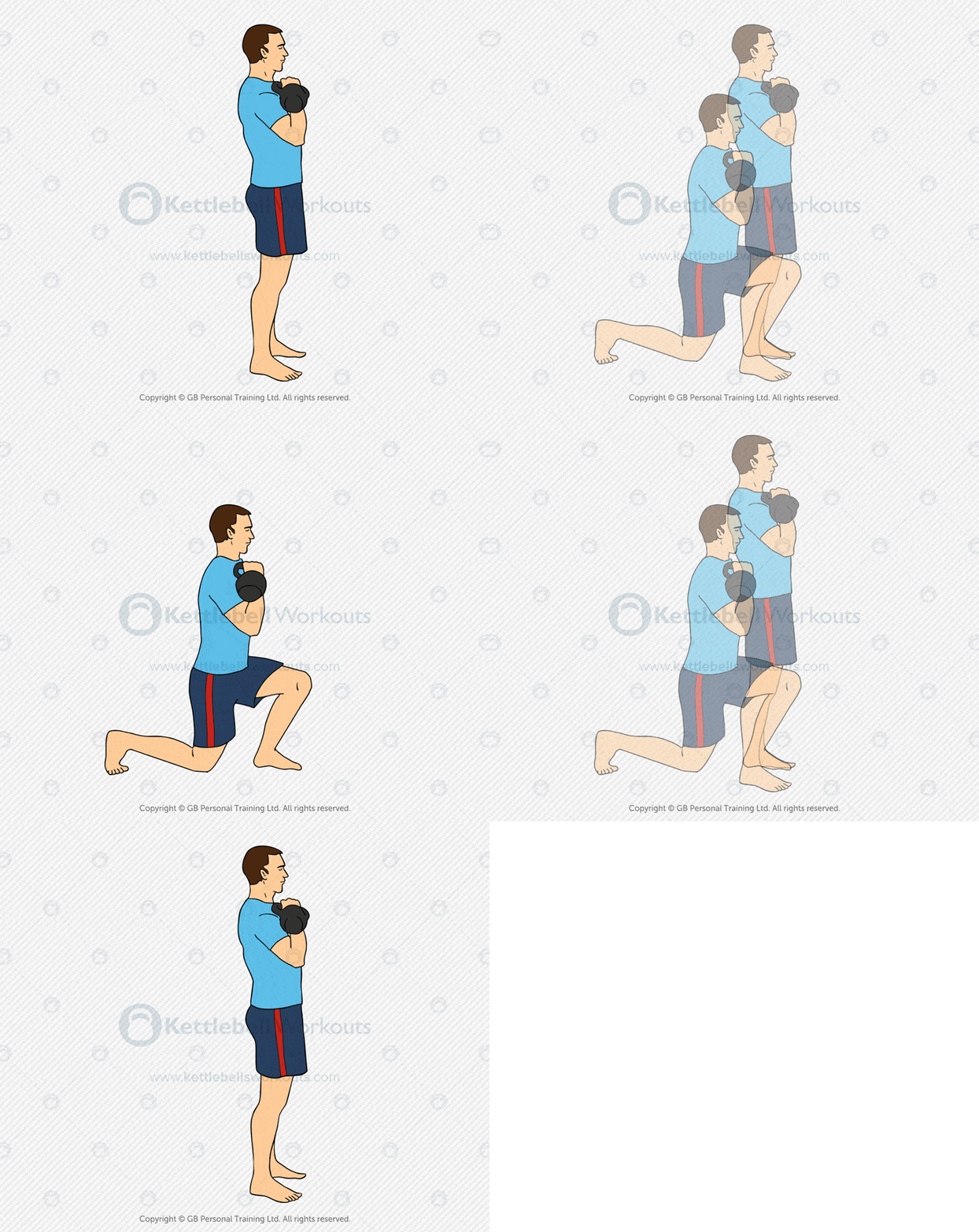
Kettlebell Reverse Lunge
The Reverse Lunge challenges balance while the feet continue to contact the floor. It is often a better starting point than more advanced single-leg exercises because you can control the step length and depth.
Balance focus: Step back quietly, keep the front foot planted and use support if necessary.

Single-Leg Kettlebell Clean
Once you can control a Single-Leg Deadlift, adding a Clean increases the coordination demand. This is not a beginner exercise, but it is a useful progression when you want balance to remain connected to real kettlebell training.
Balance focus: Own the standing position before adding speed to the Clean.
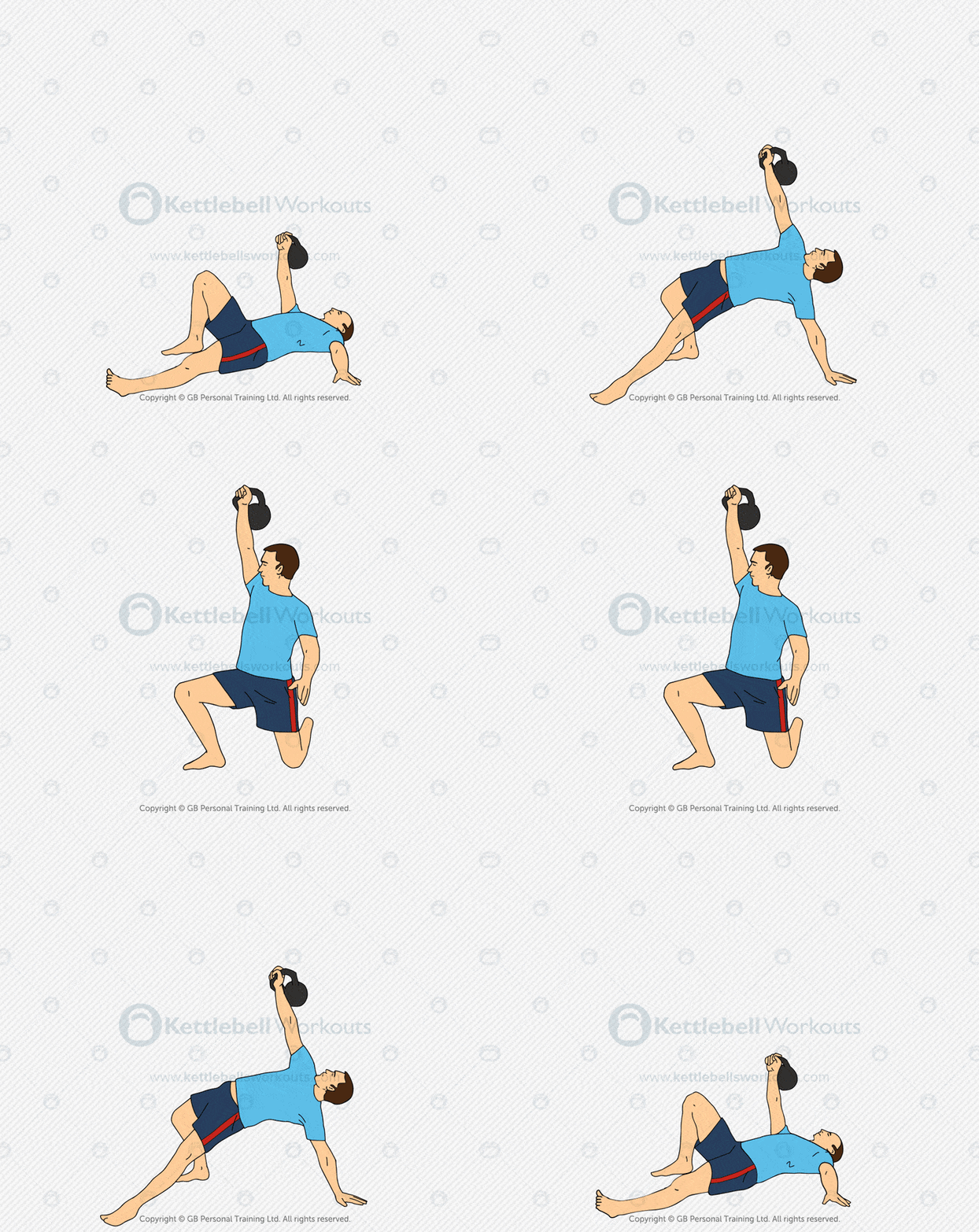
Turkish Get Up
The Get Up trains transitions from the floor to standing and back down again while controlling the kettlebell overhead. It challenges coordination, trunk control and awareness of where your body is in space.
Balance focus: Learn the sequence without load first and move deliberately through every position.

Overhead Reverse Lunge
Holding the kettlebell overhead raises the stability demand considerably. Use this only after the basic Reverse Lunge and Overhead Press are comfortable and reliable.
Balance focus: Keep the ribs controlled and the kettlebell stacked over the shoulder as you step back.
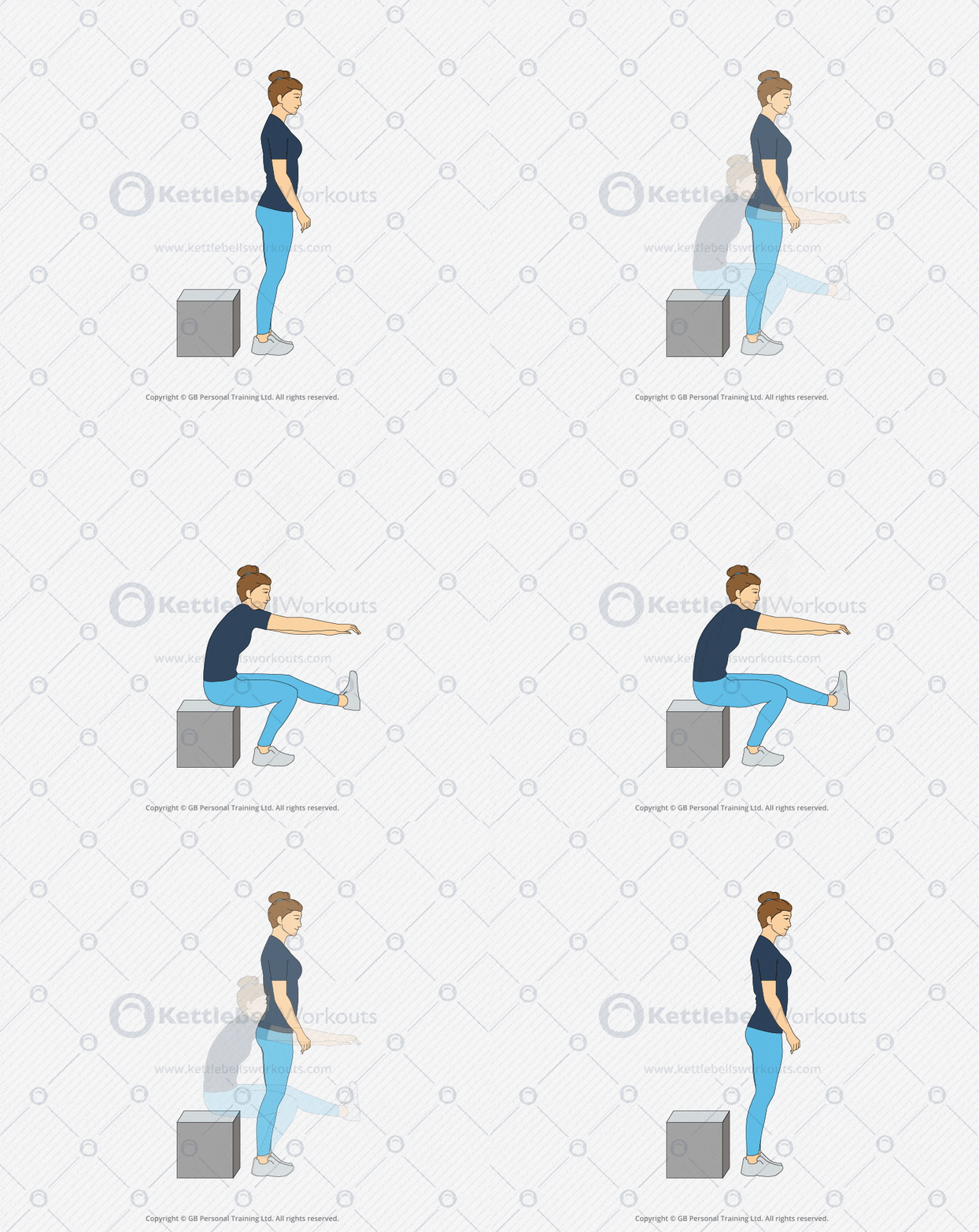
Kettlebell Pistol Squat
The Pistol Squat is a high-level balance and strength exercise, not a starting point. Most people will get more from assisted single-leg work first. Use a support, box or reduced range before trying to squat deeply on 1 leg.
Balance focus: Treat balance as part of the strength challenge, not as a reason to force the full depth.
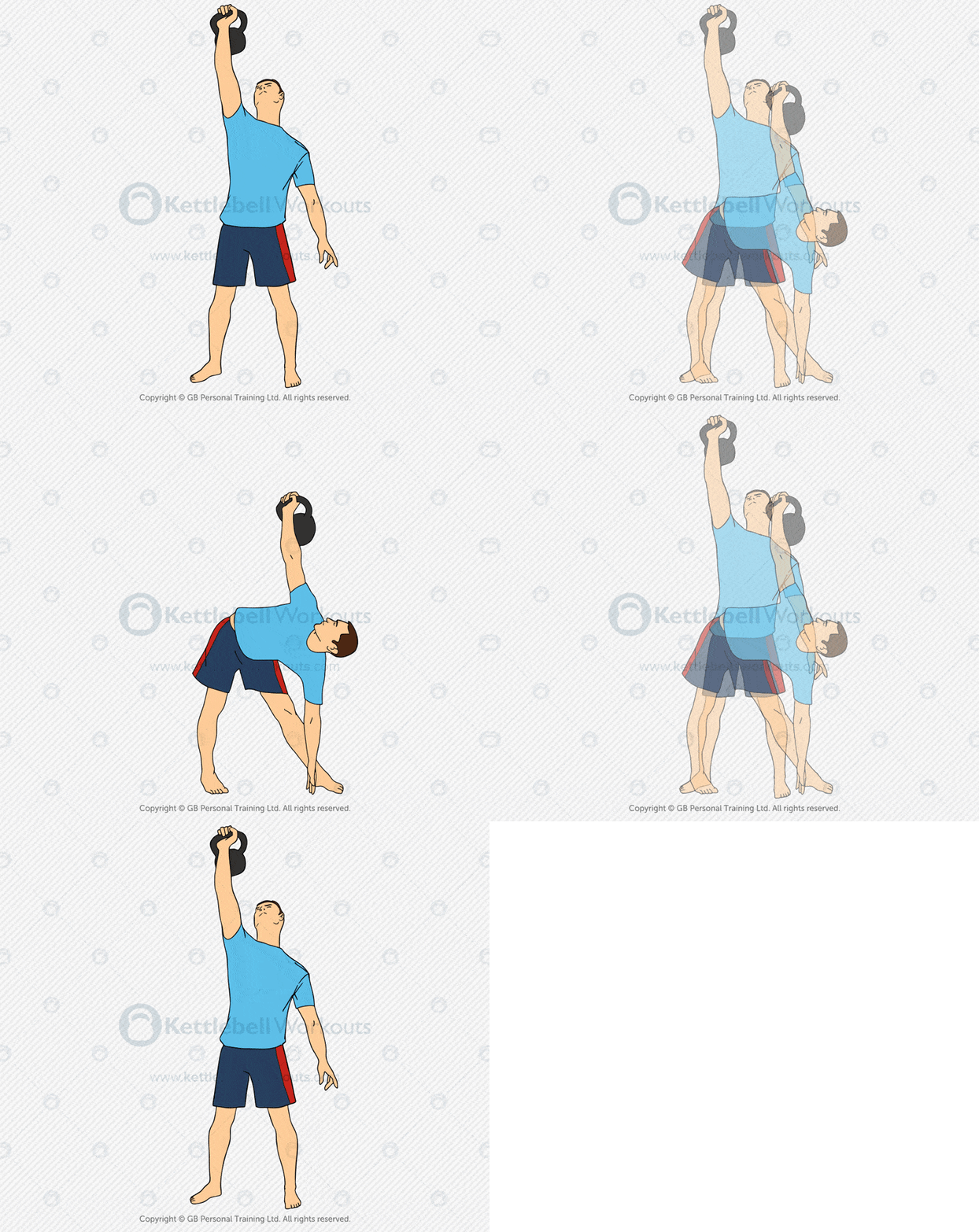
Kettlebell Windmill
The Windmill is not a traditional single-leg balance exercise, but it challenges your ability to control the body around a stable base while keeping the kettlebell organised overhead.
Balance focus: Move slowly, keep the front leg loaded and use a range you can control.

3 Ways to Progress Your Balance Training
1. Reduce support
Move from a firm grip to fingertip support, then to no support at all. Do this before adding unnecessary complexity.
2. Increase range
Use a deeper Lunge, longer Single-Leg Deadlift or greater range only while you can stay controlled.
3. Add load or speed
Once the pattern is stable, increase the kettlebell weight or add a more dynamic variation such as a Clean.
Simple Kettlebell Balance Workout
This short workout combines balance with leg and hip strength. Use support whenever it improves the quality of the exercise.
Balance + Strength Circuit
Complete: 2 to 4 rounds with enough rest to keep the movements controlled.
Balance Training for Over 50s and Older Adults
Balance training becomes particularly useful when it is combined with strength. A supported Single-Leg Deadlift, Reverse Lunge or controlled Step Up can be more productive than simply trying to stand on 1 leg for longer.
If you are returning to training, start conservatively and keep the exercises stable long enough to improve them. My Kettlebell Training Over 50 guide shows how balance fits alongside strength, muscle, power, mobility and cardiovascular training.
For a more conservative starting point, see my Kettlebell Exercises for Seniors and Older Adults.
Common Balance Training Mistakes
You do not need wobble boards or deliberately unstable surfaces to train balance effectively.
Support can help you train the leg harder and practise the correct movement pattern.
Own the basic Single-Leg Deadlift and Lunge before adding advanced Cleans, Pistols or overhead variations.
Related Kettlebell Guides
Frequently Asked Questions
Can kettlebells improve balance?
Yes. Kettlebells can be used to load unilateral exercises such as Lunges and Single-Leg Deadlifts, which challenge balance while also building strength and coordination.
What is the best kettlebell exercise for balance?
The Single-Leg Deadlift is an excellent starting point because it combines hip strength with single-leg control and can easily be performed with support.
Should beginners hold onto something during balance exercises?
Yes, if support improves control. A wall, chair or pole can reduce unnecessary wobbling and let you train the target muscles more effectively.
How often should I train balance?
Balance exercises can be included 2 to 3 times per week as part of your normal strength training. You do not necessarily need a separate balance-only workout.
Are kettlebell balance exercises good for people over 50?
Yes. Exercises such as supported Single-Leg Deadlifts, Reverse Lunges and Carries can combine balance training with useful strength work. Choose the variation according to current ability rather than age alone.

Comments