
Last Updated on 14 August 2026 by Greg Brookes
Training Over 50 Should Still Be Real Training
Turning 50 does not mean switching to tiny weights and gentle exercise forever. The goal is to keep building the qualities that become increasingly valuable with age: strength, muscle, power, balance, mobility and cardiovascular fitness.
Kettlebell training over 50 works best when it is progressive, well balanced and matched to your current ability rather than your age alone.
You may be returning after years away from strength training, or you may already be fitter at 55 than you were at 35. Those 2 people should not follow the same programme simply because they share a birthday decade.
This guide shows you how I would organise kettlebell training for men and women over 50, including exercise selection, weekly programming, strength and muscle work, balance, conditioning and 3 sample workouts.
What Should Kettlebell Training Over 50 Focus On?
The biggest mistake is making age the programme. Instead, make the programme about the physical qualities you want to preserve and improve.
You Do Not Need a Separate Men’s or Women’s Workout Over 50
The important differences are usually training experience, strength, injury history, goals, available equipment and recovery, not whether the programme is labelled for men or women.
A woman beginning kettlebell training at 52 may need the same movement progression as a man beginning at 58. An experienced 55-year-old lifter may need a far more demanding programme than either of them.
How Heavy Should You Train After 50?
You should not automatically train light because you are over 50. Use a kettlebell that makes the intended exercise challenging while allowing you to maintain good technique and control.
For strength and muscle work, finish most sets knowing you could still perform a small number of clean repetitions if needed. As technique improves, progress the load, repetitions or total sets rather than keeping the same light kettlebell indefinitely.
If you are completely new to kettlebells, start with my beginner kettlebell guide before adding faster exercises such as the Swing.
6 Kettlebell Exercises for Training Over 50
You do not need dozens of exercises. A small group of movements can cover the major qualities extremely well.
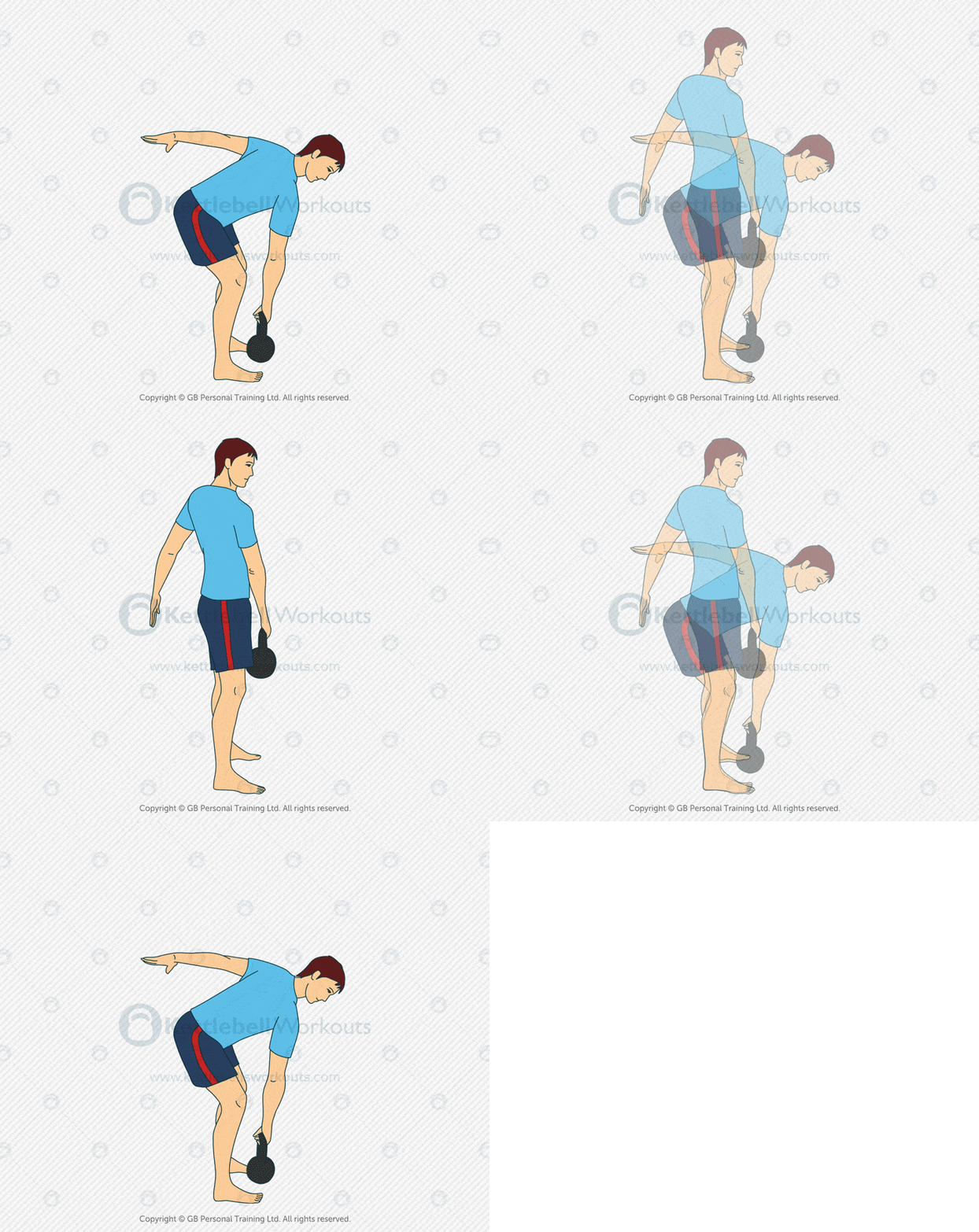
Kettlebell Deadlift
The Deadlift is the best place to learn how to use the hips and legs to lift load from the floor. It also gives you a straightforward way to build strength without needing speed or complicated coordination.
Starting point: 6 to 12 controlled reps per side.
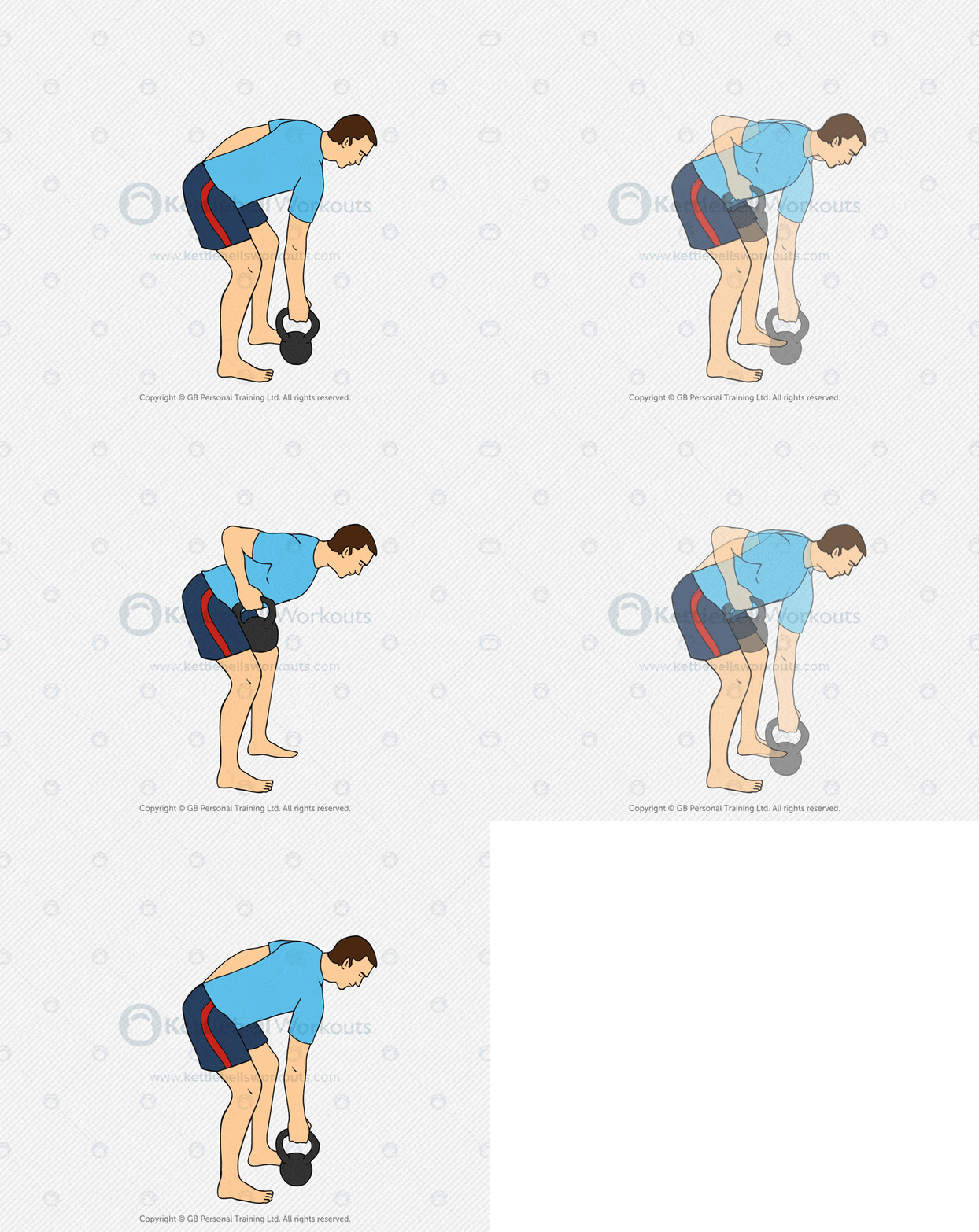
Kettlebell Bent Over Row
Rows give you an easy-to-progress pulling movement for the upper back and arms. They are particularly useful if your daily life includes a lot of sitting or if your training otherwise contains more pressing than pulling.
Starting point: 6 to 12 reps per side.
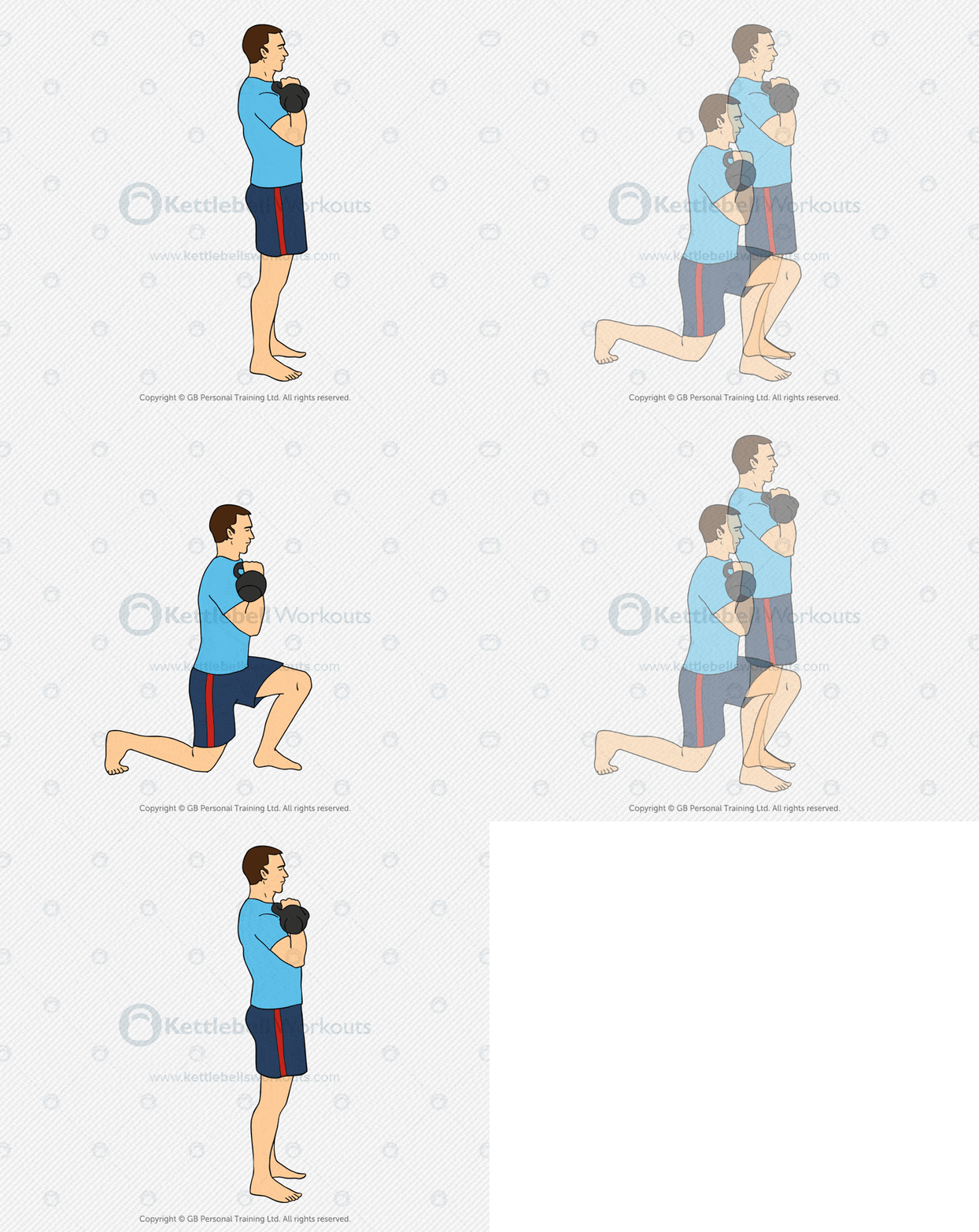
Kettlebell Reverse Lunge
Reverse Lunges train each leg independently and challenge balance without requiring the advanced control of a Pistol Squat. Hold support if necessary and earn the unsupported version gradually.
Starting point: 5 to 10 reps per side.
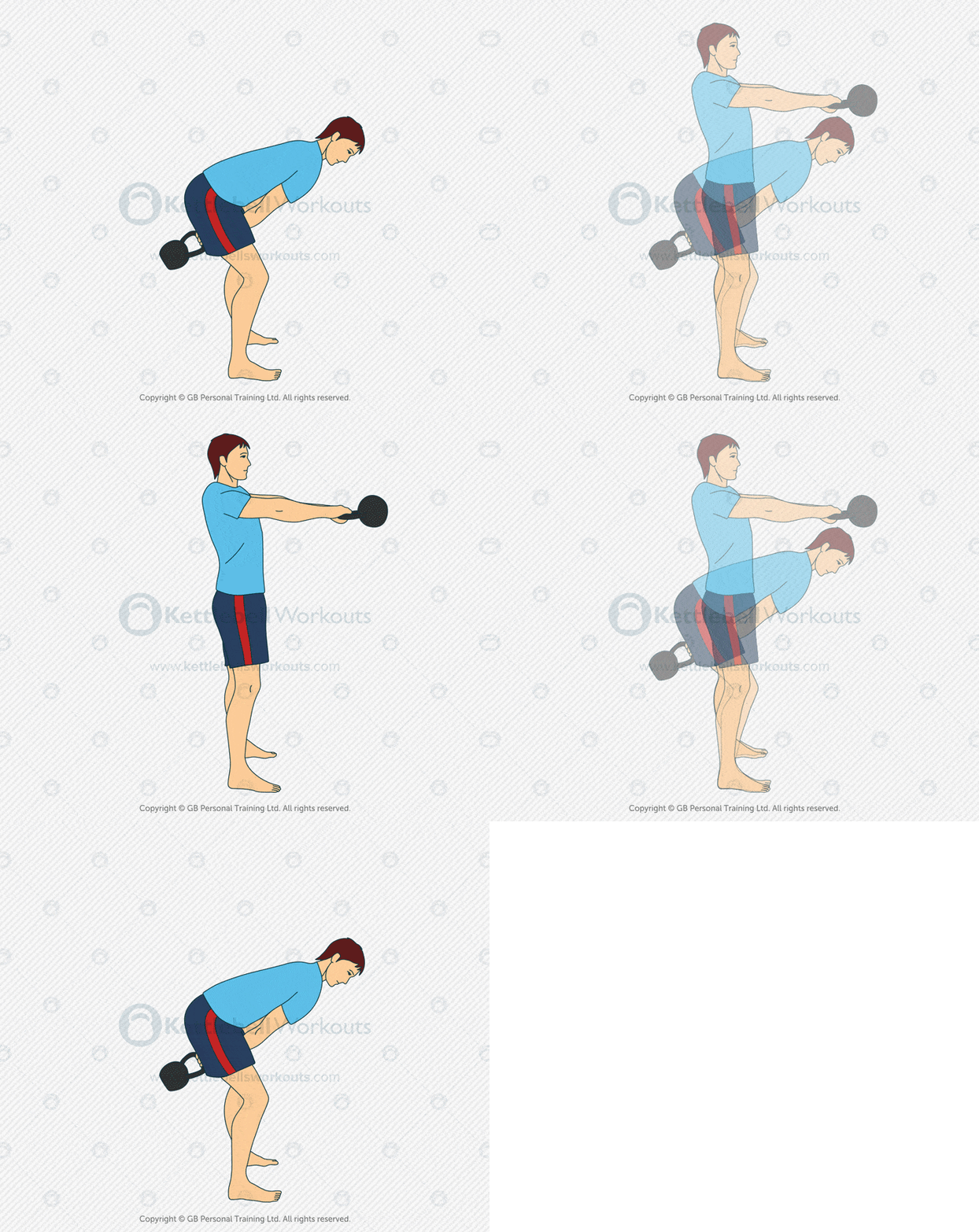
Kettlebell Swing
Once your hip hinge is reliable, the Swing adds speed and power. That matters because training over 50 should not become slow-only training. The Swing also gives you a compact way to raise the heart rate without turning every session into long cardio.
Starting point: 8 to 15 reps with crisp technique.
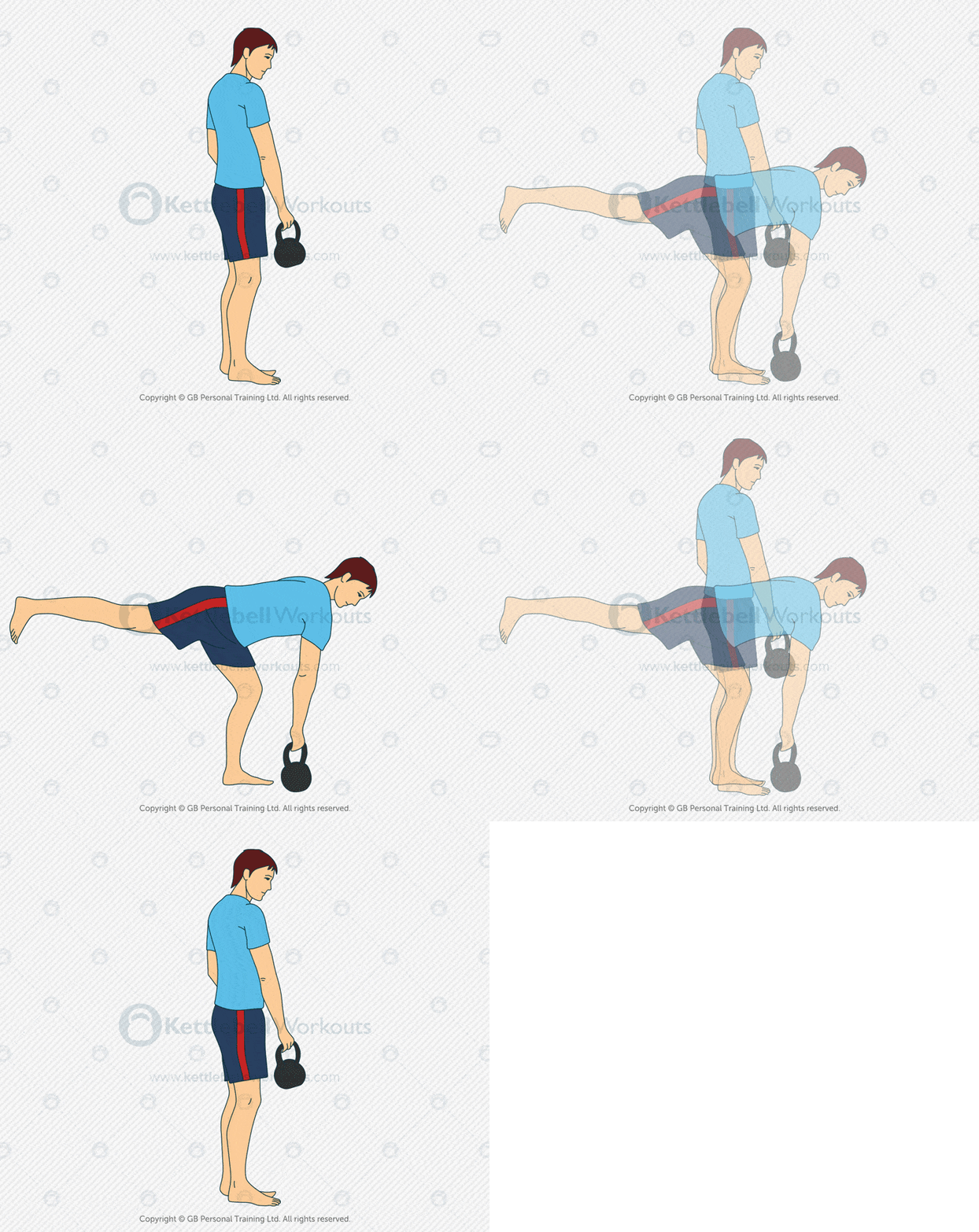
Kettlebell Single-Leg Deadlift
Single-leg training combines strength with balance and coordination. Use a wall or chair for support if that lets you load the hip more effectively. Balance difficulty should not prevent the muscles from getting stronger.
Starting point: 5 to 8 reps per side.
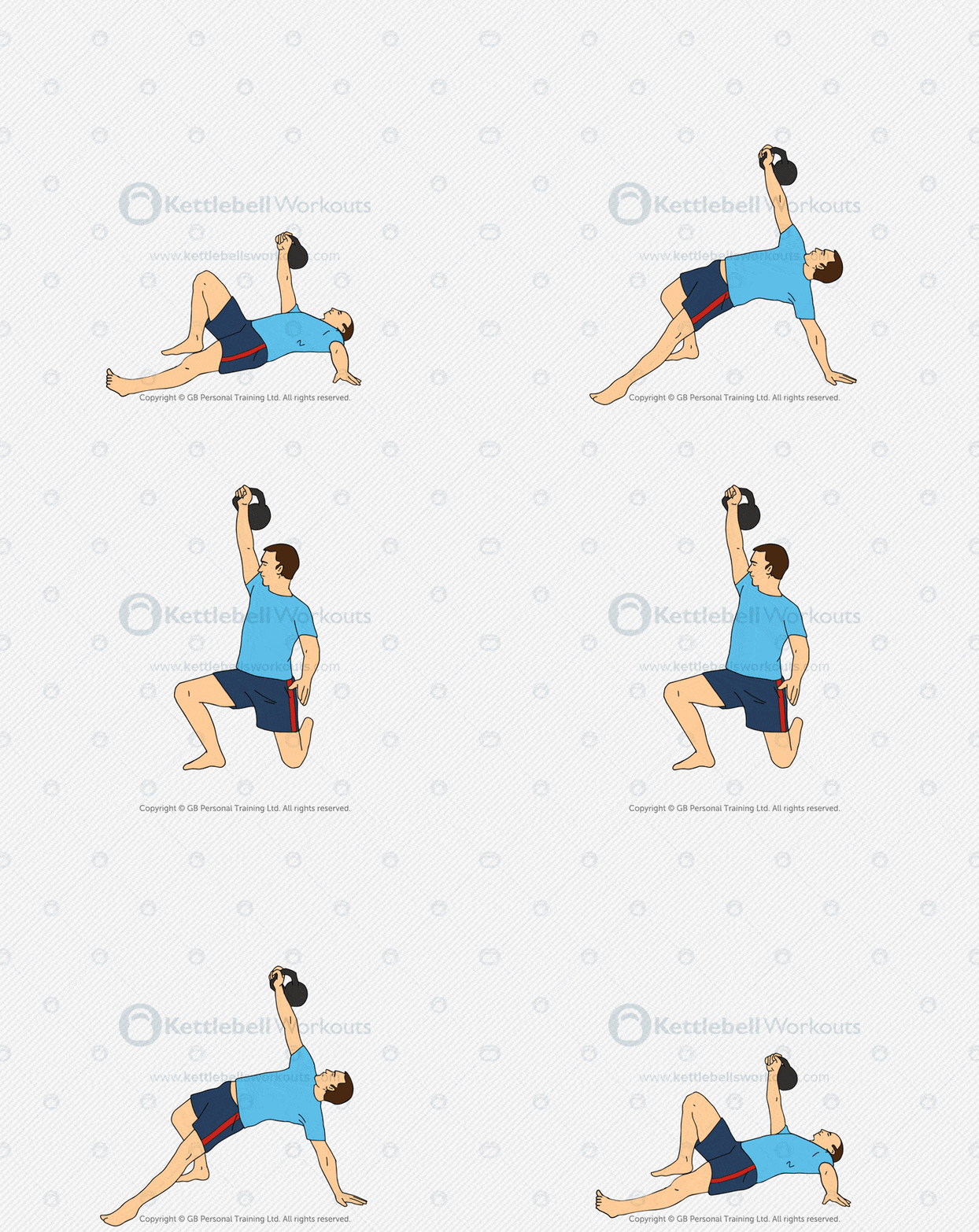
Turkish Get Up
The Get Up links floor-to-standing ability, trunk control and shoulder stability. It is technical, so learn the sequence without load first and treat it as a skill rather than a conditioning exercise.
Starting point: 1 to 3 deliberate reps per side.

What About Squats, Presses and Carries?
They belong in the programme too. I have kept the main exercise list short because the exact variation should match the person.
If a free-standing squat feels uncertain, start with a supported squat: hold a sturdy pole, door frame or similar support and sit down only as far as you can control. As confidence improves, progress towards a Goblet Squat.
Use a kettlebell overhead press if shoulder movement is comfortable. If overhead pressing does not suit you, choose another pressing variation that lets you train without pain.
A Farmer’s Carry uses a kettlebell in each hand, while a Suitcase Carry uses 1 kettlebell at your side. Walk tall without leaning and keep the steps controlled. See the Kettlebell Farmer’s Walk guide.
For a larger movement library, see my 52 kettlebell exercises.
3 Kettlebell Workouts for Over 50s
These are templates rather than tests. Rest long enough to keep the movements strong and controlled.
Workout 1: Beginner or Returning to Training
Complete: 2 to 3 rounds. Rest as needed between exercises and rounds.
Workout 2: Strength, Balance and Muscle
Complete: 2 to 4 sets depending on training experience.
Workout 3: Strength + Conditioning
Complete: 3 to 5 rounds. Take enough recovery that the Swing remains powerful rather than becoming a tired back exercise.
Building Muscle With Kettlebells After 50
If muscle is a priority, do not make every kettlebell session a fast circuit. Muscle-building work needs enough load, enough challenging sets and enough recovery for the target muscles to produce force repeatedly.
Use Squats, Rows, Presses, Lunges and Deadlift variations as your main strength movements. Swings are useful for power and conditioning, but they should not replace progressive resistance work.
See my complete kettlebell muscle-building guide for more detail on sets, reps and programming.
Balance and Single-Leg Training After 50
Balance improves when you actually practise controlling your body with a smaller base of support. That can be as simple as using a supported Single-Leg Deadlift, Reverse Lunge or Step Up before progressing towards more demanding variations.
Do not confuse wobbling with productive balance training. Use support when necessary so the movement stays controlled and the working muscles still receive enough load.
My single-leg kettlebell exercises and Single-Leg Deadlift guide give you clear progressions.
Mobility After 50: Train the Range You Need
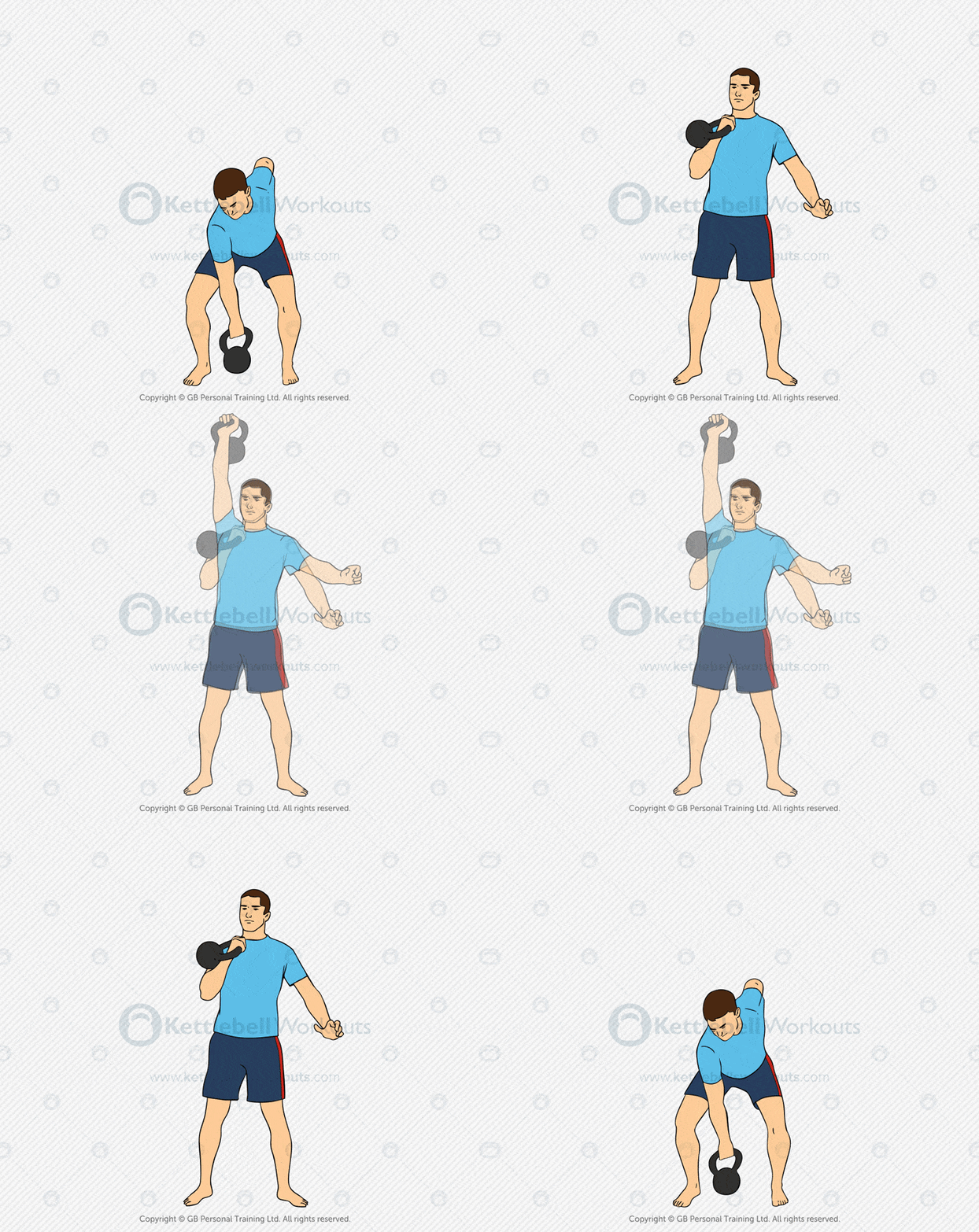
Mobility should help you access useful movement, not become a separate hobby that replaces strength training. Squats, Get Ups, Windmills, Halos and controlled hinges can all build strength through useful ranges when they are appropriate for you.
If a movement is limited, reduce the range, load or complexity and build it gradually. My kettlebell mobility and flexibility guide goes deeper into this area.
A Simple Weekly Kettlebell Training Plan Over 50
For many people, 2 to 3 focused strength sessions provide a very useful base. Walking, cycling or other aerobic activity can then fill the days between without making every day a hard kettlebell workout.
How to Progress Without Beating Yourself Up
- Add 1 or 2 repetitions while technique remains solid.
- Move to a heavier kettlebell when the current load no longer challenges the target range.
- Add a set before adding more exercises.
- Progress from supported to unsupported single-leg work.
- Increase Swing volume only while the hinge stays powerful.
- Keep easier weeks when fatigue begins to accumulate.
You can also see my guides to kettlebell reps and how often to perform kettlebell workouts.
What If You Are Over 60 or 70?
The principles do not suddenly change, but your starting point may. If you want more conservative exercise choices, chair-supported variations, mobility preparation and older-adult workout examples, use my dedicated guides:
When to Modify the Plan
Joint pain, recent injury, surgery, significant balance problems or medical conditions that affect exercise tolerance deserve individual consideration. Age by itself is not the reason to avoid an exercise, but your current symptoms and movement capacity may be.
If Squats or Lunges are uncomfortable, my exercises for bad knees guide shows ways to adjust the starting point.
The Bottom Line on Kettlebell Training Over 50
Do not train as if getting older means becoming fragile. Train to keep the qualities you want to use for the next several decades.
Build strength. Keep muscle. Practise balance. Maintain useful mobility. Keep some power in the programme. Support it all with regular aerobic activity and enough recovery to make the next session productive.
The best kettlebell programme over 50 is not the easiest one. It is the one you can progress consistently while continuing to move well.
Related Kettlebell Guides
Frequently Asked Questions
Are kettlebells good for people over 50?
Yes. Kettlebells can be used for progressive strength, muscle, power, balance and conditioning work. The exercise selection and load should match your current ability and training experience.
Can I start kettlebell training at 50 with no experience?
Yes. Start with stable exercises such as Deadlifts, supported Squats, Rows and Carries before adding faster or more technical movements such as Swings, Cleans and Get Ups.
How often should I do kettlebell workouts after 50?
For many people, 2 to 3 full-body strength sessions per week work well. The right frequency depends on workout difficulty, other activity, sleep, recovery and training experience.
Can you build muscle with kettlebells after 50?
Yes. Use progressive resistance exercises, challenging sets and enough weekly training volume rather than relying only on fast circuits and conditioning workouts.
What are the best kettlebell exercises for women over 50?
The same major movement patterns that benefit men also benefit women: hinges, Squats, Rows, Presses, Lunges, Carries and appropriate power work. Choose the variation and kettlebell weight according to the individual rather than sex alone.
What are the best kettlebell exercises for men over 50?
Deadlifts, Squats, Rows, Presses, Lunges, Carries and Swings provide an excellent base. Exercise choice should depend on current ability, goals and training history rather than age alone.
Should I use lighter kettlebells after 50?
Not automatically. Use a load that is appropriate for the exercise and challenging enough to create progress while you maintain control and technique.

Comments