
Last Updated on 17 August 2026 by Greg Brookes
A kettlebell flow links individual exercises together into one continuous sequence, with the transitions between movements becoming part of the training.
The aim is not simply to complete several exercises without putting the kettlebell down. A good flow should feel connected, controlled and deliberate, with each position leading naturally into the next.
Flows can be used for movement practice, mobility, coordination, strength or conditioning, but they work best when rhythm and quality remain more important than speed.
What Is a Kettlebell Flow Workout
A kettlebell flow is a sequence of exercises performed fluidly back-to-back, usually without putting the kettlebell down between movements.
The key distinction is the transition. In a flow, the movements are chosen because they connect smoothly. In a complex, the emphasis is more often on completing a prescribed sequence of exercises and repetitions.
Benefits of Kettlebell Flow Workouts
Kettlebell Flow vs Complexes and Circuits
These formats can look similar, but they have different priorities.
For the complete comparison, see my Kettlebell Workout Formats guide.
Using Movement Patterns in Kettlebell Flows
I build flows around movement patterns rather than adding exercises simply for variety.
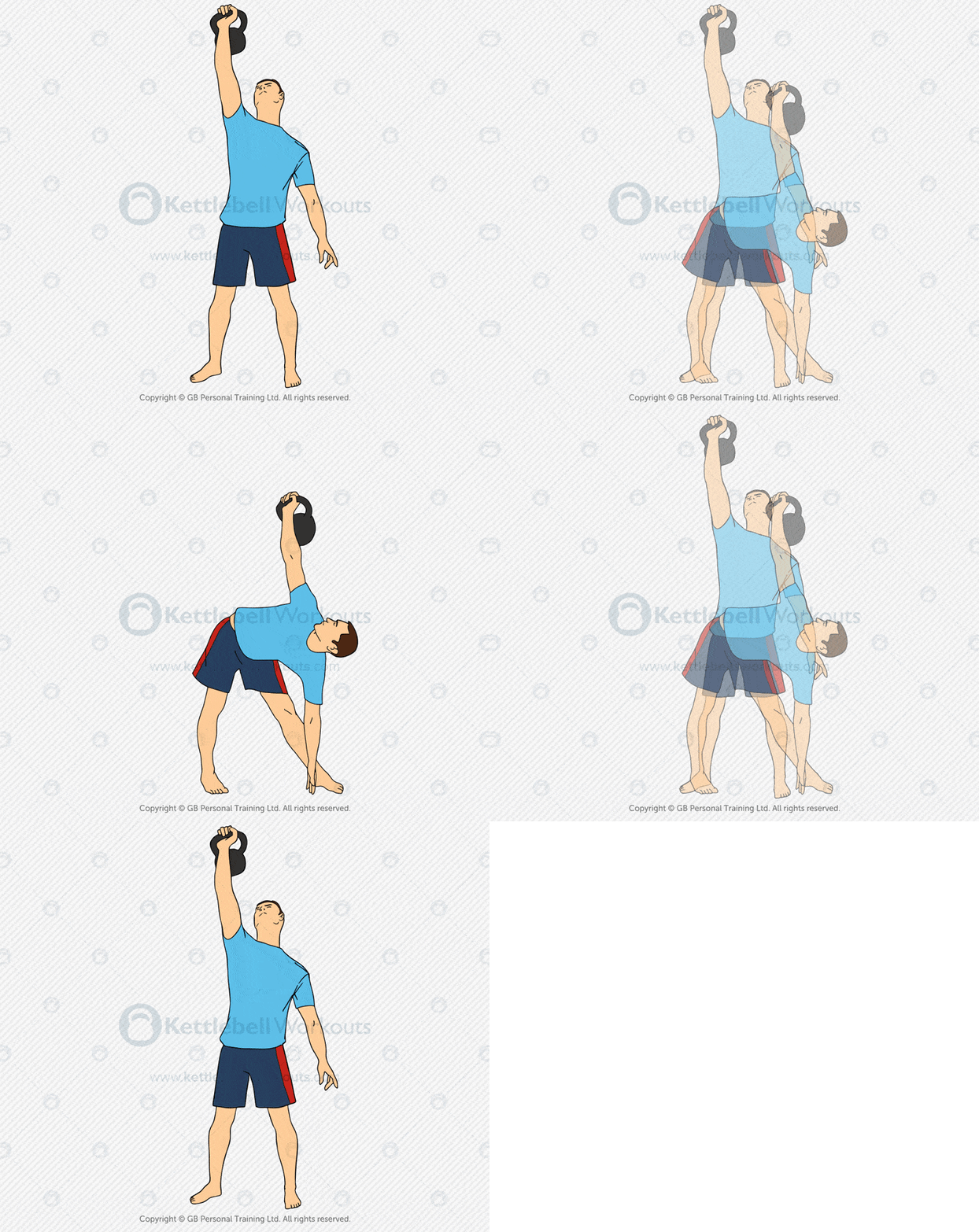
A simple flow might move from a Single-Arm Swing into a Clean, then a Racked Squat, Press and Windmill. Each exercise has a purpose and each finishing position creates the starting point for the next movement.
How to Structure and Progress Kettlebell Flows
Do not begin by trying to memorise a long sequence. Build the flow in stages.
Level 1: Practice Individual Exercises
Master every exercise independently first. If you cannot control a movement when fresh, adding it to a continuous sequence will not improve it.
Level 2: Perform Short Complexes
Use 2 or 3 compatible exercises and perform a few repetitions of each. This lets you practise the positional changes without also having to remember a long flow.
Level 3: Perform True Flows
Move to 1 repetition of each exercise and focus on linking the end of one movement directly into the beginning of the next. Keep the kettlebell light enough that you can concentrate on rhythm, breathing and position.
Level 4: Ladder Flows
Build the sequence progressively. Start with the first movement, then add the second, then the third, until the complete flow has been assembled. This is useful for learning longer sequences without losing control.
Programming Goals for Kettlebell Flows
The same flow can feel very different depending on the load, tempo and duration.
The interest in kettlebell mobility flows makes sense because the format naturally encourages movement between positions, but mobility should still be trained within ranges you can actively control.
Warm Up Thoroughly
Before a demanding flow, prepare the hips, shoulders and trunk and rehearse the movements you plan to use. See my Kettlebell Warm-Up guide for a structured approach.
Sample Kettlebell Flow Workouts
These 3 flows progress from a short basic sequence to a more technically demanding advanced flow.
Beginner Kettlebell Flow
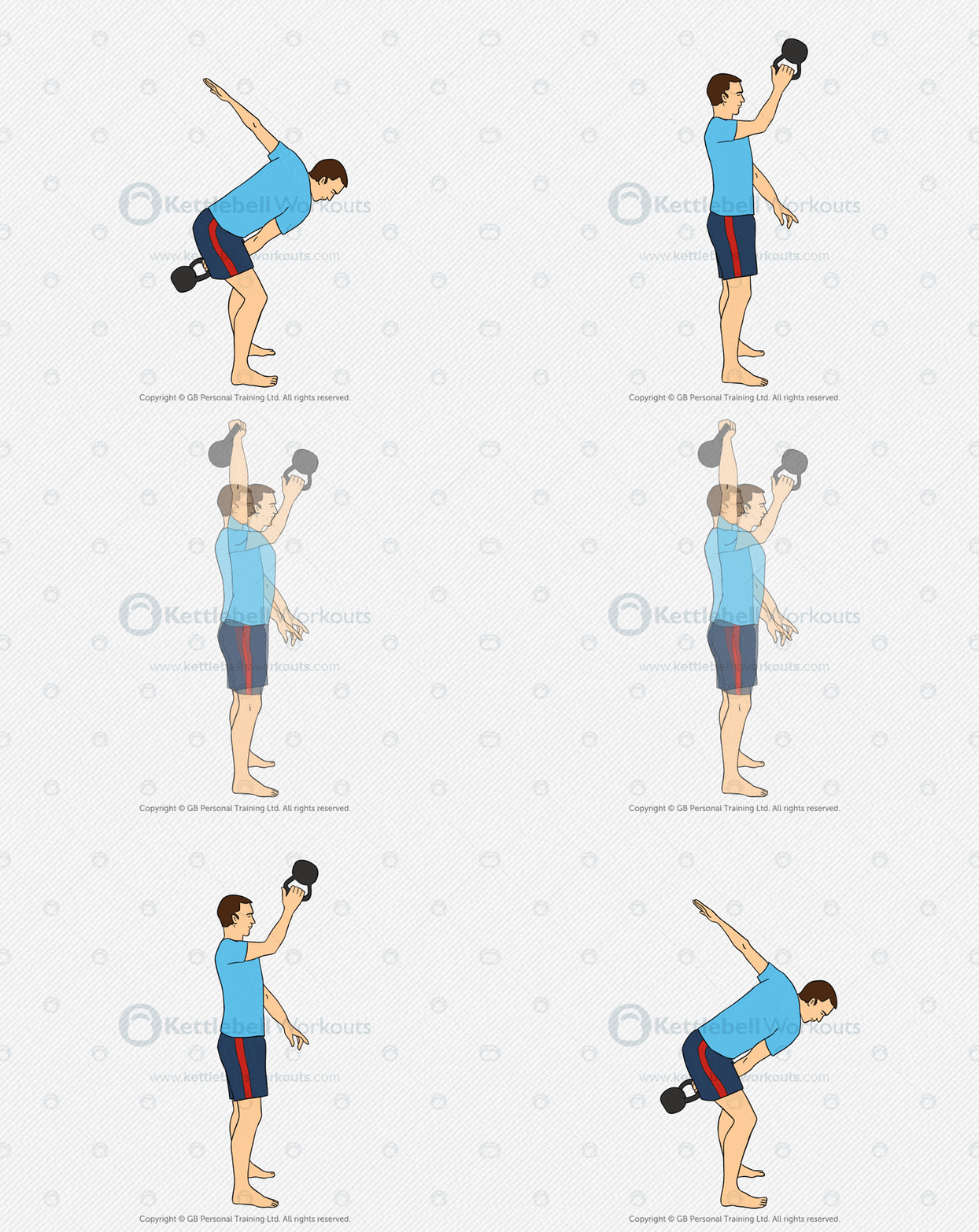
- Single-Arm Swing × 1
- Clean × 1
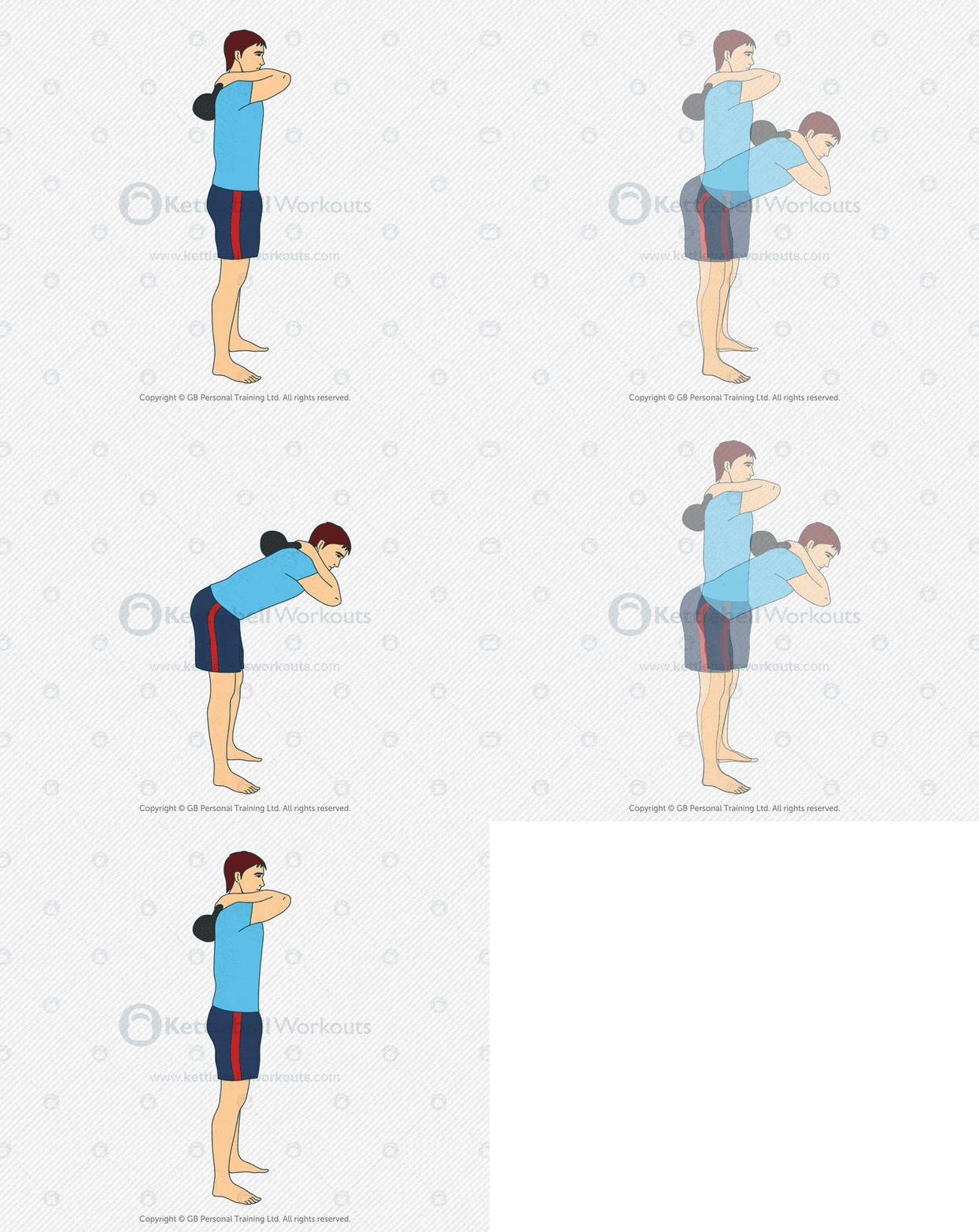
- Racked Squat × 1
- Press × 1
Repeat the sequence smoothly on one side, then change sides. Start with a short 3 to 5 minute practice and rest whenever the transitions begin to feel rushed.
Intermediate Kettlebell Flow
- Clean × 1
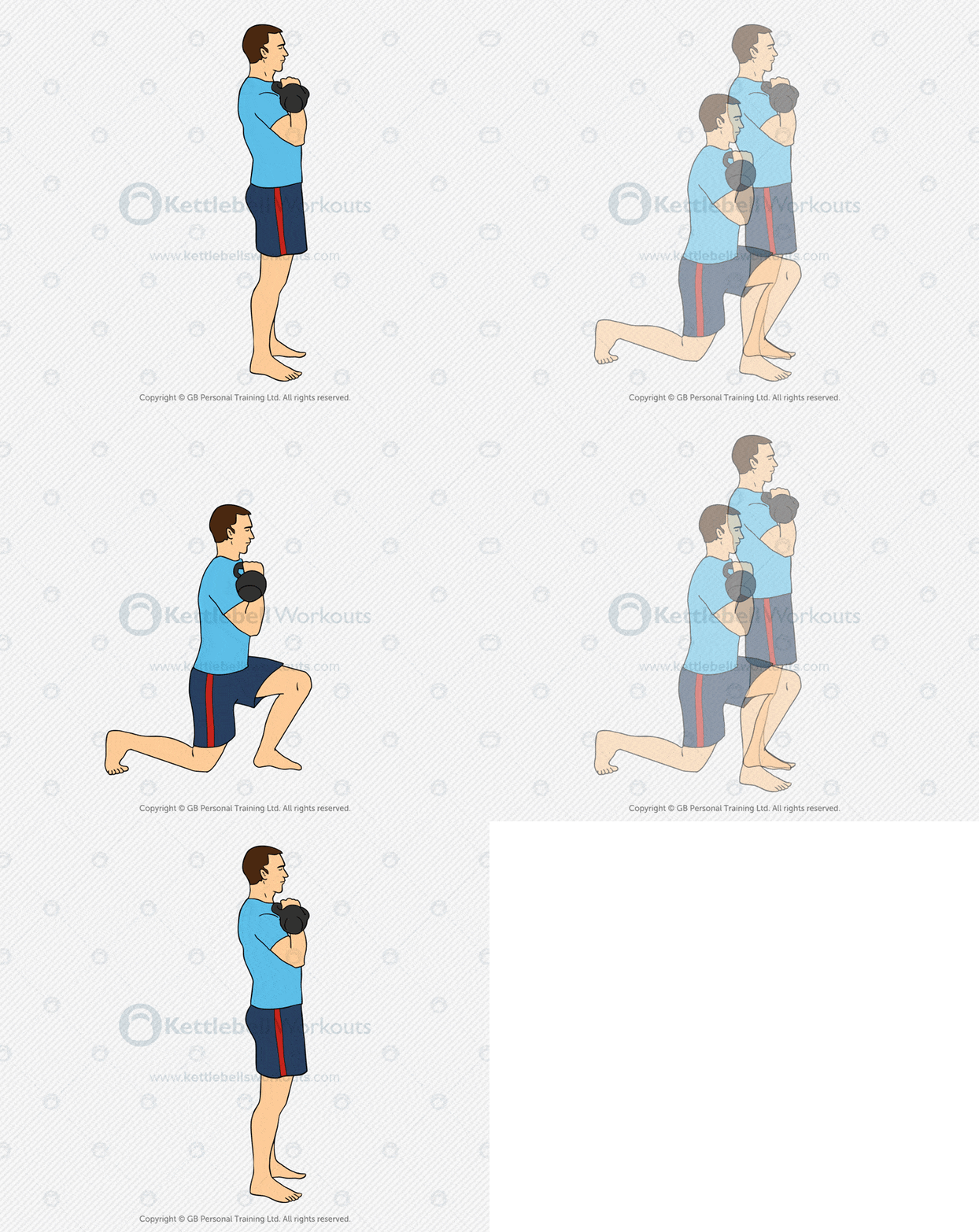
- Racked Reverse Lunge × 1
- Racked Squat × 1
- Press × 1
- Windmill × 1
Perform 6 to 12 controlled rounds each side. The Reverse Lunge and Windmill make the positional demands greater, so use a lighter kettlebell than you would for a normal strength workout.
Advanced Kettlebell Flow
- Snatch × 1
- Overhead Squat × 1
- Windmill × 1
- Clean × 1
- Racked Squat × 1
- Thruster × 1
This sequence requires established overhead mobility, stability and Snatch technique. Practise the sequence for quality first rather than immediately trying to turn it into a 15-minute challenge.

Programming Tips for Kettlebell Flows
How I Use Kettlebell Flows
I use flows when I want movement quality, coordination and transitions to become part of the training rather than simply counting repetitions.
The best flow feels inevitable. Each movement finishes in a position that naturally sets up the next one. If you have to fight the transition, change the sequence.
How to Make Kettlebell Flow Training Work
Master the individual exercises first, keep the kettlebell relatively light while learning the sequence and choose movements that connect naturally. Once the flow is smooth, you can use duration, load or complexity to change the training effect.
For neighbouring workout structures, compare my Complex Workouts, Circuit Workouts, EMOM Workouts, AMRAP Workouts and Workout Formats guide.
Frequently Asked Questions
What is a kettlebell flow workout?
A kettlebell flow links exercises together into one continuous sequence, usually without putting the kettlebell down. The emphasis is on smooth, purposeful transitions between movements.
Are kettlebell flows good for conditioning?
They can be. Longer flows with a light to moderate kettlebell create sustained work, but flows can also be used purely for movement practice, coordination or mobility.
What weight kettlebell should I use for flows?
Use a kettlebell you can control through every exercise and every transition. While learning a flow, it is usually better to go lighter than you would for normal strength work.
How often should I do kettlebell flows?
That depends on how demanding the flow is. A light mobility or skill flow can be used more frequently than a long, heavily loaded conditioning flow.
What exercises are best for kettlebell flows?
Swings, cleans, squats, presses, lunges, windmills and Snatches can all work well when the exercises are already familiar and the transitions between them are natural.


Comments