
Last Updated on 7 August 2026 by Greg Brookes
Kettlebell rows are one of the simplest ways to add more pulling work to your training. They strengthen the back and arms, challenge your grip and, depending on the variation, can place a considerable demand on the core as well.
The important point is that not every kettlebell row serves the same purpose. A bent-over row is a very different exercise from a renegade row, and a high pull belongs at the dynamic end of the spectrum rather than being used like a slow strength exercise.
Below I have organised 6 kettlebell row variations from the more straightforward options through to the most demanding. Use this page to decide which variation best suits your current ability and training goal. Where I have a separate exercise guide, I have linked to it rather than repeating the full tutorial here.
Which Kettlebell Row Should You Use?
If you do not want to work through all 6 variations, start with the outcome you are looking for.
Kettlebell Row Variations Compared
Think of these exercises as a progression rather than 6 rows that all need to appear in the same programme. The right choice depends on your technique, available kettlebells and what you want the exercise to achieve.
| Variation | Level | Best For | Equipment |
|---|---|---|---|
| Bent-Over Row | Beginner | Learning the basic horizontal pull | 1 kettlebell |
| Suitcase Row | Beginner to intermediate | Back strength with anti-rotation | 1 kettlebell |
| Double Bent-Over Row | Intermediate | Heavier bilateral back strength | 2 kettlebells |
| Plank Row on Bench | Intermediate | Back and core strength with extra support | 1 kettlebell + bench |
| Renegade Row | Advanced | Anti-rotation, core and shoulder stability | 2 stable kettlebells |
| High Pull | Advanced | Explosive pulling and conditioning | 1 kettlebell |
5 Rules That Improve Almost Every Kettlebell Row
The individual variations change, but most controlled kettlebell rows share the same basic principles.
One exception: the high pull is a ballistic exercise driven by the hips, so it should not be performed with the same slow tempo as the first 5 variations.
6 Kettlebell Row Variations
The descriptions below are intentionally concise. Their job is to help you understand the difference between the variations and decide where each one fits. For detailed technique, use the linked exercise guides.
Kettlebell Bent-Over Row
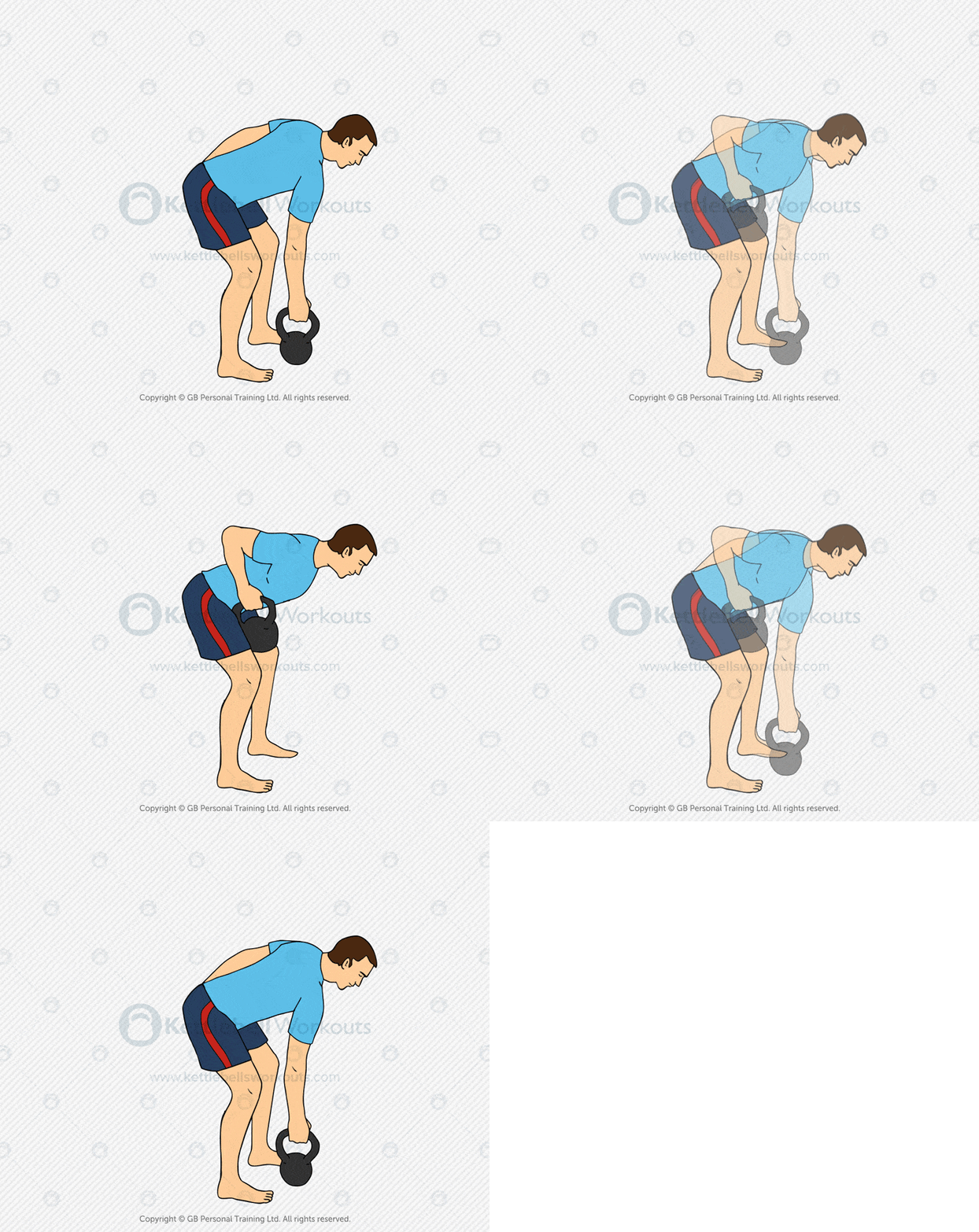
The single-arm bent-over row is the foundation for the other controlled rowing variations on this page. It trains the lats, rhomboids, upper back and biceps while the hips and core hold the body in position.
Learn to maintain a strong hip hinge and square shoulders before worrying about using a heavier kettlebell. Pull the elbow back towards the hip and lower the weight under control.
Practice: work up to 8 to 12 controlled repetitions on each side.
Kettlebell Suitcase Row

The suitcase row keeps the kettlebell outside the body, so you have to work harder to stop the torso rotating towards the load.
That makes it a useful progression when the basic bent-over row feels comfortable but you still want to stay with one kettlebell. Keep the shoulders level and avoid leaning sideways as you pull.
Practice: build towards 8 to 12 repetitions on each side.
Double Kettlebell Bent-Over Row

Using 2 kettlebells allows both sides of the back to work together and can make the exercise more strength focused. It also increases the total load that the hips, hamstrings and trunk must support in the bent-over position.
You should already be comfortable maintaining your hinge during single-arm rows before adding the second kettlebell. Row and lower both bells together without allowing one side to lead.
Practice: 6 to 8 strong repetitions is usually enough when the kettlebells are challenging.

Kettlebell Plank Row on a Bench

The plank row on a bench is a useful bridge between a standing row and the full renegade row. Supporting one hand on a bench or box removes some of the instability while still forcing the core to resist rotation.
Keep a straight line through the body and avoid letting the hips twist as the kettlebell moves. If you cannot maintain your position, raise the supporting hand or return to one of the standing rows.
Practice: progress towards 6 to 10 repetitions on each side while keeping the body completely controlled.
Kettlebell Renegade Row
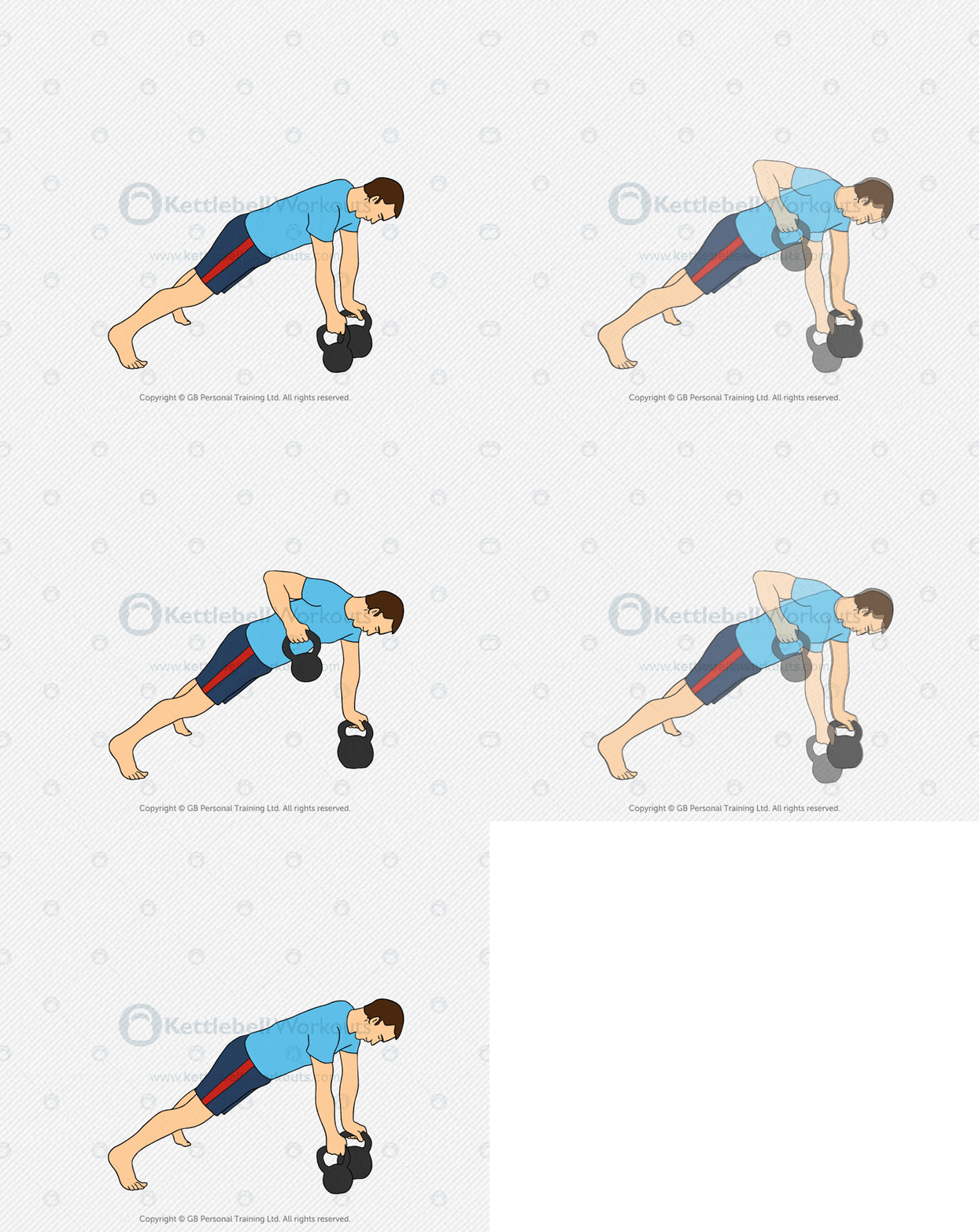
The renegade row combines a plank with a row, so the challenge is no longer just pulling the kettlebell. Your shoulders and core must also stop the body rotating while you support yourself on the other arm.
Master a strong plank and the supported bench row first. Use kettlebells with a stable base and keep the feet wide enough to control the movement without twisting through the hips.
Practice: build towards 5 to 8 controlled rows on each side before trying longer alternating sets.
Kettlebell High Pull
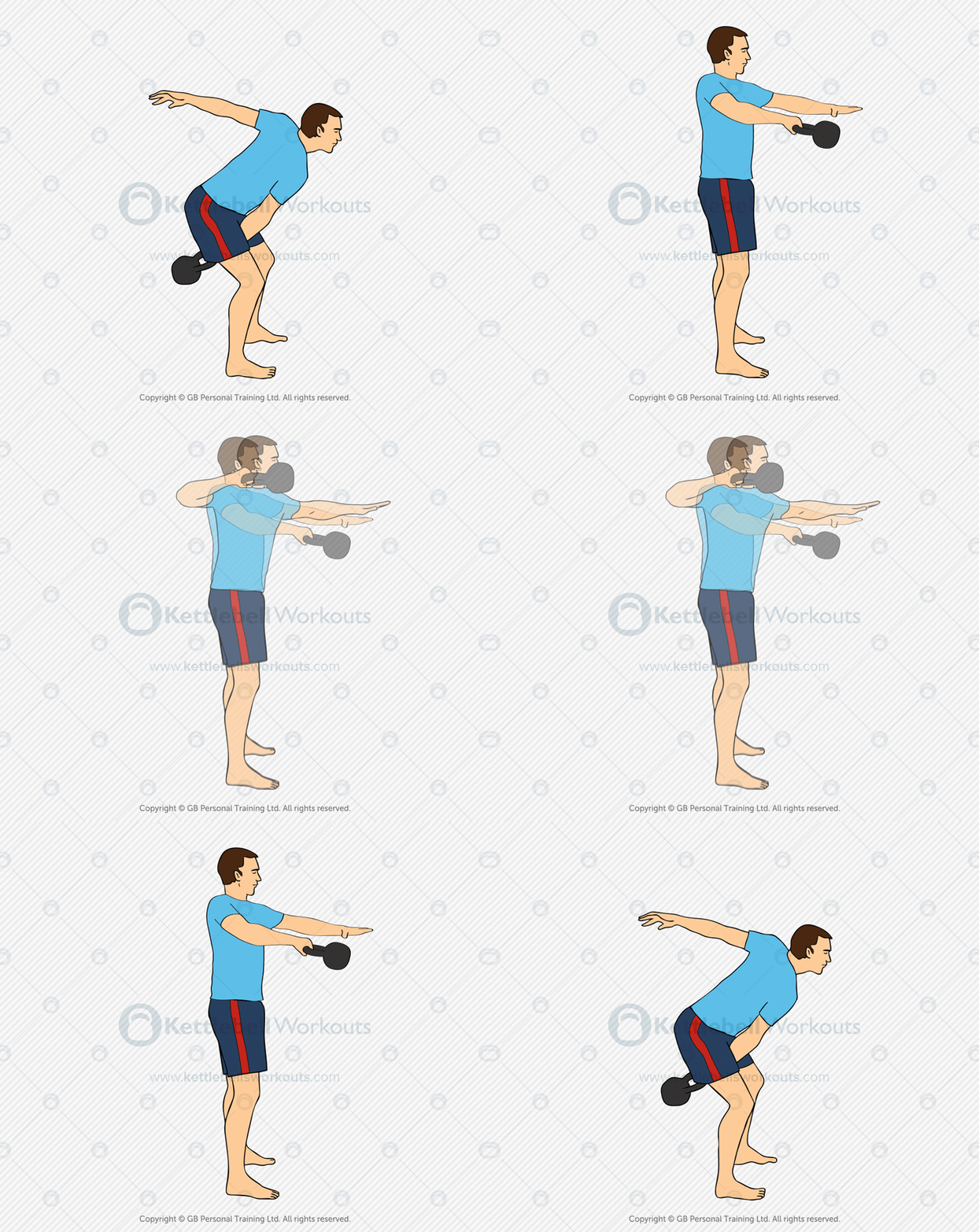
The high pull sits at the end of this list because it is not a conventional slow strength row. It combines the hip drive of a one-handed swing with a fast pulling action near the top of the movement.
Use it when you want explosive pulling and cardiovascular work rather than simply more back strength. You should already have a confident one-handed swing before adding the pull.
Practice: begin with small sets of 5 to 10 repetitions on each side and gradually build towards longer sets as your timing improves.
How Many Kettlebell Rows Should You Do?
There is no single correct number of repetitions because the purpose of the exercise and the variation you choose both matter.
You do not need several row variations in the same workout. For most people, choosing one horizontal pulling exercise and performing it well is more useful than adding 3 or 4 similar rows.
5 Common Kettlebell Row Mistakes
- Using too much weight: if the kettlebell forces you to twist, shrug or jerk the repetition, it is too heavy for the version you are using.
- Rounding the lower back: maintain the hip hinge and stop the set when you can no longer hold your trunk position.
- Shrugging towards the ear: keep the neck long and avoid turning the row into an upper-trapezius dominant movement.
- Rotating to finish the repetition: especially with single-arm rows, the torso should not turn simply to make the kettlebell travel further.
- Ignoring the lowering phase: control the kettlebell back down instead of letting gravity finish the repetition for you.
Build Your Row Around the Goal
The best kettlebell row is not necessarily the most advanced one. The bent-over row is still an excellent choice when you want straightforward back strength, while the suitcase row adds more anti-rotation and the double row allows you to handle more total load.
Move to the plank and renegade variations when you specifically want the additional core and shoulder-stability challenge. Use the high pull for power and conditioning rather than treating it as another slow row.
For more pulling options, see my kettlebell exercises for the back. You can also see where rows fit alongside pressing movements in my kettlebell push-pull workouts, or browse the complete 52 kettlebell exercise library.
Frequently Asked Questions
Which kettlebell row is best for beginners?
The single-arm bent-over row is usually the best place to start because it teaches the basic horizontal pulling pattern without the extra instability of a plank or renegade row. Once you can keep the spine and shoulders controlled, progress to the suitcase row or heavier variations.
What muscles do kettlebell rows work?
Kettlebell rows mainly train the lats, rhomboids, trapezius, rear shoulders and biceps. The grip and core also work hard, particularly during unsupported single-arm, plank and renegade row variations.
How many kettlebell row variations should I use in one workout?
Usually one is enough. Choose the variation that best matches your goal and perform several good-quality sets. Using multiple very similar rows in the same session often adds volume without adding a meaningfully different training effect.
Are kettlebell rows bad for the lower back?
Rows performed from a bent-over position require you to maintain a strong hip hinge and brace the trunk. If you cannot hold that position comfortably, reduce the load, use more support or choose a variation that places less demand on the hinge.


Hey Gregg, Thnx for all your great workouts and tips.
Thank you for your work. It is very helpful exercises.
Amazing !!!
Your Blog is the most amazing site i have ever seen 💪
Thank you!!!
why hold the belly when rowing?
I think you are referring to the suitcase row? You don’t have to hold the belly you can place your hand on your hip but putting it there just seems to help with balance and position for me.