
Last Updated on 19 August 2026 by Greg Brookes
You Can Build an Excellent Program With 1 Kettlebell
You do not need a rack of kettlebells to train your whole body. With 1 well-chosen kettlebell you can build strength, muscle, conditioning, balance and power using simple changes in exercise selection, repetitions and workout format.
If you own a single kettlebell and keep wondering whether you need more equipment, start here.
These 10 single kettlebell workouts range from simple beginner strength sessions to EMOMs, ladders, unilateral workouts and flows.
Choose the workout that matches your experience and goal rather than trying to complete all 10 in the same week.
Which Single Kettlebell Workout Should You Choose?
Do You Really Need More Than 1 Kettlebell?
No. Most kettlebell exercises can be performed with a single bell, and 1 kettlebell actually gives you a useful training advantage because you can load 1 side of the body at a time.
The limitation is that different exercises eventually need different loads. A kettlebell that feels challenging for an Overhead Press may be too light for a Deadlift or Goblet Squat.
So start with the kettlebell you have. When it clearly limits progress on several exercises, add another weight rather than assuming you need 2 matching kettlebells immediately.
See Should You Use 1 Kettlebell or 2? if you are deciding whether to expand your equipment.
10 Single Kettlebell Workouts
Each workout below uses just 1 kettlebell. Where an exercise is performed on 1 side, complete both sides before moving on unless stated otherwise.
Simple Full-Body Strength
Beginner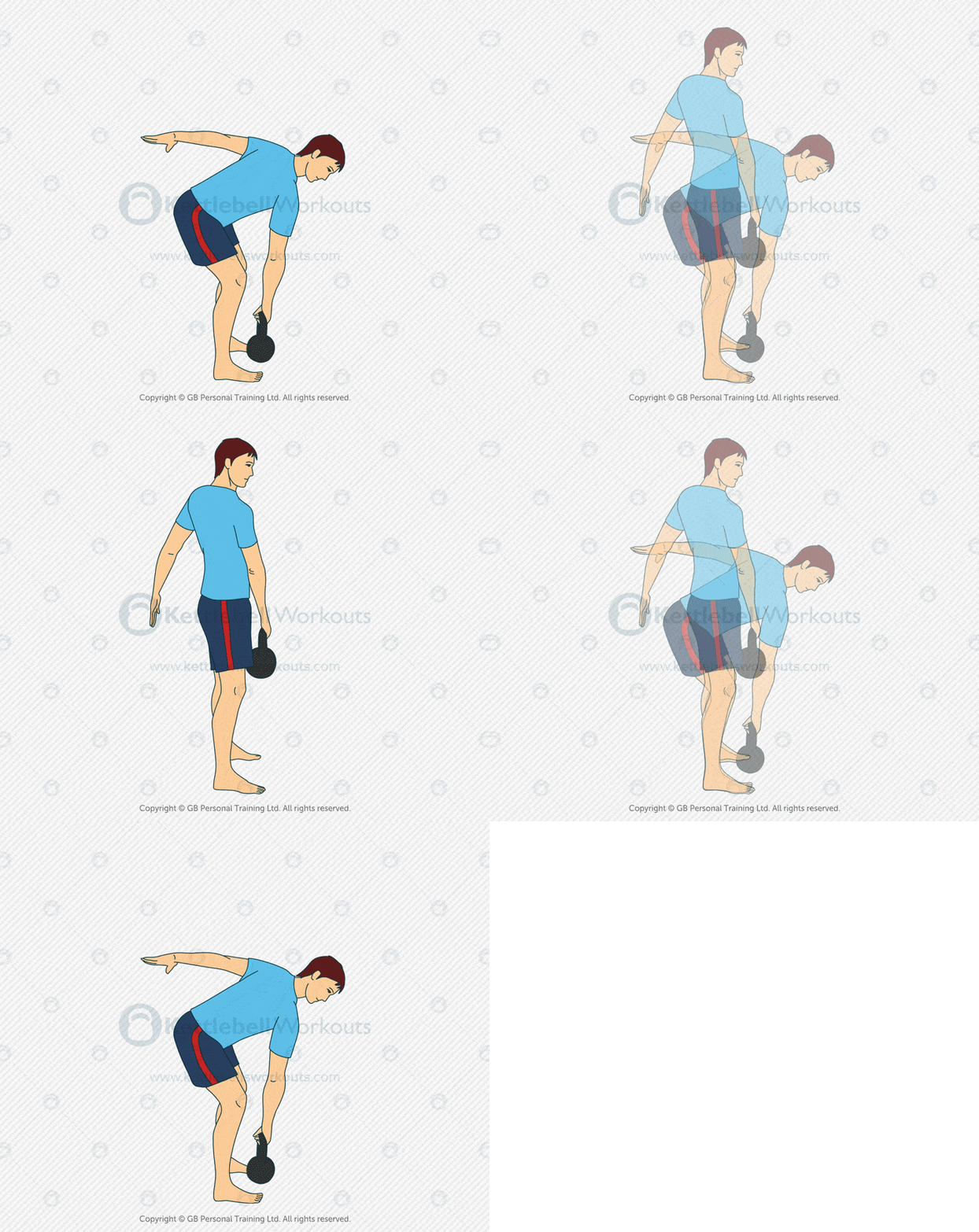
- Single Arm Deadlift: 8 reps each side
- Goblet Squat: 8 reps
- Bent Over Row: 8 reps each side
- Suitcase Carry: 20 to 30 seconds each side
Complete 2 to 4 rounds. Rest 60 to 90 seconds between rounds.
This is the place to start if you own 1 kettlebell and want a straightforward strength session. Keep the pace controlled and focus on good positions rather than trying to turn it into cardio.
Swing + Squat Conditioning
Beginner / Intermediate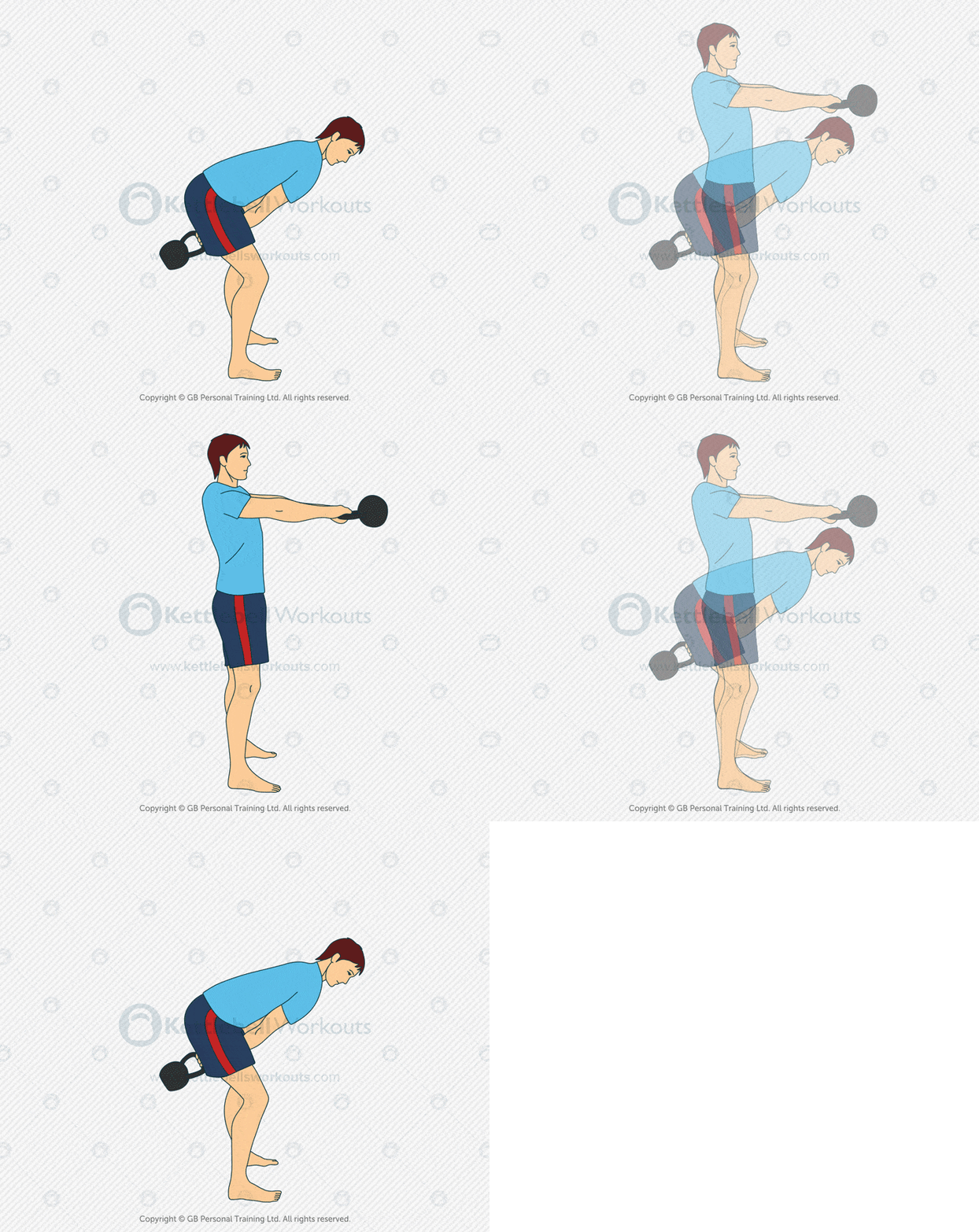
- Two-Handed Swing: 10 reps
- Goblet Squat: 8 reps
- Rest: 45 to 60 seconds
Complete 5 to 8 rounds.
A simple 2-exercise workout that combines hip power with leg strength. Do not rush the Squats and stop the set if your Swing starts turning into an arm lift.
Push + Pull Strength
Intermediate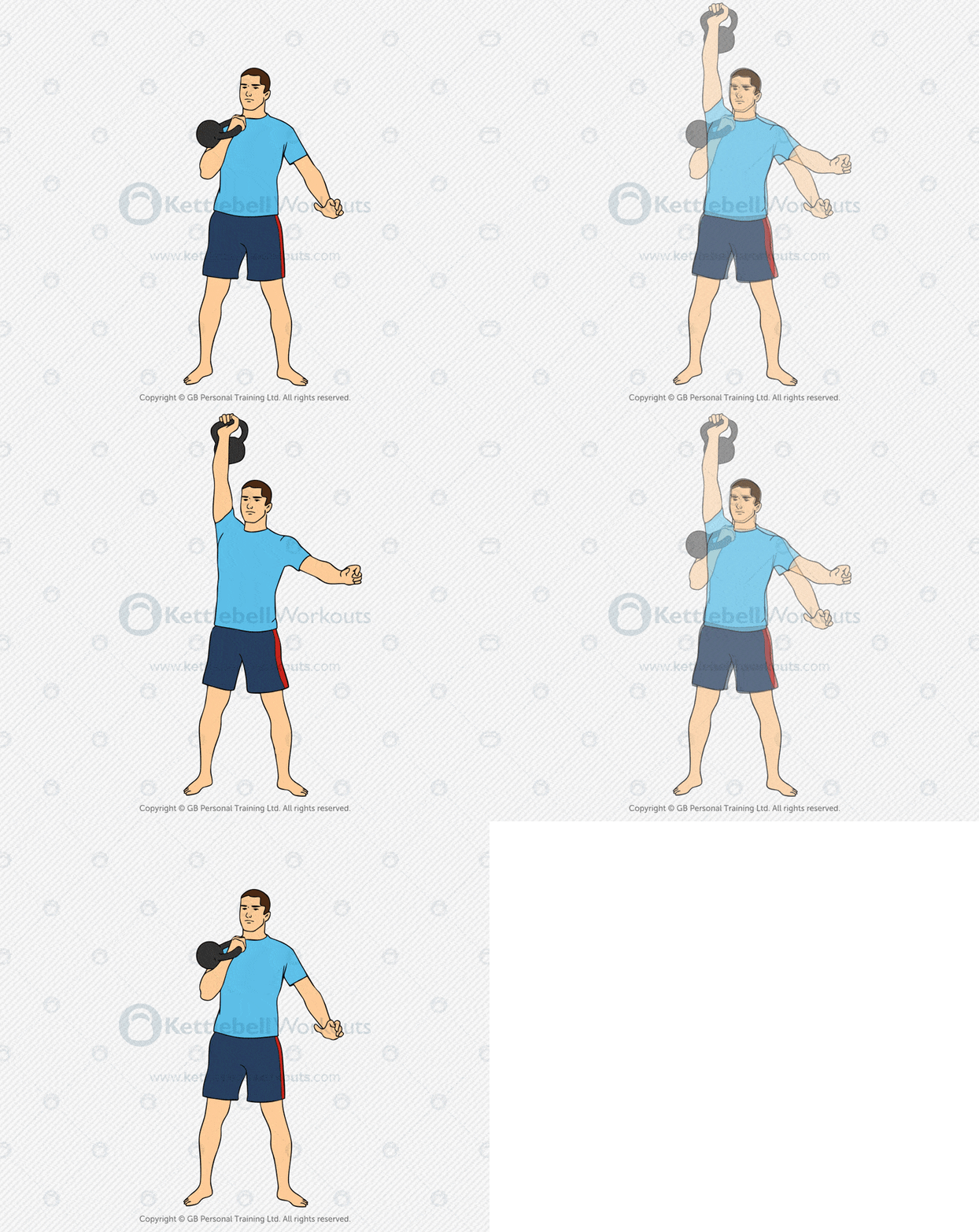
- Overhead Press: 6 to 10 reps each side
- Bent Over Row: 8 to 12 reps each side
- Goblet Squat: 8 to 12 reps
Complete 3 to 4 sets of each exercise.
Use straight sets rather than a fast circuit if strength or muscle is your priority. The same kettlebell may feel light for the Squat and heavy for the Press, so adjust the repetitions accordingly.
Lunge + Row Unilateral Workout
Intermediate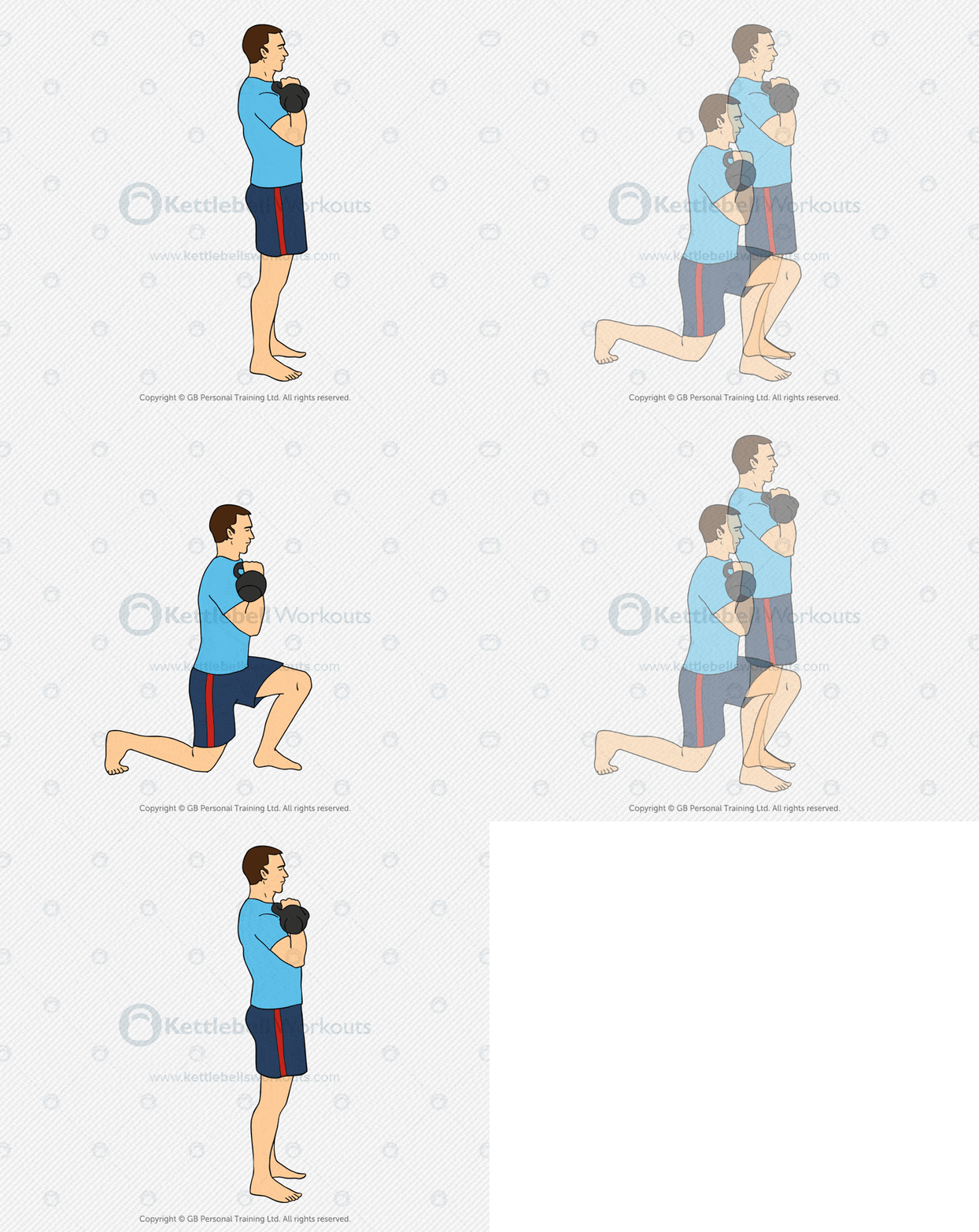
- Single-Leg Deadlift: 6 reps each side
- Bent Over Row: 8 reps each side
- Racked Reverse Lunge: 6 reps each side
Complete 3 rounds. Rest as needed to keep your balance and control.
This workout puts more emphasis on one side of the body at a time. Start with the weaker side and use support for the single-leg work if balance stops you loading the muscles properly.
Clean + Press Ladder
Intermediate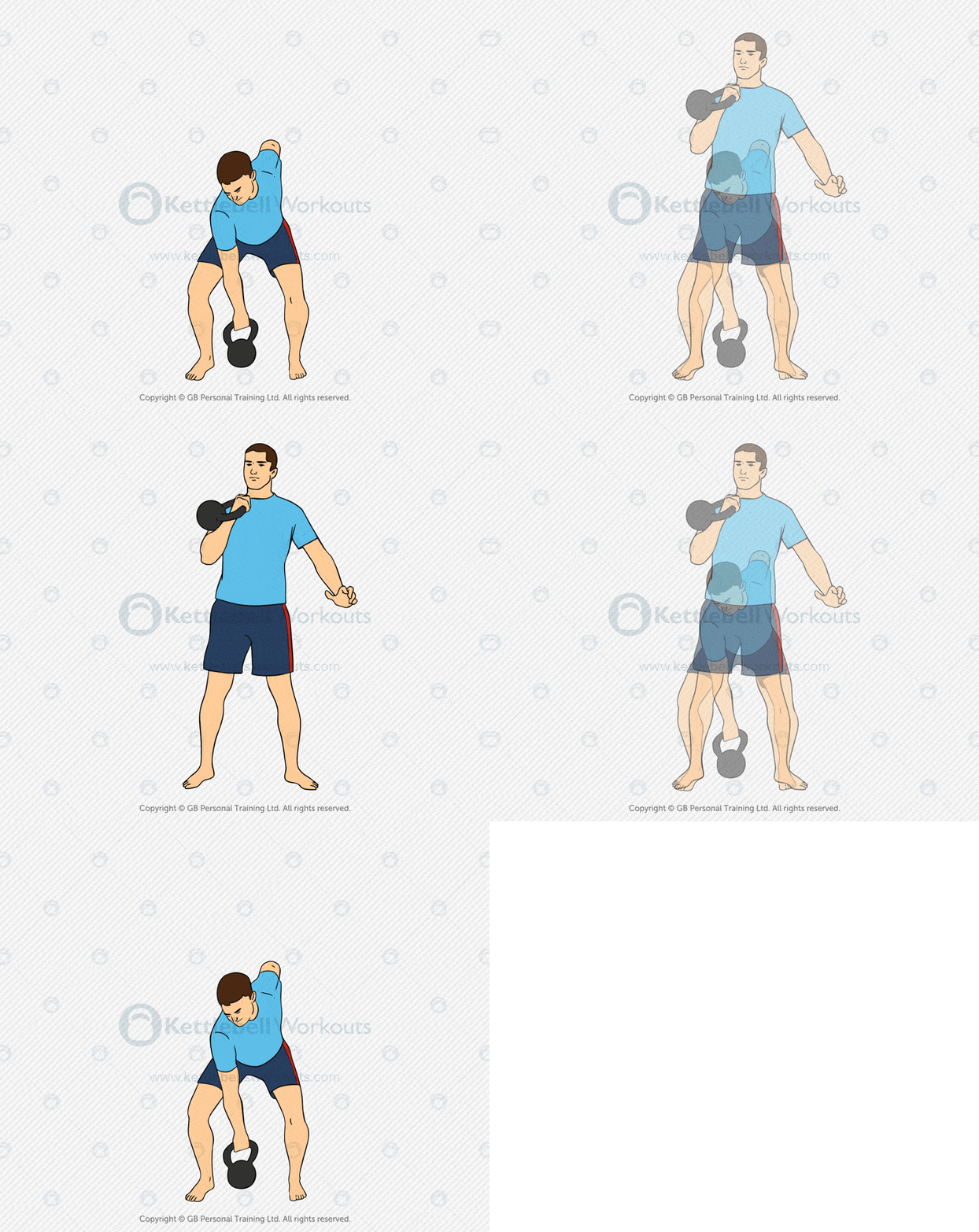
- Clean + Press: 1 rep each side
- Then 2 reps each side
- Then 3 reps each side
- Continue to 5 if technique remains strong
Rest 60 to 90 seconds, then repeat the ladder 2 to 4 times.
The Clean lets you move the kettlebell into the rack position without putting it down between every Press. Keep the Clean close to the body and avoid allowing the bell to crash onto the forearm.
10-Minute Swing EMOM
Conditioning
- At the start of every minute: 10 Swings
- Rest for the remainder of the minute
- Repeat for 10 minutes
Beginners can start with 6 to 8 Swings per minute.
EMOM means every minute on the minute. The built-in rest helps keep the Swing powerful and gives you a simple way to progress by adding minutes before adding repetitions.
Get Up + Swing
Skill + Conditioning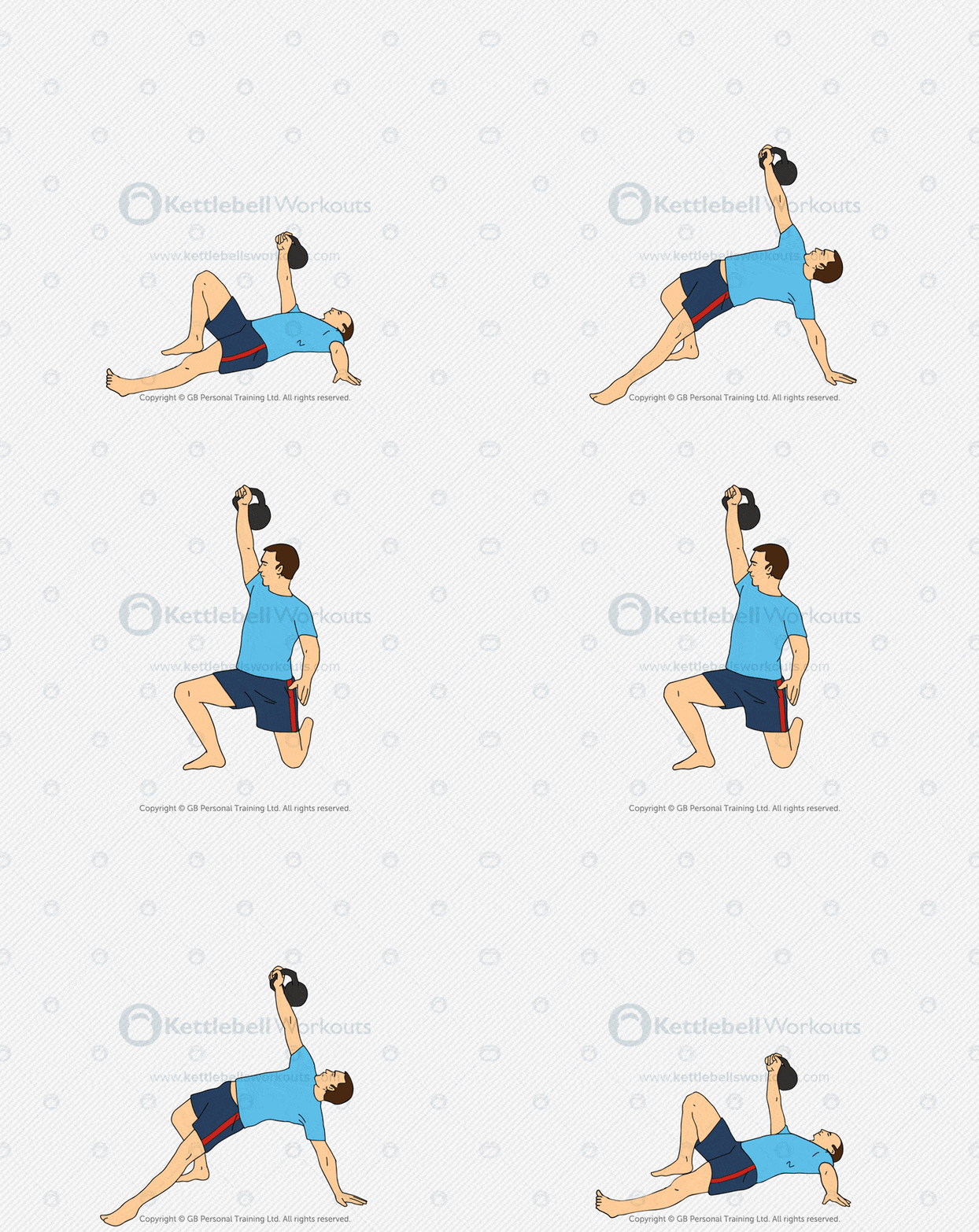
- Turkish Get Up: 1 rep each side
- Two-Handed Swing: 10 to 15 reps
- Rest: 60 to 90 seconds
Complete 3 to 5 rounds.
The Get Up slows the session down and adds floor-to-standing strength, trunk control and shoulder stability. Treat the Get Up as a skill and the Swing as the conditioning element.
Swing + Thruster Density
Intermediate / Advanced
- One-Hand Swing: 10 reps each side
- Thruster: 5 reps each side
- Rest only as needed
Work for 10 to 15 minutes and record total rounds.
This is a density workout: perform quality work inside a fixed time and try to improve total rounds gradually. Keep the Swing powerful and use the legs to drive smoothly out of the Squat into the Press during the Thruster.
Snatch Practice + Strength
Advanced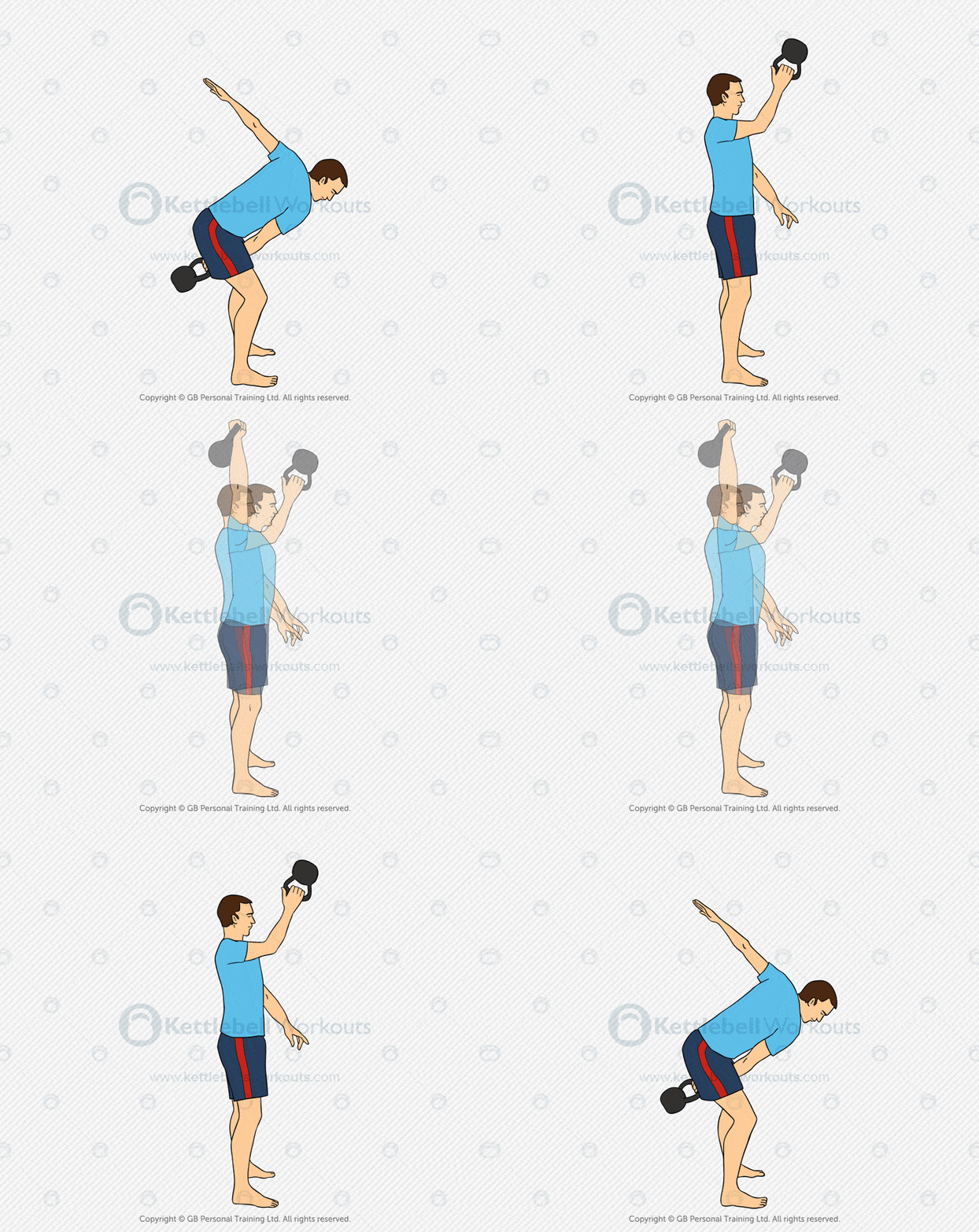
- Snatch: 5 reps each side
- Goblet Squat: 8 reps
- Row: 8 reps each side
Complete 3 to 5 rounds with full control.
Use this only after the Swing and Clean are well established. The Snatch should feel smooth rather than like a kettlebell being thrown over the hand.
Single Kettlebell Flow
Advanced
- Clean: 1 rep
- Reverse Lunge: 1 rep
- Press: 1 rep
- Squat: 1 rep
- Repeat on the other side
Perform 3 to 5 smooth cycles per side, then rest.
Flows link exercises together without putting the kettlebell down. Keep the repetitions low and move smoothly. A flow should demonstrate control, not become a race.

How to Turn These Workouts Into a Weekly Plan
You do not need to rotate through all 10 workouts. Pick 2 or 3 that support your current goal and repeat them long enough to improve.
Use 1 strength workout and 1 conditioning or mixed workout.
Use 2 strength-focused sessions and 1 conditioning session.
Split the harder sessions and keep at least 1 easier day between demanding workouts.
For a complete programming framework, see my Kettlebell Workout Plan.
How to Progress When You Only Have 1 Kettlebell
- Add 1 or 2 repetitions while technique remains strong.
- Add another set or round.
- Reduce rest when conditioning is the goal.
- Use a harder exercise variation.
- Slow the lowering phase on strength exercises.
- Move from 2-handed to 1-handed versions where appropriate.
- Increase range of motion or improve control before chasing more speed.
See 7 Ways to Progress Your Kettlebell Workouts Without Adding More Weight.
What Weight Kettlebell Should You Use?
The correct weight depends on the exercise. A bell that works well for Presses may not challenge your legs enough for Squats or Deadlifts.
If you only own 1 kettlebell, use repetition ranges and exercise variations to make that weight useful across as many movements as possible. When the bell becomes clearly too light or too heavy for several important exercises, adding another weight is the sensible next step.
See What Size Kettlebell Should I Start With? for help choosing your first or next kettlebell.
Related Kettlebell Guides
Frequently Asked Questions
Can you get fit with just 1 kettlebell?
Yes. A single kettlebell can train the major movement patterns and can be used for strength, conditioning, balance and power. Eventually you may want additional weights so different exercises can be loaded appropriately.
What is a good single kettlebell workout for beginners?
Start with Deadlifts, Goblet Squats, Rows and a simple Carry. Complete 2 to 3 controlled rounds and rest enough to maintain good technique.
Can I build muscle with 1 kettlebell?
Yes, especially when the kettlebell is challenging enough for the target exercise. Use controlled sets of Squats, Rows, Presses, Lunges and other strength movements rather than relying only on fast circuits.
How many times per week should I do single kettlebell workouts?
For many people, 2 to 4 sessions per week is enough. The correct frequency depends on workout difficulty, training experience and the amount of other activity you perform.
Do I need 2 kettlebells for double kettlebell exercises?
Yes, but you do not need double-kettlebell exercises to build an effective programme. Single-kettlebell training can remain productive for a long time.


Comments